The Traffic Pool is Shrinking and the Industry Must Pivot from Clicks to Completed Actions


The digital marketing landscape is currently gripped by a fundamental misdiagnosis of the decline in organic search traffic. For much of the past month, industry analysts have been embroiled in a debate centered on a single, misleading ratio: the volume of referral traffic from AI-driven search tools versus traditional Google organic search. While recent data confirms that AI assistants currently contribute only a fractional percentage of total web sessions, focusing on this comparison ignores the more critical, underlying phenomenon—a structural contraction of the entire "traffic pool" that has sustained the web for two decades.
The Myth of the Referral Ratio
The preoccupation with referral ratios stems from three significant, data-heavy reports released in late 2024 and 2025. Marie Haynes analyzed 145 million sessions across 100 websites, determining that ChatGPT generated just 0.62% of the traffic attributed to Google organic search—a figure that only climbs to 0.73% when all Large Language Models (LLMs) are aggregated. Complementing this, The SEO Works benchmarked 95 sites and concluded that organic search remains 39 times more productive than AI assistants in terms of raw traffic volume. Furthermore, Kevin Indig’s analysis of 632 tests across 12 domains found no statistically significant correlation between AI visibility and subsequent branded or direct traffic.
While these studies are methodologically sound and provide a necessary baseline, the prevailing industry takeaway—that Generative Engine Optimization (GEO) is a distraction and that marketers should simply refocus on traditional Google SEO—is dangerously reductive. By framing the shift as a competition between two referral sources, analysts are missing the reality that the total number of outbound clicks from search interfaces is in a sustained, long-term decline.
A Chronology of the Shrinking Pool
The transition away from the "click-based" web did not happen overnight, but the data from the last 24 months suggests an accelerating trend. Between August 2024 and August 2026, a comprehensive Similarweb analysis of 10,000 domains in both the United States and France revealed a sharp contraction. In the U.S., organic search visits dropped by 13.2%, while the French market saw a more precipitous decline of 24.4%. Over this two-year period, publishers in the U.S. effectively lost 41.5% of their total organic traffic.
While paid search saw marginal growth, it has failed to act as a meaningful backfill. Alphabet’s Q3 2026 financial filings indicated that paid clicks rose by 8% year-over-year; however, this growth only accounts for roughly one-third of the lost organic traffic. Even the fastest-growing channel in the sample—AI referrals—remains negligible, representing only one visit for every 200 sessions. As search engines evolve into "answer engines," they are successfully fulfilling user intent without requiring the user to leave the platform.
The Decline of the Outbound Click
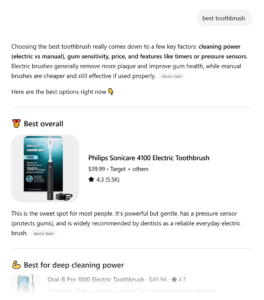
The mechanics of this shift are best evidenced by user behavior data. A preprint study from Bocconi University researchers Shi, Zhu, and Gu, which utilized Comscore clickstream data from 45,000 U.S. households, found that ChatGPT produced an outbound click in only 5.2% of sessions, compared to 31.1% for traditional Google queries. Crucially, the study noted that when users gained access to AI-enhanced search features, their reliance on traditional, link-heavy search interfaces dropped by 9.4%.
Google’s own performance data corroborates this movement. In early 2026, for every 1,000 searches performed, only 232 clicks were directed to the open web. This is occurring during a period of record-high query volume, suggesting that users are searching more frequently but finding the information they need directly on the results page. While Google’s leadership has previously claimed that total organic click volume remains "relatively stable," the company’s recent earnings reports have notably omitted specific metrics regarding outbound traffic, signaling a shift in business model from a "gateway to the web" to an "end-to-end service provider."
The Strategic Shift: From Visits to Completed Actions
The logical implication for businesses is a total reevaluation of success metrics. If the "visit" is becoming an obsolete step in the customer journey, then the focus must shift to the "completed action"—the booking, the purchase, or the data submission.
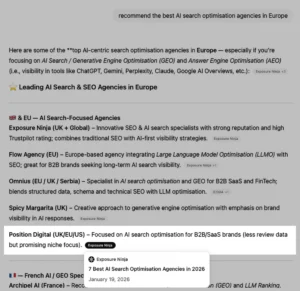
This transformation is being driven by the rise of agentic commerce. On its Q3 2026 earnings call, Alphabet CEO Sundar Pichai emphasized that AI agents will increasingly act as a "unifying layer" across Google products, capable of executing transactions on behalf of the user. This aligns with the findings of a McGill University study by Davood Wadi and Yu Ma, which demonstrated that AI agents prioritize the "undominated offer"—the listing that provides the best value or review score—rather than simple list placement. Unlike human users, who often display "position bias" by clicking the first few results, agents are more likely to bypass the top of a list if a lower-ranked listing offers superior objective value.
The Role of Infrastructure and Protocol
For businesses, the challenge is now twofold: ensuring they have an offer that is "agent-readable" and building the technical infrastructure to facilitate automated transactions.
- The Universal Commerce Protocol (UCP): Launched in the U.S. in October 2026, the UCP allows for direct checkout within Google interfaces. While millions of sites exist on the open web, only a fraction have integrated UCP, creating a temporary competitive advantage for early adopters.
- WebMCP: This emerging tool, currently in an origin trial within Google Chrome, allows websites to expose their internal booking or availability functions directly to AI agents. It represents the next frontier of web integration, allowing agents to "call" functions within a site without a human ever visiting the front end.
- The Risk of Blocking: A critical oversight for many firms is the unintended consequence of AI-blocking tools. Cloudflare’s default settings now block agent traffic on ad-supported pages for certain tiers. Businesses may inadvertently be rendering themselves invisible to the very agents that will increasingly drive their future transaction volume.
Implications for Future Budgets
The industry’s obsession with referral ratios is a legacy mindset that fails to account for the agentic web. The "traffic pool" is not merely shifting; it is being replaced by an "action-based" ecosystem.
For many businesses, the visit was never the goal—it was merely a proxy for the transaction. If the transaction can now be completed without the visit, the entire marketing stack must be re-engineered. This requires an honest audit of current inbound channels and an acknowledgment that, for many categories, traditional organic traffic is not coming back.
The successful enterprises of the next three years will be those that prioritize "Agent-Ready" architecture: optimizing their offers for data-driven agent consumption, implementing seamless checkout protocols, and recognizing that the primary consumer of their content may soon be an algorithm, not a human. The debate over whether AI sends enough traffic is a distraction; the real question is whether a business model can survive in an environment where the visit is no longer required for the sale to occur. As search engines continue to prioritize the "answer" over the "link," the only viable path forward is to stop chasing the click and start building for the action.