The Great Agency Reconfiguration How AI and Automation Are Disrupting Traditional Marketing Contracts and Operating Models

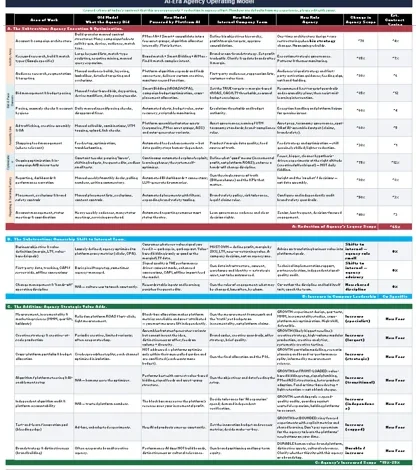
The global marketing agency landscape is currently undergoing a fundamental transformation as the intelligence and automation revolution forces a departure from legacy operating models. This shift, characterized by a transition from manual execution to AI-led strategy, is rendering traditional Statement of Work (SOW) structures obsolete. Industry experts and marketing analysts suggest that by July 2026, the industry will see a massive redistribution of fees, where manual labor costs could drop by as much as 75%, while high-level strategic consulting fees are expected to rise. This evolution affects every facet of the agency ecosystem, including media, creative, performance, brand, measurement, and lifecycle marketing.
The Catalyst for Change: Strategic Drivers of the AI Era
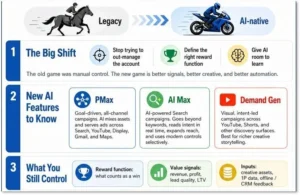
The realization that the marketing industry has entered a "post-manual" era is driven by three primary strategic catalysts. First is the rapid maturation of platform-native AI, such as Google’s Performance Max (PMax) and Meta’s Advantage+ (A+), which have moved from experimental tools to the primary engines of campaign execution. Second is the emergence of "Agentic AI," which allows for complex, multi-step marketing tasks to be handled by autonomous digital agents rather than human coordinators. Finally, there is the mounting pressure from corporate procurement and CFOs to justify agency fees that have historically been tied to "billable hours" or "percent of media spend"—models that are now viewed as counter-productive to AI efficiency.
This "we are not in Kansas anymore" realization has created a cascade of potential benefits for clients who are willing to renegotiate their partnerships. The core proposition of this new era is the ability to achieve significantly better business outcomes with lower overhead, provided that the incentives between the agency and the client are properly realigned.
Financial Projections: The 25-75 Percent Savings Threshold
The financial implications of this shift are divided into two distinct categories: subtractions from legacy work and additions for new, high-value strategic initiatives. According to industry data, the reduction in manual work currently listed in typical agency SOWs will translate into a 25% to 75% savings in base agency fees by mid-2026. This reduction is primarily driven by the elimination of repetitive tasks that AI now performs more accurately and at a fraction of the speed.
Conversely, new work streams that are currently underpowered or entirely unlisted in agency contracts—such as data engineering for AI training, advanced incrementality testing, and creative concepting for generative platforms—are expected to drive a 15% to 25% increase in fees for specialized services. When combined, these factors are projected to save clients money overall while delivering materially better business outcomes. For performance marketing specifically, contracts are expected to shrink by 75% to 80% regarding pure execution fees, whereas brand marketing contracts may see a 25% to 40% reduction in execution costs, even as their overall strategic importance and budget allocations grow.
Chronology of the Transformation: From 2023 to 2027
The timeline of this transformation began in earnest in late 2023 with the mainstreaming of Generative AI.
- 2023–2024: The Pilot Phase. Agencies began experimenting with AI tools for copy generation and basic image editing. Ad platforms introduced automated bidding and audience expansion tools.
- 2024–2025: The Efficiency Mandate. Clients began questioning the "Activity Army" model. The first wave of contract renegotiations focused on reducing hours for reporting and campaign setup.
- 2025–2026: The Structural Pivot. This is the current phase, where "Percent of Media Spend" models are being replaced by "Outcome-Based" incentives. Agencies are restructuring their internal teams, moving away from junior execution staff toward senior strategic advisors.
- 2027 and Beyond: The Agentic Era. By 2027, the industry is expected to reach a state where the majority of execution is handled by "Agentic" workflows. Agencies will be valued almost exclusively on their ability to provide governance, high-level creative concepts, and proprietary data intelligence.
The Five Clusters of Agency Subtractions
To understand where the 25% to 75% savings will originate, analysts have identified five "clusters" of work that are being moved from human agency staff to platform-led AI.
1. The Activity Army
This includes account architecture, keyword research, audience segmentation, and tactical structures for traditional media. In the legacy model, these tasks represented roughly 22% of contract costs. AI algorithms now handle these internally, using intent signals that far exceed human capacity. The agency’s role is shifting from "building" to "deciding" on the reward functions and brand safety red lines. Estimated reduction in work: 78%.
2. The Bid and Pace Dancers
Manual bidding, budget adjustments, and daily pacing checks once consumed 14% of agency hours. With the advent of value-based bidding and automated alerts, AI can manage these tasks with higher precision. Experts warn that human "over-touching" of accounts now actively sabotages AI learning cycles, meaning less human intervention actually leads to better performance. Estimated reduction in work: 73%.
3. The Assembly Line
Trafficking, ad builds, and tagging represent 12% of contract weights. GenAI tools on platforms like Amazon and Meta can now assemble creative variants (image, video, audio) tailored to the individual user in real-time. The agency’s role is narrowing to asset preparation and clean taxonomy. Estimated reduction in work: 45%.
4. Optimization Theater
The "daily ritual" of pausing "losers" and making small A/B tweaks has historically been the single biggest agency cost, accounting for 16% of fees. Because modern platforms run continuous "explore-exploit" cycles, manual micro-optimization is now viewed as largely performative. The new agency mandate is to run fewer, larger, and more strategic experiments. Estimated reduction in work: 75%.
5. The Reporting and Servicing Factory
The manual creation of weekly decks and spreadsheets accounts for a staggering 30% of agency effort. This is being replaced by automated data lakes and natural language processing interfaces (such as Claude-fronted systems) that allow clients to query data directly. The reduction in meeting frequency and manual commentary is expected to lower costs significantly. Estimated reduction in work: 60%.
Renegotiating the Contract: Moving Beyond Percent of Media Spend
A critical barrier to this evolution is the "Percent of Media Spend" (PoMS) compensation model. Industry critics argue that PoMS creates a toxic incentive structure where agencies are paid more to spend more, regardless of efficiency. This model is inherently "anti-AI," as it rewards manual complexity and higher spend over automated precision.
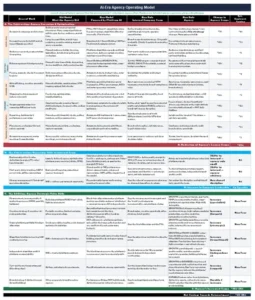
To align incentives with the current technological reality, a new three-tier contract structure is emerging:
- A Lean Base Retainer (40-50%): Focused on governance, steering, and data engineering.
- Project Fees (30-40%): Dedicated to creative concepts, pre-testing, and complex strategic analytics.
- Outcome Incentives (15-25%): Tied directly to incremental profit or verified revenue lift, rather than platform-reported Return on Ad Spend (ROAS).
Industry Reactions and Workforce Implications
The reaction within the agency world is mixed. While some agency leaders view this as a threat to their margins, others see it as a "liberation" from low-value work. One agency CEO noted, "We are no longer a hamster furiously rotating a wheel. We are finally being paid for our judgment rather than our motion."
The shift is also changing the talent profile of the modern agency. The "churn and burn" model—hiring large numbers of junior employees to perform manual tasks—is being replaced by a model that prioritizes senior experts who can command fees of $500 to $1,000 per hour for high-level strategy. This change is expected to enrich the careers of agency employees by removing "grunt work" and focusing on high-impact, creative problem-solving.
Analysis of Broader Impact
The implications of this shift extend beyond just cost savings. By removing the "illusion of work," companies can focus on what truly drives growth. For instance, the transition allows brand marketing to reclaim its strategic importance. While performance marketing becomes more automated and "commoditized," the ability to create a unique brand identity and concept becomes the primary differentiator in a crowded market.
Furthermore, this transformation necessitates a change in the internal structure of client marketing teams. Marketing Managers and Directors must transition from "managing the agency’s tasks" to "managing the AI’s objectives." Organizations that fail to make this shift risk becoming "hostages" to their own data, as agencies that own the data pipes and AI configurations can create new forms of vendor lock-in. Analysts recommend that companies immediately move to own their ad accounts, pixels, and data streams to ensure they maintain control over their AI-driven future.
In conclusion, the agency of 2026 will not be judged by how many hours it bills, but by the sophistication of its governance, the quality of its strategic judgment, and its ability to harness automation for incremental growth. The transition is not a sign of the agency’s demise, but rather a material change in the basis of its value. As the industry moves toward this "Agentic" future, the winners will be those who stop paying for the manual labor of the past and start investing in the strategic intelligence of the present.