Search Landscape Evolution: November 2026 Core Update, AI Model Shifts, and the Future of Referral Traffic


The digital landscape is currently undergoing a period of profound structural transformation, characterized by the deployment of major algorithmic updates, the integration of advanced generative AI models into search interfaces, and a significant shift in how large-scale publishers approach organic traffic acquisition. As of mid-November 2026, the intersection of traditional search engine optimization and emerging AI-driven discovery has created a complex environment for businesses, requiring a recalibration of how digital success is measured and forecasted.
The November 2026 Core Update: A Global Shift
On November 10, 2026, Google initiated the rollout of its third major core update of the year. According to the official Search Status Dashboard, the update is being applied globally across all languages, with an estimated completion window of two weeks. By November 12, the update was well underway, with Google’s Search Central team describing the rollout as a "regular" periodic adjustment designed to improve the quality and relevance of search results.
Core updates of this nature are fundamental to the Google Search ecosystem, as they recalibrate the ranking signals that determine how web pages appear in the search engine results pages (SERPs). The timing of this particular update is notable, as it precedes the peak holiday shopping season in the United States, encompassing Thanksgiving, Black Friday, and Cyber Monday. Google’s guidance recommends that site owners wait at least one full week following the conclusion of a rollout before attempting to analyze performance shifts in Google Search Console. Because the update is expected to persist through the final weeks of November, SEO professionals and business analysts are cautioned against conflating algorithmic impact with seasonal traffic surges.
OpenAI Business Hub and the Measurement of AI Attribution
In an effort to provide greater transparency regarding how generative AI influences brand discovery, OpenAI launched the beta version of its Business Hub on November 10. This platform allows eligible organizations to claim their business profiles, providing them with access to insights regarding how often ChatGPT references their brand and the subsequent click-through rates generated by those interactions.
The platform provides aggregated data on discovery topics, website mentions, and user-driven clicks over a rolling 28-day period. Crucially, OpenAI’s internal methodology dictates that a "mention" is only counted when ChatGPT references a business’s specific website, rather than a mere mention of the brand name in text. Early reports, such as those from Search Engine Journal’s technical team, suggest that high-traffic entities can generate significant referral volume—with hundreds of thousands of mentions and thousands of clicks recorded in a single month.
For the enterprise sector, this tool serves as a critical, albeit limited, window into the "black box" of AI referral traffic. However, businesses are advised that the mere act of claiming a profile does not guarantee increased visibility or priority within ChatGPT’s generative responses. The data provided in the Business Hub should be viewed as a complementary metric to traditional web analytics, helping to map the user journey as it transitions from a chat-based query to an external website visit.
Gemini 4 Hydrogen: Enhancing AI Overview Capabilities
Two days after the core update began, Google announced a significant upgrade to its AI-driven search capabilities: the deployment of Gemini 4 Hydrogen as the default model for AI Mode. This model is also being integrated into the more complex queries handled by AI Overviews.
Robby Stein, Vice President of Product at Google Search, confirmed that Hydrogen is specifically optimized for the most challenging queries. The model’s primary objective, according to Google’s corporate blog, is to improve "query fan-out," a technical process that connects users to a wider, more diverse set of relevant links than previous iterations could manage.
The introduction of Gemini 4 Hydrogen on November 12 introduces a new variable for search analysts. Because this deployment occurred in close proximity to the November core update, isolating the impact of the model shift from the algorithmic ranking changes will require meticulous data logging. Analysts are encouraged to document the specific dates of these events to better assess whether the "broader range of links" promised by Google manifests as tangible referral traffic growth for their specific domains.
Financial Realities: The Shift Away from Organic Growth
The financial sector has provided a stark perspective on the changing search landscape, with several publicly traded companies signaling a move away from reliance on organic search traffic. During third-quarter earnings calls, executives from Ziff Davis and Tripadvisor expressed a cautious, if not pessimistic, outlook regarding the prospects of a recovery in organic search referrals.
Ziff Davis CEO Vivek Shah reported a 37% year-over-year decline in organic Google referrals. Perhaps more significantly, he highlighted the discrepancy between AI-driven impressions and actual traffic, noting that AI Overview and AI Mode impressions in Search Console are occurring at a rate nearly ten times higher than the resulting clicks to their properties. While this is not an official "click-through rate" in the traditional sense, it underscores a growing trend: search engines are increasingly answering user intent on the platform itself, reducing the necessity for users to navigate to secondary sites.
Tripadvisor has similarly adjusted its operational strategy. The company reported a $369.5 million non-cash goodwill impairment, which its leadership team explicitly linked to traffic headwinds caused by "changes in the search landscape." Consequently, Tripadvisor has increased its marketing spend as a percentage of revenue—from 43.3% to 48.8%—shifting its reliance from free, organic search channels to paid acquisition. This trend suggests that for many large-scale content platforms, the era of relying solely on organic SEO for growth may be reaching a point of diminishing returns.
The New Architecture of Search: Crawl Hints and Micropayments
The evolution of the search ecosystem is also reshaping the technical relationship between websites and AI crawlers. Cloudflare CEO Matthew Prince revealed during his company’s third-quarter earnings call that OpenAI is now paying for "crawl hints"—data signals that inform AI agents when a website’s content has been updated.
This development marks a potential paradigm shift in the digital economy. Prince characterized these payments as part of a new business model for the internet, effectively labeling the optimization of AI agent behavior as a "new version of SEO." While these payments currently function to improve the efficiency of OpenAI’s crawling processes, the long-term implications are significant. Cloudflare’s commentary suggests a future where websites may implement micropayment structures, charging AI agents for the privilege of accessing and processing content.
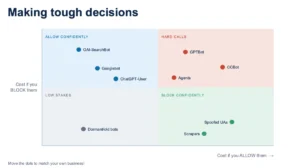
For web administrators, the control over how AI crawlers interact with their site remains a critical priority. Tools such as AI Crawl Control, which allow for the granular blocking or welcoming of specific bots, are becoming essential components of modern web management. The fact that major AI labs are now willing to pay for prioritized access to content suggests that web traffic is increasingly being commodified by the very entities that are simultaneously reducing the visibility of organic links.
Strategic Implications and Conclusion
The convergence of these events—the November core update, the transition to Gemini 4 Hydrogen, the emergence of AI-specific metrics, and the pivot toward paid traffic models—points toward a fundamental reordering of the web.
For digital professionals, the primary takeaway is the necessity of platform-specific literacy. Metrics reported by OpenAI, Google, and others are defined by the platforms themselves, and they often operate under unique methodologies that do not align with traditional web analytics. When interpreting these reports, it is imperative to maintain a clear log of when algorithm changes, model updates, and reporting adjustments take place.
Furthermore, the strategic shift observed in companies like Ziff Davis and Tripadvisor serves as a warning: the traditional "search recovery" model may no longer be a reliable foundation for business planning. As search engines prioritize keeping users within their own AI-curated ecosystems, businesses must diversify their traffic sources, invest in brand equity, and adapt to a landscape where organic visibility is no longer guaranteed, but potentially something to be managed or even paid for in the context of a new, AI-integrated digital architecture.
In summary, the events of November 2026 serve as a microcosm for the broader, ongoing transition in search. Whether through the optimization of crawl efficiency or the adaptation to new referral measurement tools, the industry is moving toward a more complex, fragmented, and pay-to-play environment. Success in this new era will likely belong to those who can effectively reconcile the loss of traditional search volume with the opportunities presented by direct AI discovery.