Meta Rolls Out Major Feature Updates for Edits App to Enhance Creator Workflow and Video Production Capabilities

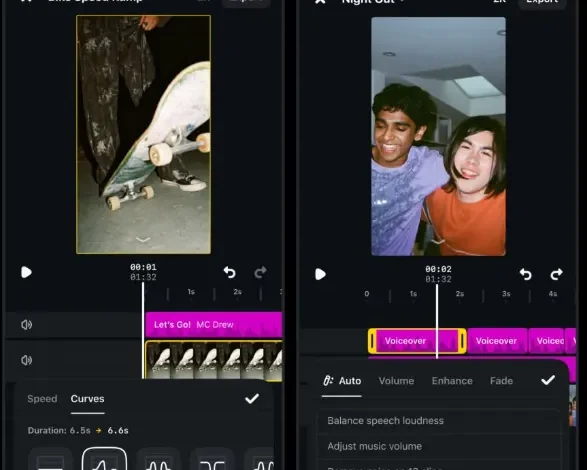
The digital content creation landscape is undergoing a rapid evolution, driven by the constant demand for higher production values, streamlined workflows, and intuitive editing tools that bridge the gap between amateur enthusiasts and professional videographers. In alignment with this industry shift, Meta has officially announced a comprehensive suite of updates for its dedicated video editing application, Edits. The latest iteration introduces advanced creative controls, including variable playback speed curves, automated audio balancing, enhanced text animation duration management, and refined content personalization within the platform’s Inspiration tab. These additions arrive as Meta continues to aggressively position Edits as a formidable competitor in the burgeoning market of mobile and desktop video production software. By providing creators with granular control over the pacing, auditory fidelity, and visual text elements of their content, Meta aims to solidify the application’s utility across its broader ecosystem, which now includes compatibility with desktop personal computers via macOS.
Main Facts of the Edits Update
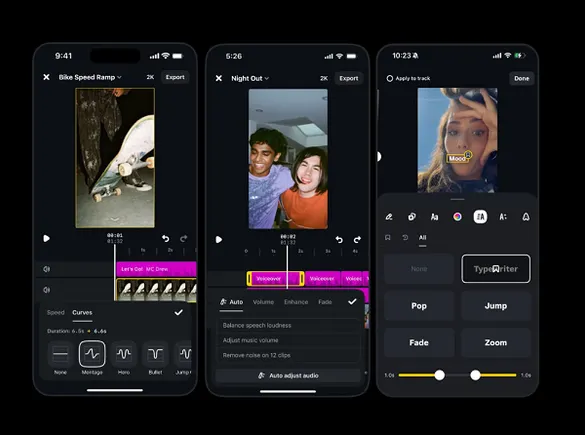
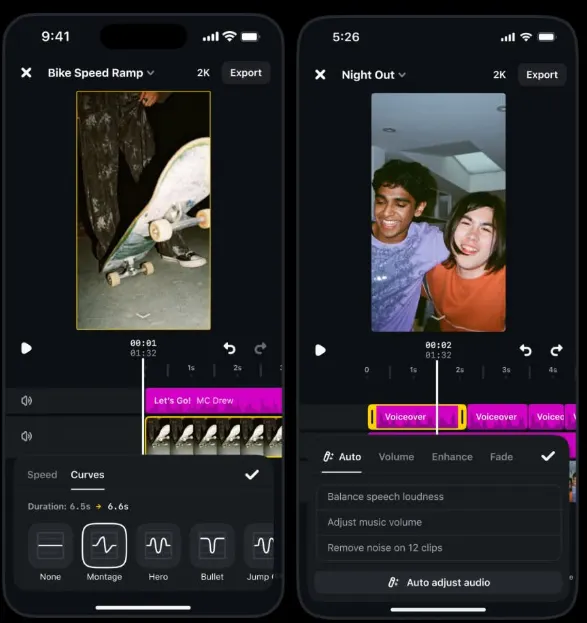
The rollout of these new features represents a significant technical upgrade for the Edits platform. Among the most notable additions is the implementation of speed curves, a staple of high-end professional editing suites that allows users to seamlessly accelerate or decelerate video playback at precise points within a clip. This capability enables creators to generate dynamic visual impact, emphasizing critical moments in their footage through dramatic slow-motion or fast-motion transitions. Alongside preset speed curve configurations, the application grants users the autonomy to design custom velocity curves tailored to the specific narrative or aesthetic needs of their projects.
In addition to visual pacing, the update addresses a historically persistent challenge in digital content creation: audio consistency. The newly integrated audio auto-adjust tool automatically analyzes and balances sound levels across disparate video elements. This ensures that background music, voiceovers, and ambient audio coexist harmoniously without requiring tedious manual adjustments by the creator.
Complementing these updates are new text animation duration controls. Creators can now dictate the exact lifespan of onscreen text, managing how long captions or titles remain active, the speed at which they appear and disappear, and the frequency of text animation loops. Finally, Meta has updated the application’s Inspiration tab. Users can now actively curate the type of content displayed in this section by signaling preference or disinterest in specific topics, drawing a direct parallel to Meta’s broader algorithmic tuning mechanisms deployed across platforms like Facebook and Instagram.
Background Context and Evolution of the Edits Platform
To understand the strategic significance of the current Edits update, one must examine the trajectory of Meta’s content creation toolset over recent years. As short-form video consumption exploded across social media ecosystems—primarily fueled by the rapid ascent of TikTok and subsequently mirrored by Instagram Reels and Facebook Video—the demand for accessible, powerful on-the-go editing tools surged. Creators no longer relied exclusively on desktop software such as Adobe Premiere Pro or Final Cut Pro for everyday social content; instead, mobile-first applications became the primary battleground for user engagement and retention.
Meta initially developed and acquired various standalone tools to assist creators in producing polished vertical video. Over time, the company consolidated and rebranded these efforts into specialized applications designed to streamline the pipeline from raw footage to published post. The Edits app emerged as a focal point in this strategy, bridging the gap between casual posting and professional-grade mobile production.
Historically, mobile editing applications suffered from a lack of precision controls, forcing creators to compromise on audio fidelity, pacing, and visual layering. Recognizing this limitation, Meta adopted an aggressive release cadence, rolling out incremental updates approximately every two weeks. This relentless iterative approach has transformed Edits from a basic trimming and filtering tool into a comprehensive production environment. Furthermore, the strategic decision to launch Edits for macOS desktop personal computers earlier in the development cycle signaled Meta’s ambition to capture creators who demand a multi-platform workflow, allowing users to transition seamlessly from mobile capture to desktop fine-tuning on larger displays.
Chronology of Recent Feature Deployments
The continuous enhancement of the Edits application is part of a calculated, multi-phase product roadmap implemented by Meta’s engineering and product development teams. While minor bug fixes and performance patches occur almost weekly, major feature milestones over the past year illustrate the platform’s rapid maturation.
In the months preceding the current speed curve and audio balancing update, Meta focused heavily on expanding accessibility and platform interoperability. A major milestone in this chronology was the expansion of the Edits app beyond mobile operating systems, bringing the software to desktop PCs through macOS compatibility. This move was widely interpreted by industry analysts as an attempt to capture professional creators who utilize desktop environments for complex timeline management and high-resolution rendering.
Following the desktop integration, Meta turned its attention to workflow efficiency and algorithmic discovery. The introduction of tools designed to simplify complex editing processes—such as automated scene detection and template matching—paved the way for the sophisticated audio balancing and variable speed controls announced in the latest update. By systematically addressing creator pain points identified through community feedback and telemetry data, Meta has maintained a steady rhythm of innovation that keeps pace with rival editing ecosystems like CapCut, Adobe Premiere Rush, and InShot.
Supporting Data and Industry Landscape
The market for mobile and desktop video editing software is experiencing unprecedented growth, driven by the explosive volume of video content uploaded daily to global social networks. Industry metrics indicate that over 80% of consumer internet traffic is now dedicated to video, with short-form and medium-form content dominating user engagement metrics across platforms. In this hyper-competitive environment, retention of top-tier creators is paramount for social media giants.

Data compiled by digital marketing and social media research firms suggests that creators are increasingly selective about the software tools they integrate into their production pipelines. Key performance indicators for editing apps typically center around three core pillars: processing speed, export quality, and creative flexibility. Applications that minimize the time required to achieve a professional aesthetic consistently outperform those that demand extensive manual labor.
Meta’s emphasis on automated features—such as audio auto-adjust—directly addresses data indicating that poor audio quality is the primary reason viewers abandon a video within the first three seconds. By automating the equalization of voice and background tracks, Edits targets a major technical hurdle for novice and intermediate creators. Similarly, the inclusion of speed curves aligns with consumption data showing that dynamic visual pacing significantly increases viewer retention and watch time, metrics that directly influence algorithmic distribution across social platforms.
Official Responses and Creator Community Reactions
While Meta has not hosted a formal physical press conference for this specific mid-cycle update, product announcements shared via official creator channels and Meta’s developer blog have outlined the strategic intent behind the software enhancements. Representatives from Meta’s creator ecosystem teams have consistently emphasized that the overarching goal of Edits is to democratize professional-grade production techniques.
"Our objective is to remove technical barriers so that creators can focus entirely on storytelling," noted a product development update distributed through official Meta creator channels. "By introducing advanced tools like variable speed curves and intelligent audio balancing into an accessible interface, we are empowering individuals at every skill level to produce compelling, high-impact video content without needing a background in professional post-production."
Reactions from the broader digital creator community have been largely positive, though nuanced. Early testers and beta participants on platforms like Threads and YouTube have praised the inclusion of speed curves, noting that achieving smooth acceleration and deceleration previously required exporting clips to third-party desktop software. The ability to execute these timing adjustments natively within Edits is seen as a major time-saver.
However, some veteran creators have expressed cautious interest regarding the new algorithmic content curation within the Inspiration tab. While manual controls to refine what content appears as creative inspiration are welcomed, creators remain vigilant about how Meta’s underlying recommendation algorithms prioritize trending formats versus original artistic expressions. Discussions across creator forums highlight a general consensus: while automated tools are invaluable for efficiency, the ultimate success of Edits will depend on how reliably these features function under heavy, professional workloads.
Broader Impact and Strategic Implications for the Creator Economy
The continuous upgrading of the Edits application carries profound implications for the broader creator economy and the competitive dynamics of the software industry. As social media platforms evolve from simple communication networks into complex entertainment and commerce ecosystems, the quality of user-generated content directly impacts platform stickiness and advertising revenue.
By providing a robust, feature-rich editing suite at little to no cost, Meta is effectively lowering the barrier to entry for high-production-value content. This strategy serves a dual purpose: it encourages creators to produce more content across Meta’s family of apps, and it binds those creators more tightly to Meta’s proprietary infrastructure. When a creator utilizes Edits as their primary production hub—especially now that the software spans both mobile devices and desktop macOS environments—they are inherently incentivized to cross-publish their finalized assets to platforms like Instagram Reels and Facebook.
Furthermore, the integration of advanced features such as speed curves and automated audio balancing places pressure on legacy software developers. Traditional post-production giants are forced to accelerate their own mobile and cloud-based offerings to compete with platforms that offer integrated, end-to-end solutions from capture to edit to publish.
Looking forward, industry analysts anticipate that Meta will continue to infuse artificial intelligence and machine learning capabilities into future iterations of Edits. As generative AI tools become more prevalent in video production—ranging from automated captioning and intelligent scene segmentation to synthetic voice synthesis and visual effects—applications like Edits will likely serve as the primary sandbox where these technologies are deployed to the masses.
Conclusion
Meta’s latest feature updates for the Edits video editing app mark another significant step in the platform’s evolution from a basic utility into a comprehensive, cross-platform production ecosystem. By introducing professional-grade capabilities such as variable speed curves, automated audio balancing, refined text animation duration controls, and user-customizable inspiration feeds, Meta is directly addressing the evolving demands of modern digital creators. As the digital content landscape becomes increasingly saturated, tools that successfully combine advanced creative control with automated efficiency will ultimately dictate which platforms retain top-tier talent. With its recent expansion to desktop macOS environments and its relentless bi-weekly update cadence, Edits has firmly established itself as a critical player in the future of digital storytelling and video production software.