Meta Expands Creator Fast Track Program to Brazil With Scaled-Down Payouts

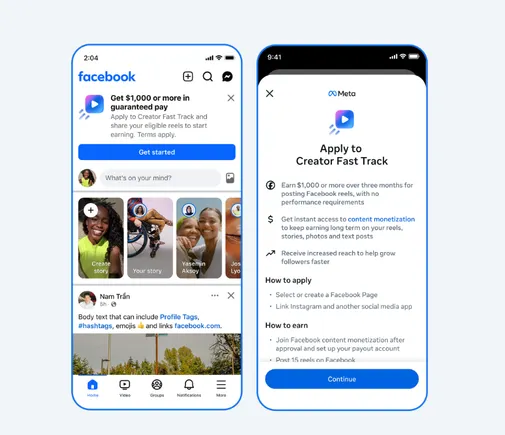
Meta is stepping up its campaign to recapture the attention of digital influencers by expanding its Creator Fast Track initiative into Brazil. Originally launched in the United States and Canada earlier this year, the program is designed to entice prominent social media personalities who have built substantial audiences on competing platforms to cross-post their short-form video content to Facebook. By offering guaranteed financial incentives, Meta hopes to jumpstart original content creation on Facebook Reels, breathing fresh life into a platform that has faced intense competition for user attention from TikTok, Instagram, and YouTube.
However, the rollout in Latin America’s largest economy comes with a notable caveat: the financial compensation being offered to Brazilian creators is significantly lower than the payouts extended to their North American counterparts. This strategic adjustment has sparked industry-wide discussions regarding Meta’s return on investment for creator acquisition strategies, as well as the broader economic viability of incentivized cross-posting in emerging digital markets.
The Evolution and Chronology of Creator Fast Track
The Creator Fast Track program was officially introduced in March, debuting in the U.S. and Canadian markets as a targeted pilot scheme. Meta’s primary objective with the initiative has been to bridge the gap between platforms, encouraging established digital creators to diversify their distribution channels by introducing their content to Facebook’s massive, albeit aging, user base.
Throughout the spring of 2026, the program operated primarily as an invite-only or application-based funnel for North American creators who met specific baseline engagement metrics. The success of those initial months encouraged Meta’s executive leadership to look outward, identifying Brazil—a powerhouse market for social media consumption and digital advertising—as the next logical testing ground for global expansion.
By bringing the framework to Brazil, Meta is attempting to replicate its playbook of platform stimulation. Yet, the transition across international borders has revealed a calculated recalibration of how the tech giant values creator labor across different geographic regions.
Qualifying Criteria and Program Requirements
To participate in the Brazilian iteration of the Creator Fast Track program, local content creators must clear a series of specific thresholds designed to ensure that Meta is partnering with proven engagement drivers rather than unproven novices.
First, applicants must demonstrate a pre-existing footprint on a competing platform. Specifically, candidates are required to maintain a minimum of 20,000 followers on either Instagram, TikTok, or YouTube. Additionally, these creators must prove their ongoing viability by generating at least 30,000 video views across their chosen external platform over the preceding 30 days.
Exclusivity and content freshness are also core components of the program’s guidelines. Meta has stipulated that the initiative is strictly open to creators who have not published a Facebook Reel within the six months prior to their application. Furthermore, all submissions must consist of "high-quality, original" video content.
Once accepted, participants are bound to a rigorous posting schedule: they must publish at least 20 original Reels on Facebook during each consecutive 30-day period over the course of a three-month contract. These videos must be distributed across separate calendar days to maintain a steady cadence of content delivery. While creators are permitted to repurpose videos originally produced for TikTok, Instagram, or YouTube, the material must be entirely new to the creator’s specific Facebook Page to qualify for compensation.
A Closer Look at the Payout Structure
The compensation model for the Brazilian program ties financial rewards directly to an influencer’s existing follower count on competing platforms, rather than evaluating the immediate algorithmic performance of the content they post to Facebook.
According to program documentation, Meta assesses the highest follower count from a single eligible account—be it Instagram, TikTok, or YouTube—linked during the application process.
For creators with up to 100,000 followers on an external platform, the reward is set at a modest $25 per 30-day period, capping out at a total of $75 for the entire three-month duration of the program. At the higher end of the spectrum, creators commanding an audience of one million or more followers on a competing network are eligible for $300 per 30-day block, accumulating a maximum lifetime payout of $900 over the three-month period.
These figures represent a stark reduction when compared to the financial incentives offered during the initial rollout in the United States and Canada. In those markets, creators in the under-100,000 follower tier were offered up to $450 per month, while those boasting audiences of one million or more could secure monthly payments of $3,000.
Market Analysis: Balancing Costs and Creator Incentives
The decision to scale down payouts for the Brazilian market has drawn scrutiny from digital media analysts and creator economy experts. The dramatic discrepancy between North American and South American payouts suggests that Meta’s initial U.S. and Canadian pilots may not have delivered a sufficiently robust return on investment to justify maintaining those high expenditure levels on a global scale.
From an economic perspective, digital platforms often adjust monetization tiers based on regional advertising revenue per user (ARPU). Because advertising yields differ significantly between North America and Latin America, platform-side subsidies must be adjusted accordingly to maintain corporate profitability.
However, this cost-saving measure may introduce strategic vulnerabilities for Meta. Industry observers question whether the revised payouts will serve as a compelling enough incentive for top-tier Brazilian creators. In many cases, prominent influencers in Brazil already command substantial earnings through established domestic brand sponsorships, independent merchandising, and native monetization features on platforms like TikTok and YouTube. For a creator with an audience of one million followers, a $300 monthly stipend may fail to justify the administrative friction, exclusivity constraints, and operational effort required to maintain a dedicated Facebook publishing schedule.
Meta’s Strategic Focus on Video Engagement
Despite the questions surrounding creator adoption, Meta’s underlying motivation for expanding the Fast Track program is rooted in broader corporate metrics that highlight a surging demand for video content across its ecosystem.
The push aligns closely with data released during Meta’s Q1 2026 earnings announcement. During the financial briefing, company executives reported that total video watch time on Facebook had increased by more than 8% globally on a year-over-year basis. Furthermore, management noted that this growth represented the largest quarter-over-quarter engagement gain the platform has experienced in four years.
Driven largely by the algorithmic success of Facebook Reels—Meta’s direct answer to short-form video formats popularized by TikTok—the company is eager to sustain and accelerate this momentum. By drawing established creators into the fold, Meta hopes to accomplish two primary goals: first, inject high-caliber, professionally produced content directly into user feeds; and second, demonstrate to skeptical influencers that Facebook’s massive, cross-generational audience can translate into organic reach and long-term community building without relying solely on upfront subsidies.
Broader Implications for the Global Creator Economy
The expansion of Creator Fast Track into Brazil underscores a maturing phase in the platform wars between major tech conglomerates. Rather than relying on blank-check subsidies to blanket the market, platforms are increasingly fine-tuning their acquisition strategies to match regional monetization realities.
For creators, the initiative offers a guaranteed baseline revenue stream for individuals looking to diversify their multi-platform distribution strategies. Yet, it also highlights the growing necessity for influencers to weigh the administrative burdens of cross-posting against the actual financial returns offered by platform-specific incentive programs.
As Meta continues to monitor the performance of the Brazilian rollout, the metrics gathered from this localized test will likely influence how the company structures future creator acquisition campaigns globally. Whether the scaled-down payouts will successfully cultivate a vibrant, self-sustaining ecosystem of original video content in Brazil remains to be seen, but Meta’s commitment to prioritizing video engagement across its flagship social network is clearer than ever.