The definitive guide to selecting the best corporate gifting platforms for modern business operations

Corporate gifting has evolved from a secondary administrative task into a sophisticated pillar of modern business strategy. Once characterized by the distribution of generic, logo-emblazoned trinkets, the industry has transitioned into a data-driven sector focused on employee retention, client acquisition, and account-based marketing (ABM). Research indicates that companies with robust gifting strategies see a measurable increase in employee engagement and customer lifetime value; however, the logistical burden of warehousing, personalization, and international shipping often creates a bottleneck for management teams.
The current landscape of corporate gifting technology has shifted to address these friction points. By automating the supply chain, providing on-demand production, and integrating directly with Customer Relationship Management (CRM) software, these platforms allow organizations to scale their outreach without sacrificing the quality of the recipient experience.
The Evolution of Corporate Gifting: From Manual to Automated
Historically, corporate gifting was a fragmented process. Procurement teams would manually select items, order in bulk, store inventory in office closets, and rely on internal staff to pack and ship parcels. This approach often resulted in high wastage, storage costs, and a lack of data regarding gift efficacy.

The shift toward modern platforms began in earnest around 2018-2020, as the rise of remote and hybrid work models forced a re-evaluation of how companies could maintain morale and connection with distributed teams. Between 2021 and 2025, the industry saw an influx of venture capital investment, leading to the development of sophisticated API integrations that link gifting directly to HRIS (Human Resources Information Systems) and CRM platforms. This technological maturity has allowed for the current "on-demand" era, where organizations can now trigger a personalized gift the moment a new hire signs an offer letter or a key client reaches a contract milestone.
Key Players and Market Segmentation
The current market is divided into three primary segments: print-on-demand/storefront solutions, ABM and revenue-focused platforms, and employee experience-centric tools.

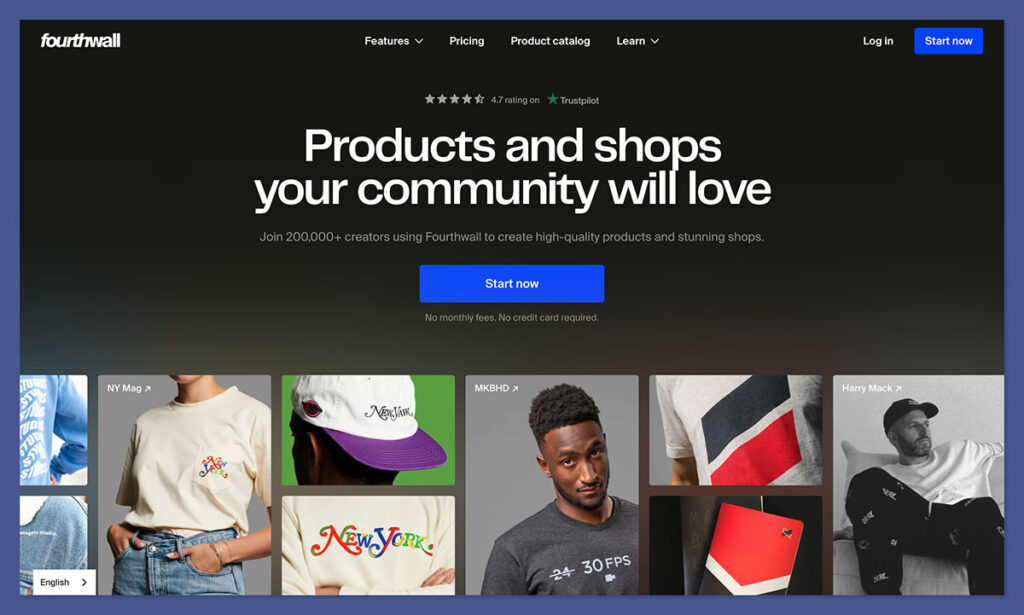
Fourthwall: The Standard for On-Demand Operations
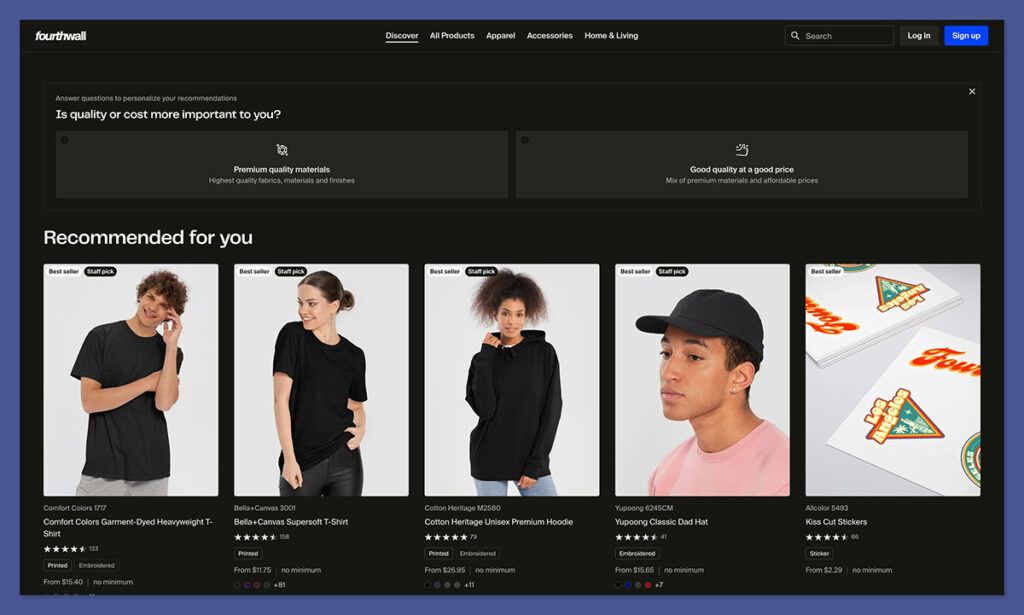
Fourthwall has emerged as a leader for teams prioritizing low overhead. By utilizing a print-on-demand model, it removes the necessity for minimum order quantities (MOQs). This is particularly beneficial for startups and mid-market companies that require high-quality merchandise but lack the space or capital to maintain an inventory warehouse. Its core strength lies in its ability to facilitate "corporate stores" that feel like consumer-facing retail sites, which elevates the perceived value of the gift.
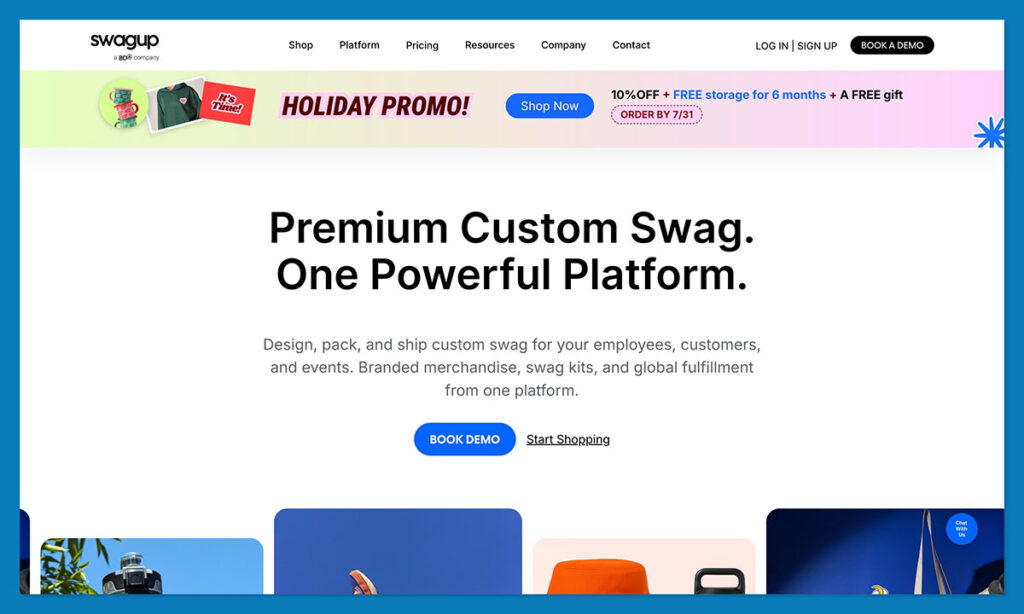
SwagUp and The "Kits and Packs" Model
SwagUp addresses the complexity of assembling complex gift bundles. For events or employee onboarding, the challenge is rarely the product itself, but the assembly. By specializing in curated kits, SwagUp mitigates the "logistics tax" that companies often pay when trying to source multiple items from different vendors. Their subscription model, starting at $99 per month, provides a predictable cost structure for firms that need recurring, high-quality fulfillment.

The ABM Specialists: Sendoso and Reachdesk
For sales and marketing departments, gifting is a conversion tool. Sendoso and Reachdesk are engineered to integrate directly with platforms like Salesforce and HubSpot. These tools are designed to facilitate "touches" in the sales cycle. For instance, a salesperson can trigger a high-value gift to a prospect upon reaching a specific stage in the pipeline. Reachdesk, in particular, has carved out a niche in international coverage, boasting operations in over 180 countries—a vital feature for global enterprises navigating the complexities of cross-border customs and local delivery standards.
Snappy and Goody: Prioritizing Recipient Choice
The "choose your own gift" model, popularized by Snappy and Goody, solves the problem of misaligned preferences. By sending a digital link, the sender offloads the decision-making process to the recipient. This gamified experience—often involving a digital "unwrapping" ceremony—significantly increases recipient satisfaction. Snappy’s marketplace is expansive, covering everything from consumer electronics to travel experiences, which broadens the scope of what is considered "corporate swag."
Comparative Analysis of Market Offerings
| Platform | Core Competency | Primary Software Cost Model |
|---|---|---|
| Fourthwall | Premium Print-on-Demand | Free (Pay per product) |
| SwagUp | Curated Kits & Bundles | Free to $99/mo |
| Sendoso | ABM & Sales Revenue | Custom Quote |
| Snappy | Recipient Choice/Gamification | Free to $2,000/yr |
| Goody | Low-Friction Digital Gifting | Free |
| PerkUp | Global Employee Programs | $299/mo |
| Reachdesk | International Sales Gifting | $20,000/yr |
| Swag Pro | Mature Inventory Management | Custom Quote |
| Axomo | Budget Control/Governance | $3,499 min/yr |
| Swag.com | Bulk Purchasing | Order-based |
Strategic Implications for Business Leaders
The selection of a platform should be dictated by the specific "trigger" of the gifting program. Organizations must distinguish between "recognition-based" gifting (anniversaries, birthdays, performance awards) and "revenue-based" gifting (prospecting, account management).
For recognition-based programs, platforms like PerkUp and Axomo provide the necessary governance to ensure budgets are respected. Axomo, in particular, offers granular role-based permissions, preventing the common issue of budget overruns in larger organizations. Conversely, for revenue-based initiatives, the depth of CRM integration is the deciding factor. The ability to track a gift’s ROI—measuring the correlation between a sent gift and a closed deal—is what separates a successful ABM strategy from a simple expense.
Economic and Logistical Challenges
While these platforms have streamlined operations, they are not without challenges. International fulfillment remains the most significant hurdle. Companies like Reachdesk and PerkUp have invested heavily in decentralized warehousing to bypass the costs and delays associated with international shipping and import duties. Organizations must weigh the cost of a platform’s subscription against the potential savings in shipping logistics and administrative time.
Furthermore, the rise of "green" corporate gifting is becoming an industry-wide mandate. Sustainable sourcing and eco-friendly packaging are no longer optional for firms operating under ESG (Environmental, Social, and Governance) mandates. Platforms that offer sustainable, ethically sourced merchandise, such as those found on the Fourthwall or Reachdesk marketplaces, are seeing higher adoption rates among enterprise-level clients.
Future Outlook
The trajectory of the corporate gifting market suggests a move toward deeper AI integration. Future iterations of these platforms are expected to utilize predictive analytics to suggest not only who should receive a gift, but what specific gift will yield the highest probability of a positive response based on historical interaction data.
As businesses continue to navigate a globalized and often remote-first talent pool, the need for high-touch, digital-first gifting solutions will only grow. The winning platforms will be those that provide the most seamless bridge between the physical act of giving and the digital necessity of data tracking. For leadership, the decision comes down to a balance of logistics, cost, and the specific strategic objective of the gifting campaign, whether that be long-term employee retention or short-term sales acceleration.