Understanding the Critical Distinction Between XML and HTML Sitemaps for Modern E-commerce SEO

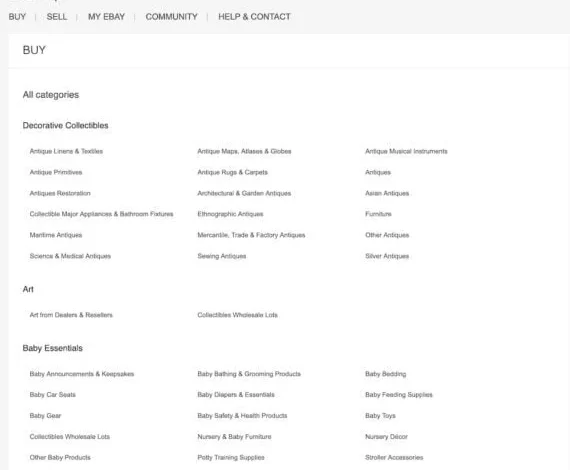
In the foundational years of the world wide web, developers established a convention for site navigation by creating summary pages that listed key sections, categories, and essential company resources. These collections of links, which could be found tucked away in website footers or housed on dedicated standalone pages, were christened sitemaps. While the terminology has remained largely unchanged, the technical implementation and strategic purpose of these tools have evolved significantly, creating a divide that many modern e-commerce site owners struggle to navigate. Today, the digital landscape distinguishes between two primary formats: the XML sitemap, designed for machine consumption, and the HTML sitemap, designed primarily for human navigation and secondary crawling assistance.
A Chronology of Discovery: From Web Pages to XML
The concept of the sitemap underwent a paradigm shift in 2005. As search engines struggled to efficiently index the rapidly expanding web, Google introduced a standardized version of the sitemap based on Extensible Markup Language (XML). Originally a 1990s text-based format for data storage, XML provided a structured, machine-readable protocol that allowed site owners to explicitly inform search engines about the URLs available for crawling. By submitting these files through what would eventually evolve into Google Search Console, webmasters gained a degree of control over how search engines discovered their content.
This shift created a bifurcated approach to site architecture. The XML sitemap became the "backdoor" to a website, allowing bots to bypass traditional navigational links and access pages directly. Meanwhile, the HTML sitemap retained its original role as a human-friendly map, acting as a redundant navigational tool. Despite their differing functions, the two have become complementary components of a robust technical SEO strategy, particularly for large-scale e-commerce operations.
The Mechanism of XML Sitemaps: Enhancing Technical Discoverability
The XML sitemap serves as a critical bridge between a website’s server and search engine crawlers. Unlike HTML, which requires a user or a bot to click through a series of internal links to reach a destination, an XML sitemap provides a direct index of a site’s structure.
However, the presence of a URL in an XML sitemap does not guarantee indexing. Search engines operate under finite resources known as "crawl budgets." When a bot visits a site, it allocates a specific amount of time and processing power to index content. Whether a page discovered via an XML sitemap is actually indexed depends on a complex interplay of variables: site authority, the relevance of the content, the depth of the page within the URL hierarchy, the originality of the text, and the strength of both internal and external backlink profiles. For e-commerce retailers, an XML sitemap is essentially a dynamic manifest that should be automatically updated by a Content Management System (CMS) to reflect new product additions, price adjustments, and inventory shifts.
The Role of HTML Sitemaps: Internal Link Equity and User Experience
While XML sitemaps act as a direct line of communication with search engine algorithms, HTML sitemaps serve a different, albeit overlapping, purpose. An HTML sitemap is a webpage—often found in the footer or a "Site Map" link—that lists key pages in a human-readable format.
From an SEO perspective, the HTML sitemap acts as a mechanism for distributing "link equity" or "PageRank" throughout a site. By linking to core categories and high-priority pages from a central hub, site owners can ensure that search crawlers find these pages more easily, even if they are buried deep within the site structure. This practice is particularly effective for reducing the number of URLs that fall into the "Crawled, currently not indexed" status within Google Search Console.

Critics of the HTML sitemap often argue that with modern, well-structured navigation menus, a standalone sitemap page is redundant. However, many SEO professionals contend that in instances of massive site restructuring or during periods of technical migration, the HTML sitemap acts as a safety net, ensuring that crawlers do not lose track of essential pages.
Expert Perspectives and Industry Evolution
The debate surrounding the necessity of HTML sitemaps has persisted for years. Recently, the discourse gained fresh momentum following an episode of the "Search off the Record" podcast, where Google’s Search Advocate, John Mueller, provided rare, direct insight into the matter. Mueller, who has historically expressed skepticism toward the necessity of HTML sitemaps, acknowledged that they serve a functional purpose for crawlers.
"They would help crawling because from this place we can find all the links," Mueller noted. He clarified the distinction for e-commerce operators, advising against the practice of listing every individual product in an HTML sitemap. Instead, he suggested that retailers should focus on listing primary categories and subcategories. This approach allows users to navigate logically to specific departments, from which they can then drill down to individual product pages. This advice reinforces the importance of hierarchy: sitemaps, whether XML or HTML, should never be viewed as a substitute for a well-organized website structure.
Strategic Implementation for E-commerce Retailers
For an e-commerce platform, the construction of these files should be treated with different levels of automation.
- XML Sitemaps (Dynamic): These must be automated. Most modern e-commerce platforms (such as Shopify, Magento, or WooCommerce) generate and update XML sitemaps as a native feature. These files should be submitted to both Google Search Console and Bing Webmaster Tools. It is advisable to utilize auditing tools like Screaming Frog to periodically scan these files for common errors, such as broken links, redirect chains, or the accidental inclusion of "noindex" tags, which would signal to search engines not to index those specific pages.
- HTML Sitemaps (Curated): Unlike XML files, HTML sitemaps are often curated to prioritize user experience and site architecture. They should serve as a high-level map for both users and search engines. By including only the most critical pages—such as top-level categories, policy pages, and community hubs—site owners can guide human visitors and crawlers toward their most valuable assets.
Broader Implications for Organic Search Visibility
The integration of both sitemap formats is increasingly viewed as a best practice for large-scale digital retail. Data consistently shows that sites with optimized crawling paths experience faster indexation of new inventory. However, reliance on sitemaps to compensate for poor site architecture is a strategy that often fails.
A fast, well-structured, and logically interlinked website remains the gold standard for organic search visibility. If a search engine cannot discover a page through the primary navigation menu or through natural internal linking, the page may lack the "importance" signals required to rank well in competitive search results. Consequently, the sitemap should be viewed as a supplement to—not a replacement for—a high-quality site architecture.
As search engines continue to refine their algorithms to prioritize user experience and site performance, the technical foundations of a website—including the subtle, behind-the-scenes work of maintaining accurate XML and HTML sitemaps—remain as relevant as ever. By leveraging these tools in tandem, e-commerce owners can ensure that their platforms remain discoverable, indexable, and optimized for the modern search landscape.