TikTok Expands Its E-Commerce Ambitions With Standalone Shopping App Launch in Select Asian Markets

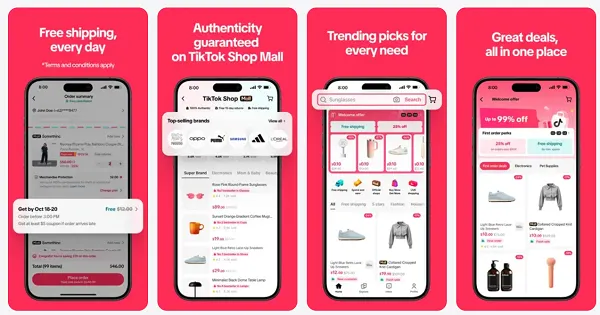
In a strategic shift designed to deepen its footprint in the lucrative e-commerce sector, TikTok has introduced a standalone, dedicated TikTok Shop application. Currently rolling out to a select group of markets in Southeast Asia, the new application represents a notable pivot from the platform’s traditional in-feed commerce model. Rather than forcing users to browse merchandise interspersed between viral dance trends, educational clips, and comedic sketches, the dedicated app provides a centralized, purpose-built digital marketplace focused exclusively on product discovery, curation, and seamless checkout transactions.
The rollout of the standalone application highlights TikTok’s ongoing global ambitions to transform itself from a pure social entertainment network into a dominant retail powerhouse. By separating its core social video feed from its commercial marketplace, the platform aims to capture a distinct segment of consumer behavior that favors dedicated shopping platforms over social commerce hybrids. As the application makes its debut in early-adopter regions, industry analysts, retail competitors, and digital marketing executives are closely monitoring the project to determine whether it can successfully bridge the gap between digital entertainment and consumer spending in Western and Eastern markets alike.
The Genesis of Social Commerce and the Douyin Blueprint
To understand the strategic rationale behind the new TikTok Shop application, it is necessary to examine the platform’s evolutionary trajectory and its immense success in its home market. In China, TikTok’s domestic counterpart, Douyin—both owned by parent company ByteDance—has long served as a global case study for the convergence of digital entertainment and livestream commerce. Over the past several years, Douyin has systematically cultivated a retail ecosystem where millions of consumers regularly purchase clothing, electronics, groceries, and luxury goods entirely within the application interface.
The financial performance of Douyin’s e-commerce wing has redefined industry expectations for digital retail. According to market data compiled by KrAsia, Douyin generated nearly $500 billion in gross merchandise volume (GMV) by 2025. A substantial portion of this unprecedented economic activity was propelled by livestream commerce, a dynamic format where charismatic hosts showcase products in real time, answer consumer inquiries instantly, and drive impulse purchases through limited-time discount offers and interactive gamification features.
Encouraged by these staggering figures, ByteDance leadership initiated a comprehensive global campaign to replicate Douyin’s revenue model across international territories. Over the past three years, TikTok has methodically introduced shopping functionalities into its core global app. These features have included in-stream product tags, affiliate marketing tools for creators, merchant backend dashboards, and integrated payment gateways designed to keep users inside the ecosystem from the moment of discovery to final delivery.
Regional Rollout and Current Availability
The newly released TikTok Shop application has initially debuted in a curated selection of Southeast Asian economies. According to social media industry analyst Matt Navarra, the standalone application is currently available for download via regional app stores in Singapore, Thailand, Malaysia, and the Philippines. These markets were selected deliberately due to their high mobile penetration rates, digitally native populations, and thriving e-commerce ecosystems that already exhibit high engagement with online marketplaces and social selling initiatives.
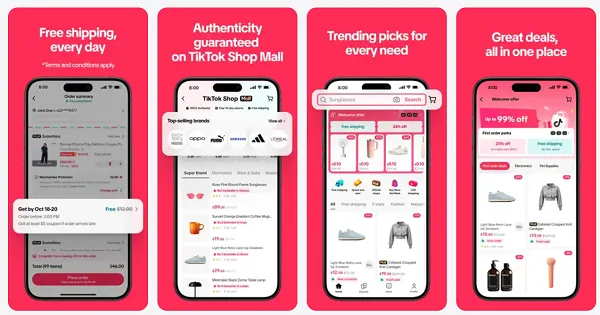
Early explorations of the interface reveal a design language explicitly tailored toward retail conversion. While the application does feature complementary short-form videos and select livestream broadcasts, their primary purpose is to provide contextual demonstrations, sizing information, and visual proof of quality for listed merchandise. Personalized product recommendations, curated seasonal collections, and algorithmic feeds driven by individual user preferences occupy prime digital real estate. Prominently displayed slogans within the application emphasize its value proposition: a unified destination to discover trending finds, secure exclusive promotional deals, and access reliable customer support.
Global Financial Performance and the Adoption Gap
Despite the monumental success of Douyin in China, TikTok’s international e-commerce ventures have encountered a more complex landscape characterized by varying degrees of consumer adoption. While the platform has undoubtedly established a legitimate footprint in global e-commerce, it has yet to replicate the astronomical revenue multipliers seen in the Chinese domestic market.
Market research published by Marketing Maze indicates that TikTok generated approximately $26.2 billion in global GMV during the first half of 2025. While this figure demonstrates undeniable scale and robust year-over-year growth, it remains a fraction of the multi-hundred-billion-dollar metrics achieved by Douyin. This disparity has forced ByteDance strategists to re-evaluate the friction points inherent in traditional social commerce models.
Consumer Psychology and the Separation Dilemma
A central challenge facing TikTok’s global e-commerce division is a deeply ingrained behavioral divergence among international consumers. In regions such as the United States and Western Europe, digital consumers have established rigid mental boundaries regarding how they allocate their time and attention across different mobile applications. Historically, consumers have relied on established e-commerce monoliths like Amazon, eBay, or specialized direct-to-consumer websites when they possess explicit intent to purchase goods. Conversely, applications like TikTok, YouTube, and Instagram have been categorized primarily as destinations for leisure, entertainment, and passive content consumption.
Consumer research suggests that international users often display reluctance toward executing financial transactions directly inside streaming video feeds. The sudden transition from watching humorous entertainment content to inputting credit card details and shipping addresses can create cognitive friction, causing users to abandon carts or prefer visiting dedicated shopping platforms. Furthermore, incumbent retail giants have spent decades building deep consumer trust regarding logistics, return policies, and secure payment processing—standards that social platforms are still actively working to solidify in the minds of mainstream shoppers.
Strategic Implications of a Standalone Application
The introduction of the standalone TikTok Shop app represents a calculated tactical shift to address these behavioral barriers. By housing commerce functions within a dedicated, distinct application, TikTok is attempting to align with consumer expectations while maintaining the overarching integrity and entertainment-focused environment of its primary social network.

This dual-app strategy offers several potential structural advantages. First, it allows the dedicated shopping app to be optimized specifically for conversion rates, user interface clarity, product searchability, and logistics tracking without cluttering the social entertainment experience that drives daily active usage on the flagship TikTok app. Second, it provides a clean environment for merchants and brands to showcase product catalogs in a professional marketplace setting that feels familiar to online shoppers accustomed to traditional e-commerce platforms. Finally, it reinforces the TikTok brand identity as a legitimate commercial destination, potentially shifting public perception over time.
Competitive Landscape in Southeast Asia and Beyond
The decision to launch the standalone app in Southeast Asia places TikTok directly into competition with established regional e-commerce powerhouses, including Shopee, Lazada, and the retail arms of regional super-apps. These competitors have spent years refining their supply chain networks, warehouse infrastructures, and localized delivery mechanisms across Singapore, Thailand, Malaysia, and the Philippines.
By pairing its unmatched capacity for viral product discovery and short-form video marketing with a dedicated purchasing portal, TikTok aims to leverage its core competency—attention generation—to drive traffic into its newly minted retail ecosystem. If consumers in these test markets embrace the standalone app for routine product acquisition, ByteDance will likely gather invaluable UX data, logistical insights, and consumer feedback necessary to refine the platform before considering a wider expansion into Western markets such as the United States and Europe.
Future Outlook and Industry Response
As the digital economy continues to evolve, the boundary lines separating entertainment, social media, and retail continue to blur. Industry analysts note that TikTok’s willingness to experiment with standalone retail applications indicates a maturation of its commercial strategy. Rather than forcing a single application to serve every conceivable digital need, the company is demonstrating a pragmatic willingness to segment its product offerings to match real-world consumer habits.
The success of the TikTok Shop app in Singapore, Thailand, Malaysia, and the Philippines will serve as a crucial bellwether for the future of social commerce worldwide. Should the platform manage to bridge the gap between algorithmic discovery and intentional purchasing through a dedicated interface, it could establish a new blueprint for digital retail in the twenty-first century. For now, merchants, competitors, and consumers alike are watching closely as TikTok writes the next chapter in its ongoing evolution from a video-sharing phenomenon into a global e-commerce contender.
Related posts: