Baseline Monthly Digest: June 2026 Brings Powerful Web Platform Advancements and Interoperability Milestones

The web development landscape experienced a significant shift in June 2026 as core browser vendors achieved broad interoperability for a sweeping array of Cascading Style Sheets (CSS), HyperText Markup Language (HTML), and Web Application Programming Interface (API) features. Spearheaded by the integration of the dynamic field-sizing property into the Baseline Newly available tier, alongside a massive cohort of technologies reaching Widely available status, developers now possess unprecedented capabilities to construct responsive, efficient, and accessible digital experiences without resorting to complex polyfills or brittle runtime scripts.
This monthly digest examines the technical implications, historical context, and overarching industry impact of these June 2026 updates, highlighting how modern tooling continues to streamline the engineering lifecycle across the global web ecosystem.
Main Facts and Core Platform Updates
The Baseline initiative, a collaborative industry framework designed to provide clear, reliable data on web feature interoperability across major browser engines, marked a milestone month in June 2026. The most prominent addition to the "Newly available" status is the field-sizing CSS property. Traditionally, form elements such as textareas, input fields, and selection menus have relied on fixed dimensions or intrusive, performance-heavy JavaScript libraries to dynamically resize based on user input.
With the official stabilization of field-sizing: content, developers can natively instruct form controls to automatically expand or contract to fit their internal values. This eliminates a persistent pain point in user interface design, ensuring smoother interactions, reduced layout thrashing, and cleaner codebases.
Simultaneously, a diverse suite of 16 distinct features transitioned into the "Widely available" category. This designation signifies that these tools are now fully supported across all major browser implementations, giving development teams the green light to adopt them in production environments without fear of fragmentation. Among these are powerful layout tools like the :has() parent selector, the & nesting selector, cutting-edge CSS math and easing functions, enhanced media and iframe management APIs, and critical security and privacy frameworks such as the Storage Access API.
Chronology and the Evolution of Web Interoperability
To understand the weight of the June 2026 updates, one must examine the chronology of the Baseline project itself. In the early eras of web development, determining whether a specific CSS property or JavaScript API was safe to use across Safari, Firefox, Chrome, and Edge required consulting fragmented compatibility tables and guessing at browser update schedules. This uncertainty often forced developers to rely on heavy feature-detection libraries or delay the adoption of modern standards by years.
The introduction of the Baseline standard fundamentally altered this paradigm by establishing a predictable lifecycle for web platform features. A feature begins in development, moves through browser implementation phases, becomes "Newly available" once supported across the core set of browsers, and finally transitions to "Widely available" after a standard incubation period—typically thirty months—during which it proves its stability and cross-platform reliability.
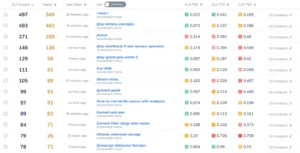
Throughout early 2026, the Web Platform Status dashboard (webstatus.dev) underwent iterative refinements to help engineering organizations track this chronology more effectively. The culmination of these efforts arrived in June with the rollout of Baseline Alerts. By integrating GitHub authentication directly into the status dashboard, engineers can now subscribe to real-time status transitions. Rather than manually auditing project dependencies, teams can configure automated notifications via email, custom RSS feeds, or Slack webhooks. These subscriptions can be filtered by specific technical domains, such as all HTML enhancements or bespoke saved searches, transforming how engineering departments plan their technical roadmaps and deprecation cycles.
Detailed Breakdown of Widely Available Features
The June 2026 milestone introduced a robust catalog of technologies to the Widely available tier, fundamentally expanding the native toolkit available to front-end architects and software engineers.
Advanced Styling and Layout Control
The :has() pseudo-class has officially cemented its status as a widely supported standard. Often dubbed the "parent selector," :has() allows developers to style an element based on what is happening inside it or among its subsequent siblings. This functional selector resolves decades-old layout challenges, enabling conditional styling paradigms directly within CSS sheets and drastically reducing the need for DOM-traversing JavaScript scripts.
Complementing this is the formal establishment of the & nesting selector. As native CSS nesting gained widespread traction, the explicit nesting anchor ensures absolute clarity and predictable specificity rules when writing complex style sheets containing pseudo-classes, hover states, and contextual modifiers.
Typography and layout precision also received boosts through the cap length unit and the counter-set property. The cap unit aligns element dimensions with the nominal height of uppercase letters, unlocking meticulous typographic alignment. Meanwhile, counter-set gives developers granular control over CSS-driven numbering sequences, streamlining the creation of complex document outlines and numbered lists.
Visual effects saw significant modernization with the stabilization of the shorthand CSS mask property and advanced mathematical functions. The mask property unifies image-based clipping layers into a concise syntax, while the pow() math function allows engineers to compute exponential scaling relationships directly within CSS declarations. Combined with expanded support for custom <easing-function> curves—including the versatile linear() function for intricate spring and bounce physics—designers can construct fluid, hardware-accelerated animations with native precision.

Performance, Media, and Rendering Optimizations
Performance optimization remains a cornerstone of the modern web, and several June 2026 updates directly target rendering overhead and network bandwidth consumption.
The HTMLIFrameElement.loading property now enjoys universal support, allowing developers to apply loading="lazy" directly to embedded frames. Browsers can now defer the loading of offscreen iframes until the user scrolls them into the active viewport, preserving critical bandwidth during initial page loads.
In the realm of graphics and media, CanvasRenderingContext2D.reset() simplifies 2D rendering workflows by allowing developers to clear transformations, clipping paths, and styles with a single method call, bypassing manual property cleanup. Similarly, createImageBitmap() enables off-main-thread image decoding from diverse sources like blobs, canvases, and standard images, preventing UI stuttering during heavy graphics rendering.
For audio and video engineering, HTMLMediaElement.preservesPitch grants developers explicit control over whether media playback rate changes alter audio frequencies, enabling pitch-shifted playback effects on demand. Furthermore, responsive preloading via the media attribute on <link rel="preload"> elements enables browsers to selectively fetch assets tailored precisely to the user’s current viewport dimensions or display characteristics.
System Detection, APIs, and Data Validation
Modern web applications demand robust environmental awareness and security controls. The @media (scripting) query now provides a reliable mechanism to detect whether client-side JavaScript is enabled in the browser, empowering developers to build truly resilient progressive enhancement strategies.
Data integrity received a boost with URL.canParse(), a static method that validates string URLs without throwing runtime exceptions, streamlining error-handling logic in complex single-page applications. Additionally, the :dir() pseudo-class enables targeted styling based on text directionality (such as left-to-right or right-to-left contexts) inherited from document architecture.
Finally, the inclusion of the Storage Access API marks a monumental victory for cross-site interoperability and privacy management. The API allows embedded third-party content within isolated iframes to request unpartitioned cookie and storage access, striking a crucial balance between modern privacy standards and legitimate cross-domain authentication workflows.
Official Responses and Industry Implications
While formal policy statements from individual browser vendors—such as Google, Apple, Mozilla, and Microsoft—frequently emphasize collaborative standards bodies like the W3C and WHATWG, the collective industry reaction to the June 2026 Baseline updates has been overwhelmingly positive.
Engineering leads across enterprise software firms note that the maturation of features like the :has() selector and native field-sizing translates directly to measurable codebase reduction. Industry analysts estimate that widespread adoption of these native primitives can eliminate up to 15% to 20% of legacy utility scripts previously required to handle dynamic UI adjustments and cross-browser layout polyfills.
Furthermore, the introduction of automated tooling like Baseline Alerts points to a broader trend within software engineering: the shift toward automated compliance and standards governance. By connecting platform status dashboards directly to developer communication channels, organizations can proactively manage technical debt, retiring obsolete workarounds the exact moment interoperability is certified.
Broader Impact and Future Outlook
The convergence of these features in mid-2026 underscores a maturation phase for the World Wide Web. As the baseline platform absorbs capabilities that once required heavy external libraries, the boundary between native web development and native application development continues to blur.
Developers are increasingly liberated from the administrative burden of cross-browser firefighting, allowing them to focus entirely on user experience, accessibility, and performance optimization. As the Baseline initiative continues its monthly cadence of cataloging interoperability, the web platform stands better equipped than ever to meet the demands of next-generation digital applications.
Teams seeking to contribute to future editions or provide feedback on the Baseline taxonomy are encouraged to participate via the official web-platform-dx GitHub repository, ensuring that the standard continues to evolve in direct alignment with the needs of the global engineering community.