The evolution of Cascading Style Sheets (CSS) has historically been defined by a tension between static declaration and programmatic flexibility. While developers have long relied on the :nth-child() pseudo-class to apply styles based on element position, this selector has remained rigidly static since its introduction. Today, the integration of CSS Style Queries and the emerging if() functional notation provides a technical pathway to transform these traditionally fixed selectors into dynamic, variable-driven engines. By leveraging sibling-index() and modern conditional logic, developers can now manipulate document structure rendering in real-time, bypassing the limitations of manual stylesheet rewrites.
The Technical Constraints of Traditional Selectors
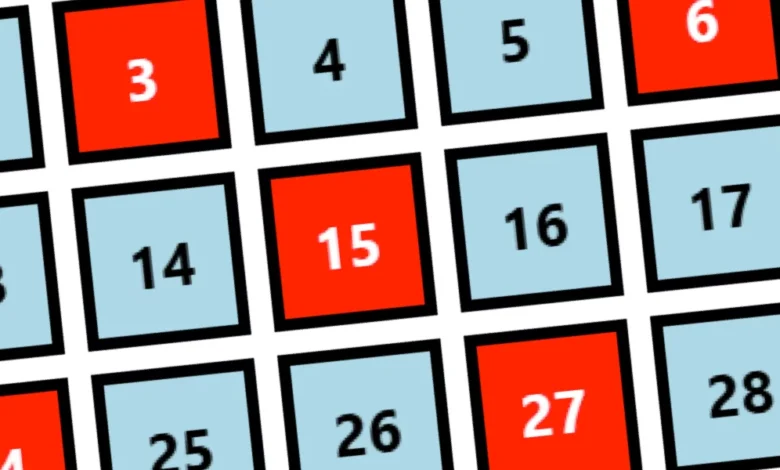
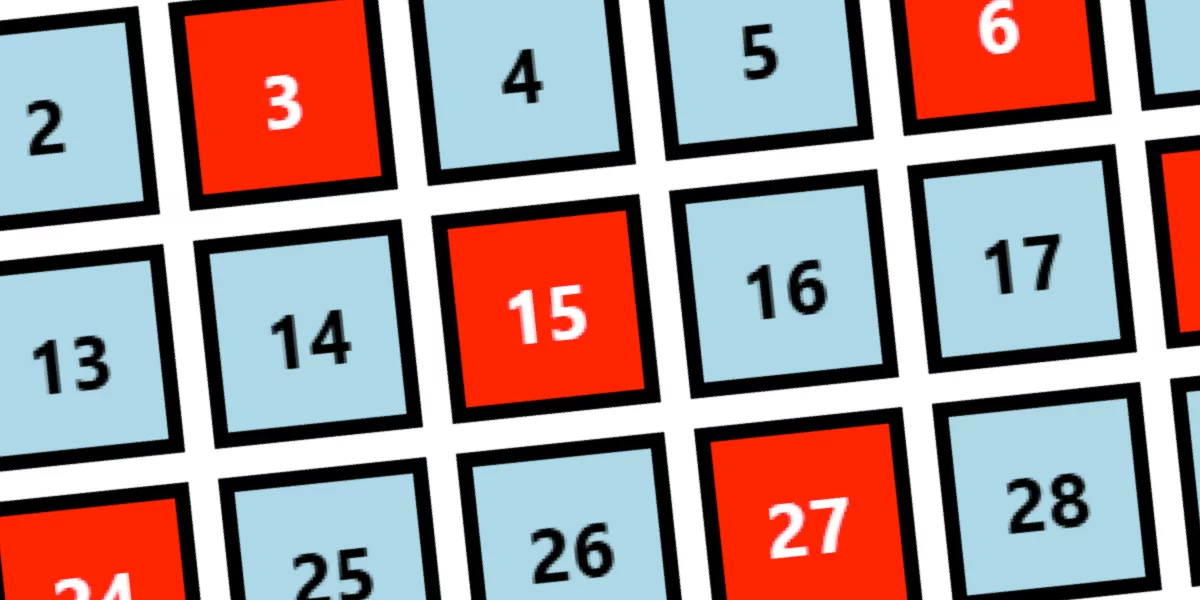
In standard CSS development, the :nth-child(An + B) selector functions as a hard-coded instruction. For example, a directive such as div:nth-child(5n + 8) instructs the browser to apply a specific background color to every fifth element starting from the eighth index. This approach is highly performant but lacks agility; if a design requirement changes—necessitating, for instance, that the cycle shift from five to six—the developer must manually locate and edit the source code.
This limitation is not merely a matter of convenience; it represents a significant hurdle in the development of responsive design systems. In complex applications where component properties are dictated by external data or dynamic user inputs, the inability to pass CSS variables directly into a pseudo-class argument creates a maintenance bottleneck. The proposed solution involves migrating the logic from the selector string itself into the property declaration layer, using custom properties (CSS variables) as inputs for a conditional rendering engine.
Chronology of the CSS Conditional Paradigm
The capability to implement dynamic selection did not arrive overnight. It is the culmination of several iterative advancements in the CSS specification:
- Introduction of Custom Properties (CSS Variables): This provided the baseline for storing values that could be inherited and modified at runtime.
- Container Style Queries: Initially designed to allow styles to respond to the state of a container, these queries opened the door to inspecting the internal state of elements.
- Sibling Index Functionality: The implementation of
sibling-index()allowed elements to become "aware" of their own position within a parent, a prerequisite for any mathematical filtering. - The if() Functional Notation: The most recent development, currently in the experimental phase, enables inline ternary-style operations within property values.
By synthesizing these features, developers can now create a system where the "selector" is essentially a function that evaluates whether a given index satisfies a mathematical condition.
Theoretical Implementation and Logic
To replicate the functionality of :nth-child(B)—selecting a specific index—the modern approach utilizes the if() syntax combined with style() queries. By setting a custom property such as --B: 5 on the parent container, individual child elements can query their own sibling-index() against that variable.
The syntax follows this structural logic:
background: if(style(sibling-index() = var(--B)): red; else: lightblue);
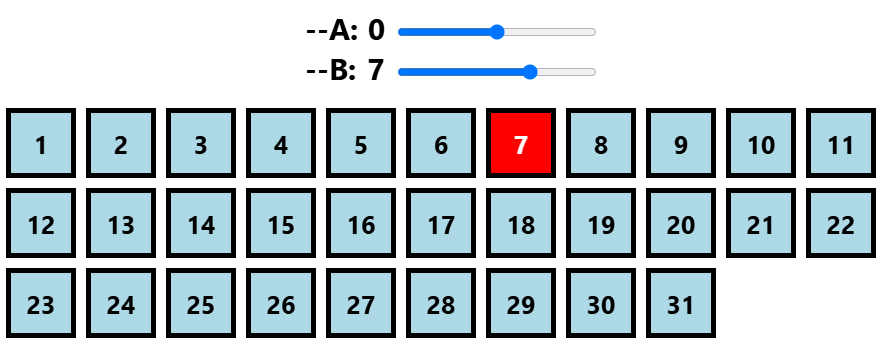
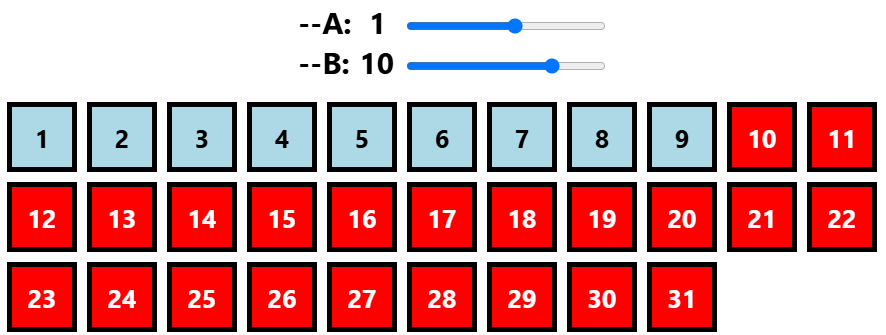
This approach effectively decouples the style definition from the element’s absolute position. When the value of --B is updated via JavaScript or a stylesheet change, the browser re-evaluates the condition for every child, triggering an immediate repaint of the affected elements. This method is not limited to simple equality. By utilizing standard operators like >=, <=, and the mod() function, developers can achieve the full range of :nth-child patterns, including parity (even/odd), ranges, and complex cycles.
Mathematical Accuracy and Edge Cases
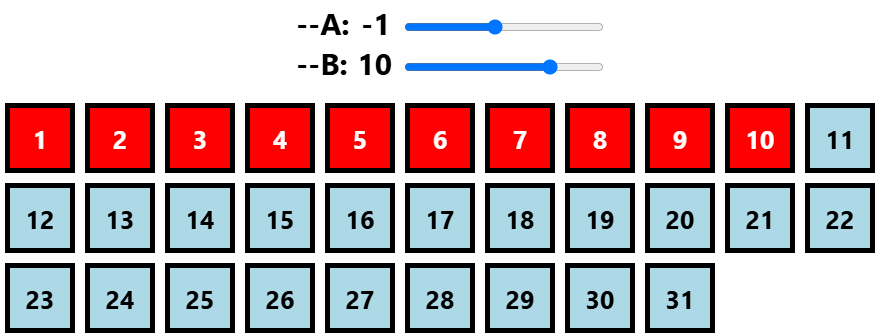
The transition from native pseudo-classes to custom conditional logic requires rigorous mathematical handling. Native :nth-child selectors are inherently optimized by browser engines; custom implementations using mod() must account for potential edge cases, such as zero-values or negative integers, which can return unexpected results.
For example, when implementing An + B logic, the formula requires checking that the index satisfies (index - B) / A >= 0 and that the division yields a remainder of zero. In early testing, developers found that a direct implementation of mod(index - B, A) = 0 could return erroneous results if A is zero or if the index is smaller than B. To mitigate this, advanced implementations now employ a "gatekeeper" variable approach, where a secondary CSS variable is calculated to confirm the validity of the index before the final style is applied. This prevents the "NaN" (Not a Number) errors that occur when a divisor is zero, ensuring the rendering engine remains stable.
Industry Implications and Performance Considerations
The shift toward dynamic CSS selectors has significant implications for design systems and component libraries. By allowing developers to modify layout patterns through variable updates, CSS becomes a more robust interface for data-driven applications.
However, experts note that this is not a universal replacement for standard pseudo-classes. Native selectors remain faster and are optimized by the browser’s CSS parser at the pre-render stage. The proposed dynamic method, while powerful, involves the evaluation of style queries for every child element, which may introduce overhead in documents containing thousands of nodes.
"The power of this technique lies in its ability to enable highly specialized, interactive layouts without resorting to DOM manipulation or class-toggling via JavaScript," says a lead developer in the CSS working group discussions. "It shifts the logic to the browser’s engine, where it belongs, provided the scale remains manageable."
Future Outlook: The Role of Sibling-Count
The next phase of this development involves the integration of sibling-count(). While sibling-index() allows an element to know its place, sibling-count() will allow it to know the total size of its parent’s collection. This will enable even more advanced dynamic behaviors, such as :nth-last-child() logic, where the selection order is reversed.
If a developer wants to select the last three items in a dynamic list, they would need to calculate the difference between the total count and the current index. This calculation is theoretically possible today with existing browser support for calc() and custom properties, but it requires the manual passing of the count value to the elements. Future native support for these functions will likely streamline this process, making the "dynamic selector" pattern a standard tool in the professional front-end developer’s kit.
Conclusion
The experiment of re-implementing :nth-child() serves as a profound demonstration of the current capabilities of the CSS language. By moving beyond the static nature of standard selectors, developers can gain unprecedented control over document layout. While these techniques are currently at the bleeding edge of web development, they represent a broader trend: the movement of complex business and layout logic into the declarative layer of the web. As browsers continue to optimize these features, the ability to create truly dynamic, responsive, and data-aware CSS will become a fundamental requirement for modern web architecture, marking a departure from the rigid structures of the previous decade.