Top 5 Lightspeed eCom Alternatives for Retailers Transitioning to Modern Ecommerce Solutions


The retail landscape has undergone a profound transformation over the last decade, shifting from siloed physical storefronts to integrated omnichannel ecosystems. As businesses increasingly prioritize digital scalability, many retailers are re-evaluating their reliance on legacy platforms. Lightspeed eCom, once a staple for brick-and-mortar merchants, has transitioned into a bundled component of the broader Lightspeed Retail suite. This shift, which mandates a higher entry price—starting at approximately $89 per month—has prompted many business owners to seek more cost-effective and agile alternatives that offer superior online store capabilities.
The evolution of retail technology has reached a point where "omnichannel" is no longer a luxury but a requirement. For many, the decision to migrate away from Lightspeed is driven by the realization that their business has outgrown the platform’s retail-centric focus. While Lightspeed excels in inventory management for physical locations, its digital storefront tools often lag behind competitors that were built as "digital-first" solutions. The migration process, while daunting, has become significantly more accessible through automated tools, allowing merchants to preserve their historical data while moving to platforms better suited for modern e-commerce demands.

The Strategic Shift in Retail Management
To understand why retailers are migrating, one must look at the structural changes within the market. In the past, Lightspeed eCom served as a standalone bridge for physical retailers looking to enter the digital space. By folding eCom into the core Lightspeed Retail subscription, the company has effectively repositioned its product as an enterprise-grade solution for complex, multi-location operations. For small-to-medium businesses (SMBs) that do not require deep supply-chain automation or sophisticated multi-location purchasing tools, this bundled pricing model presents a financial bottleneck.
Furthermore, the consumer expectation for a seamless, mobile-responsive, and high-performance digital shopping experience has intensified. Platforms that treat e-commerce as an secondary add-on to a Point-of-Sale (POS) system often struggle to provide the same level of UI/UX design, SEO optimization, and third-party app integration as dedicated e-commerce builders. Consequently, retailers are prioritizing platforms that offer a more robust digital ecosystem, even if it requires a shift in how they manage their physical inventory.
Comparative Analysis of Leading Alternatives
The market for e-commerce platforms is currently dominated by five key players, each offering a distinct value proposition for migrating merchants.

1. Shopify: The Gold Standard for Omnichannel Growth
Shopify has emerged as the most direct successor for those leaving Lightspeed. Its architecture is fundamentally designed to bridge the gap between in-store and online operations. By leveraging the Shopify POS system, merchants can maintain a unified customer and inventory database.
Data from recent industry reports indicates that Shopify’s app ecosystem is currently the largest in the sector, housing thousands of plugins that allow for custom feature implementation without the need for manual coding. While the platform utilizes a section-based editor that provides less "drag-and-drop" freedom than some competitors, its reliability and scalability make it the top recommendation for growing brands. The entry-level Basic plan, priced at $29 per month (billed annually), provides a significant cost reduction compared to the Lightspeed baseline.
2. Square Online: Efficiency for Budget-Conscious Retailers
For smaller retailers who find the overhead of Lightspeed prohibitive, Square Online offers a compelling "freemium" model. Square has successfully integrated its POS with its e-commerce engine, creating a seamless experience where online and offline sales are tracked in one place.

The primary benefit here is the elimination of monthly platform fees for the entry-level tier. Retailers only incur costs through standard payment processing, which is 2.9% + $0.30 per online transaction. However, the trade-off for this cost-efficiency is a reduction in design complexity and advanced inventory reporting. Square is best suited for cafes, boutique shops, and local retailers who prioritize simplicity over deep analytical granularity.
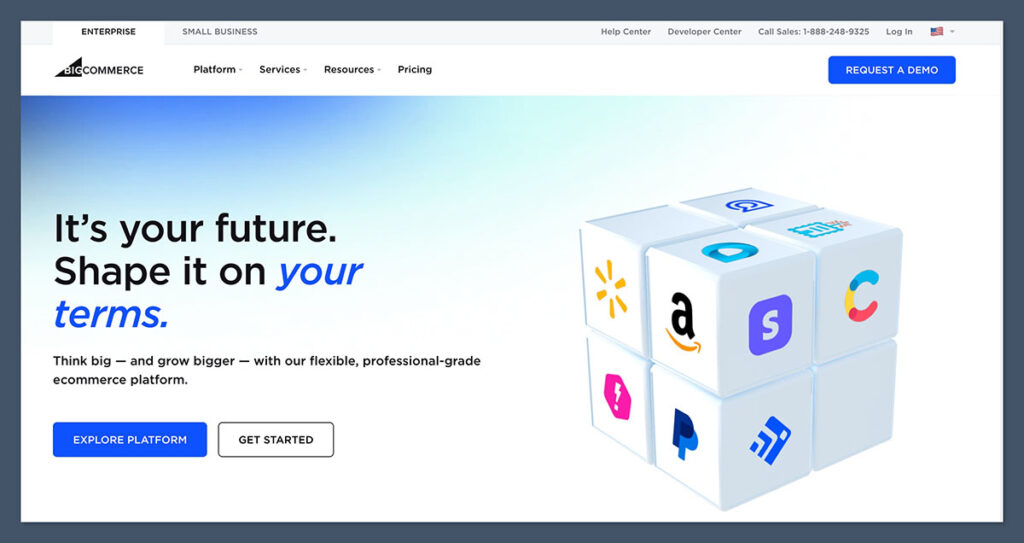
3. BigCommerce: The Powerhouse for Large Inventories
When a retailer’s primary challenge is catalog size—such as those managing thousands of SKUs with complex variants—BigCommerce is often the preferred destination. Unlike many of its competitors, BigCommerce includes most essential e-commerce features (such as multi-currency support and advanced filtering) natively within its subscription.
A key advantage for high-volume merchants is BigCommerce’s lack of platform-based transaction fees. Regardless of the payment gateway chosen, the platform does not take an additional percentage, which can lead to substantial savings for businesses processing significant revenue volumes. While it lacks a native POS system, its robust API allows for smooth integration with third-party POS solutions, making it an ideal "online-first" choice that can accommodate physical retail needs.

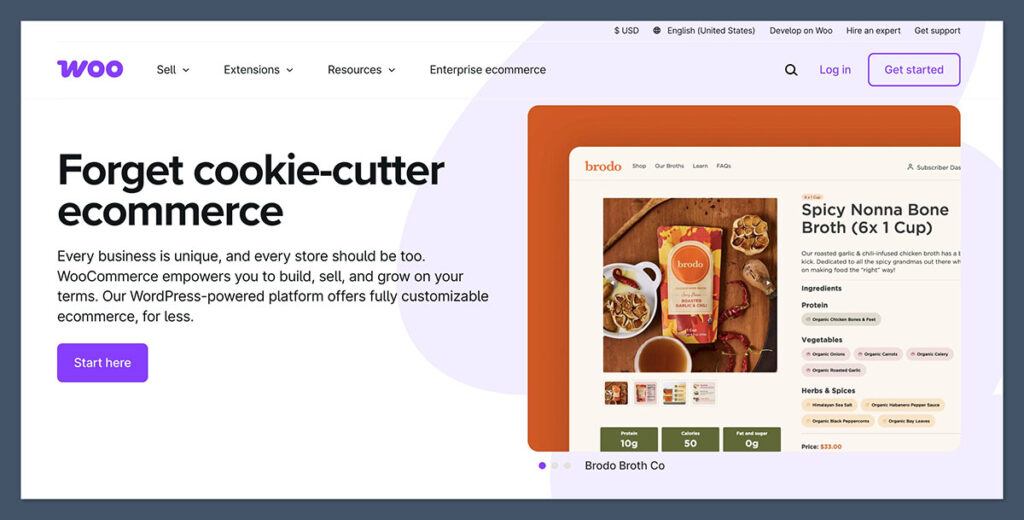
4. WooCommerce: The Developer’s Choice for Total Control
WooCommerce represents a fundamental departure from the "Software-as-a-Service" (SaaS) model. As an open-source plugin for WordPress, it provides the merchant with complete ownership of their code, data, and design. For retailers with internal technical expertise or those who require highly bespoke storefronts, this platform offers unparalleled freedom.
The cost structure of WooCommerce is highly variable. While the plugin is free, the total cost of ownership includes web hosting, security certificates, and premium extensions. Historically, WooCommerce has been the platform of choice for businesses that want to avoid the "walled garden" approach of SaaS providers. However, it requires a higher degree of maintenance, as the user is responsible for site performance, security updates, and backups.
5. Wix: Design-Led Simplicity
Wix has aggressively moved into the e-commerce space, focusing on businesses that prioritize aesthetics and brand identity. With its AI-driven site builder and drag-and-drop editor, Wix allows users to create visually stunning storefronts with minimal technical knowledge.

While its retail capabilities are not as deep as Lightspeed or BigCommerce, it is an excellent fit for small, design-conscious retailers. The platform includes a POS system (currently US-centric) and a suite of marketing tools that are integrated directly into the dashboard. For the merchant who views their website as a digital storefront and a marketing asset, Wix provides a low-barrier-to-entry solution starting at $29 per month for the Core e-commerce plan.
Technical Considerations for Migration
The transition from a legacy system to a new e-commerce provider is a complex technical process. Most experts advise a phased migration approach to ensure data integrity. The chronology of a successful migration typically follows this sequence:
- Data Audit: Before moving, merchants must conduct a full audit of their product catalog, customer lists, and order history.
- Backup and Export: Extracting data from Lightspeed into a CSV or XML format is the standard first step.
- Staging Environment: Setting up the new platform and importing a test batch of products allows the retailer to verify that descriptions, pricing, and tax settings remain accurate.
- Parallel Operations: Running the new store alongside the old system for a period of 48 to 72 hours ensures that all payment gateways and shipping configurations are functioning correctly before the final switch.
- DNS Cutover: Updating the domain name system (DNS) records to point the existing website URL to the new platform marks the final phase of the transition.
Retailers should note that automated migration services, such as Cart2Cart or LitExtension, are frequently used to bridge the gap between these platforms. These services can transfer product images, meta-tags, and customer passwords, which manual CSV imports often struggle to handle.
Implications for the Future of Retail
The broader implication of this market shift is the commoditization of the digital storefront. As e-commerce platforms compete for market share, they are increasingly providing enterprise-level tools to SMBs at lower price points. This democratization of technology means that even small retailers can now leverage features—such as AI-powered product recommendations, automated abandoned cart recovery, and sophisticated loyalty programs—that were once reserved for major corporations.
Furthermore, the rise of "headless" commerce, where the frontend design is decoupled from the backend inventory management, is becoming more prevalent. Platforms like BigCommerce and Shopify are leading this charge, offering developers the ability to build custom experiences that are not constrained by traditional templates.
Conclusion and Strategic Recommendations
The decision to migrate from Lightspeed eCom should be dictated by the business’s primary objective. If the goal is a seamless, all-in-one transition that preserves the "in-store + online" workflow, Shopify remains the industry benchmark. For retailers burdened by high overhead, Square Online offers an immediate path to profitability through its free-to-use infrastructure. Large-scale merchants with complex inventories should look toward BigCommerce for its feature-rich environment, while those seeking total creative control will find their home in the WooCommerce ecosystem. Finally, for the design-obsessed entrepreneur, Wix offers the most intuitive user experience.
Regardless of the choice, the migration process is an opportunity to streamline operations and update digital assets. By moving away from a legacy platform that no longer aligns with their business model, retailers can shed unnecessary costs and invest in the tools necessary to thrive in an increasingly competitive digital marketplace. As with any significant technology upgrade, the key to success lies in thorough preparation, a clear understanding of long-term operational needs, and the utilization of the trial periods that each of these platforms provides.