ChatGPT Search Volume Approaches One-Fifth of Google’s Scale According to OpenAI Leadership

The landscape of digital information retrieval is undergoing a significant transformation as artificial intelligence platforms increasingly position themselves as viable alternatives to traditional search engines. In a recent disclosure that underscores the rapid evolution of user behavior, Adam Fry, the consumer product lead at OpenAI, revealed that ChatGPT now facilitates approximately one-fifth of the search-like query volume handled by Google. This data point, shared during a private discussion hosted by OpenAI in New York and subsequently reported by Big Technology, offers a rare glimpse into the internal metrics of one of the world’s most influential AI developers.
As ChatGPT evolves from a generative text tool into a comprehensive information portal, the methodology for measuring its impact remains a subject of intense debate among industry analysts. Fry’s revelation highlights the emergence of a new paradigm where the definition of a "search" is shifting from a list of blue links to a conversational, synthetic output.
Defining the Search Metric: How OpenAI Quantifies Engagement
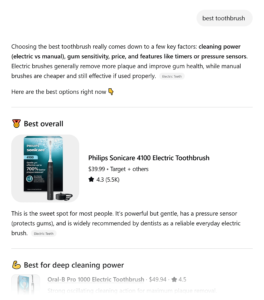
The comparison between Google and ChatGPT is inherently complex due to the disparate architectures of their platforms. For Google, a search is a discrete event where a user inputs a query and receives a search engine results page (SERP). For OpenAI, the process is integrated into a multi-turn conversation. Fry clarified the company’s internal accounting during the recent event, stating that OpenAI counts a search every time a user’s prompt necessitates an automated query to the live web to retrieve current information.
This distinction is crucial. ChatGPT was initially adopted by users primarily for creative tasks—coding, drafting emails, and brainstorming—that did not require real-time web access. However, the platform’s utility has pivoted significantly over the past year. As users increasingly rely on the model for inquiries regarding finance, health, and real-time events, the proportion of prompts requiring external web verification has climbed. Fry noted that this shift mirrors the intent behind traditional search engine usage, marking a convergence in the user experience of AI chatbots and legacy search portals.
The Growth Trajectory and Market Context
The scale of this shift is corroborated by recent growth figures. Reports from Big Technology indicate that ChatGPT’s weekly active user base surged by 20% in just two months, moving from 1 billion to 1.2 billion users. This massive adoption rate suggests that the "search-like" query volume is not merely a byproduct of existing users experimenting, but a reflection of a fundamental change in how a billion people seek information.
While OpenAI has not disclosed the specific Google volume baseline, the time frame of the comparison, or the geographic coverage of its data, the claim that ChatGPT is operating at 20% of Google’s scale invites comparisons to other search giants. Industry observers are now questioning whether this volume makes ChatGPT significantly larger than Microsoft’s Bing, which has struggled to capture a dominant market share despite its integration of OpenAI’s technology. The implication is clear: OpenAI is rapidly maturing into a primary gateway for the internet, potentially bypassing the traditional search funnel altogether.
Divergent Perspectives: Outside Data and Referral Traffic
While OpenAI’s internal metrics paint a picture of significant search volume, third-party data providers offer a different vantage point. In February, Ahrefs, a prominent SEO and digital marketing data firm, estimated that ChatGPT’s search volume was roughly 12% of Google’s. Their methodology differed fundamentally from OpenAI’s; it was based on an analysis of 2.5 billion daily prompts, where researchers identified that approximately 65% of these prompts were "search-like" in nature.
The discrepancy between the 20% figure cited by Fry and the 12% estimate by Ahrefs highlights the difficulty of establishing a universal metric for AI interaction. Ahrefs’ analysis is based on the nature of the prompt, whereas OpenAI’s metric is based on the execution of a web search operation.
Furthermore, a critical divergence exists when measuring "referral traffic"—the actual number of users who click through from a search interface to a third-party website. According to Ahrefs’ Web Analytics data from October, which tracked traffic across over 118,000 websites, Google accounted for 24.74% of traffic, while ChatGPT was responsible for only 0.36%. This highlights a critical limitation in the current AI search model: while users may be getting their answers directly from the AI, they are not necessarily visiting the source websites that provide the underlying information. This "zero-click" phenomenon poses a structural threat to the digital publishing ecosystem, which relies on referral traffic to survive.
Google’s Response to the AI Inflection Point
Alphabet, Google’s parent company, has maintained a confident stance in the face of these challenges. During the company’s third-quarter earnings call on October 28, CEO Sundar Pichai addressed the impact of AI on search, suggesting that the integration of AI-driven features—such as AI Overviews—has not cannibalized their business but rather expanded it.
Pichai reported that Google’s year-over-year query growth rate is currently at its highest point in five years. This suggests that while ChatGPT is indeed capturing a significant share of "search-like" queries, the total "pie" of global search volume is expanding. AI, according to Google, is enabling users to ask more complex questions that they previously would have deemed too difficult or time-consuming for a standard search engine.
Implications for the Digital Economy and SEO
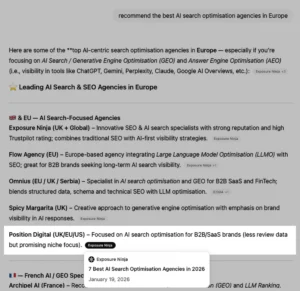
The rise of AI search platforms like ChatGPT has profound implications for digital marketing, content creation, and web economics. If one-fifth of search-like queries are moving to a closed-loop AI environment, the traditional "Search Engine Optimization" (SEO) playbook is effectively being rewritten. Businesses that have spent decades optimizing their sites for Google’s crawlers now face an environment where their content might be ingested to train a model or used to generate a direct answer, rather than driving a visit.
The current landscape demands a two-tiered measurement approach. Organizations must track:
- Query Volume: The number of requests being processed by the platform, which tells us how many users rely on the AI as an information source.
- Referral Traffic: The actual volume of users sent to external sites, which determines the economic health of the broader internet.
As OpenAI continues to iterate on its search capabilities, the lack of transparency regarding their comparison metrics remains a hurdle for researchers. Without a standardized definition of what constitutes a "search" in the era of generative AI, comparing Google and ChatGPT is akin to comparing a library to a librarian. The former offers a vast directory of sources, while the latter synthesizes the information into a single, summarized response.
Future Outlook: The Convergence of Search and Synthesis
Looking ahead, the tension between AI platforms and search engines will likely intensify. OpenAI’s attempt to quantify its search volume is a signal of its intent to compete directly with Google for user attention. However, as Ahrefs’ referral data shows, there is still a massive gap between answering a question and directing users to a destination.
The industry is watching closely to see if OpenAI will eventually move toward a more "referral-heavy" model to appease publishers and regulators, or if the "zero-click" AI experience will become the industry standard. For now, the roughly 1/5th ratio serves as a benchmark for the scale of the disruption. As the technology continues to evolve, the distinction between "searching" for information and "asking" for information will likely disappear entirely, leaving a new, consolidated market that will require entirely new metrics to measure.
The next twelve months will be critical. If ChatGPT’s search volume continues to climb while referral traffic remains stagnant, the conflict between AI developers and the web’s content creators will likely reach a breaking point. Conversely, if Google can successfully integrate its AI capabilities without losing its position as the primary driver of web traffic, the status quo may hold for the foreseeable future. Either way, the numbers provided by OpenAI leadership serve as a clear warning to the status quo: the era of the traditional search engine is no longer the sole arbiter of the world’s information flow.