The Decline of Upwork for WordPress Developers and the Strategic Pivot Toward Sustainable Networking

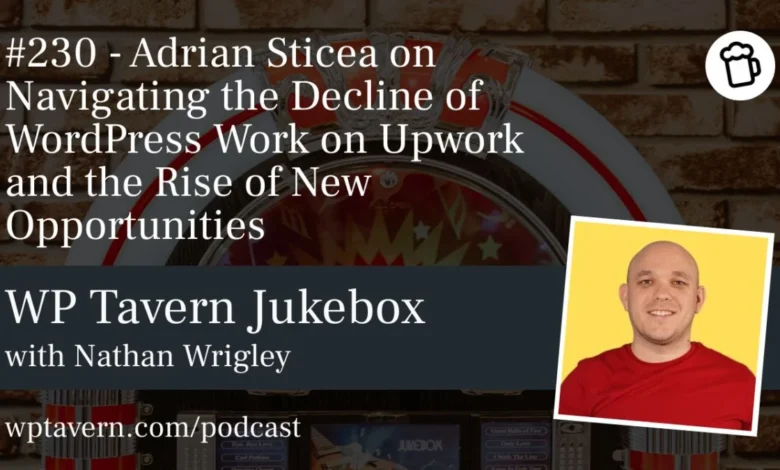
The landscape of freelance web development has undergone a seismic shift, particularly for professionals deeply embedded in the WordPress ecosystem. Recent data shared by industry veteran Adrian Sticea has brought this transformation into sharp relief, revealing a dramatic, multi-year decline in project volume for WordPress developers on the freelance marketplace Upwork. Sticea, whose career spans over a decade of enterprise-level development including tenure at IBM and StellarWP, documented a near-total evaporation of his lead pipeline on the platform, a trend that appears to mirror the experiences of numerous other independent contractors globally. This shift marks a pivotal moment for the gig economy, raising critical questions about the sustainability of platform-dependent freelancing and the evolving nature of digital labor in the age of artificial intelligence.
A Chronology of Platform Reliance and Decay
Adrian Sticea’s professional journey serves as a microcosm of the broader freelance WordPress market. Having specialized in WordPress since 2013, Sticea successfully utilized Upwork as his primary engine for lead generation for nearly a decade. During the period between 2015 and 2020, his project volume remained consistent, with the marketplace acting as a reliable, high-volume source of income.
However, the trajectory began to change in 2022. According to data provided by Sticea, his lead volume from the platform saw a 20% contraction that year. This decline accelerated significantly in 2023 and 2024, culminating in a total depletion of project leads by early 2025. This timeline aligns with the broader economic tightening in the tech sector and the rapid integration of Generative AI tools into the standard software development lifecycle. For many developers who relied on Upwork as a "fountain of work," the transition from a steady stream of incoming contracts to a stagnant, competitive wasteland has forced an immediate re-evaluation of their business models.
The Impact of AI and Market Commoditization
The core of the issue lies in a complex convergence of technological and economic factors. While many observers have reflexively blamed artificial intelligence for the collapse, a more nuanced analysis suggests that AI acts as an accelerator rather than a sole cause. The rise of large language models (LLMs) has increased the efficiency of existing development teams, allowing them to produce more code in less time. Consequently, the demand for additional headcount to complete routine tasks has diminished.
Furthermore, the nature of the work requested on platforms like Upwork has shifted. While demand for simple, brochure-style website builds persists, complex, enterprise-grade, or plugin-specific development—the bread and butter of experienced professionals like Sticea—has migrated away from public bidding marketplaces. Clients seeking high-level expertise are increasingly turning toward pre-vetted agencies, boutique consultancies, and private recruitment networks. This move away from "open market" bidding reflects a growing preference for risk mitigation and verified professional pedigree over the lower-cost, high-competition model that defines platforms like Upwork.
Institutional Shifts and the Rise of Professional Vetting
The exodus of high-value projects from Upwork is indicative of a broader trend toward professionalized talent acquisition. Industry experts note that as the barrier to entry for "web development" has lowered due to no-code platforms and AI-assisted coding, the market has become saturated with entry-level providers. This saturation makes it difficult for premium developers to distinguish themselves on price-sensitive platforms.
As a result, companies are pivoting toward organizations such as Toptal or utilizing specialized temp agencies and headhunters to source talent. These entities provide a layer of quality assurance that open marketplaces lack. By pre-vetting developers, these agencies offer clients a guarantee of competency that is particularly vital when dealing with complex, legacy, or mission-critical WordPress infrastructure. This transition effectively creates a two-tiered system: a commoditized tier for basic web tasks and an elite, relationship-driven tier for complex technical projects.
The Economics of Networking and Client Acquisition
The primary lesson emerging from this shift is the inherent danger of "platform dependency." For many freelancers, the convenience of a centralized dashboard for finding work, managing contracts, and receiving payments was sufficient to ignore the long-term risks. However, as the data shows, when a marketplace changes its algorithm, fee structure, or user base, those who have outsourced their business development to the platform are left vulnerable.
Sticea’s pivot, which has been successful in maintaining his income, highlights the importance of traditional networking. By shifting his focus toward LinkedIn, direct outreach to agency partners, and building relationships with recruiters, Sticea has moved his business from a "transactional" model to a "relational" one. This approach, while more labor-intensive in the initial phases, yields significantly higher returns in terms of project complexity, client longevity, and professional reputation. Unlike the ephemeral nature of an Upwork contract, which often ends as soon as the project is delivered, relationship-based work fosters a cycle of referrals and repeat business that is more resilient to market volatility.
Implications for the WordPress Ecosystem
The WordPress industry is currently at a crossroads. As the platform matures and competes with modern site builders and JavaScript-based stacks, the professional development sector must adapt to changing client expectations. The demand for "vibe coding"—a colloquialism for rapid, AI-assisted development—has created a segment of the market that prioritizes speed and cost over technical depth and long-term maintainability.
However, for established professionals, the market is not disappearing; it is migrating. There remains a persistent, high-value demand for developers who understand the technical debt, security requirements, and architectural nuances of large-scale WordPress installations. The decline in Upwork volume is a signal that the "easy money" era of simple, platform-supplied gigs is fading. In its place, a more rigorous, networking-heavy professional landscape is emerging.
Strategic Recommendations for Freelancers
For professionals currently feeling the squeeze of declining marketplace leads, the data suggests a three-pronged strategy:
- Diversification of Revenue Sources: Relying on a single platform is a structural weakness. Developing a presence on multiple platforms or, preferably, building a standalone digital footprint, is essential for long-term stability.
- Focus on High-Value Complexities: As AI commoditizes basic tasks, freelancers must move up the value chain. Specializing in legacy code maintenance, complex plugin architecture, or high-security integrations provides a competitive moat that automated tools cannot easily bridge.
- Cultivation of Professional Relationships: Testimonials, direct referrals, and partnerships with established agencies are the most durable assets a freelancer can own. Investing time in human connection—whether via LinkedIn or local industry events—is no longer optional; it is the fundamental requirement for sustaining a career in the current technical environment.
Conclusion: A Maturing Market
The decline of Upwork as a primary income source for experienced WordPress developers is not the end of the profession, but rather a maturation of the market. As the barriers to basic entry fall due to automation, the premium on human expertise, verified experience, and strategic relationships increases. Professionals who can successfully transition from the "commodity bidder" model to the "trusted consultant" model are likely to find that the work has not disappeared—it has simply moved to a more sophisticated, and ultimately more rewarding, arena. The era of the platform-dependent freelancer is giving way to the era of the networked consultant, a shift that promises to reward those who prioritize long-term value over short-term transaction volume.