Synup Review: Leveraging AI-Driven Automation to Streamline Agency Local Marketing Operations

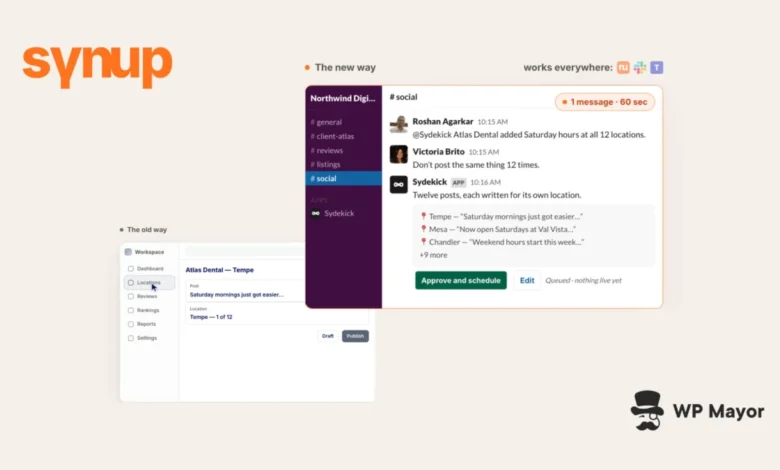
Managing a digital marketing agency in the modern era presents a persistent paradox: while securing recurring revenue from client contracts is the foundation of business stability, the operational burden of maintaining those accounts often stifles scalability. Agencies are frequently tasked with the manual, repetitive maintenance of business listings, the constant monitoring of consumer reviews, the execution of social media calendars, and the generation of performance reports. This labor-intensive cycle can erode profit margins and limit the capacity for strategic growth. Synup, through its AI-powered agent known as Sydekick, has emerged as a technological solution designed to automate these granular, high-volume tasks, effectively decoupling agency headcount from client output.

The Evolution of Local Marketing Automation
The local marketing landscape has grown exponentially more complex over the past decade. With the proliferation of platforms such as Google Business Profile, Yelp, Bing Places, and various industry-specific directories, maintaining "NAP" (Name, Address, Phone) consistency is no longer a simple data entry task; it is a critical component of local SEO. Historically, agencies relied on manual updates or expensive, static software-as-a-service (SaaS) platforms that provided visibility but lacked the ability to execute meaningful, proactive changes across multiple client locations simultaneously.
The integration of Generative AI into this workflow marks a significant shift. By employing an AI agent—in this case, Sydekick—agencies are moving from a "tool-based" approach, where a human directs a software interface, to an "agent-based" approach, where an autonomous system interprets instructions and executes multi-step processes. This shift mirrors broader trends in the SaaS sector, where the goal is to reduce the "time-to-action" for routine administrative tasks.

Understanding the Sydekick AI Framework
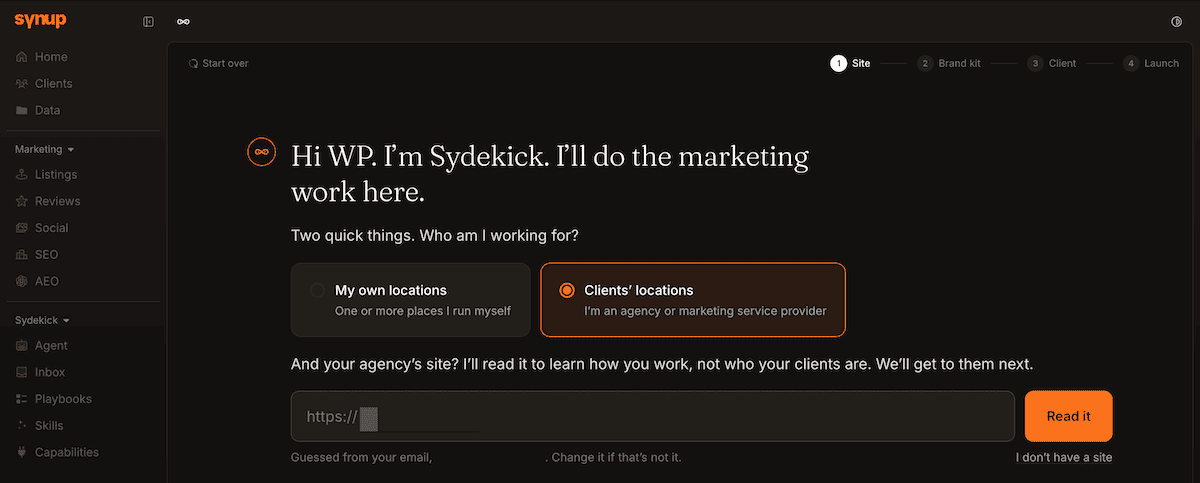
At the heart of the Synup platform is Sydekick, an AI-driven interface designed to interact with existing marketing ecosystems. The agent functions via a dual-mechanism system: Skills and Playbooks.
Skills represent discrete, repeatable capabilities—such as updating a business’s operating hours across fifty locations or drafting a response to a specific customer review. Playbooks, conversely, are multi-step, logic-driven workflows that can be triggered by specific events. For instance, a "Review Management" playbook could be configured to automatically draft responses to positive reviews while flagging negative feedback for human intervention, all while maintaining a brand-specific tone of voice stored within the system’s memory.

This memory component is perhaps the most vital feature for agency scalability. Synup allows users to store institutional knowledge at the agency, client, or location level. By feeding the agent specific guidelines, brand personas, or historical data, the system becomes increasingly accurate over time. This reduces the frequency of human oversight required for recurring tasks, allowing account managers to shift their focus toward high-level strategy and client acquisition rather than back-end administrative maintenance.
Strategic Pricing and Resource Allocation
Synup’s pricing model reflects a focus on enterprise-grade scalability. Unlike platforms that gate features behind higher tiers, Synup provides full functionality across its entire pricing structure. The differentiation between tiers is based on operational volume, such as the number of managed locations, the capacity for parallel agent chats, and the allocation of "agent credits."
These credits serve as the currency of the platform, funding metered actions including web scrapes, SEO lookups, content generation, and database updates. For agencies, this model offers a distinct advantage: cost predictability. By monitoring the "effective rate per location," agencies can accurately bake the cost of automation into their own service-level agreements (SLAs), ensuring that the technology does not become a hidden drain on their margins.
Furthermore, the platform offers both shared and dedicated environments. This choice allows agencies to balance costs with security and performance requirements. For smaller agencies or those testing the platform, a shared environment is often sufficient. However, for agencies managing sensitive data for high-stakes enterprise clients, the dedicated environment provides the necessary infrastructure isolation to meet compliance and performance standards.
Integration and Technical Implementation
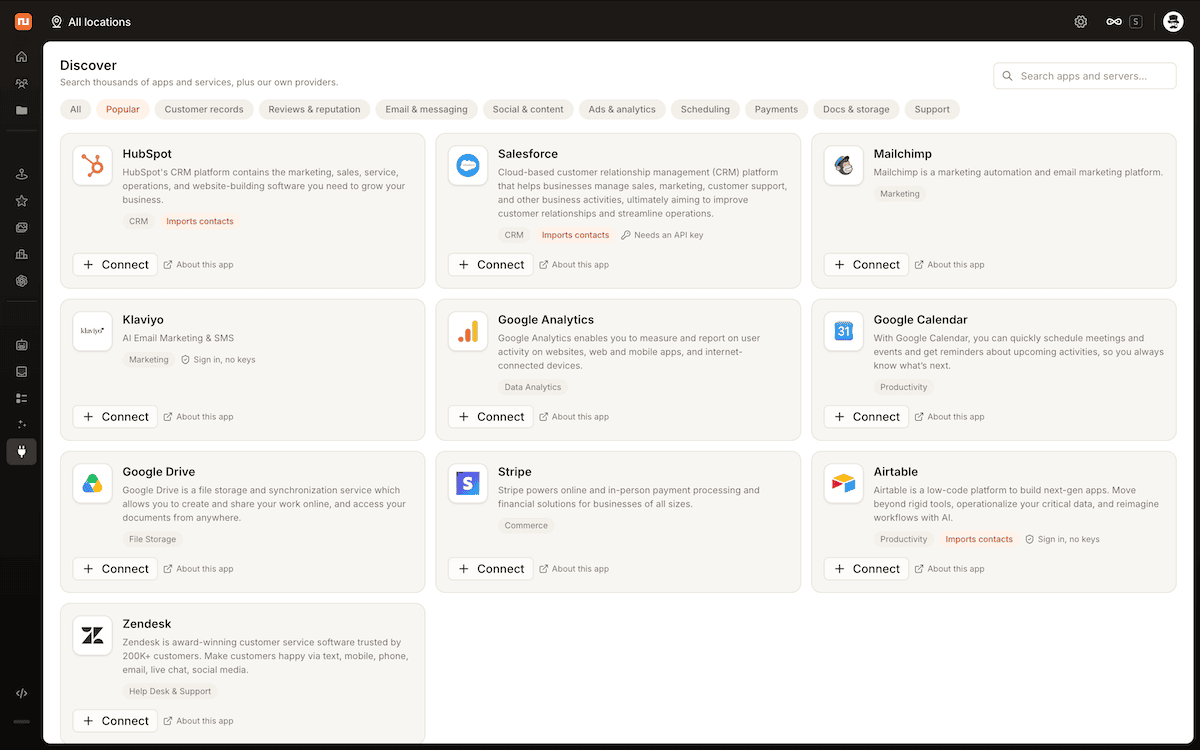
The platform’s "Capabilities" screen acts as a central hub for third-party integrations. While Synup does not currently offer a native WordPress plugin, it provides robust support for Model Context Protocol (MCP) servers. This allows users to connect Synup to a wide variety of external tools and proprietary databases.
For agencies heavily invested in the WordPress ecosystem, this flexibility is crucial. By utilizing an MCP server, an agency can create a direct bridge between their local marketing automation and their content management systems. Technical analysts recommend that agencies initiating these connections start with read-only access. This "least privilege" approach ensures that while the agent can ingest data for reports or audit purposes, it cannot inadvertently modify live web content until the agency has fully verified the agent’s reliability in their specific environment.

Operational Transparency and Security
One of the primary concerns regarding the adoption of autonomous agents is the risk of "runaway" automation—the fear that an AI might post inappropriate content or delete essential data. Synup addresses this through a robust audit logging system and granular autonomy settings.
The "Agent Audit Logs" provide a comprehensive trail of every action taken by the AI. This is essential for accountability, particularly when managing multiple clients with distinct brand guidelines. Furthermore, the autonomy settings provide a "human-in-the-loop" override. Agencies can set specific modules to require manual approval, creating a safety net for high-visibility tasks like social media publishing or reputation management responses. This tiered approach to control allows agencies to scale their automation gradually, granting more autonomy to the AI only as trust in its output is established.

Analysis of Impact and Industry Implications
The introduction of tools like Synup represents a broader, tectonic shift in how digital agencies operate. The traditional agency model—which is heavily labor-intensive and linear—is increasingly unsustainable in a market where profit margins are being compressed by the democratization of AI.
Data from recent industry reports suggests that agencies adopting AI-driven automation for routine tasks see a reduction in operational overhead of between 20% and 40%. By automating the "low-value, high-frequency" tasks of listing management and review moderation, agencies are not just saving time; they are increasing the consistency of their output. A human worker, regardless of skill, is subject to fatigue and inconsistency; an AI agent, when properly configured, is not.
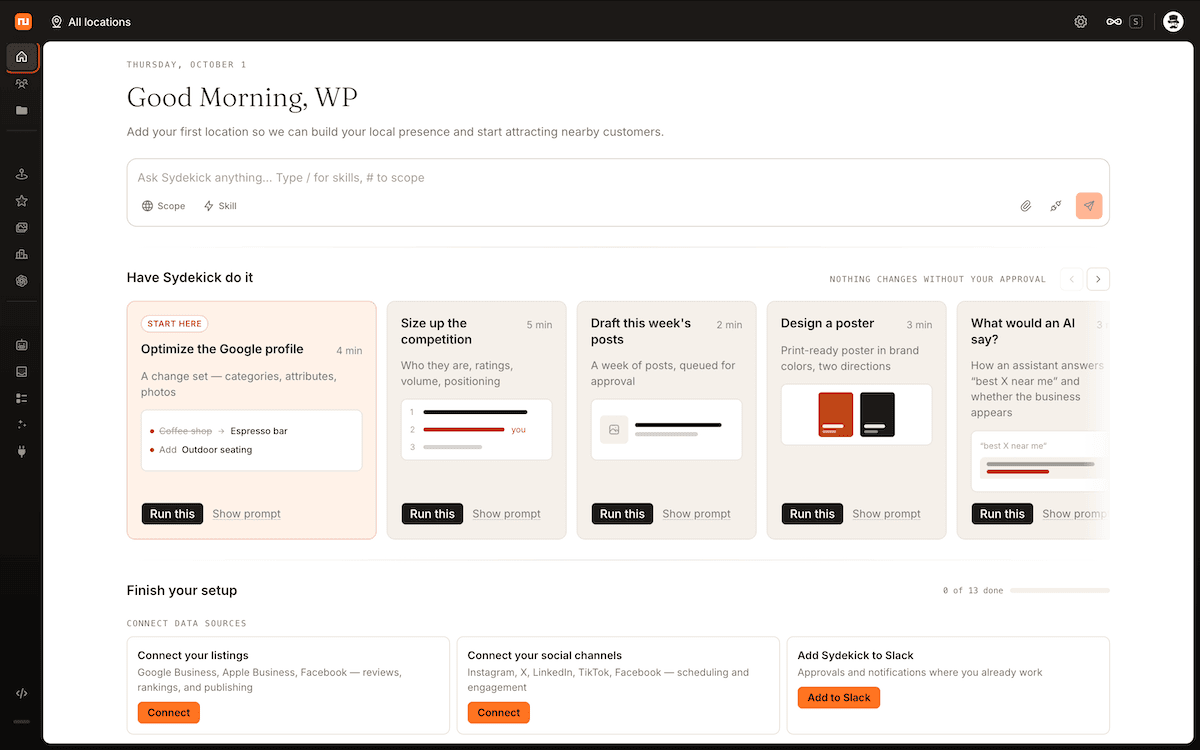
However, the transition is not without challenges. The primary barrier to entry is the "setup tax"—the initial time investment required to configure Playbooks, train the agent’s memory, and establish clear approval workflows. Agencies that view this as a one-time project often struggle; those that view it as an iterative, ongoing process of refinement are the ones that see the most significant return on investment.
Conclusion: Is Automation the New Agency Standard?
For agencies managing a high volume of multi-location clients, the adoption of a platform like Synup is no longer an optional upgrade; it is an operational necessity. The ability to manage hundreds of listings and interactions with the same level of care as a single location is the primary competitive advantage in the modern local marketing space.
While the platform is sophisticated, it is most effective when the user possesses a clear understanding of their own operational bottlenecks. By leveraging the combination of Skills, Playbooks, and secure memory, agencies can effectively turn their manual operations into a scalable machine. Whether this technology will replace the need for entry-level account coordinators remains to be seen, but it is clear that the role of the agency employee is evolving from "doer" to "manager of digital labor." As the industry continues to move toward autonomous workflows, agencies that resist this transition may find it increasingly difficult to compete on price, speed, and accuracy.