Navigating the Evolving Landscape of WordPress Security in the Age of Artificial Intelligence

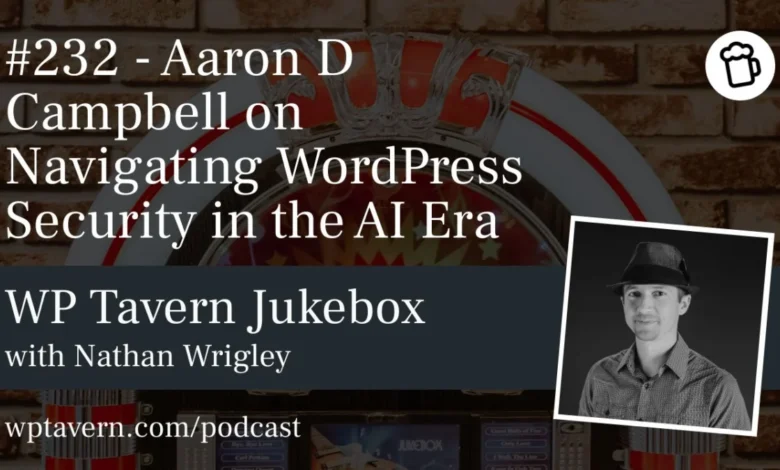
The digital landscape is currently undergoing a paradigm shift as the rise of artificial intelligence (AI) fundamentally alters the dynamics of cybersecurity. For the WordPress ecosystem—which powers over 40% of the world’s websites—this transition has moved the battlefield from a contest of human ingenuity to a high-stakes competition of computational power. Aaron D. Campbell, a veteran in internet security and current representative at Monarx, recently discussed these developments at WordCamp US, highlighting the unprecedented speed, scale, and complexity of modern cyberattacks.
The integration of AI into malicious operations has compressed the timeline between the discovery of a vulnerability and its exploitation. Previously, security professionals operated within a window of days or weeks to patch software vulnerabilities before they became widespread threats. Today, that window has narrowed significantly, often shrinking to mere hours. This acceleration is not merely a quantitative change but a qualitative one, as AI-driven agents are now capable of chaining together multiple, low-level vulnerabilities into sophisticated exploits that human developers might struggle to conceive or map manually.
The Shift from Human-Centric to Machine-Scale Attacks
For decades, cybersecurity was characterized by a "cat and mouse" game played between human developers and individual or small groups of attackers. The advent of AI has replaced this model with an automated, 24/7 offensive posture. Unlike human hackers who require rest and operate within finite cognitive constraints, AI-driven bots can test millions of permutations simultaneously, across global IP ranges, without pause.
This computational advantage has led to the emergence of "chained attacks." In a recent security assessment, researchers identified a WordPress Core vulnerability that required an 11-page technical document just to outline the logical steps of the attack. Such complexity demonstrates that software deemed "secure" by traditional standards—which were based on human review cycles—is now susceptible to machine-driven discovery. The ability of AI to store, recall, and synthesize disparate vulnerabilities across different segments of the tech stack—such as linking a Linux kernel issue with a PHP function and a WordPress core flaw—represents a significant leap in offensive capability.
Economic Motivations and the Supply Chain Risk
Despite the technical sophistication of these attacks, the fundamental motivation remains consistent: financial gain. The prevalence of WordPress makes it a high-value target for large-scale, automated exploitation. Attackers utilize compromised sites for a variety of purposes, ranging from the injection of illicit pharmaceutical advertisements—generating pay-per-click revenue—to the recruitment of site infrastructure into massive botnets. By commandeering tens of thousands of websites, attackers gain distributed compute power that is significantly harder for security firms to block than attacks originating from a single source.
Supply chain vulnerabilities have also come to the forefront. When a plugin or theme is compromised—either through the sale of the asset to a malicious actor or through an upstream breach—the impact is magnified across the entire ecosystem. This has led to the implementation of innovative defensive measures, such as the "Protect the Shire" initiative within the WordPress community. This policy introduces a time-bound delay in public updates to ensure that new code releases do not inadvertently propagate security flaws, effectively creating a buffer zone to verify the integrity of the software supply chain.
Defensive Posture: The AI Arms Race
The industry response to this threat is an "arms race" where defenders are increasingly deploying AI to combat AI. Security firms, hosting providers, and the WordPress Security Team are moving away from purely reactive patching toward proactive, behavioral-based monitoring. By utilizing AI to analyze file changes and runtime behaviors, defenders can identify malicious patterns even when the specific exploit has not been previously categorized.
Collaboration has become the cornerstone of modern defense. The WordPress Security Team, in conjunction with major hosting partners and security vendors like Cloudflare and Monarx, maintains private communication channels to share intelligence on emerging threats. This coordinated approach allows for the implementation of global patches and firewall rules long before a public disclosure is made, protecting millions of users simultaneously. This model of collective security is widely considered the most effective way to neutralize the speed advantage currently enjoyed by automated adversaries.
Historical Context and Future Implications
The history of cybersecurity is punctuated by moments of similar technological disruption. When traditional encryption standards were rendered vulnerable by advances in computing power, the industry responded by developing more resilient algorithms. Experts anticipate a similar maturation phase for AI-driven security. While the current period is defined by a sense of "overwhelm," it is also fostering the development of new testing rigs and assessment tools that leverage AI to verify vulnerability reports and prioritize remediation efforts.
The transition to an AI-driven security model is not expected to eliminate the need for human oversight. On the contrary, the role of the security professional is shifting from that of a manual debugger to a strategic architect. Humans remain the essential decision-makers in determining the long-term viability of software patches and ensuring that technical fixes align with the needs of the end-user. The goal is to reach a point where security measures are not just reactive but are "future-proofed" against next-generation threats.
Actionable Advice for WordPress Users
For the average WordPress user, the complexity of these high-level technical shifts can be daunting. However, maintaining a secure site remains achievable through the implementation of fundamental, layered security practices:
- Prioritize Automated Updates: Enabling auto-updates for WordPress core, plugins, and themes is the single most effective way to ensure that patches are applied as soon as they are available. Relying on the official security team’s release cycle is the best defense against known exploits.
- Evaluate Hosting Security: Users should inquire about their hosting provider’s security posture. High-quality hosts employ layered security, including web application firewalls (WAFs), malware scanning, and real-time threat detection. Choosing a host that prioritizes security allows users to offload the burden of technical defense to experts.
- Credential Monitoring: With AI now capable of collating historical data from thousands of breaches, old passwords have become a significant liability. Users should utilize services such as "Have I Been Pwned" to check if their credentials have appeared in public data breaches and adopt rigorous multi-factor authentication (MFA) protocols.
The trajectory of WordPress security is moving toward a more integrated, automated, and collaborative future. While the threats posed by AI are profound, the shift toward a collective, machine-assisted defense model suggests that the ecosystem is adapting to maintain its integrity. As the industry continues to refine its tools and processes, the focus remains on ensuring that the benefits of an open-source, global platform continue to outweigh the risks inherent in a connected digital world. For now, the "cat and mouse" game continues, but the speed of the game has permanently increased, requiring constant vigilance and a reliance on the expertise of those dedicated to protecting the web’s infrastructure.