TikTok Unveils Comprehensive Brand Safety Center and Advanced Protection Tools to Reinforce Advertiser Trust in the APAC Region

TikTok has officially launched a suite of enhanced brand safety resources, headlined by a dedicated Brand Safety Center website designed to provide marketers with streamlined access to guidance, advisory tools, and compliance frameworks. Unveiled during the high-profile APAC Responsible Media Forum held in Singapore, the rollout marks a significant strategic push by the short-form video platform to instill greater confidence among corporate advertisers, media agencies, and independent merchants operating in the Asia-Pacific region and beyond.
The initiative arrives at a critical juncture for digital advertising platforms, which face mounting scrutiny over content moderation, automated content generation, and brand suitability. By centralizing its educational assets and introducing proactive risk-management solutions, TikTok is attempting to address long-standing corporate anxieties regarding where and how commercial messaging appears alongside user-generated content.
A Centralized Hub for Marketer Guidance
At the core of TikTok’s latest announcement is the launch of the Brand Safety Center website. This digital portal acts as an authoritative clearinghouse for platform policies, safety updates, and best-practice frameworks. Rather than requiring advertisers to sift through scattered help documentation, the centralized platform houses a curated library of instructional resources aimed at mitigating reputation risks.
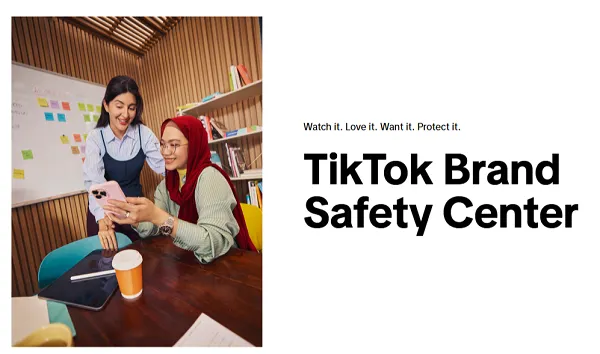
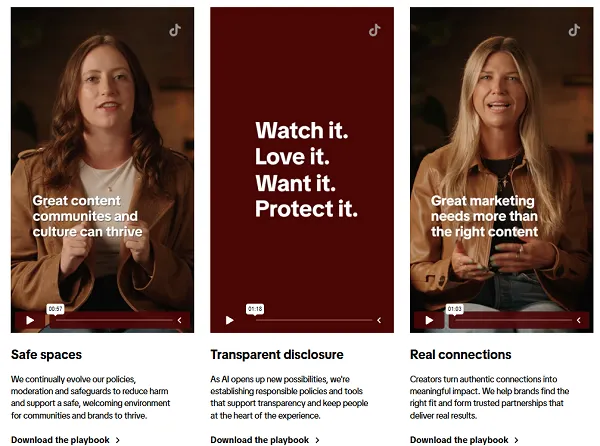
A standout feature of the new center is a comprehensive video series featuring TikTok’s internal policy, trust, and safety experts. These multimedia segments break down complex governance issues, offering marketers practical considerations for campaign structuring, audience targeting, and content alignment. By demystifying the platform’s underlying algorithms and moderation protocols, TikTok aims to bridge the knowledge gap between traditional media planners and digital-native content creators.
In tandem with the video modules, the hub provides direct access to vital documentation, most notably the newly released Brand Protection Playbook and the AI Safety Essentials for Advertisers guide. The Brand Protection Playbook serves as an exhaustive manual for managing risk, detailing how brands can leverage third-party verification tools, inventory filters, and exclusion lists to safeguard their market positioning. Meanwhile, the AI Safety Essentials overview outlines protocols for navigating the complexities of synthetic media, generative artificial intelligence, and automated creative tools on the platform.
Advanced Protection Tools and Risk Mitigation
Beyond educational resources, TikTok has introduced a robust lineup of tactical tools aimed at active risk identification and intellectual property defense. These utilities are engineered to give brands greater autonomy over their digital footprint and legal interests within the ecosystem.
Among these new offerings is the brand perception insights tool, integrated directly into TikTok’s business center. This analytical feature allows marketing teams to evaluate audience sentiment and monitor how their brand identity is perceived relative to the content ecosystem surrounding their campaigns. By offering granular visibility into consumer reception, the tool empowers advertisers to make real-time adjustments to their media spend and creative messaging.
Simultaneously, TikTok has reinforced its intellectual property protections, rolling out enhanced copyright and trademark infringement reporting options alongside specialized counterfeit protection mechanisms for marketplace sellers. These features address a historically volatile area of e-commerce and social commerce, providing legitimate merchants with expedited avenues to flag illicit copycats, unauthorized product listings, and intellectual property theft. Given the rapid convergence of entertainment and retail on social platforms, these safeguards are vital for maintaining marketplace integrity.
The APAC Responsible Media Forum: Background and Context
The unveiling of these safety resources took place against the backdrop of the APAC Responsible Media Forum in Singapore, an event that convened regional marketing leaders, platform executives, and industry watchdogs to discuss the future of digital accountability. The choice of Singapore as the host city underscores the strategic importance of the Asia-Pacific market, which boasts some of the world’s most dynamic mobile-first economies and rapidly expanding digital advertising expenditures.
During the forum, TikTok executives presented an overview of the platform’s ongoing investments in regional trust and safety. While specific volumetric data regarding moderation actions fluctuate quarter-over-quarter, the platform emphasized its scaling enforcement teams, automated detection mechanisms, and localized content moderation policies tailored to the diverse cultural, linguistic, and regulatory landscapes of APAC nations.
Industry analysts noted that the timing of the forum and the corresponding product rollouts reflect a broader industry trend. As regulatory bodies worldwide introduce stricter compliance frameworks—such as the European Union’s Digital Services Act and emerging digital safety legislation across Asian jurisdictions—platforms are compelled to institutionalize transparency and provide enterprise-grade safety controls to retain high-budget corporate clients.
Navigating the Artificial Intelligence Frontier
A focal point of the Singapore forum was TikTok’s responsible artificial intelligence framework. As generative AI tools become increasingly accessible to creators and advertisers alike, the potential for synthetic misinformation, unauthorized likeness usage, and brand-unsafe automated content generation has escalated.
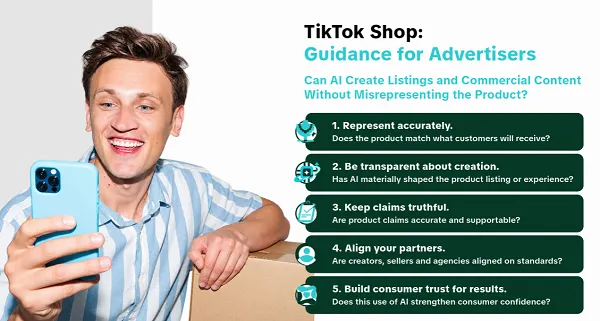
TikTok’s AI Safety Essentials guidelines establish clear boundaries for how artificial intelligence can be utilized within advertising workflows. The framework mandates transparency regarding the use of synthetic media, requiring clear disclosures when AI-generated avatars, voices, or imagery are deployed in commercial campaigns. Furthermore, the guidelines outline guardrails to prevent generative tools from producing content that violates community standards, infringes upon copyrights, or misrepresents commercial partnerships.
By establishing a structured governance model for AI, TikTok is attempting to position itself as a forward-thinking yet responsible environment for technological innovation. Marketers are increasingly eager to harness the efficiency of generative AI for rapid creative iteration, but they require ironclad assurances that automated systems will not inadvertently generate brand-damaging outputs.
Industry Implications and Strategic Analysis
The introduction of the expanded Brand Safety Center and its accompanying toolsets carries significant implications for the digital marketing landscape. For enterprise-level brands that have historically maintained conservative media spending strategies due to perceived risks associated with short-form video environments, these tools offer a welcome layer of predictability and control.
From a strategic perspective, TikTok’s initiative is a calculated response to competitive pressures from legacy digital giants such as Meta and Google, both of which have long-standing, highly mature brand safety infrastructures and third-party verification partnerships. By closing the infrastructure gap, TikTok is making a strong play for risk-averse corporate marketing budgets that traditionally skew toward search and established social feeds.
However, the ultimate success of these resources will depend heavily on adoption rates and the efficacy of execution. Marketing agencies and brand custodians will need to actively integrate the Brand Protection Playbook and business center insights into their daily operations. Furthermore, the dynamic nature of online culture means that safety protocols must continually evolve in tandem with emerging internet trends, viral audio formats, and decentralized content creation styles.
As these tools roll out globally following their initial APAC debut, they represent a pivotal step in TikTok’s maturation from a purely entertainment-driven phenomenon into a trusted, enterprise-ready advertising medium. For brands willing to navigate the complexities of modern social video, the new framework provides a structured pathway toward achieving high-impact engagement without compromising corporate reputation.