Meta Releases Comprehensive 2026 Holiday Planning Guides to Help Marketers Navigate Q4 Peak Shopping Season

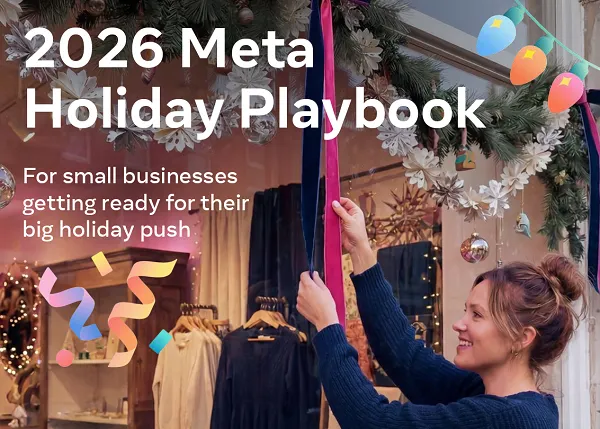
As the global retail and digital advertising sectors gear up for the critical final quarter of the year, Meta has officially unveiled its extensive suite of holiday planning resources for 2026. Designed to help brands, agencies, and small-to-medium-sized businesses (SMBs) optimize their marketing strategies, the newly published playbooks arrive at a time when digital platforms are fiercely competing for holiday ad spend. Available through the Meta Festive Season Insights Center, these customized guides provide a mixture of data-driven consumer insights, artificial intelligence integration tactics, creative best practices, and tactical execution checklists tailored to different tiers of advertisers.
The rollout comes as digital marketing experts and retail analysts emphasize earlier consumer shopping behaviors, rising reliance on algorithmic discovery, and the growing integration of generative AI within advertising workflows. By releasing these materials well ahead of the traditional peak shopping window, Meta aims to position its family of apps—including Facebook, Instagram, and WhatsApp—as indispensable ecosystems for consumer product research, engagement, and conversion.
Strategic Breakdown of the 2026 Meta Holiday Playbooks
Meta’s newly released documentation is not a one-size-fits-all brochure; instead, it is segmented into specialized tracks that address the unique challenges faced by different segments of the digital marketing landscape. The primary components of the 2026 holiday planning center include:
- Artificial Intelligence Integration Overview: A dedicated guide exploring how brands can leverage Meta’s suite of machine learning and generative AI tools to streamline ad creation, optimize audience targeting dynamically, and personalize messaging at scale.
- Agency and Enterprise Playbook: Tailored for large-scale media buyers managing complex cross-platform campaigns, focusing on macro-trends, measurement strategies, and high-budget allocation frameworks.
- Creative Explainer: A deep dive into ad formats, visual storytelling trends, and best practices for capturing consumer attention in fast-scrolling environments like Instagram Reels and Facebook Feeds.
- Small and Medium-Sized Business (SMB) Toolkit: Packed with practical statistics regarding consumer gift research habits, shopping engagement metrics, and an actionable holiday readiness checklist designed to maximize return on ad spend (ROAS) with limited budgets.
- Advanced Advertiser Guide: Featuring granular data on cross-app shopping behaviors, priority guidelines for ad setup, and comprehensive product catalog optimization checklists.
Background Context: The Evolution of Holiday Digital Marketing
The release of Meta’s seasonal playbooks reflects a broader, multi-year transformation in how consumers approach the year-end holiday shopping season. Over the past decade, the traditional timeline—traditionally anchored by Black Friday and Cyber Monday—has steadily expanded. Consumers now begin their holiday research as early as September and October, often utilizing social media platforms for product discovery rather than relying solely on traditional search engines.
In recent years, economic fluctuations, changing household budgets, and shifts in consumer confidence have made precision marketing more critical than ever. Advertisers can no longer afford to rely on blanket campaigns or guesswork. Platforms like Meta have responded by embedding advanced predictive analytics and automation into their advertising manager tools, enabling brands to reach high-intent buyers with remarkable accuracy. The 2026 playbooks serve as Meta’s official roadmap for navigating this shifting terrain, translating complex behavioral data into actionable marketing frameworks.
Chronology of Meta’s Seasonal Planning Initiatives
Meta’s approach to holiday campaign preparation has evolved into a structured, year-round strategic cadence. Understanding this timeline helps contextualize the significance of the latest playbook releases:
- Early Q2 (April – May): Meta typically begins releasing preliminary macroeconomic forecasts and consumer sentiment studies to help enterprise brands initiate their high-level budgetary planning.
- Mid Q3 (July – August): The release of dedicated educational resources, foundational creative guides, and platform updates. This period is critical for SMBs, who often begin drafting their seasonal marketing strategies during the late summer months.
- Late Q3 (September): The publication of comprehensive, specialized playbooks—such as the newly announced 2026 suite—complete with detailed checklists, app-specific usage statistics, and tactical ad-setup guidelines. This allows brands roughly 30 to 60 days to build, test, and refine their creative assets before the onslaught of October and November shopping events.
- Q4 (October – December): Active campaign execution, real-time optimization using AI-driven tools, and continuous performance monitoring across peak retail moments, including Singles’ Day, Black Friday, Cyber Monday, and the final shipping countdowns.
Analyzing the SMB Toolkit and Practical Checklists
One of the most notable elements of Meta’s 2026 release is its heavy emphasis on actionable resources for smaller businesses. SMBs often operate with leaner teams and tighter financial constraints, making efficient capital allocation essential during the fourth quarter.
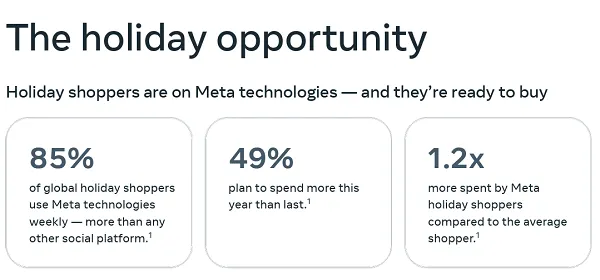
The SMB-focused guide addresses these pain points by incorporating specific data points regarding consumer app usage during the gift-research phase. According to internal insights highlighted within the materials, a significant percentage of shoppers use social media applications not just for inspiration, but as active research tools to compare prices, read peer reviews, and discover niche brands they might not encounter through traditional retail channels.
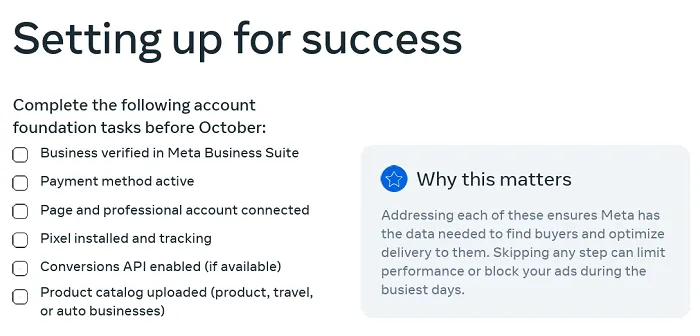
To bridge the gap between insight and execution, the SMB playbook features a step-by-step holiday checklist. This checklist guides business owners through critical milestones:
- Auditing and updating existing product catalogs to ensure accurate pricing, stock availability, and high-resolution imagery.
- Setting up conversion tracking and Meta pixels early to capture foundational data before peak traffic surges.
- Developing diversified creative assets, emphasizing short-form video formats like Reels which consistently drive higher engagement rates.
- Establishing clear testing frameworks to evaluate different value propositions, discount structures, and call-to-action buttons prior to scaling ad spend.
Advanced Advertiser Strategies and Product Catalog Optimization
For enterprise-level brands and sophisticated media agencies, Meta’s advanced playbook delves into the mechanics of high-volume campaign management. As privacy regulations tighten and signal loss continues to challenge digital marketers, reliance on first-party data and robust on-platform infrastructure has become paramount.
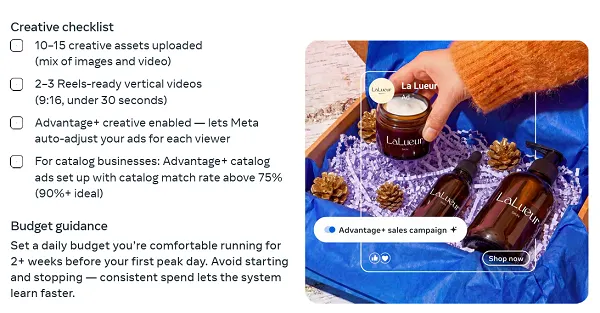
The advanced guide outlines strict priorities for ad setup during the 2026 holiday season, stressing the integration of Advantage+ shopping campaigns—Meta’s automated solution designed to streamline audience targeting, budgeting, and placement. Furthermore, the material provides an exhaustive optimization checklist for product listings, ensuring that automated ad delivery systems receive clean, structured data feeds. This technical alignment is vital for dynamic product ads (DPAs), which automatically display personalized product recommendations to users based on their browsing and interaction history across Meta’s applications.
Industry Implications and Market Context
Meta’s aggressive push into holiday readiness education underscores the fierce competition defining the digital advertising ecosystem. With major tech companies, e-commerce giants, and retail media networks all vying for a share of fourth-quarter marketing budgets, platforms must continuously prove their utility and return on investment.
Industry analysts note that by packaging sophisticated consumer data into accessible, modular playbooks, Meta effectively lowers the barrier to entry for advanced targeting technologies. When small businesses and large enterprises alike utilize automated tools and AI-driven ad setups, overall platform efficiency increases, leading to higher ad spend retention for Meta.
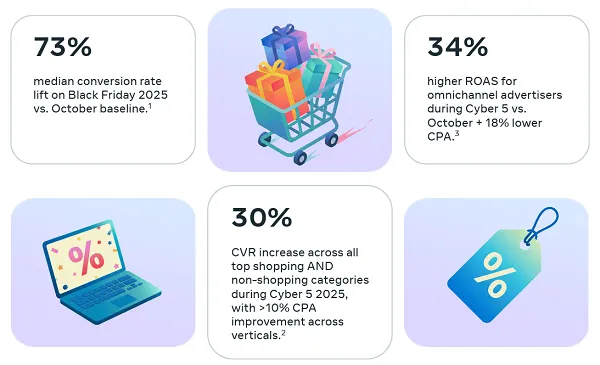
Furthermore, these resources highlight the growing convergence of social media and e-commerce—frequently referred to as social commerce. By embedding discovery, research, and transactional capabilities directly within apps like Instagram and Facebook, Meta aims to shorten the path from initial inspiration to final purchase.
Looking Ahead as Q4 Approaches
As brands absorb the strategies outlined in the 2026 holiday planning guides, the focus will quickly shift from planning to execution. Digital marketing departments are currently finalizing their creative assets, configuring their tracking pixels, and aligning their promotional calendars with Meta’s recommended timelines.
The success of this year’s holiday campaigns will ultimately depend on how effectively advertisers can harness automated tools while maintaining an authentic, engaging brand voice. Meta’s Festive Season Insights Center and its newly expanded library of playbooks will serve as a vital compass for organizations seeking to navigate the complexities of the 2026 peak shopping season and capture consumer attention in an increasingly crowded digital marketplace.