AI-Powered Machine Learning Model Decodes Cellular Communication Pathways to Revolutionize Regenerative Medicine and Embryonic Development Studies

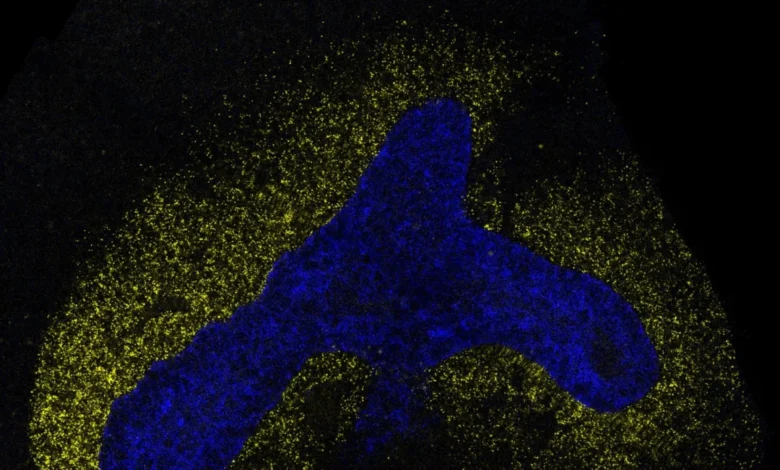
The intricate journey of human and mammalian development begins with a simple, homogeneous cluster of embryonic stem cells. Often described as biological "blank slates," these pluripotent cells possess the remarkable capacity to differentiate into any of the hundreds of specialized cell types that constitute a mature organism, ranging from the complex neurons of the brain to the metabolic powerhouse cells of the liver and the contractile fibers of muscle tissue. As an embryo grows, these cells do not merely multiply; they meticulously self-organize into complex, three-dimensional architectures, forming functional tissues and intricate organ systems.
For decades, developmental biologists have sought to decode the precise instructions that govern this cellular metamorphosis. The fundamental fate of any individual cell—determining whether it will evolve into a cardiac muscle cell, a pulmonary alveolar cell, or a spinal neuron—is governed by gene regulation. Specifically, fate is decided by which genes are selectively activated and which are suppressed. These complex patterns of gene expression fundamentally shape the physical structure and biochemical function of the cell, enabling it to execute its specialized duties within the living body.
However, this critical decision-making process is not an isolated event dictated by individual cells acting autonomously. Instead, cellular differentiation relies on a continuous, dynamic dialogue. Cells constantly transmit and receive biochemical signals to and from their immediate microenvironment and neighboring cells. Through this constant communication, cells ascertain their precise spatial coordinates within the developing embryo, understand their current developmental timeline, and determine their ultimate biological destiny. These vital messages travel along multi-step biochemical cascades known as signaling pathways. These pathways function as cellular translators, converting external environmental cues into precise, internal changes in gene activity.
The Historical Bottleneck of Cellular Mapping
For the scientific community, the ability to retrace the exact chronological sequence of instructions a cell receives has long represented a holy grail of developmental biology. Mastering this capability would offer profound insights into how healthy tissues construct themselves and provide a diagnostic lens into how these delicate processes go awry in congenital disorders, developmental abnormalities, and oncogenesis.
Despite its immense promise, achieving this level of retrospective cellular mapping has proven exceptionally difficult. Historically, scientists operated under the prevailing assumption that the functional effects of individual signaling pathways varied widely and unpredictably across different cell types. Under this traditional paradigm, mapping how a cell interpreted its environment meant researchers had to painstakingly isolate, study, and map every single signaling pathway separately within every distinct cell type. This requirement created an arduous, time-consuming bottleneck that severely limited the scale of developmental research. Traditional experimental approaches demanded exhaustive trial-and-error testing for every pathway in every possible cellular context, making comprehensive, whole-embryo signaling maps an insurmountable logistical challenge.
The Breakthrough: Discovering Universal Cellular Fingerprints
That paradigm changed fundamentally with groundbreaking research published on September 8 in the journal Nature Methods. Led by Pulin Li, an assistant professor of biology at the Massachusetts Institute of Technology (MIT) and a member of the Whitehead Institute for Biomedical Research, alongside MIT graduate student Nicholas Hutchins, a new study reveals a paradigm-shifting biological discovery: each signaling pathway leaves behind a distinct, universal "fingerprint."
This fingerprint is a unique, recognizable pattern of gene activity that mirrors the specific biochemical signals the cell has encountered along its developmental journey. Crucially, the research team discovered that these pathway-specific fingerprints remain remarkably consistent across entirely different cell types.
Rather than being idiosyncratic to every distinct tissue, a specific signaling pathway leaves a signature that can be reliably identified regardless of whether the cell is destined to become skin, bone, or neural tissue. This consistency shatters the old dogma of cellular variability. It means that scientists no longer need to map each cell type individually. Instead, researchers can reconstruct the complete signaling histories of diverse cell types simultaneously by leveraging these universal, pathway-specific fingerprints.
IRIS: The Artificial Intelligence Model Transforming Biology
The realization of this discovery was made possible through the development of a sophisticated machine learning framework named IRIS. Designed as a neural network-based artificial intelligence model, IRIS excels at recognizing complex patterns within massive datasets, operating on principles analogous to human cognitive pattern recognition.
IRIS examines the comprehensive gene expression profile of an individual cell and works backward to estimate which signaling pathways were active—and at what specific temporal stages—during the cell’s embryonic development. What sets IRIS apart from traditional bioinformatics tools is its ability to generalize its training, allowing it to pinpoint signaling histories even within cell types and developmental stages it has never encountered before.
To build and validate this groundbreaking model, Li and Hutchins trained IRIS on a massive, highly curated experimental dataset. This dataset documented how thousands of human embryonic stem cells responded dynamically to dozens of distinct combinations involving six major signaling pathways across multiple temporal stages of development. By analyzing this vast matrix of data, the model constructed a comprehensive reference atlas mapping how specific combinations of biochemical signals dictate cellular behavior and gene expression.
To rigorously test the predictive power of IRIS, the research team applied the model to single-cell genomic data harvested from mouse embryos undergoing gastrulation—a critical, highly dynamic developmental stage characterized by rapid cellular diversification and lineage commitment. The results exceeded expectations. IRIS accurately predicted the exact timing and spatial localization of specific signaling pathway activations in cells destined to differentiate into the heart, gut, skeletal muscle, and spinal cord. This precise spatial and temporal orchestration of signaling molecules is precisely what guides embryonic cells to form the correct structures in the correct anatomical locations.
Validating Predictions: From Computer Models to Laboratory Discoveries
To transition from computational prediction to empirical validation, the researchers deployed IRIS to solve a specific biomedical challenge: identifying the precise chemical signals required to generate a specialized cell type critical for normal lung development.
The AI model analyzed existing genetic data and predicted that the targeted activation of a specific, previously underappreciated signaling pathway would encourage lung-specific cellular differentiation. Follow-up bench experiments conducted on mouse embryos directly confirmed the model’s computational prediction. By uncovering the exact combinations of signals driving pulmonary cell development, the researchers demonstrated a reliable methodology for generating accurate, functional, lab-grown models of lung tissue.
"In these ways, IRIS is helping us decode the language cells use to talk to each other at a much faster rate than we could realistically achieve through traditional experiments," noted graduate student Nicholas Hutchins, co-lead of the study.
Broader Implications for Regenerative Medicine and Pharmacology
The implications of this research extend far beyond basic developmental biology, offering transformative potential for regenerative medicine, stem cell engineering, and pharmacological drug testing.
By mastering the specific patterns of biochemical signals that drive pluripotent stem cells to mature into specialized, functional cell types, scientists can now recreate those exact signaling environments in a controlled laboratory setting. This capability drastically improves the generation of organoids—sophisticated, miniature three-dimensional tissue models that accurately mimic real human organs.
Organoids generated with this precision provide researchers with unprecedented tools to investigate complex human pathologies, including asthma, lung cancer, and idiopathic pulmonary fibrosis—a debilitating and often fatal condition characterized by the progressive, unexplained scarring of lung tissue. With reliable, lab-grown pulmonary models, scientists can screen potential therapeutic compounds with high throughput, safely test novel pharmaceutical interventions, and ultimately design advanced regenerative therapies capable of repairing or replacing irreversibly damaged human tissues.
Drawing an insightful parallel to modern consumer technology, Dr. Pulin Li likened the underlying mechanism of IRIS to familiar artificial intelligence systems. "Think of voice recognition systems like Siri, which are trained mainly in English, but then use that training to help them recognize other languages," Li explained. "This is called transfer learning, and this is why IRIS can work across many different cell types."
As researchers continue to refine machine learning models like IRIS, the biological sciences stand on the precipice of a new era. What once required decades of painstaking, isolated experimentation can now be accelerated through artificial intelligence, bringing humanity closer to comprehensive maps of embryonic development and opening new frontiers in the treatment of human disease.