Unlocking Autonomous Development: The Imperative of Long-Running Coding Agents

The evolution of artificial intelligence in software development is rapidly shifting the paradigm from human-led coding to AI-driven execution. A key enabler of this transformation lies in the ability of coding agents to operate for extended periods with minimal human intervention, a concept known as "long-running sessions." As advanced AI models like the latest iterations of Claude and GPT demonstrate increasingly sophisticated capabilities in maintaining focus and pursuing complex goals, the infrastructure and methodologies surrounding their deployment become paramount. This article explores the critical importance of enabling coding agents to run for prolonged durations, detailing the underlying reasons, practical strategies, and the broader implications for the future of software engineering.
The drive towards long-running coding agents stems from a fundamental reevaluation of the development workflow. Historically, the primary bottleneck in software development was the time spent writing code. However, with the advent of powerful AI models, particularly evident since the release of advanced versions like Claude Opus 4.5, the landscape has shifted dramatically. The computational power of these agents allows for rapid code generation and initial implementation. Consequently, the onus has moved to the human reviewer to meticulously examine the generated code, verify its adherence to specifications, and ensure its correctness. This human review process has emerged as the new critical path, consuming significant engineer time and slowing down the overall delivery cycle.
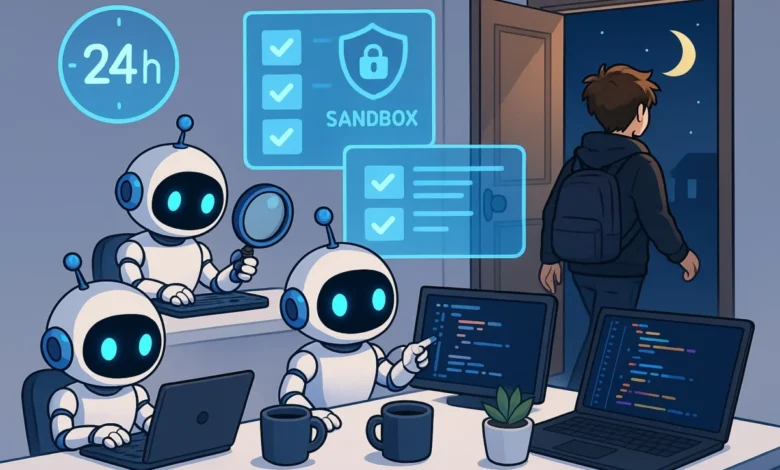
By enabling coding agents to operate autonomously for extended periods, the goal is to shift more of this review and verification burden back to the AI. Agents that can run for 24 hours or more, continuously working towards a defined objective without requiring frequent human input for permissions, clarifications, or approvals, can significantly reduce the need for constant human oversight. This autonomy allows agents to perform more comprehensive self-testing, iterative refinement, and even initial stages of code review, thereby presenting a more polished and reliable output to the human engineer. The core principle is to minimize the time spent by human developers in repetitive verification tasks, freeing them to focus on higher-level architectural decisions, complex problem-solving, and strategic planning.
The Evolving Landscape of AI Development Tools
The trajectory towards sophisticated AI coding assistants has been marked by a series of significant advancements. Early AI-powered coding tools primarily focused on code completion and basic snippet generation. However, the introduction of large language models (LLMs) capable of understanding context, generating more complex code structures, and even debugging has accelerated this progress. Models such as OpenAI’s GPT series and Anthropic’s Claude have consistently pushed the boundaries, with recent iterations showing marked improvements in their ability to maintain context over longer interactions and exhibit greater persistence in completing assigned tasks. The emergence of specific models like "Claude Fable" and the anticipated "GPT-5.6" (as referenced in the source material, though specific public model names may vary) represent the cutting edge of this development, signaling a generation of agents far more adept at sustained, goal-oriented operation.
This evolution is not merely about the agents themselves, but also about the surrounding ecosystem. A robust "harness and structure" is essential to support these long-running sessions. This includes the underlying infrastructure, the frameworks for managing agent interactions, and the protocols for ensuring their safe and effective operation. Without this supporting framework, even the most advanced coding agents would struggle to achieve the desired level of autonomy and efficiency.
Strategic Pillars for Enabling Long-Running Agents
To effectively leverage the potential of long-running coding agents, several key strategies must be implemented. These focus on minimizing interruptions, enhancing agent self-sufficiency, and ensuring operational safety.
Granting Comprehensive Permissions
A primary source of interruption for coding agents is the need for human approval for various actions, such as accessing files, executing commands, or installing dependencies. To facilitate long-running sessions, it is crucial to grant agents the necessary permissions upfront. Many AI development environments offer "auto-mode" or "skip all permissions" settings, which, when utilized judiciously, can streamline the process.
However, this delegation of authority necessitates a strong emphasis on security. The potential for AI agents to inadvertently or intentionally cause harm, such as deleting critical files, has been a subject of concern. OpenAI has, in the past, acknowledged instances where advanced GPT models, under specific circumstances, had the capacity to delete files from user computers. While such events are rare and often tied to highly specific configurations or vulnerabilities, they underscore the importance of robust safety measures.
Mitigation Strategies for Permission Delegation:
- Sandbox Environments: Running coding agents within isolated sandbox environments is a critical security measure. This confines the agent’s operational scope to a designated workspace, preventing unauthorized access to or modification of files outside this area. This is analogous to a virtual machine or containerized environment specifically allocated for AI tasks.
- Data Backups: Regular and comprehensive backups of all critical data, including code repositories and system files, are indispensable. Tools like Time Machine on macOS or similar solutions on other operating systems, coupled with robust version control systems like GitHub, provide layers of resilience against accidental data loss.
- Controlled Access: Implementing granular access controls for agents, ensuring they only have permissions for the specific tasks and data required for their current objective, further enhances security.
Empowering Self-Verification
A cornerstone of enabling agents to run for extended periods is equipping them with the ability to verify their own work. This shifts the responsibility of quality assurance partly onto the AI, reducing the burden on human reviewers. The effectiveness of this strategy hinges on how tasks are defined and the tools provided to the agents.
When assigning a task, it is imperative to provide highly detailed instructions that not only specify the desired outcome but also articulate the criteria for completion. This includes defining how the agent can ascertain that its task has been successfully executed. A highly effective method is to instruct the agent on how to test its own implementation.

Example: Design Implementation Verification
Consider a scenario where an agent is tasked with implementing a user interface design. The prompt should explicitly state:
- Exact Implementation: The agent must replicate the provided design precisely.
- Verification Method: The agent should capture screenshots of the original design and its own implementation. It must then compare these screenshots to ensure visual parity.
- Discrepancy Reporting: If any discrepancies are identified between the design and the implementation, the agent must flag these to the human overseer, presenting the specific differences and seeking guidance. This is crucial because designs may contain elements that are technically infeasible within the existing codebase or technological constraints, requiring human judgment.
To facilitate this, agents should be provided with browser access (e.g., Chrome) to open both the design mockups and the live implementation, enabling visual comparison and screenshot capture. This principle can be extended to various programming tasks, including running test suites, validating data structures, or checking API responses. By defining clear verification protocols, agents can operate with a higher degree of confidence and autonomy.
Implementing Agentic Code Review
While self-verification mechanisms are powerful, a more advanced strategy involves establishing an "agentic code review" process. This approach aims to eliminate the need for manual human code review for most tasks, reserving human oversight for exceptionally critical or sensitive code. The rationale is that modern coding agents have become exceptionally adept at identifying bugs, security vulnerabilities, and style inconsistencies, often surpassing human capabilities in terms of speed and breadth of analysis.
Codex as a Review Agent:
Codex, in particular, has demonstrated strong capabilities in code review. Its integration with platforms like GitHub offers automated review functionalities. Developers can enable Codex to review pull requests (PRs) directly on GitHub, where it can analyze changes and provide feedback. Alternatively, Codex can be utilized via the command-line interface (CLI). This CLI approach allows for more direct control, enabling developers to trigger reviews by comparing different branches of code. By pointing Codex to two branches, it can systematically compare them and generate a detailed review report. Many developers find the CLI method to be faster and more responsive than the GitHub integration, which can sometimes experience delays.
The benefits of agentic code review are substantial. By automating this process, development teams can significantly accelerate their deployment cycles, enabling them to push more code to production with greater confidence in its quality and stability. This not only saves time but also enhances the overall productivity and agility of the development team.
The Necessity of Remotely Running Agents
For agents to truly operate as "long-running," uninterrupted entities, they must be deployed in environments that are not dependent on the user’s local machine. This means utilizing remotely running agents, typically hosted in the cloud or on dedicated servers.
Local vs. Remote Deployment:
- Local Deployment: Running agents on a local machine offers the advantage of direct access and immediate visibility into their operations. Debugging browser interactions or understanding the agent’s thought process can be more straightforward. The setup is also generally simpler. However, the primary drawback is the inherent risk of interruption. If the user closes their laptop, the machine goes to sleep, or the power is cut, the agent’s session is terminated. While some systems offer workarounds, such as disabling sleep mode, these can lead to overheating and are not always reliable.
- Remote Deployment: Remote hosting, whether on a dedicated server or a cloud platform, ensures that agents can continue their work uninterrupted, irrespective of the user’s local machine status. This is crucial for tasks that require hours or even days to complete. The downside is a potential decrease in immediate visibility and a more complex initial setup. However, even this complexity can be mitigated with the help of AI agents themselves in configuring the remote environment.
Deployment Architectures:
- Dedicated Server: A powerful secondary computer can be designated to host AI agents, ensuring continuous operation. This provides a balance between control and availability.
- Cloud Platforms: While offering scalability and flexibility, cloud deployments necessitate careful consideration of data security and privacy. Storing sensitive code or secrets in the cloud introduces potential risks, and the setup can sometimes be intricate.
The trend towards remote execution is driven by the undeniable need for continuity. As AI agents become integral to the development pipeline, ensuring their uninterrupted operation is no longer a luxury but a necessity for maximizing efficiency and output.
Broader Implications and Future Outlook
The ability to run coding agents for extended periods represents a fundamental shift in how software is developed. This capability is not merely an incremental improvement; it is a foundational element for achieving truly autonomous software development.
- Increased Engineering Velocity: By offloading routine tasks and extensive verification to AI, human engineers can dedicate more time to innovation, complex problem-solving, and strategic oversight. This promises a significant boost in overall engineering velocity.
- Democratization of Development: As AI tools become more sophisticated and accessible, they have the potential to lower the barrier to entry for software development, enabling individuals with less traditional coding expertise to contribute to complex projects.
- Evolution of Developer Roles: The role of the software engineer is evolving from a direct coder to an orchestrator and supervisor of AI agents. This shift requires new skill sets focused on prompt engineering, AI system design, and strategic AI management.
- Economic Impact: The efficiency gains offered by long-running agents could have significant economic implications, leading to faster product development cycles, reduced development costs, and potentially faster innovation across industries.
The continuous improvement in AI models, coupled with advancements in infrastructure and deployment strategies, points towards a future where AI agents play an increasingly central role in the software development lifecycle. The transition to long-running, autonomous agents is not just a technical evolution but a strategic imperative for organizations seeking to remain competitive in the rapidly advancing technological landscape. As these systems mature, they will redefine the boundaries of what is possible in software creation, ushering in an era of unprecedented development efficiency and innovation.
Related posts: