SceneSmith: AI Agents Craft Hyper-Realistic Virtual Worlds for Robot Training

The increasing visibility of robots navigating public spaces, from bustling sidewalks to controlled industrial environments, signifies a profound shift in our technological landscape. While these autonomous agents are becoming more adept at locomotion and basic task execution, a significant hurdle remains in their development: data acquisition for sophisticated learning. Much like humans, robots learn best through experience, but the physical process of accumulating this experience – teaching machines countless actions across diverse real-world scenarios – is prohibitively labor-intensive and time-consuming. This challenge is being addressed by a novel system called SceneSmith, developed by researchers at MIT’s Computer Science and Artificial Intelligence Laboratory (CSAIL) and the Toyota Research Institute, which leverages advanced AI agents to generate exceptionally rich and diverse virtual environments for robot training.
The Data Bottleneck in Robotics Education
"One natural idea is to use simulation as a training ground," explains Russ Tedrake, a distinguished professor at MIT and a principal investigator at CSAIL. "While there has been significant progress over the last few years in the physics engines that power robotics simulators, one of the remaining challenges has been creating sufficiently rich and diverse simulation content to capture the complexity of the real world." The physical world, with its infinite variations in object placement, lighting conditions, and surface textures, presents an immense dataset that is difficult and expensive to replicate digitally for training purposes. Traditional methods often rely on manually curated 3D models and environments, which can be static, limited in scope, and fail to capture the nuanced interactions that robots will encounter in real-world applications. This lack of comprehensive and varied training data directly impacts a robot’s ability to generalize its learned skills to new situations, leading to brittle performance and a reliance on extensive, costly real-world testing.
SceneSmith: An Agentic Approach to Virtual Environment Generation
The breakthrough lies in employing AI agents, specifically semi-autonomous programs capable of "thinking" and executing well-defined tasks, to generate these lifelike virtual settings. The SceneSmith system utilizes a collaborative trio of these agents to construct detailed 3D scenes, encompassing everything from the placement of walls and furniture to the overall aesthetic of indoor spaces like restaurants, bedrooms, and hotels. The system’s ability to produce more realistic and detailed recreations than previous methods offers robots a crucial virtual playground to practice skills and explore different task execution strategies before being deployed in the physical world. This not only accelerates the learning process but also significantly reduces the need for time-consuming and potentially hazardous real-world testing for engineers.
The core innovation of SceneSmith is its reliance on sophisticated vision-language models (VLMs). These models, trained on vast amounts of text and image data from the internet, are capable of understanding and responding to visual prompts. By integrating a state-of-the-art VLM, identified as GPT-5.2 in the research, each agent within SceneSmith gains a form of "spatial knowledge." This allows for a structured and iterative scene generation process.
A Collaborative Symphony of AI Agents
The three agents within SceneSmith each play a distinct, yet complementary, role in the creative process:
- The "Designer" Agent: This agent initiates the scene creation by generating the fundamental elements of a 3D environment. It lays down the initial structure, objects, and their basic arrangements based on the textual prompts provided.
- The "Critic" Agent: Acting as a quality control mechanism, this agent evaluates the realism and plausibility of the scene generated by the "designer." It provides feedback, identifying areas that appear unnatural or inconsistent with real-world environments.
- The "Orchestrator" Agent: This agent manages the dynamic interplay between the "designer" and "critic" agents. It orchestrates their back-and-forth feedback loop, deciding when the scene has reached a satisfactory level of detail and realism, and ultimately determining when the design process is complete.
This tri-agent collaboration allows SceneSmith to construct 3D scenes with a level of sophistication and creativity akin to a human designer. Nicholas Pfaff, an MIT EECS PhD student and a lead author on the research paper presenting SceneSmith, notes, "We’ve found that the system can construct 3D scenes the way a human designer would. We made over 1,300 scenes using a leading VLM that has internet-scale priors, and it made insanely creative and diverse arrangements. I hadn’t taught the system to do that in the prompts; it just improvised." This emergent creativity from the VLM is a key factor in generating the diverse and unexpected scenarios necessary for robust robot training.
Enhanced Realism and Density for Advanced Training
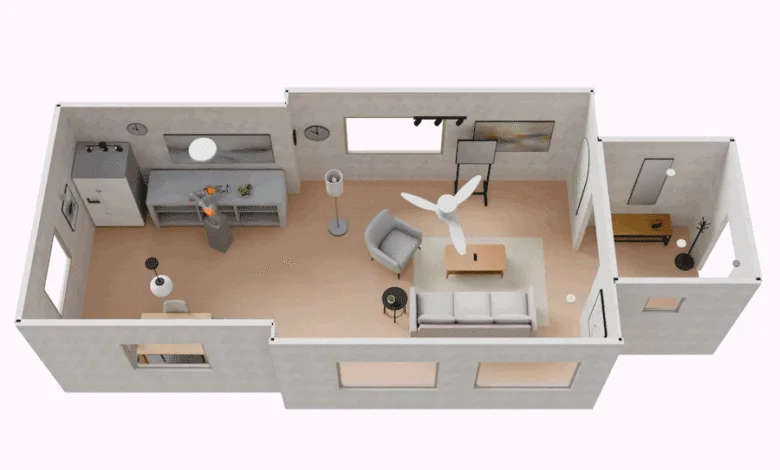
The impact of this collaborative AI approach is evident in the detailed and object-rich environments SceneSmith can produce. Users can issue natural language commands, such as "generate a garage with a car, a workbench, tires stacked in the corner, and a ladder against the wall," and receive a virtual space teeming with interactive elements. These generated rooms are notably denser with objects compared to previous methods, often featuring up to six times more items per scene. This increased density is crucial for training robots in complex manipulation tasks, such as placing a cup in a sink, arranging fruit on plates, or transferring objects between surfaces – skills that require precise spatial reasoning and interaction with multiple objects in close proximity.
The realism and detail of these virtual environments are not merely for visual appeal; they are critical for effective robot learning. Researchers demonstrated this by evaluating different action plans, or "policies," within SceneSmith’s simulated worlds. They generated 100 unique spaces and utilized a VLM agent to assess each robotic attempt. The evaluations revealed numerous flaws in the robot’s plans, with the machine frequently failing its tasks. Crucially, human observers agreed with the VLM’s assessments over 99 percent of the time, highlighting the AI’s ability to accurately identify suboptimal or faulty robotic behaviors within the simulated environment. This capability allows roboticists to efficiently identify and rectify flawed approaches in simulation before they are ever attempted in the physical world, saving significant development time and resources.
Rigorous Validation of Virtual World Fidelity
The question of how closely these virtual worlds mirror reality is paramount for effective training. The SceneSmith research team employed several rigorous methods to validate the fidelity of their generated environments. A particularly compelling test involved introducing a pre-trained robot policy – an AI controller primarily trained on real-world data and thus unfamiliar with SceneSmith-generated scenes – into these virtual settings. In one experiment, when instructed to "take the apple from the bowl and place it onto the cutting board," the simulated robot executed the task flawlessly. This success strongly suggests that the generated scenes closely resembled the real-world environments from which the policy had learned, as it would have otherwise failed to perform the task accurately.
Further validation came from teleoperating robots through these virtual spaces. Researchers guided robots to perform actions such as opening cabinets, storing bottles, and navigating between rooms. These experiments confirmed that the SceneSmith environments remained robust under sustained physical interaction, extending beyond mere visual fidelity to encompass functional realism. This means that the physics and object interactions within the simulation are sufficiently accurate to support the development of robots capable of performing real-world tasks.
The Iterative Design Process: From Floor Plan to Functional Scene
The inner workings of SceneSmith reveal a sophisticated, staged approach to scene generation, driven by the distinct roles of its AI agents. The process can be conceptualized as building a virtual space layer by layer, ensuring both structural integrity and functional realism at each step.
For instance, when creating a scene like the first floor of a house, the "designer" VLM might first establish a general floor plan. This initial layout is then reviewed by the "critic" VLM, with the "orchestrator" VLM providing the final approval before proceeding. This iterative cycle repeats for subsequent stages:
- Furniture Placement: Adding furniture to the established layout, ensuring it is appropriately positioned and scaled.
- Wall and Ceiling Decorations: Placing decorative elements on walls and ceilings, such as artwork or lighting fixtures.
- Object Integration: Introducing manipulable objects that robots are intended to interact with. A key advancement here is the VLM’s ability to generate articulated objects, such as cabinets that robots can open and close – a feature often absent in prior scene generation baselines.
At each stage, the "critic" VLM plays a vital role in ensuring the scene’s practicality. It might, for example, advise against placing a bathtub in a living room, thereby maintaining a sense of real-world logic. The "orchestrator" VLM then oversees the overall quality, potentially rewinding the design process a few steps if the visuals or functional aspects do not meet the required standards. Once the collaborative efforts of the three VLMs culminate in a satisfactory scene, the underlying physics engine integrates the mechanics of the real world, rendering the scene ready for simulation.
Competitive Edge in Scene Generation
SceneSmith demonstrates a significant advantage over existing scene-generation baselines, such as HSM and Holodeck. Its ability to generate environments with a higher density of objects and a greater variety of scenes, including specialized locations like private offices, pottery stores, and even custom-themed gaming rooms, sets it apart. The system’s comprehensive understanding of how rooms should appear, where objects are typically placed, and the underlying principles of real-world physics contributes to its superior output.
This qualitative superiority has been corroborated by user feedback. In a study involving over 200 users, SceneSmith’s generated visuals were consistently rated as more realistic, with users finding the system’s output to be more realistic over 90 percent of the time. Furthermore, SceneSmith was observed to follow user prompts more closely than other approaches, indicating its efficacy in generating the specific virtual environments that users envision.
A System of Diverse Talents and Future Potential
The strengths of SceneSmith extend beyond generating entire environments to creating individual 3D objects with remarkable detail and realism. Users can prompt the system to generate a specific item, such as a rolling serving cart, which is then translated from a 2D image into a detailed 3D model endowed with crucial physical properties like mass, friction, and inertia. This granular level of detail is essential for realistic physics simulations.
However, this sophisticated generation process does involve a trade-off in speed. Producing a single, highly detailed scene can take several hours due to the intensive creation and scrutiny involved by the AI agents. The researchers acknowledge that increased computing power could significantly enhance the system’s efficiency. Looking ahead, the CSAIL engineers are also exploring the expansion of SceneSmith to include deformable objects, such as sponges, which would require access to extensive 3D libraries and further advancements in VLM capabilities.
Jeremy Binagia, an applied scientist at Amazon Robotics who was not involved in the research, commented on the significance of SceneSmith: "SceneSmith represents a significant advance in this regard by providing an agentic framework for generating simulation-ready indoor environments just from a simple text prompt. It advances the state of the art in several ways, including pushing the limits of the density of objects in the simulated environment, ensuring that all of the objects are physically accurate (versus just being visually realistic), and creating assets that are not constrained to a fixed library, since they can be generated via text-to-3D." This endorsement highlights SceneSmith’s impact on the broader field of robotics simulation and AI-driven content generation.
The research paper detailing SceneSmith was authored by Nicholas Pfaff and Russ Tedrake, alongside Thomas Cohn, an MIT PhD student and CSAIL researcher, and Toyota Research Institute roboticists Sergey Zakharov and Rick Cory. The work received support from various entities, including Amazon, the U.S. Office of Naval Research, the Toyota Research Institute, and the U.S. National Science Foundation. The team presented their findings as a spotlight presentation at the International Conference on Machine Learning, underscoring the significance of their contribution to the advancement of robotics and AI simulation technologies.
Related posts: