Mach9 Robotics Secures $34 Million in Series A Funding and Pivots to AI-Powered CAD Software to Revolutionize Civil Engineering Workflows

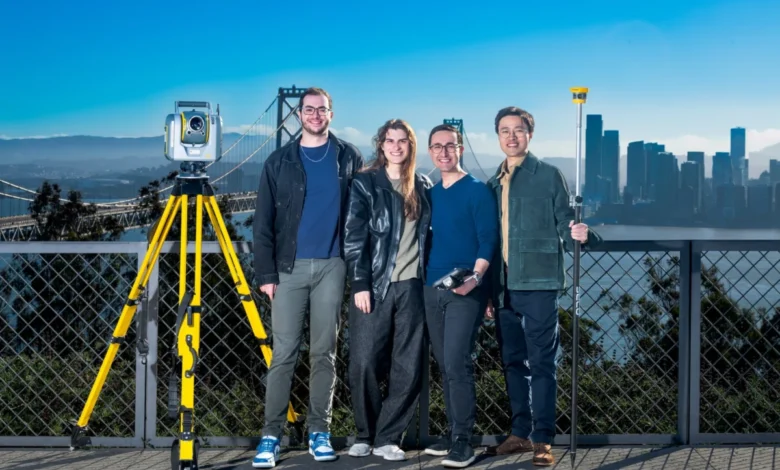
The civil engineering and construction sectors have long been characterized by sluggish bureaucratic processes, labor-intensive workflows, and an over-reliance on legacy software systems that struggle to keep pace with modern data collection capabilities. Addressing these systemic bottlenecks, Mach9—formerly known as Mach9 Robotics—has officially announced a $34 million Series A funding round. The investment was co-led by First Round Capital and Bessemer Venture Partners, with additional participation from early-stage PropTech and ConTech investor Prudence and returning backer Quiet Capital.
This substantial injection of capital underscores a broader, accelerating trend across the technology and infrastructure landscapes: the race to deploy artificial intelligence to streamline the entire planning-to-building pipeline. Mach9’s successful pivot from a hardware-centric robotics company to an AI-driven software enterprise highlights a critical realization shared by many modern tech startups—that the primary obstacle in modern infrastructure development is not the collection of site data, but the agonizingly slow transformation of that data into actionable design assets.
From Hardware Bottlenecks to Software Solutions: The Founding Vision
When Alex Baikovitz co-founded Mach9 Robotics in 2021, his initial objective was ambitious yet conventional for a modern engineering startup: to build a faster, cheaper, and more efficient hardware solution for civil engineers conducting visual inspections. At the time, the founders believed that disrupting the physical tools used on construction and engineering sites would cut through the red tape bogging down infrastructure projects across the United States.
For the first few years of operation, the company focused intensely on developing advanced hardware systems designed to simplify site data collection. However, as the team deployed their technology in the field, Baikovitz and his co-founders encountered a glaring irony. The hardware they built was successfully capturing massive, incredibly detailed sets of reality-capture data—including laser scans and high-resolution imagery—but the engineers receiving this data were struggling to utilize it efficiently.
Speaking on the realization that reshaped the company’s trajectory, Baikovitz noted the tedious nature of traditional workflows. Civil engineering organizations were sitting on a goldmine of data captured by modern laser scanners and imaging systems, yet turning those endless bytes of information into usable surveys—detailed topological and spatial maps required for design work—remained a monumental chore. The real pain point was not the capture device; it was the pipeline connecting raw data to engineering design.
Recognizing that software, rather than hardware, was the true bottleneck of the industry, leadership made a decisive pivot. The company dropped "Robotics" from its name and redirected its engineering resources toward developing artificial intelligence-driven computer-aided design (CAD) software tailored specifically for civil engineering and surveying professionals.
Validating the Pivot: Traction and Market Validation
The strategic shift proved remarkably prescient. Although the software is currently operating in a private beta phase, Mach9 has already amassed a customer base of nearly 100 civil engineering and surveying firms. To date, these early adopters have leveraged the platform across more than 2,500 distinct projects, providing the startup with invaluable real-world validation and rigorous dataset feedback.
This impressive market traction served as the primary catalyst for the company’s latest fundraising milestone. The $34 million Series A round will allow the firm to scale its operations rapidly. According to Baikovitz, the newly acquired capital will be evenly distributed among three core objectives: accelerating core product development, recruiting top-tier industry experts to bridge the gap between AI and civil engineering, and scaling all organizational departments to match surging market demand.
The Legacy Software Monopsony and the Cost of Manual Labor
To understand the magnitude of Mach9’s market opportunity, one must examine the entrenched status quo of civil engineering software. For decades, the industry has relied on legacy CAD platforms developed by incumbent giants such as Autodesk and Bentley Systems. While these software suites are powerful and deeply integrated into traditional engineering practices, they are notoriously labor-intensive.
According to Baikovitz, delivering a major infrastructure or civil engineering project using legacy software can take months of painstaking, manual labor. On average, an experienced technician requires roughly one full week of manual drafting and verification to process just one mile of survey data within traditional systems. This sluggish pace creates a severe capacity constraint for civil engineering firms, limiting the number of projects they can accept and driving up overhead costs for state and municipal governments.
Mach9 claims its proprietary AI-powered platform makes the surveying and drafting process up to ten times faster while drastically cutting operational costs. By automating the most repetitive aspects of data processing, the software allows engineering firms to dramatically expand their operational capacity. Rather than spending weeks tracing curbs, pavement markings, and utilities manually, engineers can direct their attention toward high-level design choices, safety evaluations, and asset management strategies.
The Technology: In-House AI Models and Centimeter-Level Precision
One of the defining challenges of applying artificial intelligence to civil engineering and construction is the uncompromising demand for absolute precision. General-purpose, off-the-shelf AI models—such as standard computer vision systems trained on consumer imagery—frequently fail to meet the rigorous tolerances required in infrastructure development, where a margin of error of a few inches can lead to catastrophic structural, legal, or financial liabilities.
To overcome this hurdle, Mach9 dedicated a significant portion of its engineering efforts beginning in 2024 to building and training specialized, in-house AI models. These proprietary neural networks are specifically designed to interpret multimodal datasets combining high-resolution imagery and complex laser scans, translating them into survey-grade geometry.
The system is engineered to achieve centimeter-level accuracy, identifying and tracing fine infrastructure details—such as street curbs, pavement striping, utility poles, and road edges—exactly to the specifications demanded by licensed civil engineers.
Human-in-the-Loop Architecture and Professional Liability
Despite the high degree of automation provided by Mach9’s platform, the company is careful to position its software as an assistive tool rather than a fully autonomous replacement for human expertise. Civil engineering is an industry governed by strict regulatory frameworks, intense public safety mandates, and profound professional liability.
To navigate these realities, Mach9’s platform operates on a human-in-the-loop architecture. The AI ingests raw survey data and generates an initial, comprehensive draft of the project design. Engineers are then provided with an intuitive suite of specialized editing tools that allow them to draw, remove, adjust vertices, and rigorously assess the quality of the AI-generated models.
This workflow ensures that licensed professionals maintain ultimate authority and accountability over the final deliverables. By giving engineers the ability to verify every detail, Mach9 ensures that its users can confidently place their professional stamps and signatures on the final project plans, mitigating legal risk while maximizing efficiency.
A Booming ConTech Ecosystem: Parallel Innovations in Infrastructure
Mach9 is far from alone in its mission to modernize the notoriously sluggish planning-to-building pipeline. The broader construction technology (ConTech) and PropTech sectors have experienced an influx of venture capital and entrepreneurial energy, as founders recognize the immense economic potential of digitizing the built environment.
In August, for instance, infrastructure data startup CivilGrid secured $26 million in funding to expand what it has aptly described as a "Google Maps for the underground"—a platform designed to help utility and construction planners navigate complex subsurface infrastructure. Similarly, Blueprints AI, a startup leveraging artificial intelligence to generate code-compliant, permit-ready architectural blueprints in a matter of minutes, recently captured industry attention as a top-200 competitor in the Startup Battlefield at TechCrunch Disrupt.
These parallel innovations point to a systemic digital transformation sweeping through civil engineering. From underground utility mapping to automated architectural permits and rapid AI surveying, startups are systematically dismantling the archaic workflows that have slowed infrastructure development for generations.
Reflections on the Hardware Journey and Broader Societal Impacts
Looking back on the evolution of his company, Baikovitz expresses no regret regarding the initial decision to pursue a hardware-first strategy. Far from being a wasted detour, the hardware phase served as an indispensable market-discovery mechanism. Pitching physical capture devices to potential enterprise clients gave Mach9 direct access to industry executives who ultimately guided the company toward its true calling.
Recalling conversations with prospective clients, Baikovitz noted that major transportation and engineering leaders made it clear that their primary operational bottleneck was not the hardware used to gather data, but the software used to interpret it. One enterprise vice president bluntly dismissed the need for cheaper capture devices, emphasizing instead that better software was urgently required to improve efficiency in massive, statewide transportation mapping initiatives.
Such statewide initiatives—including extensive mapping and infrastructure projects undertaken in states like Texas—play a critical role in modernizing regional transit networks. By accelerating the delivery of these critical infrastructure projects, advanced software tools help government agencies deploy safer, more effective transportation systems, directly impacting public safety and economic vitality.
As Mach9 integrates its newly secured $34 million Series A capital into its scaling strategy, the company stands at the vanguard of a technological renaissance in civil engineering. By replacing months of manual drafting with intelligent, centimeter-accurate automation, Mach9 is not merely improving software efficiency—it is actively reshaping how cities, states, and engineering firms design the physical infrastructure of the future.
Related posts: