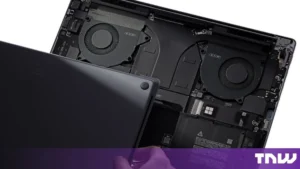
The AI Tax and the Global Memory Crisis How Soaring Component Costs are Reshaping the PC and Smartphone Markets


The global personal computing market has entered a period of significant contraction for the first time in two years, as the relentless demand for artificial intelligence infrastructure begins to cannibalize the supply chains of consumer electronics. According to the latest data from the analyst firm Omdia, global shipments of desktops, notebooks, and workstations fell by 3.6% in the second quarter of 2026, totaling 65.7 million units. While a decline in shipments often suggests a cooling of consumer interest, market analysts highlight a more complex reality: demand remains relatively stable, but the soaring cost of memory components—driven by the insatiable appetite of AI data centers—has forced a spike in retail prices that is beginning to price out a significant portion of the market.
The current crisis is rooted in the architecture of the AI boom. Large-scale language models and neural networks require vast amounts of High Bandwidth Memory (HBM), DDR5 DRAM, and high-capacity NAND flash storage to function within server environments. As tech giants like Microsoft, Google, and Meta scramble to build out their AI capabilities, they have effectively cornered the market on memory production. Silicon wafer capacity that was once allocated to consumer-grade RAM and SSDs has been diverted to high-margin enterprise components. This has created a "memory siphon" effect, where the chips intended for laptops and smartphones are being redirected to the server racks of northern Virginia and Dublin, leaving device manufacturers to compete for a dwindling and increasingly expensive supply.
The Anatomy of a Market Decline
The 3.6% dip reported by Omdia is echoed by other industry trackers, such as IDC, which estimated a slightly steeper decline of 4.9%. Regardless of the specific metric, the consensus among economists is that the era of affordable, high-performance computing is facing its most severe challenge since the post-pandemic supply chain disruptions.
The impact has been felt unevenly across different hardware categories. Desktops, which often utilize slightly more mature or varied component configurations, proved more resilient, with shipments slipping only 1.3% to 13.9 million units. The notebook sector, however, bore the brunt of the volatility. Shipments of portable PCs fell by 4.2% to 51.7 million units. Omdia’s research indicates that for comparable models, retail prices have surged by 20% to 40% compared to the same period in 2025. A mid-range laptop that might have cost $800 a year ago is now frequently listed above $1,000, driven almost entirely by the inflated cost of its 16GB or 32GB memory modules.
Curiously, the sales volume did not collapse entirely, largely due to a phenomenon known as "pull-forward" demand. Anticipating that prices would continue to climb throughout 2026, many individual consumers and corporate IT departments accelerated their procurement cycles. By buying now to avoid a 20% hike in six months, these purchasers have artificially propped up current shipment numbers. However, this creates a "demand vacuum" for the coming quarters. Omdia’s June poll of business resellers revealed that more than 50% of their clients are now planning to delay further hardware refreshes until 2027 or 2028, citing unsustainable hardware costs.
Vendor Performance: Apple Defies the Trend
The competitive landscape of the PC market is being redrawn by this supply crisis. Lenovo maintained its position as the world’s largest PC vendor, shipping 16.6 million units and securing a 25% market share. However, even the industry leader saw a 2.1% decline in volume. The situation was more dire for HP, which saw the sharpest drop among the top-tier manufacturers with a 9% decline in shipments. Dell followed suit with a 4.9% slip, as the company struggled to maintain its margins in the face of rising component bills.
The notable exception to this downward trend was Apple. The Cupertino-based giant grew its shipments by an impressive 15.9%, reaching 7.3 million units and gaining two percentage points in market share. This growth was fueled by the launch of the MacBook Neo, a device that resonated with the high-end market despite a significant price increase. Apple raised prices across its MacBook lineup by as much as $300 per unit this year.
Analysts suggest Apple’s success is twofold: first, its customer base is generally less price-sensitive and more brand-loyal; second, Apple’s vertical integration and long-term supply contracts for NAND and DRAM provide it with a level of insulation that smaller or more diverse manufacturers lack. While Apple is still paying the "AI tax" on its components, its ability to command premium prices allows it to absorb these costs without sacrificing its market position.
The Death of the Budget Smartphone
While the PC market is struggling, the smartphone sector is facing an existential crisis, particularly at the lower end of the price spectrum. Omdia projects that global shipments of smartphones priced below $400 will plummet by more than 22% by the end of 2026. This is not a matter of consumer preference, but of mathematical impossibility.
In the budget segment, profit margins are razor-thin. In the first quarter of 2026, memory components alone accounted for nearly 60% of the total bill of materials (BOM) for a sub-$400 phone. For ultra-budget devices priced under $99, memory and storage costs now exceed 64% of the production cost. Premium manufacturers can mitigate these rises by using slightly older display technology or optimizing other internal components. Budget manufacturers, such as Transsion, OPPO, vivo, Honor, and Xiaomi, have no such luxury; they have already stripped their devices to the bare essentials.
As a result, these brands are either aggressively raising prices—effectively moving out of the budget category—or quietly withdrawing from the low-end market altogether. The "digital divide" is widening as a result. While shipments of phones priced above $400 are expected to grow by 5.7% this year, the overall mobile market is set to shrink by 12%. The industry is drifting upmarket by necessity, leaving consumers in emerging markets and low-income brackets with fewer and more expensive options.
A Pervasive Crisis: From Gaming to Legacy Silicon
The ripple effects of the AI-driven memory shortage are appearing in unexpected corners of the technology world. Microsoft has implemented its third price hike for the Xbox Series consoles, citing memory and storage costs that have more than doubled in eighteen months. Valve, once a champion of affordable handheld gaming with the Steam Deck, recently launched its high-performance Steam Machine at a premium price point of $1,049, a move necessitated by the current component environment.
The desperation for memory has even reached the "legacy" market. Prices for DDR2 DRAM—a technology standard that debuted in 2003 and is largely obsolete for modern computing—have seen a sudden and sharp spike. This is because industrial manufacturers of medical devices, automotive components, and infrastructure systems are scrambling for any available memory supply to keep older production lines running. When a 23-year-old chip architecture becomes a hot commodity, it serves as a stark indicator of a systemic supply failure.
The retail sector is also sounding the alarm. The CEO of Currys, the United Kingdom’s largest electronics retailer, recently warned that the current inventory of "pre-hike" stock is nearly exhausted. He advised consumers that the laptops and phones arriving on shelves in the final quarter of 2026 will carry significantly higher price tags than those currently available.
Chronology of the Crisis
To understand the current state of the market, one must look at the timeline of the AI transition:
- Late 2023 – Mid 2024: Generative AI becomes a corporate priority. Major chipmakers like Samsung and SK Hynix begin shifting production capacity from standard consumer DRAM to High Bandwidth Memory (HBM) to satisfy Nvidia’s surging demand.
- Early 2025: Initial signs of a consumer memory shortage emerge. SSD and RAM prices rise by 10-15% as inventories begin to thin.
- Late 2025: The "Server First" policy becomes industry standard. Memory manufacturers prioritize long-term contracts with data center providers over spot-market sales to PC and phone makers.
- Q1 2026: Memory costs hit 60% of the BOM for budget smartphones. Major brands begin canceling low-margin product lines.
- Q2 2026: Global PC shipments fall 3.6%. Apple raises MacBook prices by $300. DDR2 legacy memory prices surge as the shortage goes systemic.
Outlook: When Will the Pressure Ease?
The path to recovery appears long and fraught with uncertainty. Jensen Huang, CEO of Nvidia, has stated that the structural imbalance between chip supply and AI demand will likely persist for "quite a few years," as the global build-out of AI "factories" is still in its early stages. IDC’s forecast is similarly cautious, suggesting that the memory market will not reach a state of equilibrium until early 2028.
There is, however, one potential mitigating factor. Chinese memory manufacturers, led by firms like CXMT (ChangXin Memory Technologies), are rapidly expanding their production capabilities. These companies are focusing heavily on standard DDR5 and LPDDR5 memory—the types used in consumer PCs and phones—rather than the high-end HBM required for AI. If these firms can scale their output and navigate international trade restrictions, they may provide the "release valve" the consumer market desperately needs.
For now, the advice from market analysts remains consistent and sobering. For consumers and businesses alike, the strategy of "waiting for prices to drop" may be a losing one. In a market where the core components of modern life are being redirected to feed the growth of artificial intelligence, the cost of silicon is no longer a reflection of consumer demand, but a reflection of the global race for computational supremacy. As the industry moves into the second half of 2026, the "AI tax" is no longer a theoretical concern—it is a line item on every receipt.