The AI Paradox: Why Outcomes, Not Effort, Must Redefine Value in the Age of Artificial Intelligence

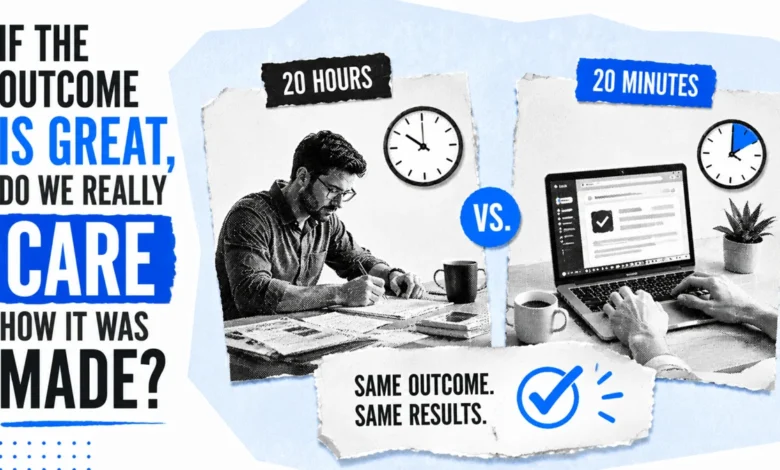
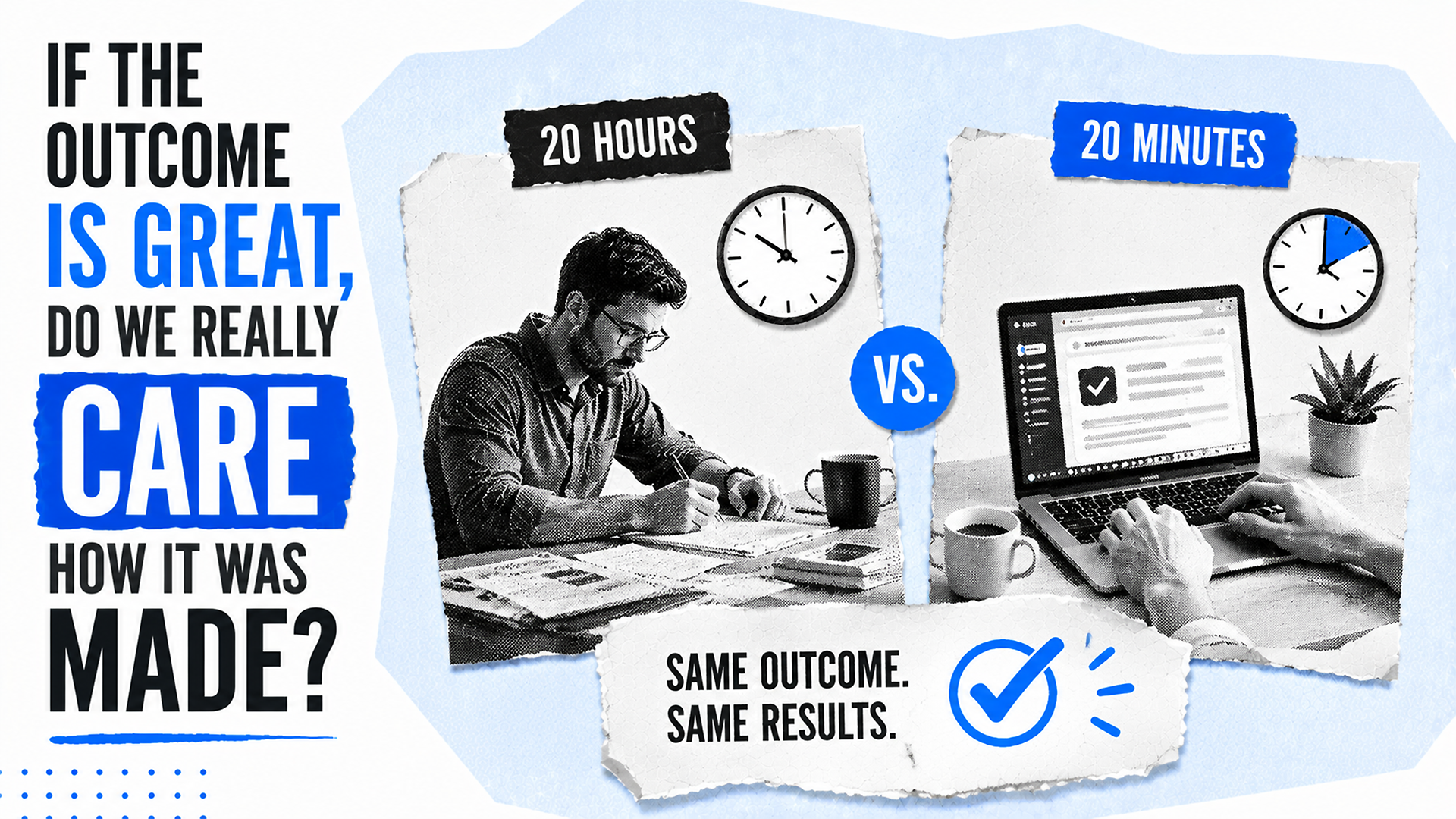
The modern professional services landscape is increasingly confronted with a fundamental challenge to traditional notions of value, particularly with the accelerating integration of Artificial Intelligence (AI). This paradigm shift is perhaps best encapsulated by a common scenario: a client commissions two distinct deliverables, both expertly fulfilling the brief, yielding identical, positive business outcomes, and leaving the client initially satisfied. The inherent value of these deliverables appears equal until the client discovers a stark difference in their creation time—one took 20 hours of human labor, the other a mere 20 minutes with AI assistance. This revelation frequently triggers a cascade of questions regarding fairness, pricing, and the very definition of professional remuneration.
The Evolving Landscape of Value Perception
The discomfort arising from the rapid, AI-driven creation of valuable work is deeply rooted in decades of conditioning that inextricably links perceived value to visible effort. Historically, the longer and more arduous a task appeared, the more justifiable its associated cost. This deeply ingrained correlation manifests in various professional contexts, from legal fees based on billable hours to consulting rates reflecting extensive research and manual analysis. The introduction of AI disrupts this established mental model, forcing a re-evaluation of what clients are truly paying for.
-
Historical Precedent: The Craft vs. Automation Debate: This tension is not entirely new. Throughout history, technological advancements have consistently challenged existing labor paradigms. The Industrial Revolution, for instance, saw craftsmen resent the mechanization of tasks, fearing devaluation of their skill and effort. Similarly, the advent of sophisticated software tools in fields like graphic design or architecture reduced the manual drafting time significantly, yet the value of the final design remained high, attributed to the designer’s creative vision and expertise, not the hours spent drawing lines by hand. AI represents the latest, and perhaps most profound, iteration of this ongoing debate, pushing the boundaries of what constitutes "effort."
-
The Engineer’s Hammer: A Modern Parable of Expertise: The enduring anecdote of the ship engine engineer powerfully illustrates this principle. When a complex ship engine failed, multiple attempts by in-house teams proved futile. An experienced engineer was called in, who, after a brief inspection, tapped a single spot with a small hammer, restoring the engine to full functionality. His invoice for $10,000 incensed the owners, who demanded an itemized bill. The engineer’s legendary response: "$1 for tapping with a hammer, $9,999 for knowing where to tap." This tale, regardless of its factual basis, serves as a potent reminder that true value often resides not in the visible action, but in the accumulated knowledge, insight, and judgment that informs that action. In the context of AI, the "tap" becomes the prompt, the model, or the automated process, while the "knowing where to tap" remains the human’s strategic input, critical thinking, and domain expertise.
The AI Revolution: Speed, Scale, and Shifting Expectations
The past few years have witnessed an unprecedented acceleration in AI capabilities, particularly with the emergence of generative AI models like ChatGPT. This rapid advancement has not only expanded the scope of tasks that can be automated but has also intensified the public discourse surrounding AI’s role in professional work.
-
Market Dynamics and AI Adoption Rates: The global AI market is experiencing explosive growth. According to IDC, worldwide spending on AI is projected to reach over $500 billion in 2024, reflecting a robust compound annual growth rate (CAGR) as businesses across sectors integrate AI into their operations. Industries such as marketing, content creation, software development, and customer service are at the forefront of this adoption wave. A 2023 report by PwC estimated that AI could contribute up to $15.7 trillion to the global economy by 2030, largely through productivity gains and new product development. This economic potential underscores the inevitability of AI integration and the competitive disadvantage faced by those who resist it.
-
Public Perception and the Trust Deficit: Despite the economic benefits, public and client sentiment towards AI-generated work remains complex and often contradictory. A 2023 Pew Research Center study revealed that while a significant portion of the public acknowledges AI’s potential benefits, there is also widespread concern about its societal impact, including job displacement and ethical implications. Specifically, when consumers are aware that a product or service was created with AI, their willingness to pay a premium, or even the standard rate, can decrease, even if the quality is demonstrably high. This "trust deficit" is a critical factor for service providers to navigate. Clients, particularly in high-stakes fields, often express apprehension about transparency, accountability, and the potential for AI to introduce bias or inaccuracies without human oversight. This indicates that while the outcome might be excellent, the process still matters to many, especially concerning trust.
Beyond Effort: Identifying Legitimate Concerns with AI Integration
While the time-versus-value fallacy often drives initial discomfort, not all objections to AI are unfounded. Indeed, some of the most critical concerns about AI have little to do with the speed of creation and everything to do with fundamental issues of trust, ethics, and accountability.
-
Ethical Frameworks and Algorithmic Bias: AI systems are trained on vast datasets, which can sometimes reflect and amplify existing societal biases. This can lead to discriminatory or unfair outcomes, particularly in sensitive areas like hiring, lending, or criminal justice. Ensuring fairness, transparency, and equity in AI algorithms is a paramount ethical concern. Without careful human oversight and robust testing, AI-generated content or decisions can inadvertently perpetuate harmful stereotypes or misinformation.
-
Transparency and Disclosure: The Client’s Right to Know: A significant ethical consideration revolves around transparency. Should clients be informed if AI was used in creating their deliverables? Many argue for clear disclosure, believing clients have a right to know the methodology behind the services they purchase. Lack of transparency can erode trust, leading to accusations of deception or misrepresentation, even if the final product is satisfactory. Industry standards are beginning to emerge, advocating for clear labeling of AI-assisted content or services.
-
Accountability in an Automated World: The Human Anchor: One of the most critical objections to unbridled AI use centers on accountability. When an AI system produces an error, or when its output leads to negative consequences, who bears the responsibility? The AI itself cannot be held liable. Instead, accountability invariably falls on the human professional, the consultant, the employee, or the company that deployed and vouched for the AI’s output. This human responsibility underscores the idea that AI is a tool, not a substitute for human judgment and ethical oversight. The risk of reputational damage or legal repercussions remains firmly with the human agents.
-
Data Security and Intellectual Property Challenges: The use of AI, particularly generative models, raises significant questions about data privacy and intellectual property. Training AI models often involves ingesting vast amounts of data, raising concerns about the security of proprietary client information or the inadvertent use of copyrighted material. Ensuring that AI tools comply with data protection regulations (like GDPR or CCPA) and respect intellectual property rights is a complex but crucial challenge that requires careful consideration and robust safeguards.
The "Outcome Test": A New Paradigm for Evaluating AI-Enhanced Services
Given these complex considerations, a more productive approach to evaluating AI-enhanced services shifts focus from the how to the what. This "outcome test" prioritizes the measurable results and intrinsic qualities of the deliverable over the tools or time expended in its creation.
- Defining Success in the AI Era: For a deliverable to pass the "outcome test," it must meet several criteria:
- Accuracy: Is the information or solution presented factually correct and free from errors?
- Usefulness: Does it effectively solve the client’s problem or achieve their desired goal?
- Trustworthiness: Can the client rely on its content and the process behind it? Is it free from bias and ethically sound?
- Ethical Compliance: Does its creation and content adhere to ethical standards and legal regulations, particularly concerning data privacy and intellectual property?
- Alignment with Intent: Does it truly reflect the client’s brand, voice, and strategic objectives?
If a deliverable, regardless of its AI genesis, satisfies these rigorous criteria, the method of its production becomes secondary to its demonstrable value. This reframing moves the conversation away from a superficial evaluation of effort and towards a profound assessment of impact and integrity.
- The Indispensable Role of Human Oversight: Crucially, passing the "outcome test" with AI tools requires significant human input. AI excels at execution and synthesis, but humans remain indispensable for:
- Judgment: Deciding what problem to solve, what data to feed the AI, and how to interpret its output.
- Taste and Creativity: Infusing deliverables with unique perspectives, aesthetic appeal, and emotional resonance that AI struggles to replicate authentically.
- Decision-Making: Strategic choices about deployment, ethical considerations, and risk assessment.
- Communication: Articulating complex ideas, building client relationships, and explaining AI-assisted processes.
- Accountability: Ultimately standing behind the work, taking responsibility for its accuracy, ethical implications, and impact.
Implications for Industry and the Future of Work
The widespread adoption of AI, coupled with a focus on outcome-based evaluation, carries profound implications for various industries, business models, and the very nature of work.
-
Reshaping Business Models and Pricing Strategies: The traditional hourly billing model, heavily reliant on tracking effort, is becoming increasingly tenuous in an AI-powered world. Service providers will be compelled to transition towards value-based pricing, where fees are tied to the demonstrable impact and results delivered, rather than the time spent. This shift encourages efficiency and innovation, rewarding providers who can achieve superior outcomes more quickly through intelligent tool utilization. For example, a marketing agency might charge based on lead generation or conversion rates, rather than hours spent drafting emails, acknowledging that AI can accelerate the latter while human strategy optimizes the former.
-
Upskilling and the Evolving Workforce: The rise of AI will necessitate a significant re-skilling and upskilling of the workforce. Routine, repetitive tasks that AI can perform efficiently will diminish, while demand for uniquely human skills will surge. These include critical thinking, problem-solving, creativity, emotional intelligence, complex communication, and ethical reasoning. Professionals who can effectively leverage AI as a co-pilot, augmenting their capabilities rather than being replaced by them, will thrive. Educational institutions and corporate training programs will need to adapt rapidly to equip individuals with these future-proof competencies.
-
Regulatory Responses and Industry Standards: As AI becomes more ubiquitous, governments and industry bodies are actively exploring regulatory frameworks to address ethical concerns, ensure transparency, and manage risks. Initiatives like the European Union’s AI Act aim to establish comprehensive guidelines for AI development and deployment, focusing on safety, fundamental rights, and democratic values. These regulations will shape how AI can be ethically and legally integrated into professional services, demanding adherence from providers and offering protection to clients.
Conclusion: Embracing an Outcome-Driven Future
The ongoing AI revolution is challenging deeply entrenched assumptions about value, effort, and professional service delivery. While the initial discomfort often stems from a misplaced emphasis on the visible expenditure of time, the more salient concerns revolve around trust, accountability, and ethical deployment. The future of professional services will not be defined by a conflict between humans and machines, but by the synergistic partnership between them. Those who will excel are not the ones who shun AI, but those who master its use, applying human judgment, creativity, and accountability to drive superior outcomes.
The ultimate measure of success in this new era will be the demonstrable quality, utility, and trustworthiness of the results, rather than the effort invested in their production. As the landscape continues to evolve, the premium will be placed squarely on the human capacity for strategic thinking, ethical decision-making, and the unwavering commitment to delivering genuine value, irrespective of the tools employed. The true losers in the AI age will be those who remain fixated on evaluating effort, while the winners embrace a future where outcomes are the sole currency of success.