How a Serendipitous Harvard Lab Discovery Led to Pascal and an $8.5 Million Bid to Reinvent Global Cooling

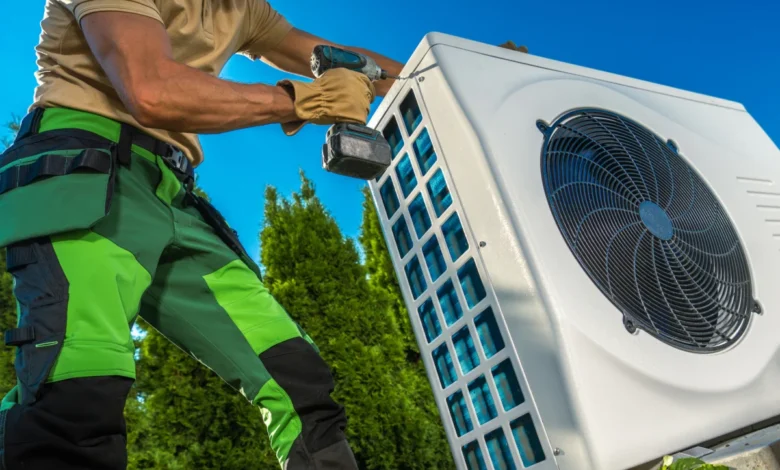
For decades, the global cooling appliance industry has been locked in a relentless cycle of environmental remediation and engineering compromise. From household refrigerators and commercial supermarket display cases to residential air conditioners and industrial heat pumps, the fundamental mechanics of keeping things cold or warm have relied heavily on chemical refrigerants. Yet, this reliance has created a prolonged environmental stalemate. For roughly thirty-five to forty years, scientists, chemical engineers, and industry stakeholders have engaged in what climate researchers describe as a relentless game of whack-a-mole.
Older gaseous refrigerants, most notably chlorofluorocarbons like Freon, severely depleted the stratospheric ozone layer, prompting international bans under the landmark Montreal Protocol. The industry subsequently transitioned to hydrofluorocarbons, such as R-134a. While these alternatives spared the ozone layer, they emerged as exceptionally potent greenhouse gases, trapping thousands of times more heat in the atmosphere than carbon dioxide pound-for-pound. Although regulatory bodies worldwide continue to phase down these compounds in favor of lower-global-warming-potential synthetics, engineers still face strict trade-offs regarding toxicity, flammability, and systemic energy efficiency.
Enter Pascal, an innovative Massachusetts-based climate technology startup founded by Adam Slavney and Jinyoung Seo. Emerging from stealth with a fresh $8.5 million in follow-on seed funding, the company aims to break this historical treadmill. Co-led by Sazze Partners and LB Investment, with strategic participation from KDB Silicon Valley, the latest capital infusion brings Pascal’s vision closer to commercial reality. Crucially, this funding round materialized ahead of schedule, spurred by an unexpected commercial validation: a binding contract with a multinational beverage conglomerate to pilot the startup’s next-generation cooling technology.
Pascal’s core value proposition is bold yet straightforward. Refrigerators and heat pumps powered by its proprietary technology promise to achieve roughly a 20 percent increase in energy efficiency compared to existing commercial and residential models. Because modern heat pumps and traditional refrigerators rely on identical thermodynamic principles—transferring heat from one enclosed space to another—the potential implications span multiple multi-billion-dollar consumer and industrial markets. With a first functional prototype slated for early next year and polished commercial refrigerator units targeted for a 2028 rollout, Pascal is positioning itself at the vanguard of sustainable thermal management.
The Accidental Breakthrough at Harvard University
The foundations of Pascal were not born out of a top-down corporate research mandate, but rather through a quintessential moment of scientific serendipity in a university laboratory. Prior to launching the startup, Adam Slavney and Jinyoung Seo were conducting advanced materials research at Harvard University. Their initial objective was relatively standard: evaluate a new class of materials to determine whether they could improve the efficiency of thermal cooling systems.
During their experimentation, the researchers needed to conduct high-pressure measurements. The analytical instrument housed in their lab required the use of a specific gas medium to maintain pressure during testing. At one point, the research team swapped out the original gas for a different one, expecting the baseline measurements to remain unaffected, as the gas was ostensibly just a neutral pressurizing agent.
Instead, the empirical results defied expectations. The measurements shifted in ways that standard thermodynamic models could not easily explain. Puzzled by the anomaly, Slavney and Seo initiated an internal forensic investigation into their own methodology.
“Why are these things different? What did we change?” Slavney recalled asking during those initial lab sessions. While the team developed an early inkling of the underlying physical mechanism within roughly three months of observation, securing definitive, peer-review-grade proof took between one and two years of rigorous follow-up testing.
That empirical proof eventually became the foundational intellectual property of Pascal. Rather than forcing the team to abandon their line of inquiry, the anomaly revealed an entirely novel pathway for harnessing solid-state refrigeration principles without relying on traditional compressor-driven fluid loops or hazardous chemical refrigerants.
Demystifying the Technology: How Pascal’s Gas-Solid System Works
To understand the significance of Pascal’s innovation, it is helpful to examine the evolution of alternative cooling architectures. For years, researchers looking to escape the environmental liabilities of gaseous refrigerants have focused heavily on solid-state refrigerants. These materials offer a compelling environmental advantage: because they exist in a solid state, they cannot leak or vent into the atmosphere, completely eliminating the ozone depletion and atmospheric warming risks associated with volatile chemical vapors.
Traditional solid-state cooling concepts typically rely on caloric effects—such as barocaloric materials that give off heat when mechanically squeezed and absorb heat when that physical pressure is released. However, applying massive mechanical pressure directly to solid blocks of material requires heavy, specialized machinery, often operating at pressures too high and inefficient for consumer-grade appliances.
Pascal bypasses this engineering bottleneck by ingeniously combining gas dynamics with solid-state material properties. Instead of compressing a solid block of metal or polymer, Pascal’s system compresses a benign, ubiquitous gas—specifically carbon dioxide—into a specialized containment cartridge. Inside this cartridge lies a proprietary, porous, sponge-like material developed by the startup.
As the carbon dioxide gas is forced into the microscopic pores of this proprietary material, individual gas molecules begin colliding rapidly with the internal pore walls. These continuous molecular collisions transfer kinetic energy directly to the solid material, causing it to warm up. A conventional heat exchanger then exhausts a portion of that accumulated heat away from the system.
When the cycle is reversed, the process runs backward: the material absorbs thermal energy from the internal heat exchanger and transfers it back to the carbon dioxide molecules as the gas expands out of the porous matrix.
In a fully realized Pascal refrigeration unit, dual cartridges operate continuously in tandem. One cartridge actively absorbs heat from the interior of the refrigerator compartment, transferring it to the carbon dioxide stream, while the second cartridge simultaneously releases heat from the carbon dioxide to the outside ambient air. Once the cartridges reach their thermal limits—becoming excessively hot or cold—the fluid flow and operational cycle reverse.
Furthermore, the system’s underlying durability has undergone rigorous stress testing. According to Slavney, the proprietary material has successfully cycled up to 300,000 times in laboratory environments, translating to roughly a year of continuous, accelerated field operation without structural degradation. Because the system moves heat more effectively than competing solid-state alternatives, Pascal does not require the extreme, high-pressure thresholds that traditionally plague alternative refrigeration designs.
“We’re using conventional systems to do it,” Slavney noted, emphasizing the manufacturing and scalability advantages. “That means we believe we can make it cheap, and that means we can make it widespread.”
Strategic Milestones, Commercial Pilots, and Financial Backing
The journey from an unexplained laboratory anomaly to a heavily funded venture-backed startup highlights the growing appetite among institutional investors for hard-tech climate solutions. With the close of its $8.5 million follow-on seed round, Pascal has secured the runway necessary to transition from foundational research to scaled industrial prototyping.
The round’s co-leads, Sazze Partners and LB Investment, recognized the vast commercial potential inherent in improving thermal efficiency across global supply chains. Refrigeration and air conditioning units account for a staggering share of global electricity consumption. According to international energy agencies, space cooling alone consumes roughly 10 percent of all global electricity today, a figure projected to triple by mid-century as developing nations industrialize and global temperatures rise. A 20 percent efficiency gain across this massive installed base would translate into hundreds of terawatt-hours of electricity saved annually, alongside significant reductions in municipal and industrial carbon footprints.
Pascal’s strategic decision to target commercial refrigeration first—exemplified by its newly signed pilot contract with a multinational beverage corporation—provides a pragmatic pathway to market. Commercial beverage coolers, supermarket display cases, and convenience store refrigerators operate continuously under demanding retail conditions, making them ideal testbeds for validating energy efficiency claims and durability metrics.
By securing this high-profile customer validation prior to launching its fundraising push, Pascal altered its corporate trajectory. Rather than seeking capital purely on theoretical projections, the startup entered funding negotiations backed by immediate, real-world commercial demand.
Timeline and Future Outlook
Looking ahead, Pascal has mapped out an aggressive yet structured development schedule. The company’s immediate engineering focus centers on completing its maiden functional prototype, which is officially on track for delivery in early 2025. Following extensive benchtop validation and iterative design refinements based on data gathered from the multinational beverage partner’s pilot program, Pascal plans to scale toward manufacturing readiness.
The ultimate commercial milestone remains the introduction of polished, consumer- and enterprise-ready refrigerator units slated for market release in 2028. If successful, these units could establish a new manufacturing paradigm—one that decouples high-performance thermal cooling from environmentally hazardous synthetic gases and inefficient mechanical cycles.
Broader Implications for the Cooling Industry
The broader market implications of Pascal’s breakthrough extend far beyond the balance sheets of venture capitalists or the commercial strategies of beverage giants. For decades, environmental regulators have sought to force appliance manufacturers into adopting safer alternatives through tightening compliance standards, such as the Kigali Amendment to the Montreal Protocol. However, compliance often comes at the expense of upfront manufacturing costs, system complexity, or operational efficiency.
By introducing a technology that simultaneously enhances energy efficiency by 20 percent, eliminates the threat of atmospheric chemical leakage, and relies on conventional, cost-effective system architectures, Pascal addresses the core economic and environmental friction points that have hindered past transitions.
As the startup transitions its operations from the Harvard laboratory bench to its dedicated Massachusetts facility, the eyes of the climate tech and refrigeration industries will be fixed on its upcoming prototypes. If Pascal can successfully commercialize its gas-solid refrigeration architecture at scale by 2028, it may finally put an end to the industry’s half-century game of environmental whack-a-mole, inaugurating a cleaner, more efficient era of global thermal management.