WP Trend Watcher: A New Paradigm for Navigating the WordPress Ecosystem in the Era of Information Overload

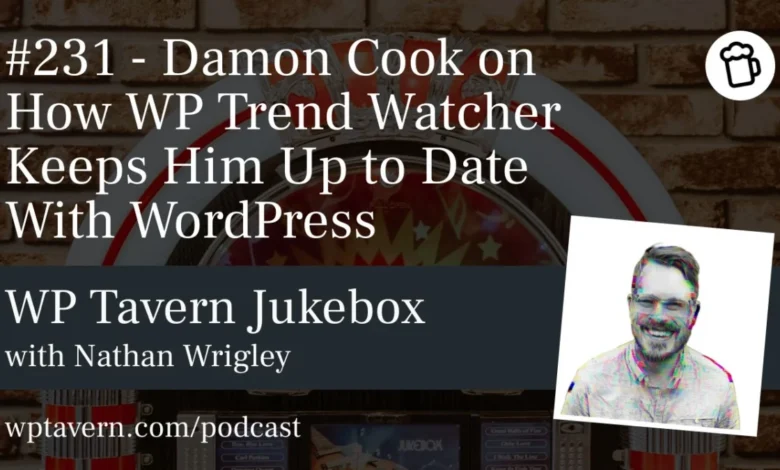
The rapid expansion of the WordPress ecosystem, which now powers over 43% of all websites on the internet, has created a significant challenge for developers, agency owners, and content creators: the relentless deluge of information. From core software updates and security patches to shifting trends in block development and community governance, the sheer volume of news has made manual monitoring increasingly inefficient. In response to this, WordPress developer Damon Cook has introduced WP Trend Watcher, an open-source, AI-driven tool designed to automate the aggregation and summarization of WordPress-related news while maintaining a critical layer of human oversight.
The project represents a shift in how professionals interact with technical updates. Rather than relying on static RSS readers that force users to sift through redundant or irrelevant content, WP Trend Watcher leverages local artificial intelligence models to curate, categorize, and synthesize industry developments. By shifting the burden of initial data gathering to automated processes, the tool aims to provide a high-level view of the "WordPress zeitgeist" without sacrificing accuracy or depth.
The Evolution of Information Management in WordPress
For over two decades, the WordPress community has relied on a decentralized network of blogs, news sites, and official repositories to disseminate information. Historically, developers kept track of these updates through manual reading habits or traditional RSS aggregators. However, the introduction of the Gutenberg editor and the subsequent transition toward full-site editing (FSE) significantly accelerated the pace of development within the core software.
The current landscape involves a complex interplay of stakeholders, including the WordPress Core team, plugin developers, theme authors, and marketing professionals. For a freelance developer or a small agency owner, keeping pace with every nuance of these updates—such as the rapid release cycles of versions like 7.1—has moved from a manageable task to a professional necessity that threatens to detract from actual billable work. Cook, who has operated within this space for over a decade, identified that the traditional approach to information gathering was no longer sustainable for those who must balance technical proficiency with business management.
Technical Architecture and Local AI Implementation
Unlike cloud-based news aggregators that rely on third-party APIs or external servers, WP Trend Watcher is designed for local installation. This approach offers several advantages, most notably in terms of privacy and data control. The tool is built on a TypeScript codebase, currently available via GitHub, which allows users to run the software on their own machines.
Central to the tool’s functionality is its integration with LLM (Large Language Model) interfaces, such as LM Studio, which facilitate the operation of open-source AI models directly on the user’s hardware. By utilizing local compute resources, the tool avoids the latency and privacy concerns associated with sending sensitive or proprietary news feeds to external cloud providers. The process follows a structured pipeline:
- RSS Ingestion: The tool fetches data from a curated list of high-authority WordPress news sources.
- AI-Driven Synthesis: Local models process the text, filtering for relevance and summarizing content based on prompts tailored to the needs of developers and agency stakeholders.
- Deduplication: The software automatically detects overlapping content, ensuring that the final output provides a clean, concise overview of the week’s events.
- Human-in-the-Loop Verification: This is the most critical stage. The AI-generated summaries serve as a draft, which the user then audits, fact-checks, and augments with personal insights.
Human-in-the-Loop: Redefining AI Utility
A common criticism of AI-driven content aggregation is the potential for hallucinations or the loss of nuance. WP Trend Watcher addresses these risks by formalizing the role of the human operator. Cook emphasizes that the tool is not an attempt at full automation; rather, it is an assistive technology meant to optimize the user’s cognitive load.
By requiring the user to engage with the summarized links, the tool ensures that the professional remains informed about the material they are publishing or acting upon. This "human-in-the-loop" model serves two purposes: it ensures the veracity of the information provided to clients or the community, and it acts as an active learning mechanism for the developer. When a user manually reviews the AI summaries and adds their own commentary, the information is processed more deeply, leading to better retention of technical changes and industry trends.
Implications for the WordPress Ecosystem
The broader impact of tools like WP Trend Watcher could be profound. As the volume of data generated by the WordPress community continues to grow, the ability to discern signal from noise becomes a competitive advantage. Agency owners who can anticipate core changes or plugin shifts before they impact client websites are better positioned to provide proactive support.
Moreover, the open-source nature of WP Trend Watcher encourages community participation. Users are not merely consumers of the tool; they can contribute to the list of RSS sources, refine the prompts used by the AI, and improve the underlying codebase. This collaborative development mirrors the ethos of the WordPress project itself, suggesting that the future of community news management may lie in decentralized, user-controlled platforms rather than centralized news aggregators.
Future Trajectory and Long-term Analysis
Looking ahead, the potential for this type of tool extends beyond mere news aggregation. As more historical data is collected through these weekly summaries, there is an opportunity to perform longitudinal trend analysis. By feeding historical reports back into an AI model, developers could potentially identify patterns in software development lifecycles, predict shifts in technology adoption, or map the origins of major features within the WordPress ecosystem.
The transition from a simple "news ticker" to a predictive tool could fundamentally change how developers plan their roadmaps. For instance, being able to trace the evolution of a feature from an initial proposal on Trac to its final implementation in Core could provide invaluable context for developers working on enterprise-level projects. While the current iteration of WP Trend Watcher focuses on efficiency and current awareness, its architecture is robust enough to support more sophisticated analytical queries in the future.
Conclusion
WP Trend Watcher represents a pragmatic response to the challenges of the modern digital landscape. By combining the processing power of local AI with the critical judgment of human professionals, it offers a sustainable way to stay informed in an industry that never sleeps. For those feeling overwhelmed by the "fire hose" of WordPress news, the tool provides not just a summary, but a framework for staying ahead of the curve. As the ecosystem continues to evolve, tools that prioritize both technological efficiency and human accountability will likely become essential equipment for the modern web developer.
Related posts: