Uniting the Shared Lab Ecosystem: MIT.nano Hosts 2026 NEMO User Meeting to Revolutionize Research Facility Management

Managing a state-of-the-art research laboratory in the twenty-first century extends far beyond the traditional boundaries of scientific inquiry and instrument maintenance. Today, the operational framework of a modern research facility requires navigating a dense labyrinth of administrative duties. Researchers must complete rigorous safety training, secure facility access, schedule precise operational windows for highly sensitive equipment, and manage complex internal billing systems. For large-scale, shared user facilities—which often support hundreds of sophisticated instruments and thousands of diverse academic, government, and commercial users—orchestrating these moving parts is a monumental undertaking. Compounding this operational friction is an emerging hurdle driven by the rise of modern interdisciplinary science: simply locating the precise technological capability required for a novel experiment across a fragmented national landscape.
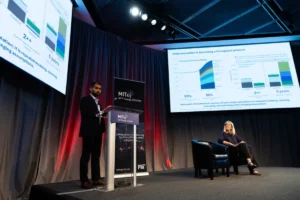
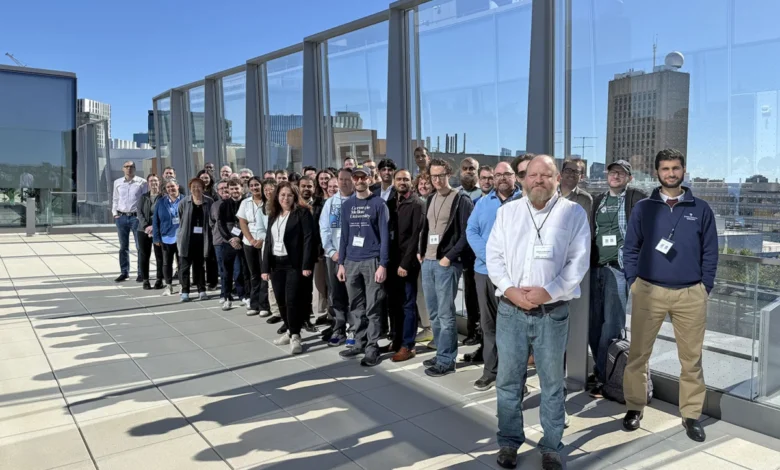
To confront these systemic challenges head-on, facility directors, laboratory managers, technical staff, software developers, industry representatives, and government researchers convened in Cambridge, Massachusetts, for the 2026 NEMO User Meeting. Hosted by MIT.nano on October 5 and 6, the two-day gathering brought together 65 specialized delegates representing 25 premier research laboratories and organizations from across the United States. Sponsored by the Northeast Microelectronics Coalition hub, the collaborative summit was explicitly designed to share innovative approaches to laboratory management, streamline administrative workflows, and forge enduring structural connections among isolated research facilities.
At the heart of the conference was the NanoFab Equipment Management and Operations system, universally known as NEMO. Originally engineered and released as an open-source software solution by the National Institute of Standards and Technology in 2018, NEMO has matured into an indispensable platform for shared research facilities. The system provides an exhaustive suite of digital tools for managing every facet of laboratory operations, while retaining a modular, open-source architecture that allows individual institutions to heavily customize the platform to suit their unique workflows.
The 2026 user meeting highlighted a defining characteristic of the rapidly expanding NEMO ecosystem: despite wide variations in physical scale, geographic location, and primary scientific mission, modern research facilities face remarkably congruent operational challenges. Whether managing a cleanroom dedicated to semiconductor manufacturing or a characterization suite focused on advanced biomaterials, the core administrative burdens remain strikingly consistent.
The Evolution of Open-Source Lab Management: A Chronology
The trajectory of the NEMO platform reflects a broader paradigm shift in how scientific infrastructure is developed and maintained. Historically, academic and national laboratories relied on proprietary, closed software systems or heavily customized, in-house databases that were costly to maintain and impossible to scale across institutional boundaries.
The release of NEMO by NIST in 2018 altered this landscape by establishing a standardized, open-source foundation. Facilities could adopt a robust scheduling and billing framework without paying exorbitant licensing fees. However, the true inflection point for the platform occurred in 2023 with the official launch of the NEMO Community Edition. NEMO-CE fundamentally transformed the software from a static tool into a dynamic, collaborative network, empowering participating facilities to independently develop software extensions and plugins, and then contribute those innovations back to the broader user base.
During the October 2026 meeting at MIT.nano, this collaborative ethos was on full display. Participants from elite research institutions—including the Massachusetts Institute of Technology, Stanford University, Columbia University, Princeton University, the University of Pennsylvania, NIST, NASA’s Jet Propulsion Laboratory, and private enterprise partners like Atlantis Labs—took the stage to present custom tools built upon the NEMO framework.
The diversity of the presentations underscored how differently configured institutions are adapting a singular platform to meet localized demands. Stanford University showcased advanced real-time digital displays providing instantaneous updates on equipment status and reservation queues. Columbia University detailed its complex operational migration to NEMO, highlighting newly engineered modules designed to automate facility billing and streamline internal user workflows. Princeton University demonstrated sophisticated automated process control charts engineered to monitor tool performance drift in real time, while the University of Pennsylvania introduced novel open-source approaches to hazardous chemical inventory management.
These presentations validated the core thesis of the NEMO community: a digital solution engineered to solve a localized problem at a single facility can rapidly evolve into a critical operational resource for the entire national research enterprise.
Scaling Operations and Multiplying Efficiency
To understand the tangible impact of these administrative innovations, one need only look at the scale of operations at host institution MIT.nano. Within its walls, the NEMO platform routinely supports more than 1,600 active researchers utilizing over 200 distinct, highly complex instruments. This massive user base generates approximately 160,000 hours of documented tool usage annually.
For Jorg Scholvin, associate director of Fab.nano at MIT, operating at this industrial scale renders the efficiency of everyday administrative processes paramount. When a facility manages hundreds of thousands of equipment interactions each year, even fractional improvements in software responsiveness or scheduling logic yield massive cumulative time savings for researchers.
"A small improvement in an administrative workflow can be multiplied across thousands of users and tens of thousands of equipment interactions," Scholvin noted during panel discussions.
Opening the conference, Dr. Vladimir Bulović, director of MIT.nano, emphasized the philosophical necessity of this cooperative infrastructure during his keynote remarks. "Together we can do way more than any one of us individually can," Bulović told the assembled delegates. "NEMO is the platform that gave us, finally, a streamlined way to do so."
Anna Osherov, associate director of Characterization.nano and the primary organizer of the 2026 user meeting, echoed these sentiments, pointing to the collaborative open-source model as the most compelling facet of the movement. "Open source changes the way we think about technology development," Osherov said. "We can build on what others have already developed, contribute improvements back to the community, and collectively create a platform that is more capable than what any one facility could develop on its own."
Bridging the Silos: From Individual Labs to a Connected Ecosystem
As the NEMO community has matured and scaled, a secondary, highly strategic opportunity has emerged for the national research apparatus. American universities, federal agencies, and independent research organizations operate a vast array of specialized microelectronics and nanotechnology facilities. Each facility houses unique, multimillion-dollar equipment, highly specialized technical expertise, and distinct processing capabilities.
However, a persistent bottleneck in modern science is discoverability: a researcher cannot utilize a specialized capability if they are entirely unaware of its existence, or if locating the facility requires navigating outdated, disparate web directories.
This challenge is particularly acute in the realm of advanced microelectronics research and development. Modern semiconductor innovation and rapid prototyping frequently require an iterative cycle of fabrication, advanced characterization, specialized microscopy, and failure analysis that may span multiple distinct facilities across different states. Historically, research networks have relied on static web pages, static PDF lists, or manual databases to catalog available hardware. Predictably, these resources fall out of sync with the physical reality of the lab almost as soon as they are published.
To solve this systemic discovery bottleneck, MIT.nano utilized the 2026 NEMO meeting to debut Hydra: a novel open-source platform developed with vital financial and strategic support from the Northeast Microelectronics Coalition. Hydra functions as a foundational component of the NEMC Technical Concierge, an ambitious program designed to help academic and commercial researchers seamlessly identify and access specialized microelectronics capabilities across a distributed national network of facilities.
Unlike traditional cataloging software, Hydra is architected to interface directly with multiple distinct NEMO installations. Rather than forcing facility managers to manually maintain a separate, redundant public database, Hydra automatically draws verified operational data directly from the active, day-to-day management systems already utilized by the labs. The result is a dynamic, real-time compilation built entirely upon the "ground truths" of actively functioning facility management systems.
"Hydra does not replace any lab management system," Osherov explained during the technical unveiling. "It connects, synchronizes, and keeps data up to date across all connected systems in real time."
In this symbiotic operational model, NEMO functions as the localized source of administrative truth within an individual facility, while Hydra elevates that operational data into a discoverable, interoperable asset across the broader national research ecosystem. For a modern researcher, this capability represents a paradigm shift: the ability to instantly locate a rare piece of microelectronics fabrication or characterization hardware anywhere in the regional network without first needing to know which specific laboratory houses the equipment.
"The focus is to make the distributed infrastructure supporting research more discoverable and usable," Osherov emphasized.
Building Infrastructure Designed to Adapt
The conceptual framework underpinning both NEMO and Hydra reflects a broader philosophical evolution in how institutional research infrastructure must be conceived. Physical laboratories and their digital backbones can no longer be viewed as static, permanent structures. Instead, they must be engineered to flex, adapt, and scale alongside the rapid, unpredictable trajectories of modern scientific discovery.
"We need to build a flexible research space and a community-oriented space so that people feel empowered to go to it, use it, and then redefine it as the years progress, adapting it to the needs of the next generation of researchers," Director Vladimir Bulović noted.
This intrinsic flexibility applies just as rigorously to digital operational architecture as it does to physical cleanroom floor plans. As emergent materials, novel quantum devices, and advanced artificial intelligence workflows reshape the scientific landscape, institutional requirements shift rapidly. Open-source software frameworks grant individual facilities the sovereign autonomy to pivot alongside technological disruptions, while preserving a standardized mechanism to share those bespoke solutions outward.
The NEMO Wave: A Self-Sustaining Community
By the conclusion of the two-day summit, a palpable sense of momentum and shared purpose permeated the proceedings. Closing panel discussions looked ahead to the horizon of laboratory management, exploring the integration of automated data pipelines, advanced predictive maintenance algorithms, and artificial intelligence into daily operational workflows.
Industry leaders noted that the momentum surrounding the software has achieved critical mass, transforming from a decentralized collection of isolated software forks into a cohesive, self-sustaining movement.
"The community is taking on a life of its own," observed Mathieu Rampant, CEO and co-founder of Atlantis Labs, pointing to a collaborative model where facility managers organically troubleshoot complex operational problems as an interconnected collective.
Rampant noted that the administrative burden on platform maintainers has noticeably decreased as facility managers increasingly communicate peer-to-peer to resolve technical hurdles. This decentralized, cooperative energy prompted Samantha Roberts, director of the City University of New York nanofabrication facility, to coin a phrase that quickly became a rallying cry among attendees: "the NEMO wave."
"Everyone is invested in it and cares about it," Roberts said, reflecting on the psychological hurdles institutions face when overhauling legacy administrative software. "It takes a lot of effort to change your lab management system, and if we keep this going, we can build out something that’s really cool and that works."
Ultimately, the driving force behind the NEMO initiative remains anchored in its foundational mission: empowering scientific discovery. By removing the administrative friction, scheduling bottlenecks, and discovery hurdles that traditionally plague shared user facilities, platforms like NEMO and Hydra ensure that researchers can dedicate their energy where it matters most—pushing the boundaries of human knowledge.
In critical sectors like advanced microelectronics, where American technological leadership increasingly hinges on rapid prototyping and unhindered access to distributed, specialized infrastructure, that operational fluidity is vital. By bridging the gap between isolated laboratories and creating a unified digital ecosystem, the NEMO community is actively accelerating the journey from a theoretical concept in a researcher’s mind to a functional experiment, and ultimately, to real-world technological impact.