In the digital advertising ecosystem, the metrics used to evaluate campaign success often serve two distinct masters: the platform selling the ad inventory and the corporate brand funding it. A growing debate has emerged concerning how tech giants like Google interpret statistical certainty in Brand Lift, Search Lift, and Conversion Lift studies. While platforms routinely encourage advertisers to act upon "directional insights" and moderate confidence intervals, a deeper examination of statistical replication reveals a profound misalignment in risk tolerance between media sellers and corporate budget holders.
The Anatomy of Platform Guidance and "Directional" Metrics
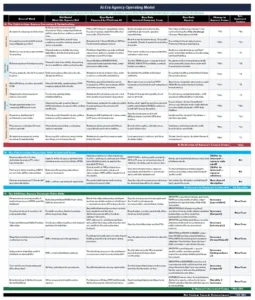
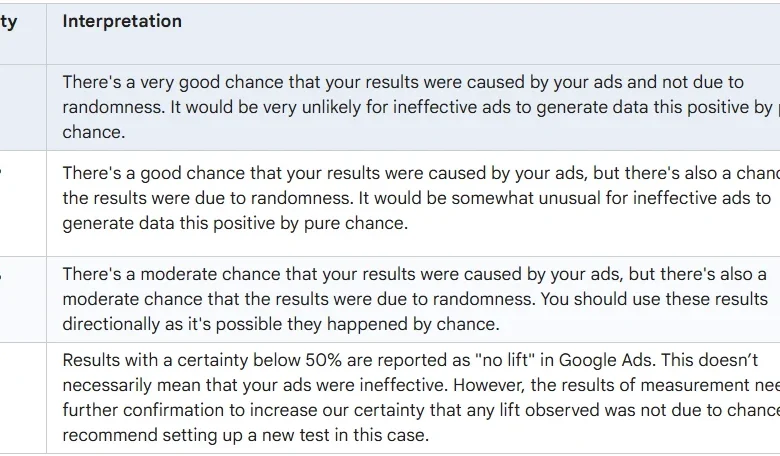
For marketing directors and Chief Financial Officers, terminology matters. Recently scrutinized guidance from major ad platforms regarding Brand Lift and Conversion Lift studies highlights a classification system that categorizes statistical certainty into distinct bands. Under these frameworks, certainty ratings of 90% or higher are frequently deemed a "very good chance" of success, while percentages hovering between 70% and 90% are classified as a "good chance." Even ranges between 50% and 70% are often described as offering "moderate chances" or providing "valuable, directional insights."
The phrase "directional results" has become a ubiquitous fixture in digital marketing reviews. On its surface, the term implies sophistication, nuance, and prudent evaluation. In practice, however, critics argue that "directional" functions as a catch-all phrase that can justify nearly any outcome. When a platform informs an advertiser that a campaign showing a 50% to 70% certainty rate offers actionable insights, the underlying message is frequently interpreted by corporate stakeholders as an assurance that the ads probably performed well, coupled with an implicit invitation to allocate additional capital to see if the results repeat.
This semantic framing creates a fundamental asymmetry. If a campaign yields ambiguous or weak statistical evidence, the platform loses nothing by encouraging a follow-up investment. Conversely, the corporate advertiser must risk hundreds of thousands—or millions—of dollars of its own capital on the assumption that the initial outcome was causal rather than coincidental.
Divergent Incentives: The Platform Versus The CFO
To understand the friction in modern marketing analytics, industry experts point to the starkly different incentives governing the two primary parties involved in digital ad transactions.
Party One consists of the advertising platform, whose primary objective is to monetize ad inventory. In this role, the platform operates with minimal downside risk. If a performance study yields marginal or suggestive evidence that an ad campaign might have worked, the platform has every commercial incentive to retain that data point as a positive indicator. Even if the evidence is weak, the possibility of a successful outcome provides a theoretical justification for continued spending.
Party Two comprises the corporate brand, represented by marketing directors, CMOs, and CFOs. These stakeholders bear the direct financial consequences of budget allocation. Their mandate is not merely to uncover interesting anomalies within a dataset, but to answer a singular, high-stakes business question: Is the empirical evidence strong enough to warrant risking another multi-million-dollar tranche of corporate capital on the premise that the previous expenditure generated a genuine return?
Because the platform bears none of the financial risk associated with an overly optimistic interpretation of data, the burden of potential failure falls entirely on the advertiser. While platforms routinely include standard legal disclaimers advising clients to interpret metrics based on their own risk tolerance, the persuasive language embedded in client dashboards and executive decks heavily favors action over caution.
Evaluating Replication Risk Through Bayesian Modeling
To bridge the gap between abstract statistical certainty and practical financial decision-making, marketing analysts have increasingly turned to methodologies rooted in biostatistics, such as Bayesian replication models inspired by the work of statistician Steven Goodman. These models address a critical oversight in platform-reported metrics: they evaluate what happens if a campaign is replicated under identical real-world conditions.
Consider a hypothetical YouTube Brand Lift study reporting a positive lift in brand consideration of three percentage points, achieved at a 70% certainty level—a threshold the platform categorizes as a "good chance." When translated through a replication risk model, that seemingly favorable designation reveals a sobering reality for financial decision-makers.
Under standard replication calculations factoring in the inherent uncertainty of both the initial measurement and a subsequent rollout, a 70% certainty metric often translates into:
- A significantly lower-than-expected probability of achieving true positive lift upon repetition.
- A high vulnerability to Type S (sign) and Type M (magnitude) errors, where the initial impact is both statistically fragile and artificially inflated.
- A substantial replication risk, meaning the likelihood of failing to reproduce a statistically defensible result in a subsequent campaign is unacceptably high for rigorous financial auditing.
For enterprise-level organizations deploying millions of dollars into digital campaigns, relying on metrics below a 90% threshold of certainty introduces commercial exposure that many corporate governance structures would reject in other capital expenditure domains. Consequently, many seasoned media directors advocate for a strict operational floor of 90% to 95% certainty before advising executive leadership to approve repeat funding.
Broader Industry Implications and the Path Forward
The issues surrounding statistical interpretation are not isolated to a single search and video titan. Similar analytical frameworks are utilized across major social media and programmatic advertising ecosystems, including Meta, TikTok, and various independent attribution vendors. Agencies and ad tech providers whose business models and compensation structures scale with total media spend often share an institutional bias toward optimistic metric interpretation.
As digital marketing budgets face increasing scrutiny in tighter macroeconomic climates, industry analysts emphasize the need for internal accountability. Corporate marketing departments are being urged to decouple their internal standards of evidence from the definitions promoted by the entities selling the advertising inventory. By establishing independent verification standards, utilizing robust replication modeling, and refusing to outsource risk tolerance to platform dashboards, modern enterprises can ensure that capital allocation decisions are driven by verifiable business outcomes rather than favorable statistical semantics.