Influencer marketing teams have mastered the art of campaign ideation and execution, from identifying the perfect creators to crafting compelling content strategies. However, a persistent challenge often lurks in the shadows of these creative endeavors: the laborious administrative work involved in managing influencer payments. This often-overlooked aspect can transform a smooth campaign into a frustrating experience, marked by delayed payments, disgruntled creators, and escalating complexity as programs scale. The traditional methods of tracking down payment details, securing invoice approvals, and managing a growing mountain of tax documents are not only time-consuming but also prone to errors, ultimately undermining the success of influencer collaborations. Fortunately, a paradigm shift is underway, driven by the adoption of automated tools and streamlined processes designed to make influencer payments a more effortless and efficient part of the marketing workflow.
Understanding the Nuances of Influencer Compensation
At its core, influencer payments represent the financial or in-kind compensation provided to social media creators in exchange for promoting a brand and its offerings. This compensation acknowledges their reach, the time invested in content creation, and their specialized skills in engaging audiences. Historically, influencer remuneration often took the form of product gifting, services, or exclusive experiences. However, the explosive growth of the influencer marketing industry has elevated these payments into a critical business operation. Modern influencer campaigns necessitate close collaboration between marketing departments and finance teams to ensure accurate and timely disbursements.
Evolving Compensation Models in the Influencer Landscape
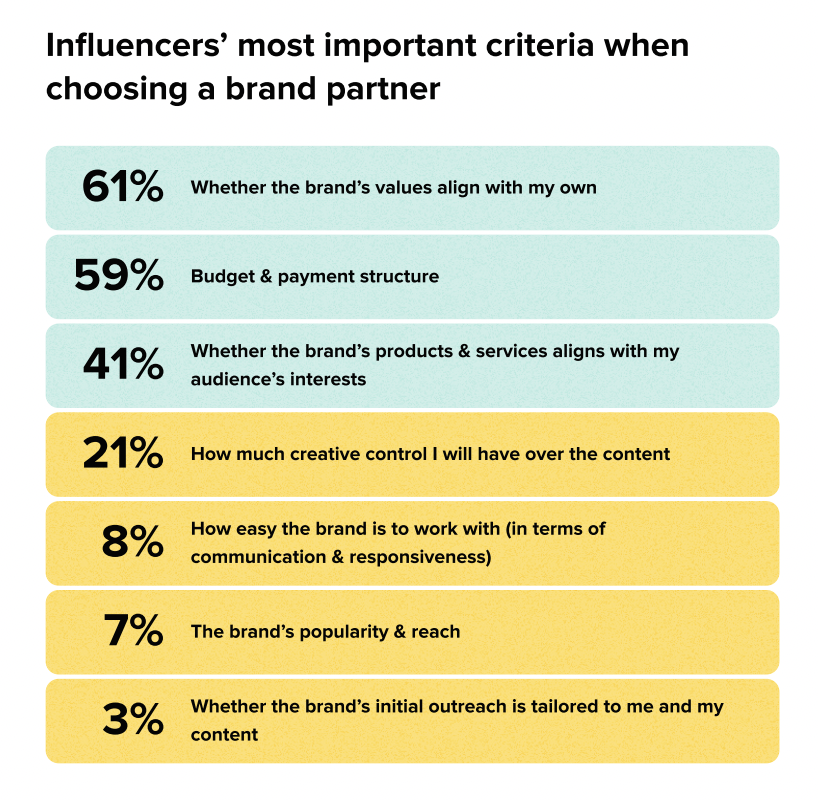
Brands employ a variety of compensation models, carefully selected to align with their budgets, campaign objectives, and overall influencer marketing strategy. The choice of payment structure is a crucial factor, significantly influencing a creator’s decision to partner with a brand. Data from "The State of Influencer Marketing Report" reveals that a substantial 59% of influencers prioritize budget and payment structure when evaluating potential brand collaborations. Understanding these diverse models is key to successful partnership negotiations.

Fixed Rate Per Post: The Straightforward Approach
The most common compensation model is the flat fee per post, also known as a fixed rate. This model involves a predetermined price for a specific deliverable, such as a set amount for an Instagram Reel or a TikTok video. Its straightforward nature allows for accurate forecasting of campaign expenses, based on pre-negotiated influencer pricing. Platforms like Sprout Social’s Influencer Marketing solution facilitate the creation of payment drafts directly within campaign workflows, enabling clean logging of fixed costs before a campaign even launches. This predictability is highly valued by brands seeking to manage their marketing budgets effectively.
Performance-Based and Affiliate Commissions: Tying Payouts to Results
Performance-based compensation models offer a dynamic approach, where creators earn a percentage of sales generated through unique tracking links or promotional codes. This model is particularly attractive to brands as it directly links influencer fees to tangible business outcomes. However, it places a greater onus on influencer marketing teams to meticulously track affiliate terms, including commission percentages and conversion data, to ensure accurate payouts. Integrations with platforms like TUNE can centralize this performance data, allowing for precise calculation of amounts owed and the creation of payment drafts based on actual conversions. While offering high ROI tracking potential, this model can present lower budget predictability due to its variable nature.
Product Gifting and In-Kind Exchanges: A Cost-Effective Strategy
Product gifting and in-kind exchanges are frequently utilized for campaigns involving nano-influencers or for initial influencer seeding efforts. This model involves providing free merchandise or complimentary services in return for content creation. While this approach can be more cost-effective for brands, accurately measuring return on investment (ROI) can be challenging, as no direct monetary transactions occur. Nevertheless, it is crucial for marketing teams to meticulously record the value of these in-kind exchanges to conduct a comprehensive analysis of influencer marketing ROI.
Long-Term Retainers and Hybrid Models: Fostering Enduring Partnerships
Some brands opt for long-term retainer agreements, engaging top-performing creators on an ongoing monthly basis. While seemingly a significant upfront investment, recent influencer marketing statistics suggest that these ongoing partnerships can be more cost-effective in the long run. A notable 71% of influencers reportedly offer discounts when contracted for multiple posts, underscoring the financial benefits of sustained collaborations. Furthermore, hybrid models, which combine baseline flat fees with performance-based bonuses, offer a balanced approach, providing both budget predictability and the potential for scalable outcomes. This flexibility allows brands to adapt their payment strategies to meet evolving campaign needs and creator relationships.
Popular Payment Methods and Tools for Creator Payouts
Brands have a diverse array of options for disbursing payments to influencers, ranging from direct wire transfers to sophisticated peer-to-peer payment platforms. The choice of method often depends on the scale of the program, the geographical location of creators, and the desired level of administrative efficiency.
Direct Peer-to-Peer Platforms: Speed and Simplicity
Digital platforms such as PayPal offer a seamless way to send payments directly to a creator’s associated email address. This method eliminates the need to exchange or manage sensitive banking information, making it a highly convenient option. These platforms also facilitate global payments, often with automatic currency conversions. Many influencer marketing tools integrate with these services to centralize payment processes. Sprout Social’s Influencer Marketing platform, for instance, features a PayPal integration that supports payments in multiple currencies and maintains a centralized record of influencer transactions. A built-in fee estimator further simplifies accurate payout calculations by accounting for transaction fees. This method is particularly well-suited for quick, one-off global creator payments.
Invoice-Based Compliance Networks: Scaling for Enterprise
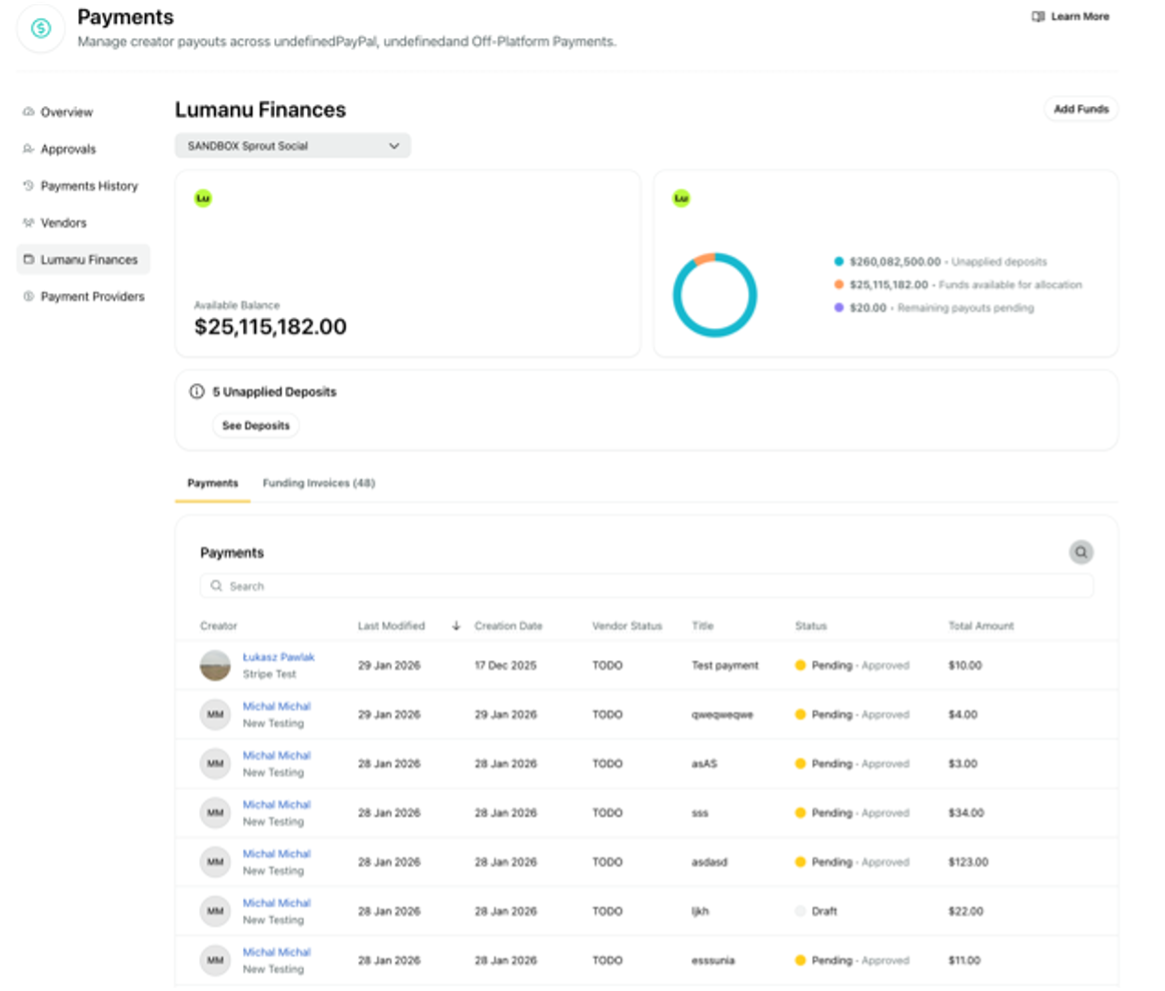
For larger-scale influencer payouts, invoice-based compliance networks like Lumanu provide robust solutions. These platforms employ an invoice-based funding model, enabling corporate finance departments to fund a secure balance and disburse multi-currency payments efficiently. Acting as a master vendor, Lumanu streamlines administrative tasks related to creator onboarding, tax documentation, and overall compliance. The integration of Lumanu with Sprout Influencer Marketing allows for seamless payment initiation and approval within the Sprout campaign workflow, offering real-time visibility into payment statuses and ledger balances. This solution is ideal for enterprise accounts managing extensive global payouts.
Wire Transfers, Checks, and Manual Tracking: Traditional Methods
Traditional payment methods, including physical checks, wire transfers, and Automated Clearing House (ACH) transfers, remain viable options. However, these methods often require manual tracking and occur outside dedicated platforms, making them more susceptible to errors and complicating the maintenance of a clean audit trail. While they offer flexibility in accommodating various payment preferences, the administrative burden and potential for discrepancies are significant drawbacks. Sprout’s Influencer Marketing payment solution allows for the logging of these off-platform transactions to maintain a centralized record, although no funds are processed through the platform itself. This approach is best suited for individual, one-off payments where administrative overhead is less of a concern.
Best Practices for Optimizing Influencer Payment Management
Even with the availability of sophisticated payment tools, companies can still encounter challenges in managing influencer payouts and recording expenses. Implementing best practices is crucial for ensuring a smooth and efficient payment process.
Establishing Clear Contracts and Due Dates
The foundation of efficient influencer payments lies in clear contractual agreements that outline payment terms and due dates. Establishing a consistent payment schedule, such as bulk payouts on a specific day each month rather than individual payments post-content submission, can significantly reduce administrative overhead. Setting these expectations early in the negotiation process prevents delays and misunderstandings, ensuring timely compensation for creators and allowing finance teams to forecast cash flow needs accurately. Sprout Social’s platform supports bulk payment scheduling within campaign workflows, aligning with this best practice.
Simplifying Tax Compliance and Reporting
Tax documentation presents one of the most significant administrative hurdles in influencer partnerships. While managing W-9 forms for a small group of domestic creators might be manageable, scaling a creator program introduces complexities related to varying state regulations and international tax laws. Dedicated tools and integrations can drastically simplify this process. Third-party settlement networks, such as Lumanu, automate compliance by handling the collection of W-9/W-8 forms and the issuance of 1099/1042-S forms on behalf of the brand. Peer-to-peer processors like PayPal report via 1099-K thresholds. Sprout’s Lumanu integration, for example, automates both domestic and international compliance, eliminating the manual collection of tax forms and the distribution of 1099s. This ensures secure payout processes with finance teams controlling fund release through dedicated approval gates and simplifies year-end IRS reporting.
Maintaining a Robust Audit Trail
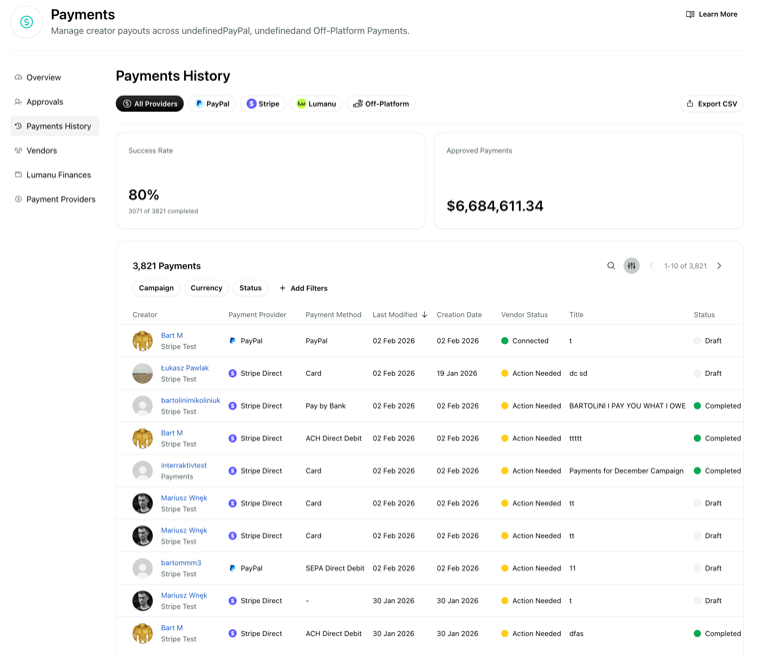
Every expense, from creator payments to platform fees, must be meticulously recorded to facilitate seamless financial audits. Relying on spreadsheets for tracking payments can lead to manual checks for payment status, currency accuracy, and potential errors, especially when marketing and finance teams operate in silos. Dynamic reporting tools that consolidate influencer payment records in a single location are essential. Sprout’s Influencer Marketing payment solution provides a clear audit trail of all payouts, including details on payment providers, methods, invoices, and taxes. The ability to filter payment histories by campaign, currency, or creator status, and to export audit-ready CSV files, significantly streamlines corporate reconciliation processes.
Embracing All-in-One Platforms for Workflow Streamlining
While third-party payment tools offer valuable features, managing them often necessitates switching between multiple platforms. An all-in-one influencer marketing platform integrates payment management directly into the broader campaign workflow. This allows users to recruit influencers, collect payment details, review content, track performance, and process payouts—all within a single, unified environment. Features such as user rights management provide granular control over who can approve payouts, enhancing security and efficiency.
Centralizing Payouts via a Unified Dashboard
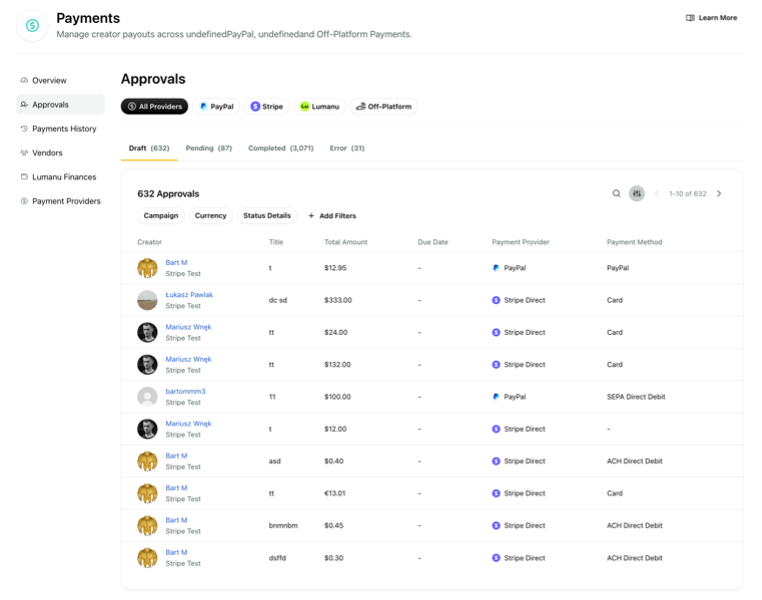
The disconnect between campaign execution and financial operations can lead to budget overruns and payment delays. Sprout Social’s Influencer Marketing platform bridges this gap by connecting influencer metrics directly to budgets and deliverables. The native Payments Dashboard provides immediate, high-level visibility into campaign financials, including total payments processed, payment statuses (Draft, Pending, Completed, Error), and overall payout health. This centralized view enables swift identification and resolution of payment errors or onboarding issues before they disrupt the workflow.
Empowering Creators with Self-Service Capabilities
The administrative burden of chasing invoices or missing payment information affects both marketing teams and creators. Sprout’s dedicated Creator Hub offers a streamlined onboarding flow, allowing creators to securely manage their payment details and proactively track their payout statuses. This self-service feature reduces the need for constant back-and-forth communication, protecting sensitive brand financial data while ensuring creators are informed about their compensation. Crucially, creators retain access only to their payment information and do not gain visibility into internal brand budgets or campaign metrics.
Conclusion: The Future of Influencer Payments
The process of paying influencers, while seemingly straightforward, can quickly become complex due to the sheer volume of transactions, diverse currencies, tax documentation requirements, and lengthy approval processes. These complexities can lead to costly mistakes and significant delays, negatively impacting creator relationships. Sprout Social’s Influencer Marketing payments solution aims to resolve these challenges by integrating payment management directly into the influencer marketing workflow. This approach centralizes all necessary documents and payment tasks, eliminating the need for platform switching or extensive communication with finance departments. By integrating with leading payment providers like PayPal and Lumanu, the platform facilitates scalable global payments and automates compliance, significantly reducing the administrative burden associated with tax documentation and reporting. The adoption of such comprehensive solutions is paving the way for a future where influencer payments are not a source of friction but a seamless and efficient component of successful marketing campaigns.
Frequently Asked Questions on Influencer Payments:
-
What distinguishes PayPal from Lumanu for influencer payments?
PayPal is adept at handling swift, individual payments, particularly for smaller influencer programs. Lumanu, on the other hand, is engineered for scalability. It manages multi-currency payouts, acts as a master vendor for finance teams, and automates tax compliance for both domestic and international creators. For enterprise-level programs involving numerous creators, Lumanu effectively mitigates the compliance complexities that PayPal may not fully address. -
How is influencer compensation determined?
Influencer rates are highly variable and depend on factors such as follower count, engagement rates, platform, and content format. As a general guideline, nano-influencers (1K-10K followers) might charge between $10-$100 per post, micro-influencers (10K-100K) between $100-$500, macro-influencers (100K-1M) between $500-$10,000, and mega-influencers can command upwards of $10,000 per post. However, follower count is not the sole determinant of value; engagement rate and audience quality are more critical indicators. Utilizing influencer pricing data and aligning with campaign objectives are essential for negotiating rates that reflect actual business impact.
Related posts: