The Paradigm Shift: From Manual Execution to Algorithmic Governance
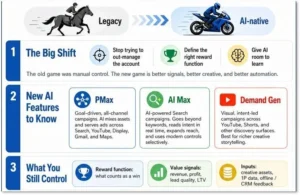
The marketing agency model has historically functioned as a "rent-an-execution-army" system. For decades, agencies were compensated for the volume of activity they generated—building keyword lists, manually adjusting bids, trafficking creative assets, and producing static reports. However, the rise of "agentic" AI and platform-level automation has rendered these manual interventions not only redundant but often counterproductive.
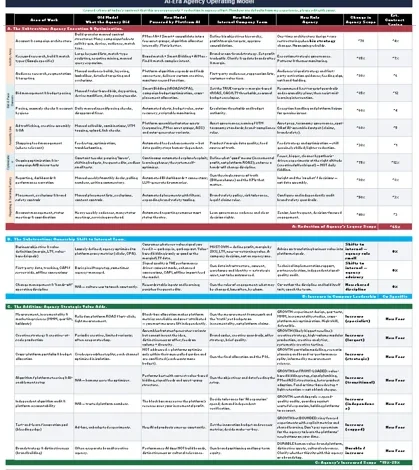
Current industry analysis suggests that as much as 80% of the work currently listed in performance marketing contracts will be absorbed by platform-level AI within the next 24 months. This shift is driven by three strategic realizations: first, that machines can optimize at a scale and speed unattainable by humans; second, that human "over-touching" of accounts often resets algorithmic learning cycles, degrading performance; and third, that the value of an agency has migrated upstream toward strategy, data engineering, and creative concepting.
Chronology of the Transition: 2024–2027
The timeline for this transition is already in motion, characterized by a sliding scale of adoption and fee restructuring.
- 2024–2025: The Efficiency Phase. Early adopters began integrating tools like Google’s Performance Max (PMax) and Meta’s Advantage+ Shopping Campaigns (ASC). During this period, brands have started to see the potential for 25% to 35% savings by eliminating low-value manual tasks.
- July 2026: The Structural Deadline. This serves as the projected inflection point where the reduction in manual work will translate into a 25% to 75% savings in legacy agency fees. Conversely, new work streams focused on high-level strategy and AI governance are expected to command a 15% to 25% increase in specialized fees.
- 2027 and Beyond: The Outcome-Based Era. By 2027, the industry is expected to fully migrate to an operating model where agencies act as indispensable strategic partners rather than execution vendors. Contracts will likely be centered on incremental profit and verified business lift rather than media spend percentages.
Deconstructing the Five Clusters of Agency Fee Subtractions
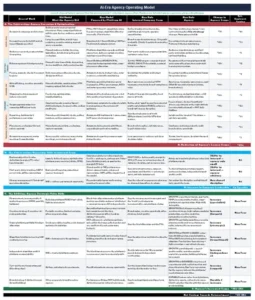
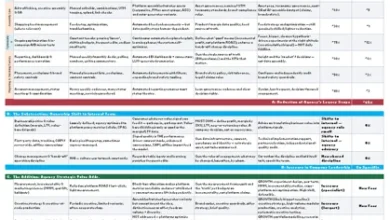
To achieve the projected 65% average savings in legacy fee structures, organizations are being advised to audit their contracts across five specific clusters of work that are increasingly being managed by platform intelligence.
1. The Activity Army (Campaign Architecture)
This cluster includes account setup, keyword research, and audience segmentation. In the legacy model, agencies spent hundreds of hours building thinly sliced campaigns for "control." Modern AI platforms, however, utilize "collapsed structures" where algorithms allocate budget internally based on real-time intent signals. Industry data indicates that work in this category can be reduced by approximately 78%, shifting the agency’s role from "building" to "deciding" on reward functions and brand safety guardrails.
2. The Bid and Pace Dancers (Optimization)
Manual bidding, budget adjustments, and daily pacing checks were once the bread and butter of agency operations. With the advent of Value-Based Bidding (VBB) and automated alerts, AI now manages these tasks with superior precision. Human intervention in bidding often leads to "learning resets," which sabotage performance. Experts estimate a 73% reduction in agency effort for this cluster, provided the agency operates at the rhythm of the AI’s learning cycle.
3. The Assembly Line (Creative and Trafficking)
The manual labor of ad trafficking, tagging, and variation making is being replaced by Generative AI (GenAI). Platforms can now assemble creative bits—text, images, and video—into the best version for each individual user. While human oversight remains necessary for asset preparation and taxonomy, the "babysitting" of feeds and creative variants can be reduced by 45%.
4. The Optimization Theater (Minor A/B Testing)
Many agencies engage in "optimization theater"—the ritual of pausing "losers" and making small tweaks to prove value. Modern platforms run continuous explore-exploit cycles that far exceed human testing capabilities. By shifting focus to large-scale, strategic experiments rather than micro-tweaks, agency work in this area can be cut by 75%.
5. The Reporting and Servicing Factory
The traditional model of weekly decks and manual data commentary is being replaced by automated data lakes and AI-fronted dashboards (such as those powered by Claude or custom GPTs). Automated placement filters and brand safety tooling have also reduced the need for exhaustive account management meetings. Strategic analysis suggests a 60% reduction in the "servicing" weight of contracts.
The New Financial Framework: Incentivizing Outcomes
A critical barrier to this evolution is the "Percent of Media Spend" compensation model. This legacy structure creates a perverse incentive: it rewards the agency for spending more and touching accounts more frequently, even when such actions harm AI performance. To align incentives with modern technology, a tripartite contract structure is emerging:
- Lean Base Retainer (40%–50%): Focused on governance, steering, and data engineering. This ensures the foundational data quality that AI requires to function.
- Project Fees (30%–40%): Dedicated to creative concepts, pre-testing, complex strategic analytics, and portfolio strategy. These are high-value, human-led initiatives.
- Outcome Incentives (15%–25%): Tied strictly to incremental profit or verified revenue lift. This moves the needle away from "Platform ROAS," which can be easily manipulated, toward genuine business growth.
Industry Reactions and Implications for Talent
The reaction from the agency sector is mixed. While some firms fear the commoditization of their services, forward-thinking CEOs view this as an opportunity to exit the "hamster wheel" of low-value work. By automating the $50/hour tasks, agencies can focus on $1,000/hour strategic consulting. This shift allows agencies to hire more experienced professionals—data scientists, prompt engineers, and strategic consultants—rather than relying on junior-level executors.
From the client perspective, the demand for transparency is at an all-time high. Procurement departments and CFOs are increasingly looking at "Value-Based Bidding" as a way to ensure that marketing spend is directly correlated with bottom-line results. There is also a growing emphasis on data ownership; brands are being advised to own their ad accounts, pixels, and data pipelines to avoid becoming "hostages" to their service providers.
Broader Impact on the Marketing Ecosystem
The implications of this shift extend beyond fees. It represents a fundamental change in the "Sophistication Score" of marketing departments. Analysts and Creative Directors are not becoming worthless; rather, the basis of their value is changing from "execution" to "judgment."
The "Analyst of 2028" will likely spend less time in spreadsheets and more time in "agentic wrangling"—managing the various AI agents that handle the execution. Creative Directors will focus less on the final version of a single ad and more on the conceptual "DNA" that GenAI will use to spawn thousands of personalized iterations.
Conclusion: The Mandate for Change
The intelligence revolution has presented a binary choice for marketing agencies and their clients: pay for the manual processes of the past or invest in the automated potential of the present. As the industry moves toward 2026, the agencies that survive will be those that embrace their role as high-level strategic partners, specialized in governance, innovation, and the scaling of intelligence.
The transition requires a "cut to grow" mentality—reducing spend on redundant execution to reinvest in the areas where human judgment remains irreplaceable. This strategic reengineering is not merely a cost-saving exercise; it is a necessary adaptation to an "Agentic AI" world where the primary value of a human partner is no longer their ability to do the work, but their ability to direct the machines that do. For marketing professionals, the message is clear: the era of "motion" is over, and the era of "judgment" has begun.