The Comment Section: Brands’ Evolving Frontline for Customer Experience and Community Building

The digital landscape has transformed the humble comment section into a dynamic and critical component of brand strategy, evolving from a mere digital suggestion box into the primary touchpoint for customer experience. Directly beneath published content, these comment sections now serve as real-time barometers of audience sentiment, fostering vibrant ecosystems for cultural exchange, community building, engagement, and audience discovery. This trend is not merely anecdotal; it is backed by robust data indicating a significant shift in consumer behavior and expectations.
"Running to the comments" has become an integral part of the overarching social media experience, a pattern anticipated to continue its ascent. A Q1 2026 Pulse Survey conducted by Sprout Social revealed that 30% of consumers, a figure climbing to 43% among Generation Z, have increased their consumption of text-based social media. This surge is driven by a growing appetite for more authentic avenues for discussion and information consumption, highlighting the comment section’s burgeoning importance.
However, this immediate feedback loop presents inherent challenges. The public’s escalating expectations for brands to maintain a constant "on" presence and deliver rapid-fire responses must be meticulously balanced with the imperative of brand safety and message alignment. Effectively managing social media comments necessitates a dual-pronged approach: high-impact tactical workflows for social media and customer care teams, underpinned by strategic guardrails established by communication leaders to navigate potential crises.
The Amplified Importance of Social Media Comments
The stakes for brands engaging in the comment section are undeniably high. According to The 2025 Sprout Social Index, a staggering 73% of social media users indicated they would switch to a competitor if a brand failed to respond to them on social platforms. This underscores the direct correlation between responsiveness and customer retention. Prompt engagement not only nurtures customer loyalty but also significantly elevates overall brand satisfaction.
Further reinforcing this point, Sprout Social’s Q1 2026 Pulse Survey also highlighted that 27% of consumers actively seek community-focused content from brands. Online community building predominantly originates within comment sections, positioning them as crucial stepping stones for brands aiming to connect with their target audiences. By strategically leveraging these interactions, brands can solidify their positions as thought leaders and experts within their respective niches. A proactive approach to feedback demonstrates a commitment to customer engagement, ultimately contributing to enhanced brand health and perception.

The shift in consumer search behavior is also notable. Sprout’s Q2 2026 Pulse Survey indicates that 30% of consumers now favor social networks over traditional search engines for product reviews and recommendations. The unfiltered thoughts and opinions of consumers frequently surface in brand comment sections, making timely and thoughtful responses paramount for nurturing customer relationships and fostering trust.
Navigating the Daily Deluge of Social Media Comments
Regardless of whether comments are positive or negative, establishing clear brand procedures for communication is essential. Without a dedicated strategy, brands risk alienating followers or disseminating inconsistent messaging that deviates from core values.
Strategies for Effective Social Media Comment Responses
Responding to social media comments requires a delicate balance between speed and accuracy, ensuring that real-time interaction does not compromise the quality of information or the empathy conveyed. The "speed of social" is relentless, and the digital landscape can shift instantaneously, making preparedness paramount.
Key considerations for addressing social media comments include:
- Timeliness: Aim for prompt responses to demonstrate attentiveness and respect for customer engagement.
- Personalization: Address users by name and tailor responses to their specific comments or questions.
- Authenticity: Use language that aligns with the brand’s voice while maintaining professionalism.
- Clarity: Provide clear and concise answers to questions or address concerns directly.
- Empathy: Acknowledge and validate customer feelings, especially in response to negative feedback.
- Call to Action (when appropriate): Guide users toward further resources or solutions.
Brands can also inject personality into their interactions. For instance, Studio MDHR effectively responded to a customer query with a GIF, simultaneously answering the question and promoting their recent video, demonstrating a creative and engaging approach.
Responding to Positive Comments: Cultivating Brand Advocacy
Acknowledging positive feedback is fundamental to building and sustaining a positive brand image. When customers express gratitude or appreciation, reciprocating that sentiment is a best practice. Sincere thanks, personalized messages, and expressions of value demonstrate appreciation for customer feedback, fostering trust and strengthening community bonds.
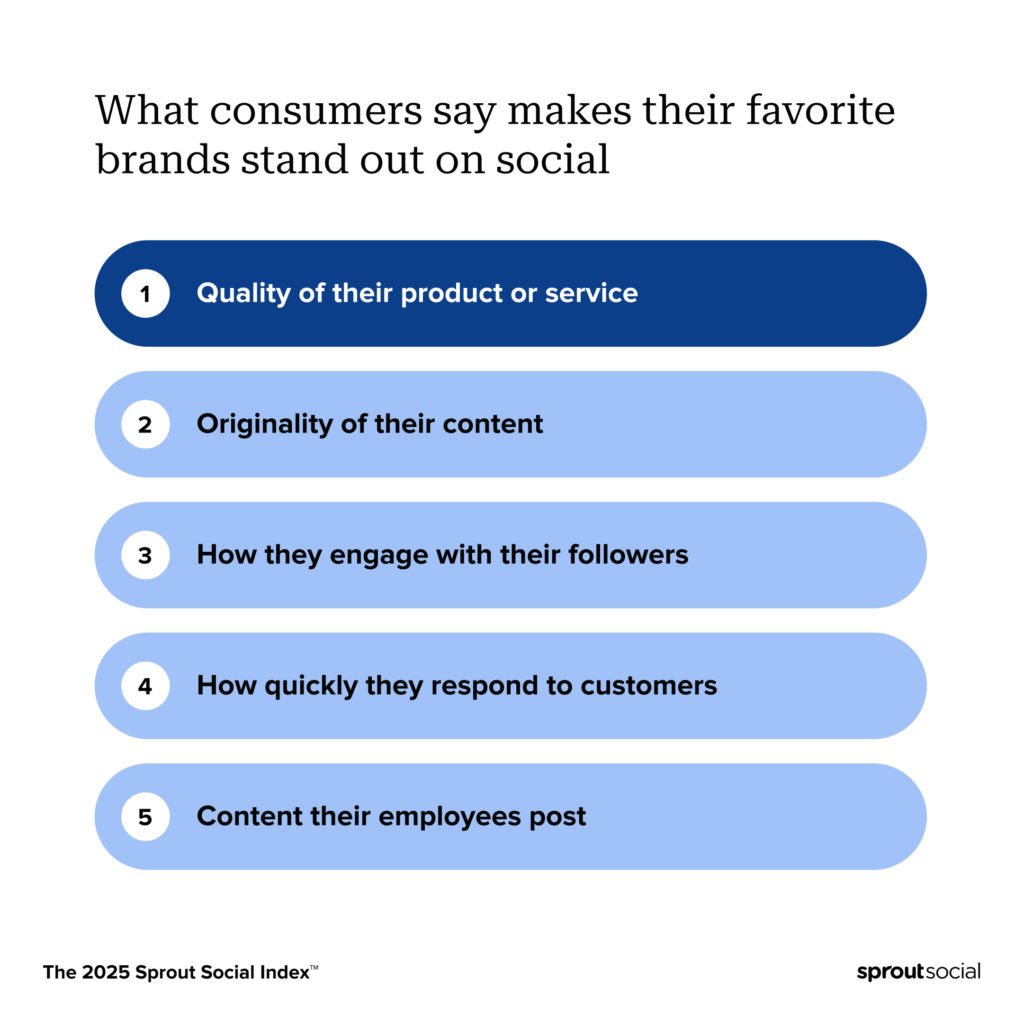
Furthermore, positive comments offer invaluable insights that can be shared across the wider business, informing decision-makers and sparking new ideas. When responding to positive comments, brands should:
- Express sincere gratitude: Thank the user for their positive feedback and engagement.
- Personalize the acknowledgment: Reference specific aspects of their comment.
- Reinforce brand values: Briefly reiterate what makes the brand special or what the customer appreciated.
- Encourage continued engagement: Invite them to share more or participate in future discussions.
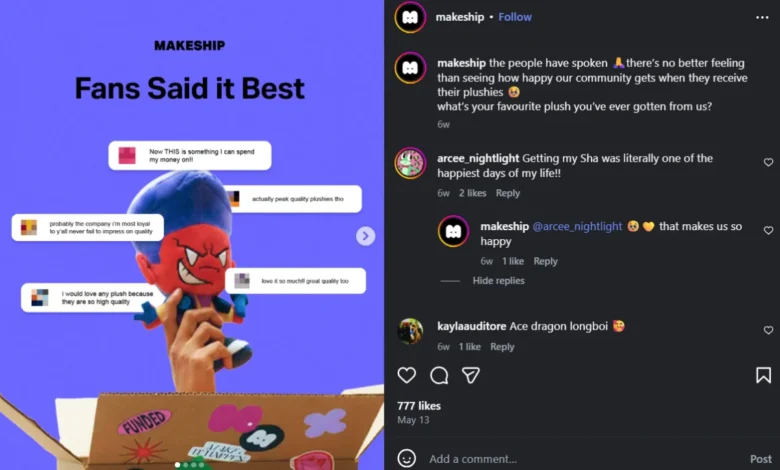
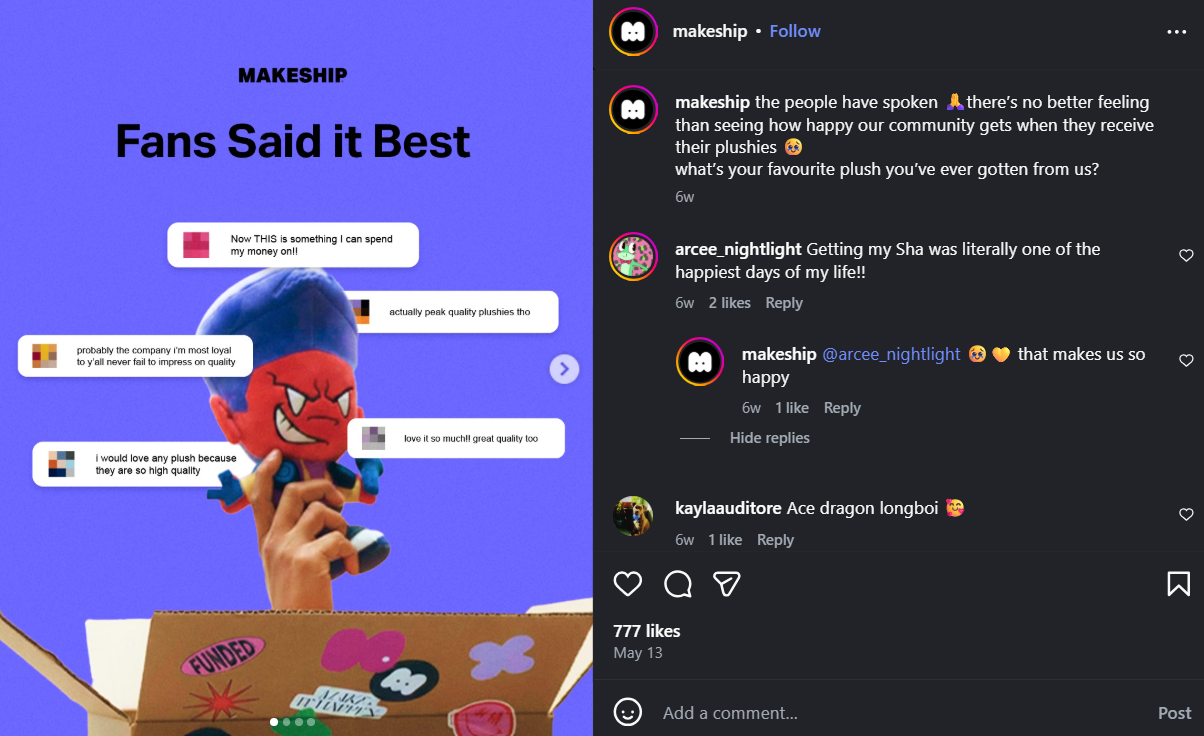
Makeship exemplifies this strategy, responding to a customer’s enthusiastic comment about receiving a plushie with a short, sincere, and friendly reply that mirrored the customer’s energy. Their use of emojis and their practice of highlighting customer feedback in their own content further solidify their community-centric approach.
Addressing Negative Comments: Turning Challenges into Opportunities
Negative comments, whether related to products or customer service, demand tact and empathy to preserve brand health. A respectful, calm, and personalized response can transform a dissatisfied customer into a loyal advocate and potentially secure repeat business.
While some negative comments are general complaints, others require careful handling to prevent escalation. Implementing an escalation management protocol is crucial for smoothly addressing sensitive issues and mitigating potential reputational damage. When negative comments arise, brands should:
- Listen actively and empathetically: Acknowledge the customer’s concern without defensiveness.
- Apologize sincerely (when appropriate): If the brand is at fault, a genuine apology is essential.
- Offer a solution: Propose a concrete step to resolve the issue.
- Take the conversation private: For complex issues, move to direct messages or email to protect customer privacy and facilitate detailed resolution.
- Maintain professionalism: Even in the face of criticism, uphold brand standards.
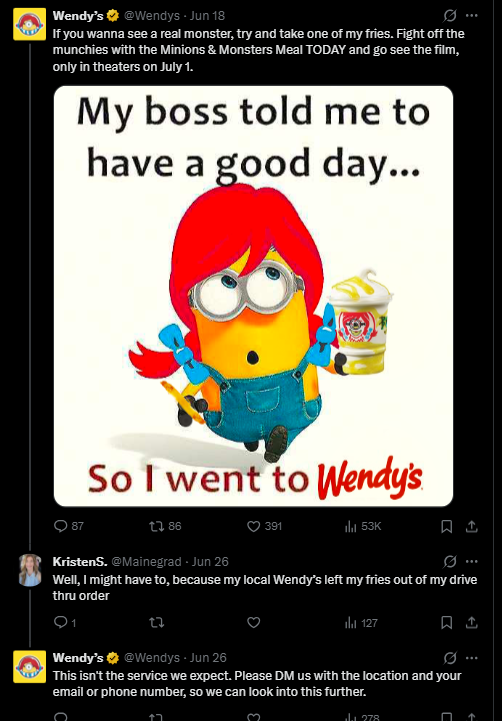
Wendy’s demonstrated effective handling of a negative comment by expressing empathy, taking the conversation private to address a missing order, and resolving the issue promptly, thereby upholding high standards of customer care.
Handling Offensive Comments and Hate Speech: Setting Boundaries
A clear distinction must be drawn between constructive criticism and hate speech or offensive language. Comments that aggressively attack a brand or individual, or that promote dehumanizing language, personal attacks, or offensive content, require a firm and decisive response. Trolling is designed to provoke, and brands must establish clear boundaries for unacceptable behavior. In such instances, blocking users and reporting the content to the social media platform are appropriate actions.

Moderating Social Media Comments: Cultivating a Healthy Digital Space
Effective moderation is crucial for maintaining a positive and productive comment section. Brands should appoint dedicated moderators equipped with clear workflows and guidelines. Utilizing saved replies for common inquiries and filtering out spam and bots can significantly enhance efficiency. Moderators must be trained to discern which comments warrant deletion or blocking, and when to escalate complex or sensitive issues to higher levels of management.
Currys showcases an excellent example of moderation by incorporating staff into comment section interactions. Their humorous and direct response to a follower’s comment about an employee’s performance not only addresses the comment but also fosters an authentic sense of community and highlights their team’s engagement.
Navigating Brand Threats and Crises in the Comments
Social media comments can quickly escalate into brand threats and crises, necessitating a comprehensive crisis communication plan. Sprout Social’s Q2 2026 Pulse Survey indicated that social media is the primary channel through which consumers first learn about brand crises. A swift and effective response is crucial, as 64% of consumers deem it vital for brands to address controversies publicly on social media, rather than relying solely on website statements or traditional press releases. The speed of response significantly impacts consumer perception, with only 16% of general consumers (and 10% of Gen Z) reporting that response speed does not affect their view of a brand’s handling of a crisis.
A well-defined social strategy for crisis management allows for immediate action while ensuring adherence to legal and brand protocols. Communications professionals play a vital role in guiding social and care teams, transitioning from casual engagement to reputational risk management.
Documenting interactions, including screenshots of relevant comment threads and direct messages, is essential for developing effective response plans and keeping all stakeholders informed. Tools like Sprout Social’s tagging feature can help categorize these critical interactions, facilitating information sharing across the organization.
Identifying a Brand Crisis: Beyond Isolated Incidents
An isolated negative comment does not constitute a brand crisis. Frontline teams require adequate training to distinguish between individual complaints and genuine indicators of systemic issues. Thorough assessment of situations is paramount, and escalation should only occur when a clear threat to the brand is identified. Experienced teams can recognize broader trends that may impact brand health and perception, enabling proactive crisis prevention.
Ryanair demonstrated a deft handling of a potential PR issue when an influencer shared a method for manipulating seat selection. Instead of panicking, Ryanair responded with a humorous meme, effectively diffusing the situation with wit and relatable content.
Guiding Social Media Responses During Crises
The impact of a crisis is often determined as much by the brand’s response as by the crisis itself. Effective social media crisis management strategies include:
- Rapid Assessment: Quickly evaluate the situation and its potential impact.
- Unified Messaging: Ensure all communication is consistent and aligned with official statements.
- Empathy and Transparency: Acknowledge the situation with understanding and provide factual updates.
- Designated Spokespersons: Clearly define who will communicate on behalf of the brand.
- Monitoring and Adaptation: Continuously monitor the conversation and adjust the response as needed.
- Internal Alignment: Ensure all internal teams are informed and coordinated.
By applying these strategies, social response teams can mitigate situations and empower senior leaders to make informed decisions for de-escalation.
From Chaos to Control: Leveraging Technology for Comment Management
Monitoring and engaging with social media comments across numerous platforms can be a daunting task. Sprout Social’s Smart Inbox offers a unified solution, consolidating all social streams into a single source of truth for efficient monitoring, rapid responses, and effective conversation management. Features like tagging, filtering, and message prioritization help ensure no comment is missed.
The platform allows for reviewing messages to identify urgent ones and responding to comments across multiple platforms from a single application. Keyword, hashtag, and location monitoring can uncover unique engagement opportunities. Sprout Social is designed to streamline complex organizational interactions on social media, moving teams from reactive to proactive engagement.
Tools like NewsWhip by Sprout Social provide predictive media intelligence, enabling communications teams to anticipate risks by monitoring narratives that could escalate into crises. Features such as blocking specific words and automating categorization and case assignments further enhance brand safety and efficient delegation of high-stakes reactions. Sprout Social aggregates comments from major platforms including Facebook, Instagram, YouTube, X, LinkedIn, TikTok, and Threads, and extends to subreddit moderation. Its integration with tools like Salesforce facilitates seamless connection of social care workflows across teams and enterprise systems.
Embracing Collaboration for Enhanced Social Media Engagement
Effectively managing social media comments requires a collaborative mindset. It hinges on the tactical agility of social and care teams to execute prompt responses, supported by the strategic vision and guardrails of communications teams to protect and align brand identity. When managed proficiently, comment sections transform from potential liabilities into avenues for sparking joy, building community, and driving significant growth and customer retention.
Brands seeking to enhance their social media comment management and responses can leverage resources like customer service training deck templates to empower their teams to engage with confidence and expertise. The evolution of the comment section from a passive feedback mechanism to an active hub for brand interaction underscores its critical role in contemporary customer experience and community building strategies.