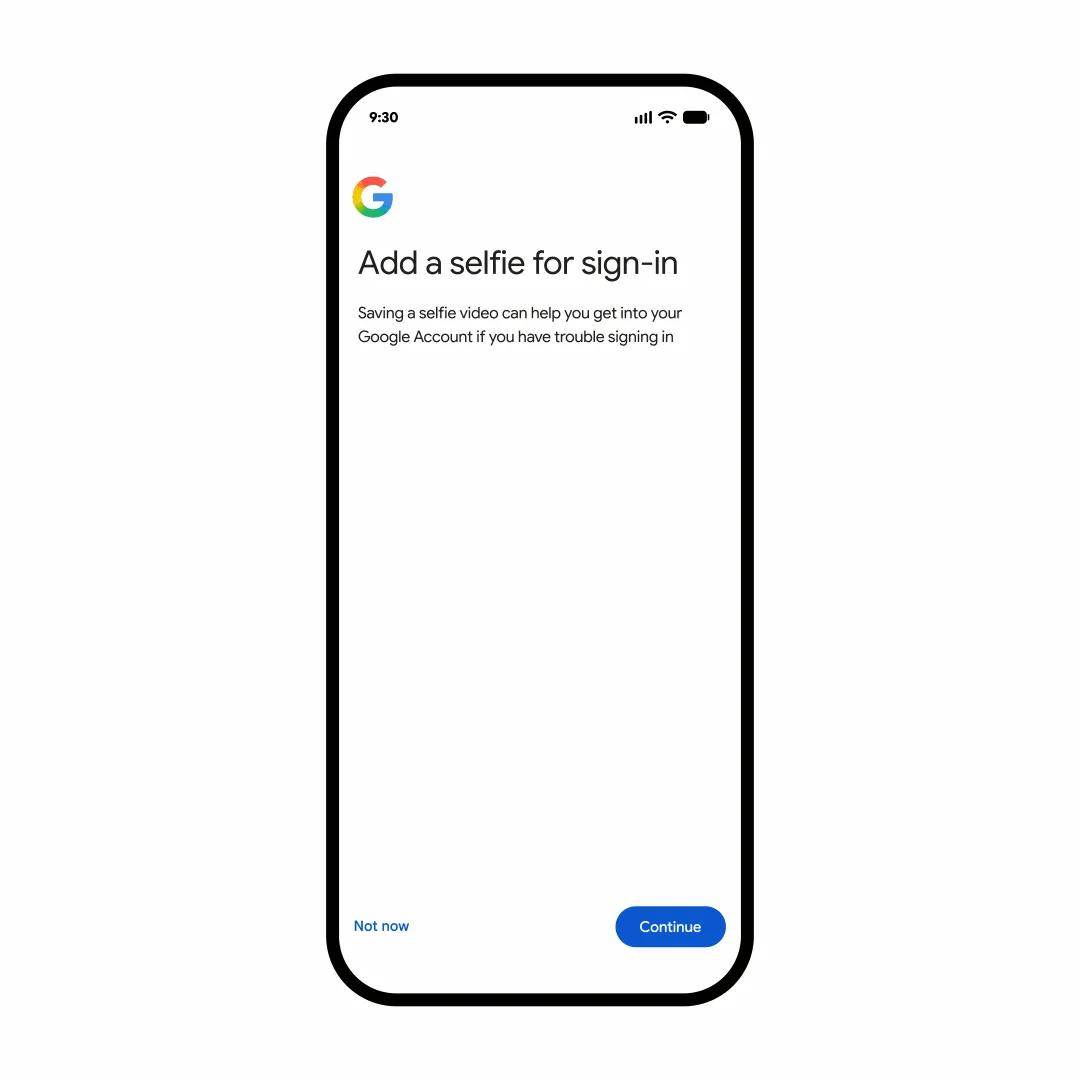
Google has officially launched a new authentication feature that allows users to regain access to their accounts through a selfie video, providing a critical safety net for individuals who find themselves locked out of their digital lives. This move represents a significant shift in Google’s identity management strategy, aiming to alleviate the often-convoluted recovery process that occurs when users lose access to their primary devices or secondary authentication methods. By framing the selfie video as a "spare key," Google is addressing a long-standing pain point for its billions of users, particularly those who rely heavily on the company’s ecosystem for email, professional scheduling, and cloud storage.
The introduction of this feature comes at a time when digital identity theft and account lockouts are reaching record highs. According to cybersecurity industry reports, account recovery remains one of the most vulnerable points in the user journey, often requiring a delicate balance between security and accessibility. Google’s new tool is designed to bridge this gap, offering a biometric-based solution that is both difficult to forge and relatively simple for the legitimate owner to execute.
The Mechanics of Selfie Video Authentication
The implementation of the selfie video sign-in is designed to be a straightforward addition to the existing suite of security tools. Users can access the setup through their Google Account dashboard under the "Security & sign-in" tab. Within the "How you sign in to Google" section, the selfie video option appears as a new choice for those accounts where the feature has been rolled out. Google has confirmed that this is a global rollout, although it is being phased in across different regions and account types.
The technical requirements for recording the video are specific but accessible. Users are instructed to hold their device—typically a smartphone—at eye level in standard lighting conditions. The system requires that the user be the only person visible in the frame, specifically warning against background elements like family portraits or crowded environments that could confuse the facial recognition algorithms. The recording process involves a series of prompted movements, such as slowly lifting the chin or turning the head, which allows the system to capture a three-dimensional perspective of the user’s facial structure. Once completed, the video is verified and stored securely within the user’s security settings.
Enhancing Security Through Liveness Detection
One of the primary concerns with biometric authentication, particularly involving images or video, is the threat of "spoofing" or deepfake attacks. To counter this, Google has integrated advanced liveness detection technologies. Claire Forszt, a product manager at Google specializing in identity and engagement, emphasized that the selfie video is not a standalone solution in high-risk scenarios. She noted that Google evaluates the overall risk based on a multitude of factors, including the location of the attempt, the device being used, and previous login patterns.

Liveness detection is a critical component of modern biometrics. It distinguishes between a live human being and a high-resolution photograph, a digital screen playback, or a sophisticated AI-generated deepfake. By requiring specific, real-time movements—such as looking at the ceiling and then back at the camera—Google’s system ensures that the person providing the video is physically present and interacting with the device in real-time. This dynamic verification is significantly more secure than static facial recognition, which has historically been vulnerable to simple bypass methods.
A Chronology of Google’s Authentication Evolution
The introduction of selfie videos is the latest milestone in a decades-long effort by Google to secure user identities. To understand the significance of this feature, it is necessary to look at the evolution of Google’s security protocols:
- The Password Era (1998–2011): In its early years, Google relied almost exclusively on traditional alphanumeric passwords. As phishing attacks grew more sophisticated, the limitations of passwords became clear.
- Two-Step Verification (2011): Google was a pioneer in mainstreaming two-factor authentication (2FA), initially using SMS-based codes. While a major step forward, SMS codes eventually became targets for "SIM swapping" attacks.
- Titan Security Keys and On-Device Prompts (2018): Google introduced physical security keys and "Google Prompts," which moved the second factor of authentication to the hardware level, significantly reducing the success rate of automated bot attacks.
- The Rise of Passkeys (2023): Google began a massive push toward "passkeys," a cryptographic credential stored on a user’s device that replaces passwords entirely. Passkeys use local biometrics (like a thumbprint or FaceID) to unlock the credential.
- Selfie Video Recovery (2024): Recognizing that users can lose the devices that hold their passkeys, Google introduced the selfie video as a "last resort" or "spare key" to bypass the need for a physical device while maintaining a high level of biometric certainty.
Privacy Considerations and Data Governance
In an era of heightened scrutiny regarding how tech giants handle biometric data, Google has implemented an opt-in model for its selfie video feature. During the setup process, users are presented with a clear choice: they can either use the video solely for account recovery or opt-in to allow Google to use the recording to improve its broader suite of AI services.
The "Improve Google services" toggle allows the company to use the video data to refine its facial recognition, age estimation, and movement-based verification technologies. Google’s documentation clarifies that users can revoke this permission at any time through their privacy settings. This transparent approach is a direct response to growing regulatory pressure, such as the General Data Protection Regulation (GDPR) in Europe and the Biometric Information Privacy Act (BIPA) in the United States, which mandate strict controls over how biometric identifiers are collected and processed.
The importance of this opt-in model is highlighted when compared to the recent experiences of other industry leaders. For instance, Meta recently faced significant public and regulatory backlash after it automatically opted Instagram users into a system that allowed their images to be used for AI training. The subsequent outcry forced Meta to rescind the feature within days. By making the selfie video and its associated AI training data purely optional, Google aims to maintain user trust while still providing a path for those who want the convenience of biometric recovery.
Broader Implications for the Tech Industry
The shift toward video-based identity verification has implications that extend far beyond Google. This technology is already becoming a standard in the financial services and government sectors. Many digital-only banks now require a selfie video and a photo of a government-issued ID to open an account, a process known as "Know Your Customer" (KYC) compliance. Google’s adoption of these methods for general account recovery suggests that the "KYC" standard of identity verification is moving into the mainstream consumer tech space.

Analysts suggest that this could eventually lead to a more unified digital identity system. If a user’s identity can be verified with high confidence through video biometrics, the need for recovery contacts, backup codes, or even secondary email addresses may diminish. However, this also centralizes more sensitive data within the hands of a few major technology providers, raising questions about the long-term security of biometric databases.
Challenges and Technical Limitations
Despite the advantages, selfie video verification is not without its challenges. One primary concern is the "aging factor." While a user’s basic facial structure remains relatively constant, significant changes in appearance—such as surgery, injury, or natural aging—could theoretically impact the system’s ability to verify a video recorded years prior. Google has not yet detailed the expiration period for these videos or how often it will prompt users to update their "spare key."
Furthermore, accessibility remains a vital consideration. Users with certain physical disabilities may find it difficult to perform the specific head movements required by the system. Google addresses this by maintaining a variety of recovery options, including backup codes and recovery contacts, ensuring that the selfie video is an additional tool rather than a mandatory one.
Conclusion: A Proactive Approach to Account Security
The introduction of selfie video sign-in marks a proactive step by Google to address the "Kafkaesque" reality of account recovery in the modern age. By leveraging the high-resolution cameras and processing power of contemporary smartphones, Google is providing users with a recovery method that is inherently tied to their physical identity, making it one of the most secure options available.
As the digital landscape continues to be shaped by the dual forces of AI-driven threats and the need for seamless user experiences, tools like selfie video verification will likely become indispensable. For the millions of users who have experienced the anxiety of being locked out of their primary communication and productivity tools, this new "spare key" offers a measure of security and peace of mind that traditional passwords and SMS codes can no longer provide. The success of this rollout will ultimately depend on Google’s ability to balance its technological ambitions with its commitment to user privacy and data security.
Related posts: