OpenAI Ventures into Hardware with Micro Keypad Amid Legal Tension and Market Skepticism

The artificial intelligence landscape witnessed a significant shift last week as OpenAI, the organization behind the ubiquitous ChatGPT, officially transitioned from a software-centric entity into the hardware sector. The debut of "Micro," a specialized mechanical keypad developed in partnership with the boutique hardware designer Work Louder, marks a pivotal moment in the company’s evolution. While the device is positioned as an artisanal tool for high-level developers and power users, its release has been shadowed by intensifying legal battles with Apple and a polarized reception from the tech community. This strategic move suggests that OpenAI is no longer content with being an engine inside other devices; it is now seeking to establish a physical presence on the desks of its most dedicated users.
The Engineering and Design Philosophy of Micro
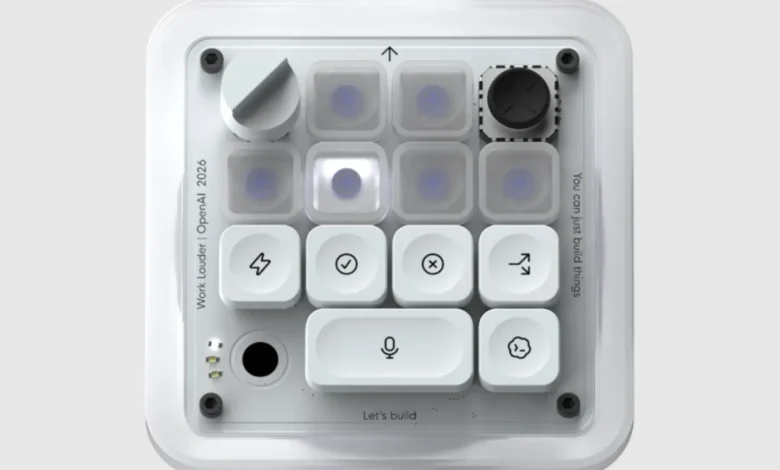
The Micro keypad is a compact, high-end peripheral designed to bridge the gap between traditional manual input and the burgeoning world of "agentic" AI. Crafted in collaboration with Work Louder—a company known for its modular, enthusiast-grade keyboards—the Micro features a robust, industrial build. Early hands-on reports describe the device as surprisingly heavy, utilizing premium materials that give it a sense of permanence often lacking in modern consumer electronics. The aesthetic of the device, and notably its packaging, has drawn immediate comparisons to Apple’s design language. The minimalist white box, clean typography, and focus on tactile feedback suggest a premium positioning intended to appeal to the "prosumer" demographic.
The hardware layout is divided into two distinct functional sections. At the top of the pad sit six "agent" keys. These are frosted, translucent buttons equipped with customizable LEDs. These keys are designed to be mapped to specific GPT agents or workflows within ChatGPT and Codex, OpenAI’s model specialized for computer programming. Below these are six command keys intended for navigational and operational control within the OpenAI ecosystem. The device supports both Bluetooth connectivity for a wireless workspace and USB-C for low-latency wired connections, catering to the specific needs of professional developers who may require reliability over mobility.
Perhaps the most significant functional addition is the dedicated voice dictation button. By holding this key, users can bypass the keyboard entirely, speaking prompts directly to the AI. This feature is paired with a dedicated "send" button, streamlining the interaction loop and reducing the number of clicks required to execute complex AI-driven tasks. The software integration is handled directly through the ChatGPT interface, where a new "Micro" tab allows users to customize key bindings, adjust LED brightness, and manage project-specific configurations.
A Growing Legal Rift with Apple
The launch of Micro does not exist in a vacuum; it arrives during a period of unprecedented friction between OpenAI and Apple. Several weeks ago, Apple filed a lawsuit against OpenAI, alleging the theft of trade secrets. The legal complaint centers on the recruitment of key personnel and the alleged misappropriation of proprietary methodologies. This conflict is particularly notable given that OpenAI’s rumored upcoming projects—specifically a screenless smart speaker designed for home use—are reportedly being developed by a team composed largely of former Apple engineers.
The tension highlights a fundamental shift in the relationship between the two giants. While Apple has recently integrated ChatGPT into its own "Apple Intelligence" framework, the two companies are simultaneously competing for the future of AI-integrated hardware. Industry analysts suggest that OpenAI’s move into peripherals like the Micro keypad is a "soft launch" for a much broader hardware roadmap. By starting with a niche, high-margin accessory, OpenAI can test manufacturing pipelines and user engagement without the immense risks associated with launching a primary computing device like a smartphone or a dedicated AI wearable.
The legal proceedings are expected to be protracted, focusing on whether OpenAI’s hardware team utilized internal Apple documents or protected trade secrets during the development of their new product line. As OpenAI continues to poach talent from Cupertino, the "Apple-coded" nature of the Micro keypad’s design may serve as a symbolic point of contention in the courtroom.
Market Reception and the $230 Price Point
Despite the excitement from OpenAI’s core supporters, the Micro has faced a wave of criticism from the broader tech and enthusiast communities. The primary point of contention is the $230 price tag. In the world of mechanical keyboards and macro pads, $230 is considered a premium price, placing the Micro in competition with highly customizable, open-source alternatives that offer more versatility.

On platforms like Reddit, the reaction has been notably skeptical. Professional coders—the very audience OpenAI intended to capture—have questioned the utility of a dedicated keypad for a tool that is already easily accessible via standard keyboard shortcuts. Some users have labeled the device a "novelty" or a "vanity project," arguing that the learning curve associated with memorizing color-coded LED signals (white for idle, blue for thinking, green for completion, and red for error) outweighs the efficiency gains.
Independent tech critics have been even more pointed. A review from the outlet Aftermath described the device as "engineered to piss me off," citing the high cost and the perceived redundancy of the hardware. Critics argue that for most users, the transition from a standard mouse-and-keyboard setup to a specialized AI pad offers diminishing returns. The "agentic" future OpenAI is selling requires users to trust the AI to perform multi-step tasks; many developers argue they would rather keep their hands on their primary keyboard where they have full control, rather than toggling back and forth to a separate peripheral.
Strategic Implications: From Lab to Lifestyle Brand
OpenAI’s foray into hardware represents a broader strategic shift in the AI industry. For the past several years, the "AI hardware" category has been defined by experimental devices like the Rabbit R1 and the Humane AI Pin. These devices sought to replace the smartphone, a goal that many now view as premature given the current limitations of large language models (LLMs).
By choosing to release a keypad, OpenAI is taking a more grounded approach. The Micro does not attempt to replace the computer; instead, it attempts to become a necessary companion to it. This "companion strategy" allows OpenAI to collect data on how users physically interact with AI in a professional environment. It also serves as a branding exercise, turning OpenAI from a website you visit into a physical object that sits on your desk 24/7.
Furthermore, the Micro serves as a tangible manifestation of OpenAI’s "Agentic" vision. The company has been vocal about its shift toward AI agents—systems that don’t just answer questions but actually perform tasks like writing code, booking travel, or managing files. The Micro’s "agent keys" are a physical representation of this shift, encouraging users to think of ChatGPT not as a chatbot, but as a suite of specialized employees ready to be summoned at the press of a button.
Timeline of OpenAI’s Hardware Evolution
The journey to the Micro keypad has been marked by several key milestones:
- Late 2023: Rumors begin to circulate regarding Sam Altman’s meetings with legendary designer Jony Ive and SoftBank’s Masayoshi Son to discuss a "Revolutionary AI Device."
- Early 2024: OpenAI begins aggressively hiring hardware engineers, specifically targeting talent from Apple’s specialized product divisions.
- June 2024: Reports surface of a collaboration with Work Louder, suggesting a focus on the developer community.
- July 2024: Apple files its trade secret theft lawsuit, naming OpenAI and several former employees.
- Last Week: The official launch of the Micro keypad and the unveiling of its integration with ChatGPT and Codex.
Conclusion: A Polarizing First Step
The OpenAI Micro is a device defined by contradictions. It is a high-quality, beautifully designed piece of hardware that offers a streamlined experience for the most dedicated AI power users. Yet, it is also a costly, niche product that enters a market already skeptical of "AI-first" hardware. Its success will likely not be measured by unit sales alone, but by how well it prepares the market for OpenAI’s future, more ambitious hardware releases.
For the average consumer, the Micro is likely an unnecessary luxury. For the "code monkeys" and ChatGPT power users it targets, it represents a glimpse into a future where AI is no longer just a tab in a browser, but a physical extension of the workspace. As the legal battle with Apple looms and the tech community continues to debate the device’s utility, one thing is certain: OpenAI has officially entered the physical world, and the desk will never be the same.