Automattic Names Jeremy Klaperman Interim CFO Following Boardroom Shakeup and Matt Mullenweg’s Return


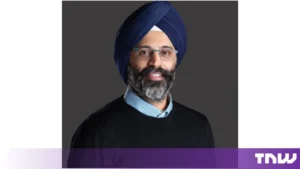
Automattic, the driving force behind WordPress and the enterprise-grade WordPress VIP platform, has appointed Jeremy Klaperman as its interim Chief Financial Officer. Klaperman, who previously served as the CFO of the company’s WordPress VIP Enterprise business unit, steps into the role following a tumultuous period of boardroom instability and executive departures. The leadership changes were communicated to employees via an internal Slack message on Friday, signaling an effort by CEO Matt Mullenweg to stabilize the company’s financial operations after a dramatic, albeit brief, corporate coup.
The appointment comes in the wake of an attempted ouster of Mullenweg by Automattic’s board of directors earlier in September. That maneuver ultimately backfired for the participating board members, resulting in their removal or resignation, alongside the departure of several top-tier executives. Among those who exited the company were former Chief Financial Officer Mark Davies—who had briefly assumed the role of interim CEO during Mullenweg’s absence—and Chief Legal Officer Andy Missan. As Automattic navigates this transitional phase, the company is actively realigning its leadership ranks to restore operational continuity.
A Turbulent Chronology: The 33-Hour Crisis
To fully understand the gravity of Automattic’s current executive realignment, one must examine the rapid-fire chronology of events that unfolded over the second week of September 2026. The corporate drama began when a faction of Automattic’s board of directors moved to strip Matt Mullenweg of his executive powers, forcing him into a sudden leave of absence.
During this brief window—lasting approximately 33 hours—Mark Davies was installed as interim CEO, attempting to steer the company under emergency protocols. Investigative reporting revealed that during this chaotic interval, departing executives Davies and Missan signed reciprocal severance agreements designed to protect their financial interests in the event of a permanent corporate restructuring.
However, the board’s attempt to permanently sideline the co-creator of WordPress lacked sufficient backing from the broader stakeholder ecosystem and key internal factions. The backlash was swift and decisive. By September 12, just days after the initial maneuver, Automattic officially confirmed that Mullenweg had successfully retaken the helm as CEO. The board members who orchestrated the coup were subsequently ousted, leaving vacant seats that Mullenweg and his remaining leadership team must now fill.
Jeremy Klaperman Steps into the Interim Role
With Mark Davies out of the picture, Automattic needed a steady hand to manage its financial health and treasury operations. Jeremy Klaperman emerged as the logical choice for the interim CFO position. According to details shared by Mullenweg in his internal Slack address, Klaperman is no stranger to the financial complexities of the organization, having previously filled in as Automattic’s CFO during one of Davies’ prior sabbaticals.
Furthermore, Klaperman’s tenure as the CFO of WordPress VIP gives him deep familiarity with Automattic’s most lucrative and high-growth commercial division. WordPress VIP serves massive enterprise clients—including global media outlets, Fortune 500 companies, and massive governmental entities—requiring rigorous financial oversight, robust security compliance, and strategic scaling capabilities.
Despite Klaperman’s familiarity with the broader enterprise ecosystem, Mullenweg noted that the search for a permanent Chief Financial Officer remains open. The board of directors—whose newly appointed members have yet to be publicly unveiled—will be tasked with conducting a thorough evaluation of both internal contenders and external executive talent before locking in a permanent financial chief.
Legal Leadership and Golden Parachute Scrutiny
In tandem with the CFO announcement, Mullenweg informed employees that a candidate for the Chief Legal Officer position has verbally accepted the job. This new hire is slated to replace Andy Missan, whose departure was formalized in the wake of the failed board coup.

The exit of both Davies and Missan has cast a spotlight on corporate governance standards at private tech giants. The revelation that the interim CEO and the chief legal counsel signed reciprocal severance deals during a 33-hour vacuum of authority raised eyebrows across the Silicon Valley legal community. While such protective clauses are not entirely unheard of in high-stakes corporate warfare, the timing and execution of these agreements underscored the precarious nature of Automattic’s internal governance during the crisis.
The incoming legal chief will face the immediate task of auditing existing contracts, evaluating governance frameworks, and ensuring that executive compensation and severance protocols align with best practices, thereby insulating the company from future boardroom maneuvers of a similar nature.
Financial Confidence and Executive Reassurance
Amidst the structural upheaval, Mullenweg sought to project absolute confidence in Automattic’s underlying business fundamentals. Addressing the company’s financial standing directly, his Slack message concluded with a definitive statement: "I have 100% confidence in our cash and financial position. There is still work to do, but everything is within our control and depends only on Automattic’s ability to execute."
Automattic operates a unique business model that combines open-source stewardship with massive commercial ventures, including WordPress.com, WooCommerce, and WordPress VIP. Maintaining steady cash flow and investor confidence is critical, particularly as the company competes in an increasingly crowded cloud and content management ecosystem dominated by headless architectures, AI-driven publishing tools, and enterprise SaaS platforms. By emphasizing that the company’s destiny rests purely on execution rather than external financial distress, Mullenweg aimed to quell any lingering anxieties among the thousands of open-source contributors, enterprise clients, and internal employees who rely on the platform daily.
What Lies Ahead: Board Announcements and Upcoming Meetings
As Automattic pieces its leadership puzzle back together, all eyes are turning toward the company’s upcoming corporate milestones. Mullenweg advised staff to "stay tuned" for official announcements regarding the composition of the newly formed board of directors.
Adding a layer of continuity to the advisory ecosystem, Stephen Wolfram—the prominent mathematician, physicist, creator of Mathematica, and founder of Wolfram|Alpha—will maintain his position as a special advisor to the company and continue his involvement with the board. Wolfram’s ongoing presence is expected to provide steady, scientific, and technical guidance as Automattic explores deeper integrations with modern data structures and computational technologies.
The next official test for Automattic’s reconstituted leadership will take place at the upcoming board meeting, scheduled for September 23, 2026. At this gathering, the newly minted directors, alongside interim CFO Jeremy Klaperman and CEO Matt Mullenweg, will begin charting the strategic roadmap for the remainder of the year.
Broader Implications for the Open-Source Ecosystem
The events of September 2026 will undoubtedly be studied as a masterclass in modern corporate governance and executive resilience. Automattic powers a staggering percentage of the global internet, meaning that any internal instability at the parent company ripples outward, affecting web agencies, freelance developers, and multinational corporations alike.
The swift resolution of the crisis—culminating in the return of Mullenweg, the installation of seasoned internal veterans like Klaperman, and the impending restructuring of the board—demonstrates the sheer leverage held by founders who maintain deep ties to their core communities and core business engines.
As Automattic closes this chaotic chapter, the primary challenge for Klaperman and the executive team will be executing on commercial targets, restoring institutional trust, and proving that the world’s most popular content management ecosystem can weather high-stakes corporate storms without losing momentum.