OpenAI Acquires Smartphone Camera Startup Glass Imaging for Over $300 Million in Major Hardware Push

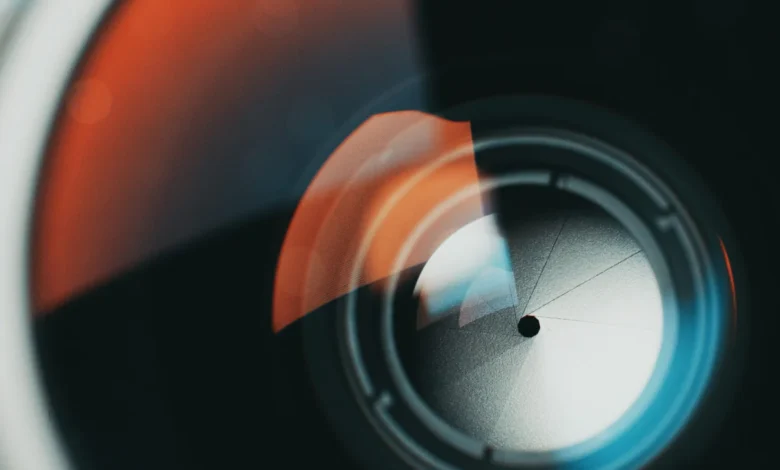
In a strategic move that signals a deeper expansion into consumer hardware, artificial intelligence powerhouse OpenAI has acquired Glass Imaging, a specialized smartphone camera technology startup, for a reported sum exceeding $300 million. The acquisition, initially reported by The Wall Street Journal on September 14, 2026, bridges OpenAI’s frontier generative AI capabilities with advanced computational photography, positioning the ChatGPT maker to fundamentally rethink how mobile devices capture the visual world.
Founded in Los Altos, California, in 2019, Glass Imaging had previously raised approximately $30 million in venture capital funding from prominent investors, including GV (formerly Google Ventures). The startup was built on the premise that traditional smartphone cameras are inherently constrained by the physical laws of optics, particularly the limited depth and space available within slim mobile chassis. To solve this, Glass Imaging pioneered proprietary neural networks designed to bypass physical limitations through advanced, on-device machine learning rather than traditional post-processing software tricks.
The Roots of Computational Photography at Glass Imaging
Glass Imaging was established by Ziv Attar and Tom Bishop, two distinguished former Apple engineering leaders who previously spearheaded the development team behind Apple’s groundbreaking Portrait Mode. Their deep expertise in image signal processing and depth-sensing technologies laid the intellectual groundwork for what Glass Imaging would later achieve.
Unlike conventional AI photo editors that alter an image after the shutter closes—often introducing artifacts or unnatural smoothing—Glass Imaging’s technology operates at the foundational level of image capture. By training deep neural networks specifically on the physical and optical characteristics of individual camera modules across various smartphone models, Glass Imaging’s software optimizes images the exact microsecond the shutter is clicked. The result is dramatically enhanced detail, accurate dynamic range, and reduced noise that mimics the quality of bulky, high-end cinema lenses within a smartphone-sized form factor.
A Timeline of Expansion: From Seed to Acquisition
The trajectory of Glass Imaging reflects the rapid maturation of computational photography startups within the broader artificial intelligence boom:

- 2019: Ziv Attar and Tom Bishop found Glass Imaging in Los Altos, California, aiming to revolutionize mobile optics using machine learning.
- 2022–2024: The company secures initial seed and extended seed funding rounds—including a notable $9.3 million round led by GV—to refine its neural network architectures and forge partnerships within the mobile industry.
- September 2026: OpenAI acquires Glass Imaging in a cash-and-stock transaction valued at upwards of $300 million, absorbing its engineering talent into OpenAI’s burgeoning hardware division.
OpenAI’s Broader Hardware Ambitions and the Jony Ive Factor
While OpenAI has not yet issued a formal, detailed press statement regarding the exact operational integration of Glass Imaging, the acquisition aligns seamlessly with the company’s heavily rumored hardware roadmap. Over the past year, industry insiders have reported that Sam Altman’s organization has been aggressively laying the groundwork to transition from a pure software and model provider into a holistic device ecosystem player.
Rumors circulating throughout the tech sector suggest that OpenAI is actively designing and prototyping a suite of AI-native hardware products. These reportedly include specialized smartphones tailored around conversational AI agents rather than traditional app grids, intelligent AI earbuds, and screenless ambient companion devices engineered to move and interact fluidly with users in real-world environments.
This hardware push reached a monumental inflection point in mid-2025, when OpenAI acquired io, a secretive device startup co-founded by OpenAI CEO Sam Altman and legendary former Apple chief design officer Jony Ive, in a blockbuster $6.5 billion deal. Jony Ive subsequently assumed leadership over OpenAI’s overarching product design initiatives. The acquisition of Glass Imaging directly complements the Ive-led hardware strategy, providing OpenAI with world-class optical engineering talent capable of building bespoke, high-performance camera systems that rival or exceed those found in market-leading consumer smartphones.
Industry Implications and Future Outlook
The consolidation of Glass Imaging into OpenAI carries significant implications for the competitive landscape of both consumer electronics and artificial intelligence. For years, smartphone manufacturers like Apple, Samsung, and Google have relied heavily on their own proprietary computational photography algorithms—such as Apple’s Deep Fusion and Google’s Pixel camera processing—to maintain market dominance.
By acquiring a specialized firm like Glass Imaging, OpenAI bypasses years of independent optical research, instantly acquiring the IP and human capital necessary to integrate advanced vision capabilities directly into future hardware devices. If OpenAI successfully manufactures an AI-centric smartphone or wearable device, the integration of Glass Imaging’s technology ensures that the hardware will not merely act as a vessel for conversational models like ChatGPT, but will also function as a best-in-class imaging tool.
As the boundaries between artificial intelligence, optical hardware, and human-computer interaction continue to blur, OpenAI’s multimillion-dollar investment underscores a clear corporate mandate: the future of AI will not be confined to server racks or software windows on existing screens. Instead, it will be woven directly into the physical devices we carry, wear, and use to capture our daily lives.