The Evolution of the Digital Measurement Landscape
The digital measurement ecosystem has faced unprecedented pressure over the last five years. Heightened consumer expectations regarding data privacy, combined with new legislative frameworks such as the General Data Protection Regulation (GDPR) in Europe and the California Consumer Privacy Act (CCPA), have forced a departure from legacy tracking methodologies. For over a decade, Universal Analytics (UA) served as the industry standard, relying heavily on cookie-based tracking to map user journeys across devices. However, as browser restrictions tightened and users increasingly demanded transparency, the UA model began to show its limitations.
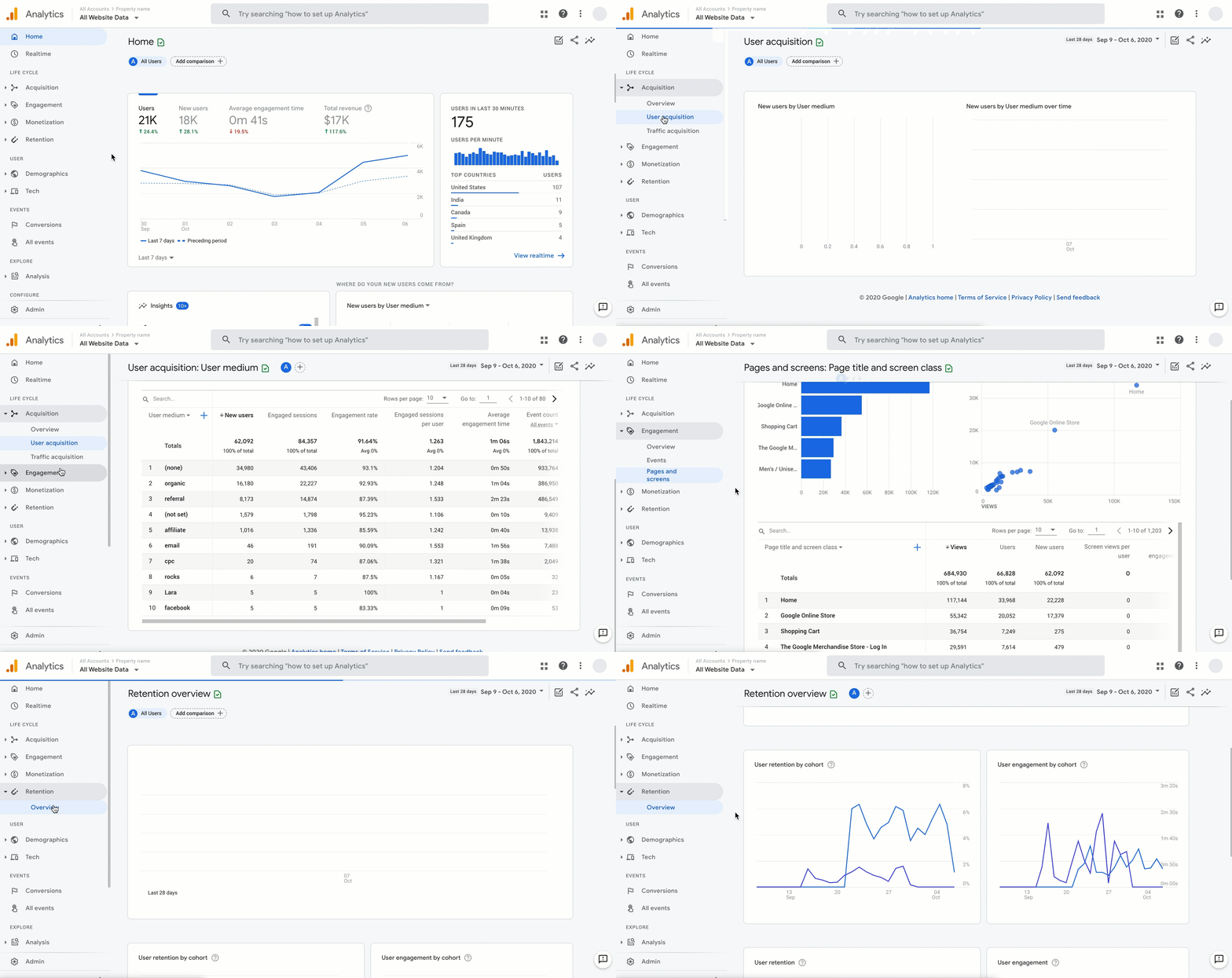
Google Analytics 4 was developed to address these specific gaps. Unlike its predecessor, which was session-based, GA4 operates on an event-based data model. This allows for a more flexible and granular understanding of user behavior. By shifting the focus from session-based metrics to individual user events, Google provides businesses with a more accurate picture of the customer journey, even when cross-device tracking is hindered by privacy-centric browser configurations.
A Chronology of the Transition
The path toward this new measurement foundation was paved by a series of strategic product releases and announcements.
- October 2020: Google officially introduced Google Analytics 4 as the new default experience for new properties, signaling that the platform was no longer in its experimental phase.
- Early 2021: The industry began to witness the widespread deprecation of third-party cookies across major browsers, including Safari and Firefox, forcing marketers to reconsider their reliance on legacy attribution models.
- October 2021: Google solidified its commitment to the new ecosystem by launching the updated Google Analytics 360, tailored for enterprise-level clients requiring advanced reporting, data retention, and service-level agreements.
- 2022 and Beyond: This period served as the intensive migration window, where businesses were encouraged to implement dual-tagging—running UA and GA4 simultaneously—to ensure historical data continuity while learning the new interface.
The Technical Shift: From Sessions to Events
The core distinction between the old Google Analytics and the new GA4 lies in the data architecture. In the Universal Analytics framework, data was structured around "hits" that occurred within a session. This approach often struggled to account for the modern, non-linear customer journey, where a user might interact with a brand across a mobile app, a laptop browser, and a physical store kiosk.
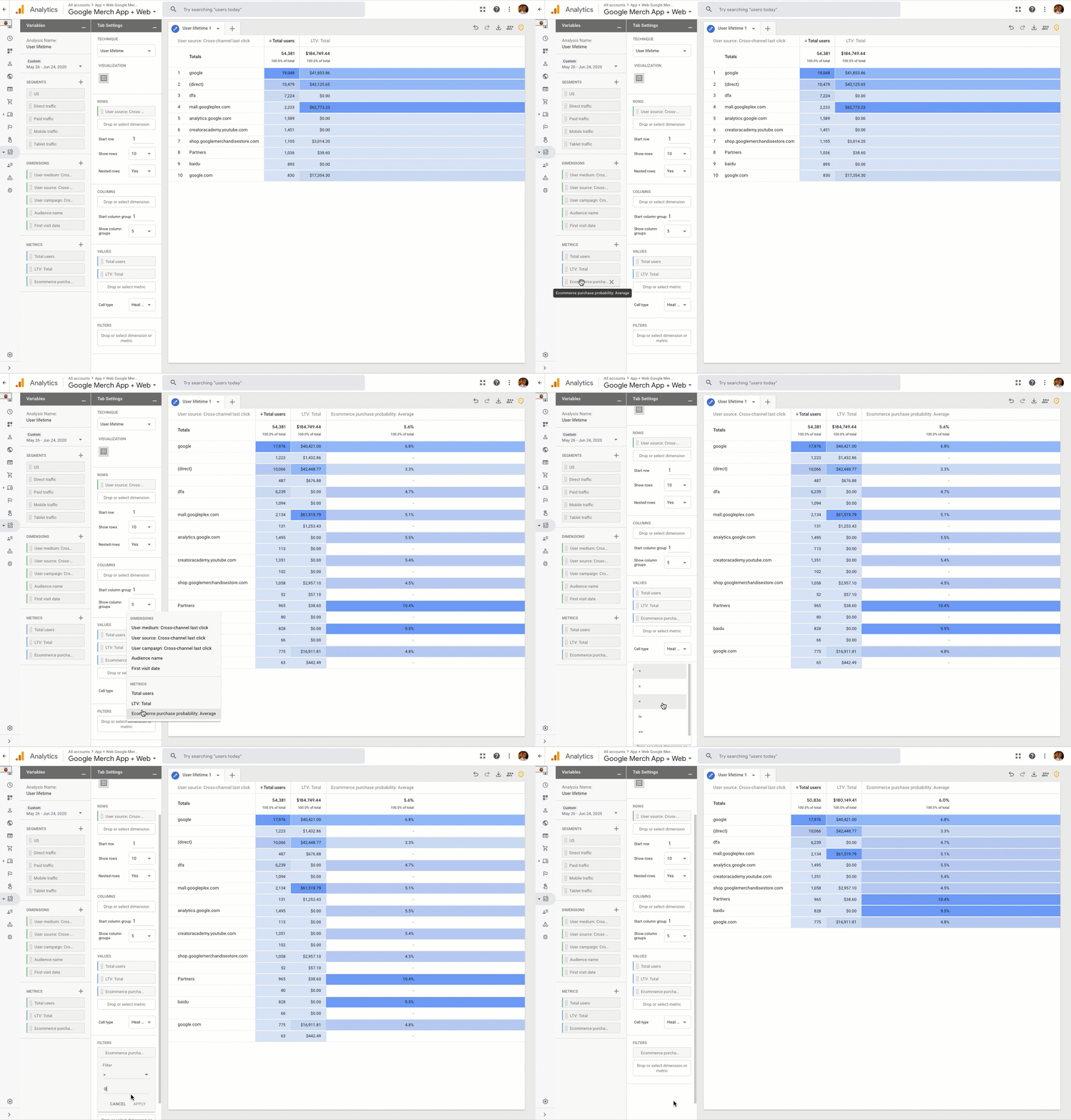
GA4, by contrast, treats every interaction—be it a page view, a button click, or a file download—as an event. This event-driven approach allows for more robust machine learning integrations. Google has leveraged this to provide "predictive metrics," such as purchase probability and churn likelihood. These features enable marketing teams to automate bidding strategies and audience segmentation with a level of precision that was historically reserved for data science teams.
Implications for Marketing ROI
The primary objective of this transition is to sustain return on investment (ROI) in a landscape where data gaps are becoming the norm. With fewer cookies available to track the full conversion path, Google’s new measurement suite utilizes "modeled data." When a user opts out of tracking or a browser prevents it, GA4 uses machine learning to fill in the gaps, providing a statistically significant estimate of behavior.

For stakeholders and executives, the implications are clear: reliance on "raw" data is no longer feasible. The new measurement foundation relies on a hybrid of observed data and intelligent modeling. Organizations that fail to adopt these tools risk losing visibility into the efficacy of their advertising spend, leading to inefficient budget allocation. The updated Google Analytics 360 further supports this by offering sub-properties and roll-up properties, allowing large organizations to manage complex data governance structures without compromising on granular insights.
Industry Reactions and Expert Perspectives
Market analysts have largely viewed the shift as a necessary, albeit painful, adjustment. Industry experts note that the "Future-proofing" marketing strategy is less about the tool itself and more about the shift toward first-party data ownership. By using GA4, businesses are encouraged to collect data that they own directly, rather than relying on third-party aggregators that are increasingly restricted by platform-level privacy changes.
Tal Ackerman, Product Marketing Manager at Google Analytics, emphasized that the transition is about building a foundation that can withstand future regulatory changes. "Now is the time to build the measurement foundation your business needs to succeed in the future," Ackerman noted during the launch phase. This reflects a broader industry sentiment: the era of "set it and forget it" analytics is over. Continuous integration, ongoing testing, and a deep understanding of data privacy compliance are now standard requirements for marketing departments.
Future-Proofing: A Strategic Imperative
The term "future-proofing" in the context of Google Analytics refers to the ability of the system to adapt to a world where user identity is harder to track. The new Google Analytics is designed to integrate seamlessly with Google Ads and other marketing platforms, creating a closed-loop system where data informs bidding in real-time.
Furthermore, the new suite provides enhanced integration with BigQuery. This allows businesses to export their raw data to a cloud data warehouse, providing a level of ownership that was previously inaccessible to smaller organizations. This democratization of data architecture is a direct response to the demand for transparency and control in data management.
The Path Forward for Organizations
For organizations still operating on legacy systems, the road map to full adoption involves three distinct phases:
- Data Governance Audit: Assessing what data is currently being collected and ensuring it complies with the latest privacy regulations.
- Implementation of GA4: Establishing dual-tracking to ensure that the new event-based models are trained on real-world business outcomes while UA data is still available for year-over-year comparisons.
- Strategic Integration: Moving beyond basic reporting to utilize the predictive capabilities of the platform, ensuring that marketing campaigns are optimized based on long-term value rather than short-term clicks.
In conclusion, the transition to the new Google Analytics is a response to the inevitable decline of the cookie-based web. While the shift requires a significant investment in training and technical configuration, it offers a sustainable way to maintain performance measurement. As digital environments continue to evolve, the ability to leverage intelligent, privacy-first measurement tools will separate market leaders from those who remain tethered to outdated methodologies. The foundation laid today will determine the efficacy of marketing efforts for years to come.