GoCable 8-in-1 EDC Charging Solution Offers Versatile Connectivity and 100W Power Delivery in a Compact Form Factor.

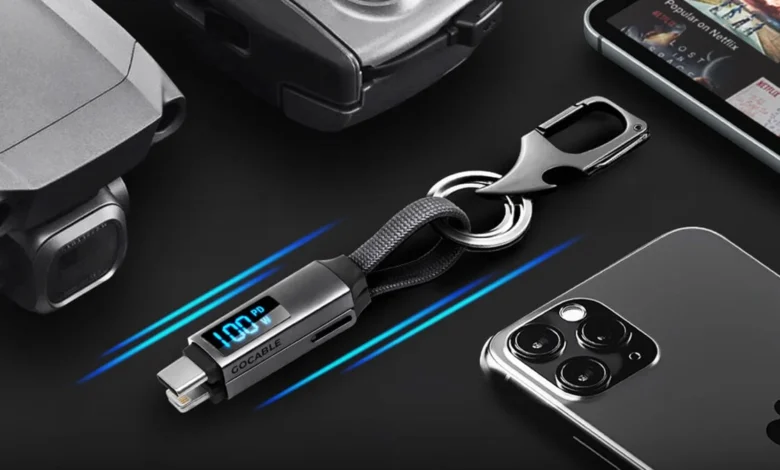
The consumer electronics accessory market has witnessed a significant shift toward multi-functional, minimalist designs as users increasingly struggle with the proliferation of device-specific charging requirements. In response to this demand for streamlined utility, the GoCable 8-in-1 Everyday Carry (EDC) charger has been introduced to the market, currently positioned at a promotional price point of $29.99, reduced from its standard retail price of $49.99. This device represents a growing trend in the "Everyday Carry" subculture, which emphasizes the optimization of tools carried on one’s person to maximize efficiency while minimizing bulk. The GoCable distinguishes itself by integrating high-speed power delivery, universal connectivity, and traditional utility tools into a single, pocket-sized apparatus designed for the modern mobile professional and traveler.
Technical Specifications and Power Delivery Capabilities
At the core of the GoCable’s value proposition is its ability to handle high-wattage throughput, a necessity in an era where laptops and high-performance tablets have transitioned to USB-C charging. The cable supports up to 100W Power Delivery (PD), provided it is paired with a compatible high-output wall adapter or power bank. This specification is particularly relevant given the power requirements of modern hardware; for instance, a 16-inch MacBook Pro or a high-end Dell XPS series laptop typically requires between 65W and 100W for optimal charging speeds. By supporting this threshold, the GoCable moves beyond the category of simple smartphone accessories and into the realm of professional-grade hardware.
The physical architecture of the cable is optimized for durability and portability. Measuring approximately 5.9 inches in length, the cable avoids the common pitfalls of traditional long cords, such as tangling and internal wire degradation caused by excessive coiling. The use of universal connectors ensures compatibility across the current technological divide, offering interfaces for both USB-C—the industry standard mandated by the European Union—and Apple’s proprietary Lightning connector. This dual-compatibility is essential for users operating within "mixed" ecosystems, where they may carry an iPhone alongside a USB-C-powered laptop or drone.
The Evolution of the Everyday Carry (EDC) Market
The emergence of the GoCable is a direct result of the maturation of the EDC market. Historically, EDC enthusiasts focused on items such as pocket knives, flashlights, and high-quality pens. However, as digital connectivity has become a fundamental human requirement, the definition of "essential" has expanded to include portable power solutions. Data from consumer electronics market research suggests that the average professional now carries between 2.5 and 3.5 connected devices daily. This has created a "cable fatigue" phenomenon, where the physical burden of carrying multiple cords—each with different connectors and power ratings—diminishes the portability of the devices themselves.
The GoCable addresses this by incorporating non-electronic utility features into its chassis. The inclusion of a built-in bottle opener and a "safe-proof" package cutter reflects a design philosophy that treats the charging cable as a versatile tool rather than a disposable peripheral. The magnetic wrap system ensures that the cable remains securely attached to a keychain or bag strap, utilizing high-grade magnets to prevent accidental loss during transit. Furthermore, the integration of an LED power display provides real-time feedback on charging status, allowing users to verify that their devices are drawing power at the expected rate—a feature often reserved for expensive, standalone power meters.
Regulatory Context and the Shift to Universal Standards
The release and subsequent popularity of multi-functional cables like the GoCable occur against a backdrop of significant regulatory changes in the technology sector. The European Parliament’s Directive (EU) 2022/2380, which mandates a common charger for electronic devices, has accelerated the global transition toward USB-C. While this legislation aims to reduce e-waste by allowing consumers to reuse chargers across different brands, the transition period remains fraught with compatibility issues for owners of older hardware.
Industry analysts suggest that the GoCable serves as a "bridge technology." By offering an 8-in-1 configuration that handles various permutations of USB-A, USB-C, and Lightning, the device mitigates the friction caused by the slow phasing out of legacy ports. This is particularly important for the drone and photography industries, where many high-end peripherals still rely on specific charging protocols that differ from standard consumer smartphones. The ability to carry one 100W-capable cable that services a drone, a camera, and a smartphone represents a significant reduction in the weight and complexity of a professional’s "field kit."
Economic Analysis and Consumer Value
From a financial perspective, the current $29.99 price point positions the GoCable as a competitive alternative to purchasing individual high-quality cables. A standard Apple-certified Lightning cable typically retails for $19.00, while a high-wattage (100W) USB-C to USB-C cable from a reputable manufacturer can cost between $15.00 and $30.00. When factoring in the additional cost of a keychain multi-tool, the aggregate value of the GoCable’s components exceeds its promotional MSRP.
Market observers note that the "StackSocial" pricing model—where the GoCable is currently featured—often reflects a strategy to gain rapid market share in the crowded accessory space. By lowering the barrier to entry, the manufacturer can build a user base that prioritizes the "all-in-one" utility, potentially leading to brand loyalty in an industry often characterized by generic, low-quality imports. The $20 discount from the $49.99 retail price serves as a catalyst for early adopters who are increasingly wary of the "planned obsolescence" associated with thin, easily frayed charging cables.
Impact on E-Waste and Environmental Sustainability
The environmental implications of the GoCable cannot be overlooked. Global e-waste is estimated to reach over 74 million metric tons by 2030, with discarded cables and chargers making up a significant portion of that total. By consolidating the functionality of eight different cable configurations into a single, durable unit, the GoCable theoretically reduces the number of individual cables a consumer needs to purchase and eventually discard.
The durability of EDC-focused gear is generally higher than that of standard consumer-grade accessories. The GoCable’s design emphasizes mechanical strength, using reinforced housing for the connectors and a tangle-free exterior that resists the internal fraying common in longer, thinner cords. If a single multi-functional cable can replace three or four specialized cables over a three-year lifecycle, the cumulative reduction in plastic and copper waste is substantial. This aligns with broader corporate social responsibility (CSR) trends where manufacturers are under pressure to create longer-lasting products that support circular economy principles.
Chronology of Development and Market Response
The development of the GoCable follows a timeline of iterative improvements in the "keyring cable" category. Early versions of such devices, appearing around 2015, were often limited by low power throughput and fragile plastic hinges. By 2020, the integration of magnets became the standard for securing these devices to keychains. The GoCable represents the "third generation" of this product line, characterized by the inclusion of high-wattage power delivery and integrated diagnostic tools like the LED display.
Initial market responses from tech-focused communities have highlighted the convenience of the 100W rating. On forums such as Reddit’s r/edc and various tech review platforms, users have noted that the primary hurdle for previous compact cables was their inability to charge laptops. The GoCable’s capacity to serve as an emergency laptop charger has shifted the perception of the device from a "novelty keychain" to a "critical backup tool." While some users have expressed a desire for longer cable lengths, the consensus remains that the 5.9-inch form factor is a necessary trade-off for the portability required of an EDC item.
Broader Implications for the Tech Accessory Industry
The success of the GoCable indicates a broader trend: the "Swiss Army Knife" approach to technology. As consumers become more mobile and travel-oriented, the demand for "Swiss-style" integration—where one item performs the tasks of many—is expected to grow. This puts pressure on traditional cable manufacturers to innovate beyond simple wire-and-plastic construction.
Furthermore, the inclusion of an LED power display suggests that consumers are becoming more tech-literate regarding charging protocols. Users now want to know if their device is "fast charging" or merely "trickle charging." This transparency allows users to troubleshoot faulty wall adapters or power banks, a level of utility that was previously unavailable in a portable cable. As the market moves toward 240W USB-C standards in the coming years, devices like the GoCable will likely evolve to handle even higher power loads, further blurring the line between portable accessories and heavy-duty power equipment.
In conclusion, the GoCable 8-in-1 EDC charger is more than a discounted tech gadget; it is a manifestation of the current state of digital mobility. By addressing the dual needs of high-speed power and universal connectivity within a rugged, multi-tool frame, it offers a pragmatic solution to the logistical challenges of modern device management. As the industry continues to consolidate around universal standards, the role of versatile, high-quality interconnects will only become more central to the daily lives of global consumers.