The digital landscape, particularly for platforms as ubiquitous as WordPress, is under constant siege from an unrelenting tide of spam. This pervasive issue manifests across various touchpoints, from comment sections and contact forms to user registrations, posing significant operational and security challenges for website administrators. The good news for the millions of WordPress users is that effective spam mitigation is more accessible and affordable than ever, moving beyond costly tools to embrace sophisticated, often invisible, protection strategies.
Drawing on over 16 years of extensive research and practical application, including safeguarding high-traffic platforms like WPBeginner and associated business websites, a comprehensive, multi-layered approach to spam defense has been refined. This guide delves into the precise methodologies employed to counter each distinct form of WordPress spam, progressing from fundamental built-in configurations to advanced, modern automated protection systems. These are the exact, battle-tested techniques that underpin the security of some of the internet’s most visited WordPress sites.

The Persistent Threat of Digital Spam on WordPress Platforms
Spam, in its myriad forms, represents a foundational nuisance and a significant security vulnerability in the digital ecosystem. For WordPress, which powers over 43% of all websites on the internet, this challenge is particularly acute. Its open-source nature, vast plugin ecosystem, and widespread adoption make it an attractive target for automated bots and malicious actors seeking to exploit vulnerabilities for various purposes, including link building for dubious SEO, phishing attempts, malware distribution, and data harvesting. The sheer volume of unsolicited content, often generated by increasingly sophisticated AI-powered tools, can overwhelm legitimate interactions, degrade user experience, and obscure critical data.
Historically, spam has evolved from simple keyword stuffing and irrelevant comments to highly convincing, context-aware submissions. Early internet spam was often manual or semi-automated, relying on brute-force tactics. However, with advancements in machine learning and artificial intelligence, spam bots can now mimic human behavior with alarming accuracy, bypassing rudimentary defenses and posing a more complex threat. The economic impact is substantial, encompassing wasted administrative time, compromised data integrity, potential SEO penalties for published low-quality content, and the erosion of user trust. It is estimated that spam costs businesses billions annually in lost productivity and security expenses.

Foundational Defenses: Leveraging WordPress’s Built-in Mechanisms
The initial line of defense against spam often resides within WordPress’s native settings, providing a cost-free and straightforward means to deter the most opportunistic attacks. These built-in options, while not a complete panacea, effectively eliminate the easiest targets, forming an essential base layer for any robust anti-spam strategy. Configuring these settings is a matter of minutes and should be the first step for any WordPress administrator.
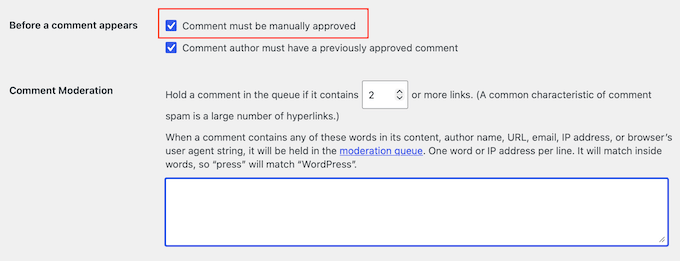
A critical area for intervention is the WordPress discussion settings, accessible via Settings » Discussion in the dashboard. These controls empower administrators to dictate comment parameters, including who can post, the nature of permissible links, and the overall moderation workflow. The comment moderation queue stands out as a particularly potent tool. By mandating manual approval for comments, submissions are held in a hidden queue, preventing any spam from reaching public view, even if it circumvents other filters. This proactive measure ensures that the site’s content remains clean and professional. Enabling "Comment must be manually approved" is a simple yet profoundly effective step. Additionally, allowing returning commenters to bypass moderation via "Comment author must have a previously approved comment" can balance security with user convenience, though regular review of published comments remains crucial.
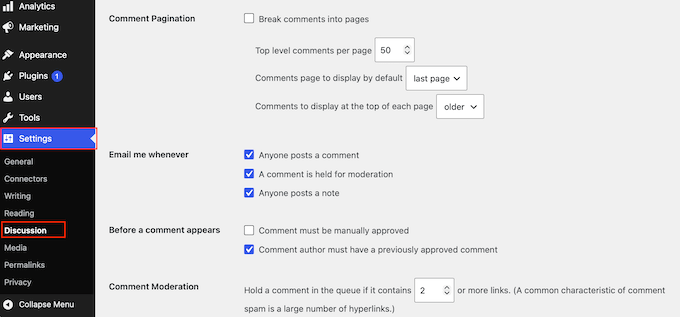
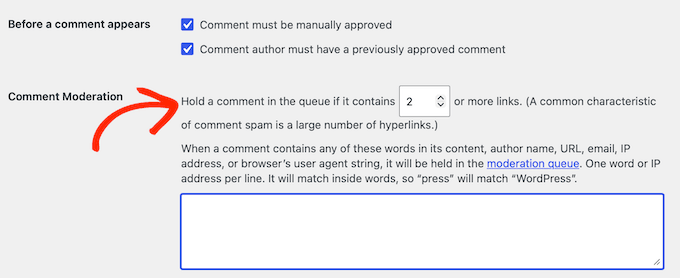
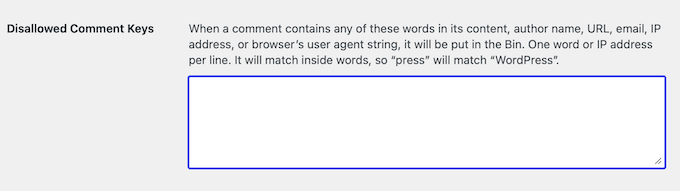
Furthermore, spam comments are almost invariably laden with web addresses. WordPress’s "Comment Moderation" box can be configured to automatically hold submissions exceeding a specified number of links. Reducing the default threshold from two to one link significantly enhances detection rates for junk content. Complementing this, the "Disallowed Comment Keys" blocklist enables administrators to define specific words, names, email addresses, or URLs that, if present, automatically relegate a comment to the trash. This custom filtering provides granular control over unwanted content.
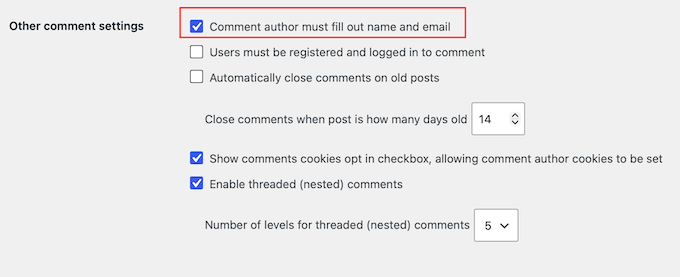
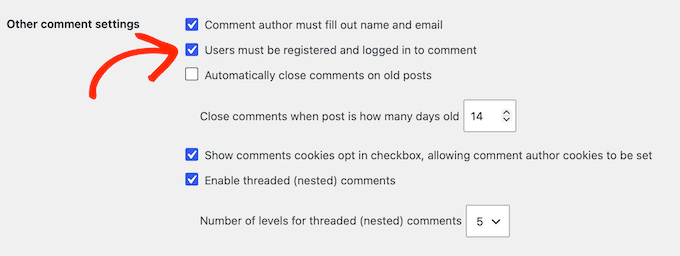
Requiring commenters to provide a name and email address is another effective measure to foster genuine engagement and deter anonymous spam. While most legitimate visitors readily provide this information, bots and casual spammers are often discouraged by the extra step. This setting, found under "Other comment settings," helps cultivate a more trustworthy and accountable online community.
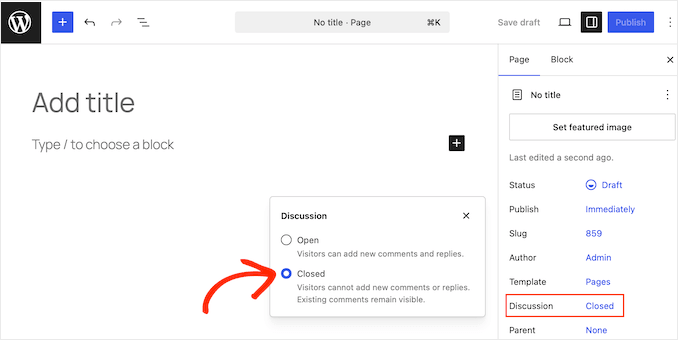
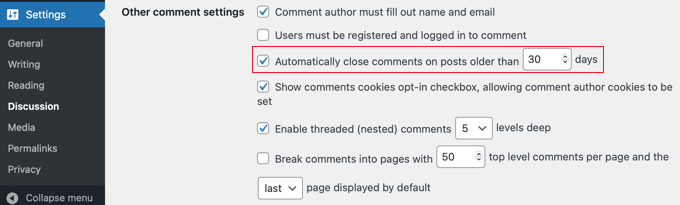
For websites where interactive comment sections are not essential, the most definitive solution is to disable comments entirely. This eliminates comment spam at its root. A site-wide disablement can be achieved through a code snippet, typically added via a plugin like WPCode to prevent theme updates from overwriting the change. This comprehensive approach removes all comment-related functionality from the administrative interface and frontend. Alternatively, comments can be disabled on individual pages (e.g., Contact or About Us) where they are rarely needed, or automatically closed on older posts after a predefined period (e.g., 30 or 90 days), reducing the attack surface for archived content.
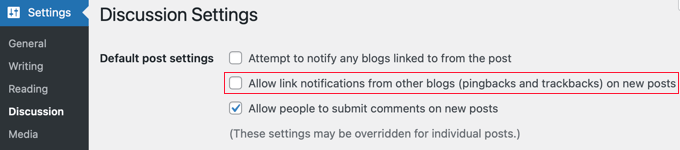
Finally, disabling trackbacks and pingbacks is a crucial cleanup step. Originally intended to notify bloggers of incoming links, these features have largely been co-opted by spammers to generate fake notifications. Turning off "Allow link notifications from other blogs (pingbacks and trackbacks) on new posts" significantly reduces dashboard clutter from these irrelevant alerts. For existing content, a targeted clean-up of older trackbacks and pingbacks is recommended to ensure comprehensive protection.
The Rise of Intelligent Automation: AI-Powered Spam Mitigation
As spam tactics grow more sophisticated, particularly with the advent of AI, modern anti-spam defenses must evolve in kind. The most effective contemporary solutions leverage artificial intelligence to automatically detect and block spam across comments, contact forms, and user registrations, crucially doing so without resorting to intrusive CAPTCHAs that can negatively impact user experience and conversion rates. This represents a significant shift from reactive moderation to proactive, invisible protection.
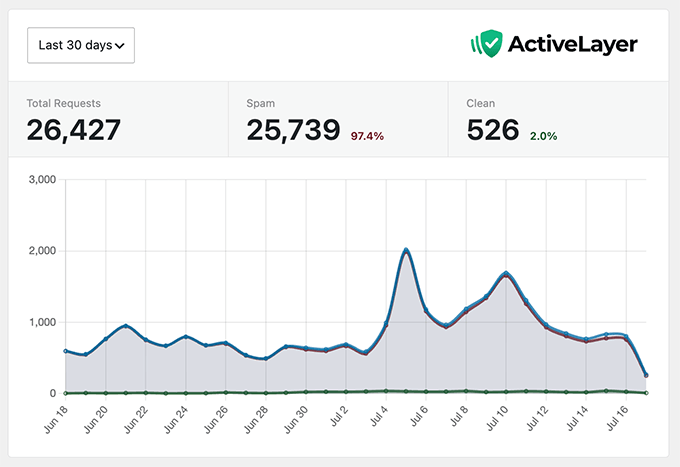
A prime example of this advanced approach is ActiveLayer, an AI-powered, server-side plugin that silently intercepts spam. Its invisible operation eliminates the need for CAPTCHAs, thereby preserving a seamless user journey, and it is also designed with GDPR compliance in mind. The efficacy of such systems is starkly illustrated by real-world data: on WPBeginner alone, ActiveLayer successfully blocked over 25,739 spam comments and contact form submissions within a recent 30-day period. Beyond mere blocking, these advanced tools often provide detailed logs, including confidence scores and the rationale behind flagged submissions, offering valuable insights into spam patterns. ActiveLayer’s free tier offers 1,000 spam checks, with paid plans starting at approximately $4 per month, billed annually, making advanced protection accessible.
Other notable players in this space include Akismet and CleanTalk. Akismet, a long-standing and widely used plugin, remains a viable option for personal blogs, offering a "name your price" model for non-commercial sites. However, its pricing structure for commercial entities has seen significant increases, making it a more expensive proposition for businesses compared to alternatives. CleanTalk, on the other hand, provides a comprehensive, cloud-based anti-spam solution for various platforms, including WordPress, and is often considered a strong contender for business sites due to its robust feature set and competitive pricing.
A key recommendation for administrators is to select and commit to a single primary spam filtering solution. Running multiple spam filters concurrently can lead to conflicts, potentially blocking legitimate users or creating redundant processing. These AI-powered plugins are designed for broad integration, typically working seamlessly with popular contact form plugins and other WordPress functionalities. The combination of WordPress’s built-in settings and a modern AI-powered filter forms a powerful duo capable of neutralizing the vast majority of spam threats.
User Interaction Challenges: CAPTCHA and Frictionless Security
While AI-powered solutions strive for invisibility, there are scenarios where a more direct challenge to bots is warranted. CAPTCHAs (Completely Automated Public Turing test to tell Computers and Humans Apart) serve as a simple test designed to be easily passable by humans but difficult for automated scripts. The modern iteration of CAPTCHA, particularly Cloudflare Turnstile, offers a compelling balance between security and user experience.
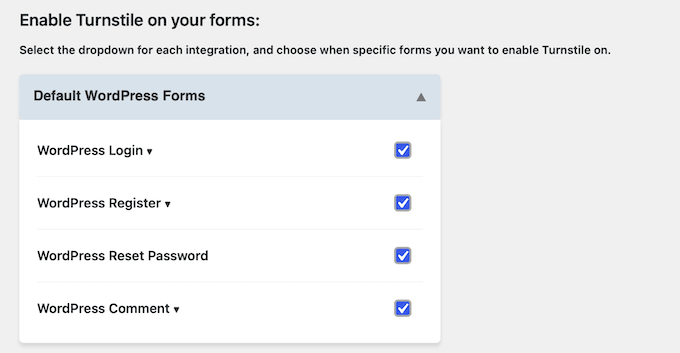
Cloudflare Turnstile stands out as a free and relatively straightforward CAPTCHA solution for WordPress. Unlike traditional, often frustrating image-selection CAPTCHAs, Turnstile operates primarily in the background, conducting checks without requiring most human visitors to solve a puzzle. The integration typically involves installing a plugin like "Simple Cloudflare Turnstile," creating a free Cloudflare account, and linking the two via site and secret keys. Once configured, administrators can selectively enable Turnstile on various WordPress forms. The advantage of Turnstile’s server-side, invisible processing aligns with the goal of frictionless security, minimizing the "conversion cost" associated with more overt CAPTCHA challenges.
Google reCAPTCHA, another prominent CAPTCHA service, has historically been a popular choice. However, recent changes to Google’s free tier, capping assessments at 10,000 per month per organization, have made Cloudflare Turnstile a more attractive, limit-free alternative for many businesses. While reCAPTCHA remains functional via plugins like "Advanced Google reCAPTCHA," the cost implications for high-traffic sites can be a deterrent.
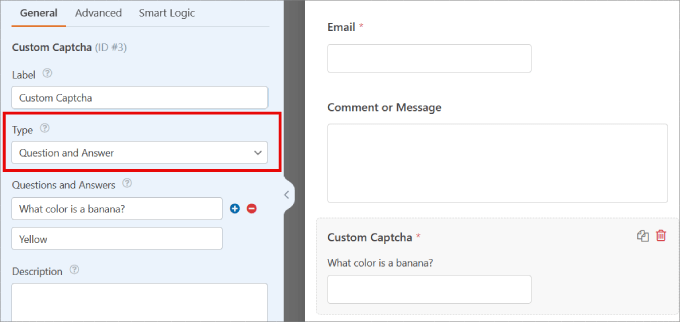
The debate around CAPTCHA’s impact on form conversions is ongoing. Industry analysis suggests that any additional step in a form submission process can introduce friction, leading to a measurable drop in completion rates. This is precisely why the emphasis has shifted towards invisible, server-side detection methods that block bots without interrupting the user journey. For scenarios where external CAPTCHA services are undesirable due to data privacy concerns or a preference for self-hosted solutions, plugins like WPForms’ Custom Captcha offer an on-server alternative. These custom CAPTCHAs can present simple math problems or custom question-and-answer challenges, keeping data localized while still providing a bot-deterring hurdle.
Securing Entry Points: Contact Forms and User Registrations
Contact and lead forms, along with user registration portals, represent highly vulnerable entry points on any WordPress site, frequently targeted by automated spam campaigns. The sheer volume of spam experienced by many platforms, exemplified by reports of over 18,000 spam entries on a single form, underscores the critical need for robust protection.
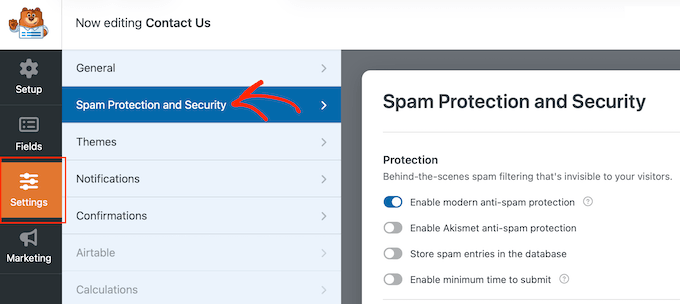
For contact forms, builders like WPForms, used by over 5 million websites, integrate sophisticated anti-spam features. A fundamental defense is the "anti-spam token," a modern evolution of the "honeypot" technique. This silently attaches a unique, time-sensitive token to the form. Automated scripts, which typically bypass JavaScript execution and form rendering, fail to submit this token, effectively blocking them before they can even reach the inbox. This invisible protection is usually enabled by default in contemporary form builders and should always be verified.
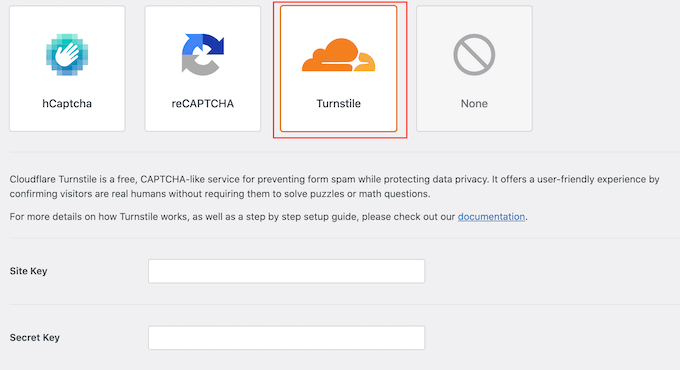
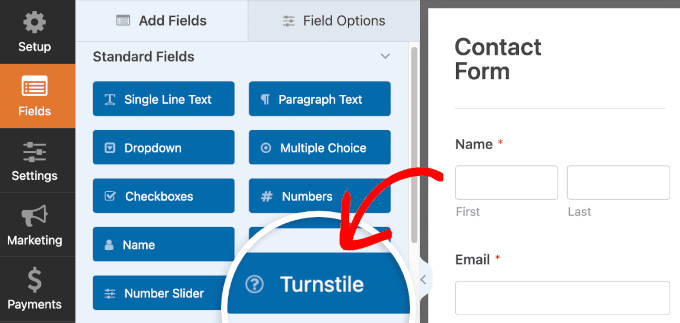
More aggressive bots, capable of mimicking human browsing patterns, may bypass simple honeypots. In these instances, a visible CAPTCHA becomes necessary. WPForms, for instance, offers built-in integrations for Cloudflare Turnstile and Google reCAPTCHA. As previously noted, Turnstile is often preferred due to its free, unlimited usage and less intrusive background checks. Implementing a CAPTCHA involves configuring API keys and adding the CAPTCHA field to each protected form. For those wary of sending visitor data to external services, WPForms’ Custom Captcha feature allows for self-hosted math problems or custom Q&A, processing the challenge directly on the server.
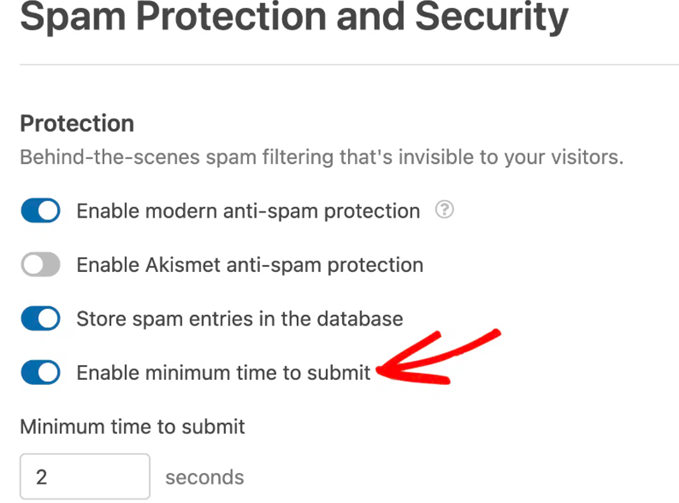
Beyond these technical hurdles, behavioral checks add another layer of defense. Real users require several seconds to read questions and complete a form. Bots, however, often submit forms in a fraction of a second. Time-based checks, such as WPForms’ "Enable minimum time to submit" (defaulting to 2 seconds), flag and block these impossibly fast submissions without altering the user interface.
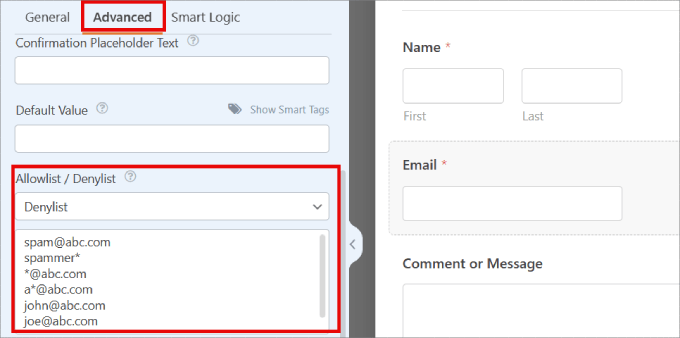
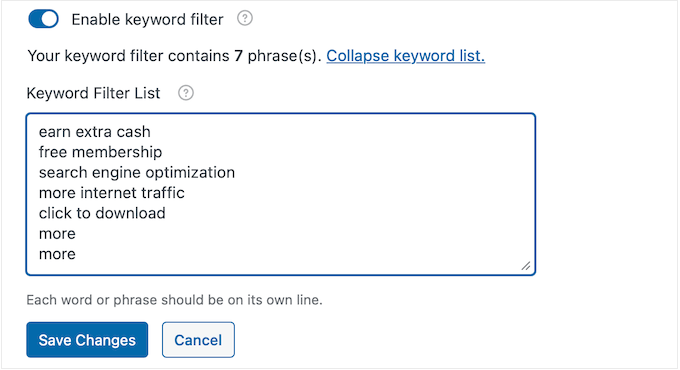
Finally, granular content filtering can intercept spam that slips through other defenses. Premium form builders like WPForms Pro allow administrators to block submissions based on specific email addresses, keywords, countries, or IP addresses. This enables targeted blocking of known spammers or problematic regions. Email denylists (e.g., *@example.com to block entire domains) and keyword filters for spammy phrases are highly effective. For geographically restricted services, country filters can either allow or deny submissions from specific locations. In cases where the form solution lacks these options, blocking IP addresses directly via WordPress or server configurations remains a viable alternative.
For user registrations, the strategies mirror those for contact forms, with additional considerations. If a website does not require user accounts (e.g., not a membership site or e-commerce store), the simplest and most effective measure is to disable registrations entirely via Settings » General by unchecking "Anyone can register."
When open registration is necessary, the paramount goal is to authenticate real users while excluding bots. Email confirmation is a highly effective gatekeeper, requiring new accounts to be activated only after the user clicks a link in their inbox, a step bots cannot typically complete. The implementation of this varies by platform:
- WooCommerce: While WooCommerce core doesn’t include a native email confirmation step, extensions are available. Alternatively, administrators can enforce guest checkout or limit account creation to the checkout process.
- Membership/Course Platforms: Dedicated plugins like MemberPress, LearnDash, and LifterLMS typically offer email verification or manual approval options within their respective settings.
- Custom Registration Forms: Plugins like WPForms’ User Registration addon facilitate email activation or manual admin approval for custom signup forms.
Combining these measures with CAPTCHA and honeypot protection, similar to contact forms, significantly strengthens registration security. Plugins like WP Armour can add hidden honeypot fields to default WordPress registration pages, silently blocking bot attempts and logging their activity. Furthermore, AI-powered tools like ActiveLayer and CleanTalk extend their automated detection capabilities to user registrations, screening signups against live reputation data to block fraudulent accounts based on known-bad IP addresses or throwaway email domains. This multi-faceted approach ensures that only verified users gain access, protecting the database and maintaining accurate user metrics.
Perimeter Protection: The Role of Site-Wide Firewalls
Beyond individual entry points, a crucial layer of defense for any WordPress site is a Web Application Firewall (WAF). A WAF acts as a digital bouncer, screening all incoming traffic and blocking malicious requests before they even reach the WordPress server. Since a significant portion of form and registration spam is automated, a well-configured WAF can neutralize a substantial volume of these attacks at the network perimeter, offering a proactive shield.
The most effective WAFs operate at the DNS (Domain Name System) level. This means traffic is filtered on the WAF provider’s network before it ever touches the website’s hosting server, reducing server load and protecting against a broader range of threats, including DDoS attacks and SQL injection attempts, in addition to spam.
Cloudflare is a leading example of a DNS-level firewall, offering a robust free plan that includes basic WAF protection. Setting up Cloudflare involves changing the domain’s nameservers to point to Cloudflare’s network, which then routes and inspects all traffic. This not only provides firewall capabilities but also offers performance benefits through its Content Delivery Network (CDN). Cloudflare’s widespread adoption and continuous updates make it a formidable barrier against evolving cyber threats.
While DNS-level firewalls are generally preferred for their comprehensive protection and performance benefits, server-side firewall plugins also exist. These plugins, while effective, process requests after they have reached the server, potentially consuming server resources. However, they can offer more granular control within the WordPress environment. Evaluating different firewall options requires considering factors such as cost, ease of setup, performance impact, and the specific types of threats they are designed to mitigate. Regardless of the chosen solution, integrating a site-wide firewall is a non-negotiable step in building a resilient spam protection strategy.
Post-Attack Management: Cleanup and Continuous Vigilance
Implementing preventive measures is only half the battle; effective spam management also requires diligent cleanup of existing junk and ongoing monitoring. Most websites, even with robust defenses, accumulate a backlog of old spam that needs periodic purging. This cleanup is essential for maintaining a tidy database, improving site performance, and ensuring the new protection tools operate optimally.
Critical Precaution: Before undertaking any bulk deletion, it is imperative to create a complete WordPress backup. Deleting data in bulk is often irreversible, and a backup provides a safety net against accidental removal of legitimate content.
WordPress’s built-in spam filter flags comments but does not automatically delete them. These can accumulate in the "Spam" folder, consuming database space. Administrators should regularly navigate to Comments, select the "Spam" filter, and click "Empty Spam" to permanently remove all caught submissions. For sites with thousands of pending spam comments, direct dashboard deletion might time out or freeze. In such cases, a free plugin like WP Bulk Delete can handle large volumes more efficiently.
Similarly, fake user accounts, often created by spam bots, pose a security risk and skew analytics. These accounts typically register with the "Subscriber" user role. Administrators should regularly review Users » All Users, filter by "Subscriber" role, identify fake accounts, and use the "Bulk actions" menu to delete them. Extreme caution is advised to ensure only fake accounts are selected, never legitimate users or administrators. For extensive numbers of fake users, WP Bulk Delete can again be instrumental, allowing deletion based on role, inactivity, or registration date.
No spam filter is infallible, and false positives (legitimate content mistakenly flagged as spam) can occur. It is crucial to perform a quick glance through the "Spam" folder before emptying it. Legitimate comments can be marked "Not Spam," which also helps train the filter to recognize similar content as safe in the future.
Finally, establishing a monthly anti-spam review routine is vital for long-term site health. This routine should include:
- Emptying the Spam Folder: Regularly clear out accumulated spam comments.
- Reviewing User Registrations: Check for and delete any fake user accounts.
- Monitoring Plugin Logs: Review the logs of anti-spam plugins and firewalls to identify new spam patterns or persistent threats.
This proactive approach ensures that the site remains clean, secure, and optimized for genuine user interaction.
The Evolving Landscape of Spam Protection: Future Outlook
Protecting a WordPress website from the relentless onslaught of spam requires a strategic, multi-layered defense. The most effective approach integrates WordPress’s foundational built-in settings, sophisticated AI-powered spam filtering, targeted CAPTCHA challenges, comprehensive form and registration security, and a robust site-wide firewall. This layered security strategy, refined over years of combating evolving digital threats, ensures maximum protection with minimal impact on user experience.
Key takeaways for administrators include:
- Leverage Built-in Features: Utilize WordPress discussion settings, moderation queues, link limits, and comment blocklists as a primary defense.
- Embrace AI Automation: Implement a modern AI-powered spam protection plugin (e.g., ActiveLayer, CleanTalk) for invisible, server-side filtering across comments, forms, and registrations.
- Strategic CAPTCHA Use: Deploy frictionless CAPTCHAs like Cloudflare Turnstile when needed, prioritizing user experience.
- Fortify Entry Points: Secure contact forms with honeypots, time-based checks, and content filters, and protect user registrations with email confirmation and dedicated anti-spam tools.
- Deploy a WAF: Integrate a DNS-level firewall like Cloudflare for site-wide perimeter defense.
- Maintain Vigilance: Regularly clean up existing spam, handle false positives, and establish a monthly review routine.
The landscape of digital spam is constantly evolving, driven by technological advancements and the ingenuity of malicious actors. As AI becomes more prevalent, both in generating spam and combating it, website administrators must remain adaptable. The future of spam protection will likely see even more sophisticated behavioral analysis, biometric authentication, and highly personalized threat intelligence. Staying informed about these trends and consistently updating security protocols will be paramount to maintaining a secure and functional online presence.
Frequently Asked Questions About WordPress Spam Protection
Q: Is free Akismet-style filtering sufficient, or is more needed?
A: For a small personal blog primarily dealing with comment spam, a free filter like Akismet can be sufficient. However, for websites with contact forms, user registration, or e-commerce functionality, a more comprehensive service like ActiveLayer or CleanTalk that protects multiple entry points is highly recommended.
Q: Will adding a CAPTCHA negatively impact form conversions?
A: Yes, adding a visible CAPTCHA can introduce friction and potentially lead to a decrease in form completion rates. This is why invisible, server-side detection methods that block bots without requiring user interaction are generally preferred to maintain a positive user experience.
Q: Why do I still receive spam after installing an anti-spam plugin?
A: This often occurs because the plugin only protects a specific entry point (e.g., comments) but leaves others (e.g., signup or contact forms) vulnerable. Modern bots will simply target these unprotected areas. A multi-layered approach, combining built-in WordPress settings, an automated filter, and a firewall, is essential for comprehensive protection.
Q: How can I prevent fake user registrations without completely disabling signups?
A: Implementing email confirmation for new accounts is highly effective. New accounts remain inactive until the user clicks a verification link sent to their inbox, a task bots cannot perform. Pairing this with a honeypot and an automated filter allows legitimate users to register freely while blocking fraudulent attempts.
Q: Can spam actually harm my website’s SEO or lead to blacklisting?
A: The impact depends on where the spam resides. Comment spam held in a moderation queue is not published and therefore poses no direct SEO risk. However, published spam, especially if it contains malicious links or low-quality content, can slowly degrade search engine rankings and, in severe cases, could lead to a site being blacklisted by search engines if it’s perceived as a source of harmful content. WordPress’s automatic "nofollow" tagging for comment links mitigates some of this risk for published comments.