Elon Musk Admits xAI Used OpenAI Data for Grok Training Amid High-Stakes Legal Battle Over Artificial Intelligence Ethics and Competition

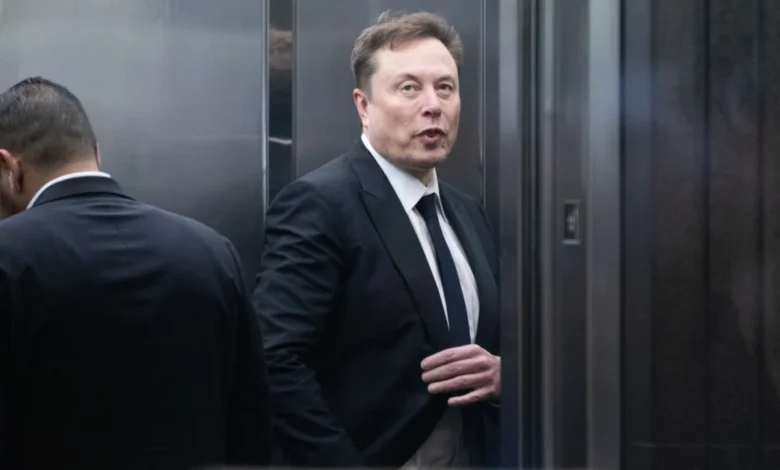
In a pivotal moment during a California federal court proceeding on Thursday, Elon Musk admitted that his artificial intelligence venture, xAI, utilized "distillation" techniques on OpenAI’s proprietary models to develop its own chatbot, Grok. The admission came during Musk’s testimony in his ongoing lawsuit against OpenAI, its CEO Sam Altman, and President Greg Brockman. When asked directly if xAI had leveraged OpenAI’s outputs to train Grok, Musk characterized the method as a standard industry practice before conceding that xAI had "partly" engaged in the process. This revelation provides a rare window into the internal development strategies of elite AI labs and highlights the increasingly blurry lines between competitive intelligence and intellectual property theft in the race for artificial general intelligence (AGI).
The Courtroom Admission and the Mechanics of Distillation
The testimony took place as part of a high-profile legal battle in which Musk alleges that OpenAI breached its founding mission as a non-profit dedicated to developing AI for the benefit of humanity. Musk, a co-founder of OpenAI who left the organization in 2018, claims the company has effectively become a "closed-source de facto subsidiary" of Microsoft. However, the focus shifted to Musk’s own business practices when he was questioned about the origins of Grok, the AI integrated into the X (formerly Twitter) platform.
Distillation, in the context of machine learning, is a process where a smaller, more efficient "student" model is trained using the outputs of a larger, more sophisticated "teacher" model. By prompting a high-end model like GPT-4 or Claude 3.5 Sonnet and using its responses as training data, developers can bypass the astronomical costs associated with gathering and cleaning raw datasets from the open web. This method allows secondary players to create "open-weight" or specialized models that rival the performance of industry leaders at a fraction of the original R&D expenditure.
Musk’s admission that xAI used this technique is significant because it mirrors the very behavior that U.S. AI giants have recently condemned. While distillation is not explicitly illegal under current statutes, it frequently violates the terms of service (ToS) established by providers like OpenAI and Anthropic, which strictly prohibit using their API outputs to develop competing commercial models.
A Chronology of the OpenAI-Musk Relationship
To understand the weight of Musk’s admission, one must examine the decade-long evolution of the relationship between the tech mogul and the lab he helped birth.
- December 2015: OpenAI is founded as a non-profit research lab by Elon Musk, Sam Altman, Greg Brockman, and several others. The stated goal is to build safe AGI and share its benefits openly with the world, specifically to counter the perceived monopolistic threat of Google’s DeepMind.
- February 2018: Musk resigns from OpenAI’s board, citing potential future conflicts of interest with Tesla’s own AI development for autonomous driving. Reports later suggest Musk attempted a takeover of the lab, which was rebuffed by Altman and the board.
- March 2019: OpenAI creates "OpenAI LP," a "capped-profit" entity, to attract the massive capital required for compute power. This shift marks the beginning of the philosophical rift between Musk and the leadership.
- November 2022: The release of ChatGPT triggers a global AI arms race. OpenAI’s valuation skyrockets, and its partnership with Microsoft deepens.
- July 2023: Musk officially launches xAI, positioning it as a "truth-seeking" alternative to what he termed "woke" AI models from Google and OpenAI.
- March 2024: Musk files a lawsuit against OpenAI, alleging a betrayal of the founding "non-profit" agreement. OpenAI responds by releasing old emails from Musk that appear to show him supporting the transition to a for-profit structure and a massive fundraising goal.
- April 2024: During trial testimony, Musk admits to using OpenAI’s data for Grok and provides his current ranking of the AI landscape.
The Economics of AI Training and the Irony of Data Sourcing
The reliance on distillation highlights the staggering barrier to entry in the frontier AI sector. Training a foundation model from scratch requires tens of thousands of specialized chips—such as Nvidia’s H100 GPUs—which cost upwards of $30,000 each. Estimates suggest that training GPT-4 cost OpenAI more than $100 million in compute alone, while future models are expected to require budgets in the billions.
Distillation offers a "shortcut" that levels the playing field. By querying a teacher model, a company like xAI can capture the logic and reasoning capabilities of a billion-dollar model for the price of API credits. This has created a paradoxical environment where the "frontier" labs—OpenAI, Google, and Anthropic—are accused of "scraping" the entire public internet (often disregarding copyright and robots.txt files) while simultaneously building digital fortresses to prevent others from doing the same to them.
Industry analysts point out the irony in Musk’s position. While he sues OpenAI for abandoning its open-source roots, his own company is utilizing the very proprietary technology he critiques to accelerate its own commercial product. This "recursive training" loop also raises technical concerns; researchers have warned that if AI models are trained too heavily on the outputs of other AIs (model collapse), they may begin to lose nuance and propagate systemic errors.
The Global Context: The "China Factor" and the Frontier Model Forum
The debate over distillation is not merely a domestic corporate squabble; it has major geopolitical implications. U.S. officials and tech executives have grown increasingly concerned that Chinese AI labs, such as 01.AI and DeepSeek, are using distillation to bridge the gap between U.S. and Chinese capabilities. By mining the outputs of Claude or GPT-4, these labs can produce open-weight models that perform at near-state-of-the-art levels despite U.S. export controls on high-end chips.
In response, the Frontier Model Forum—an industry body comprised of OpenAI, Anthropic, Google, and Microsoft—has launched initiatives to share intelligence on how to detect and block mass-querying attempts. These efforts include:
- Rate Limiting: Implementing sophisticated throttling to prevent automated scripts from harvesting millions of responses.
- Output Watermarking: Developing cryptographic signatures in text that can identify if a dataset was generated by a specific model.
- Behavioral Analysis: Identifying patterns of "suspicious" querying that look like systematic probing of a model’s internal logic rather than human conversation.
Musk’s admission confirms that these "adversarial" training techniques are not just a foreign threat but are being actively deployed by domestic competitors within the United States.
Competitive Rankings and the State of xAI
Later in his testimony, Musk provided a candid assessment of the current AI hierarchy. Despite his previous public claims that xAI would soon surpass all competitors except Google, he offered a more tempered view on the stand. Musk ranked the world’s leading AI providers as follows:
- Anthropic: Currently holding the top spot in terms of model capability and safety.
- OpenAI: Following closely behind.
- Google: Occupying the third position.
- Chinese Open-Source Models: Noted for their rapid advancement.
Musk characterized xAI as a "much smaller" entity, noting it employs only a few hundred people compared to the thousands of engineers at Google or OpenAI. This framing serves a dual purpose: it positions xAI as an underdog in the legal fight while justifying the use of distillation as a necessary survival tactic for a resource-constrained startup.
Industry Implications and Future Outlook
The fallout from Musk’s admission is likely to be felt across the legal and technical landscapes of Silicon Valley. If the court finds that xAI’s use of OpenAI’s data violated terms of service or intellectual property rights, it could set a precedent that limits how new entrants develop their models. Conversely, if such practices are deemed a "general practice" and legally permissible, it could accelerate the commoditization of AI, making it harder for the original creators to maintain a competitive moat.
Furthermore, this admission complicates Musk’s narrative in the OpenAI lawsuit. By admitting that xAI benefits from the very "closed" models he is suing to "open up," Musk risks undermining his argument that OpenAI’s shift to a proprietary model has caused irreparable harm to the public and the industry.
As the trial continues, the AI community remains focused on whether OpenAI will provide an official response or retaliate with a countersuit regarding the breach of its terms of service. For now, the "partly" yes from Elon Musk stands as a stark reminder that in the high-stakes world of artificial intelligence, the line between innovation and imitation is thinner than ever. The industry is moving toward a future where data is the most guarded currency, and the methods used to acquire it are as scrutinized as the algorithms themselves.
Related posts: