The Evolution of Digital Measurement: A Chronological Context
The journey toward this new architecture began in earnest following the industry-wide recognition that traditional web analytics—often tied to the desktop browser and third-party cookies—could no longer provide a holistic view of the consumer. In 2019, Google introduced the "App + Web" property in beta, a foundational experiment designed to unify the disparate data streams coming from mobile applications and traditional websites.
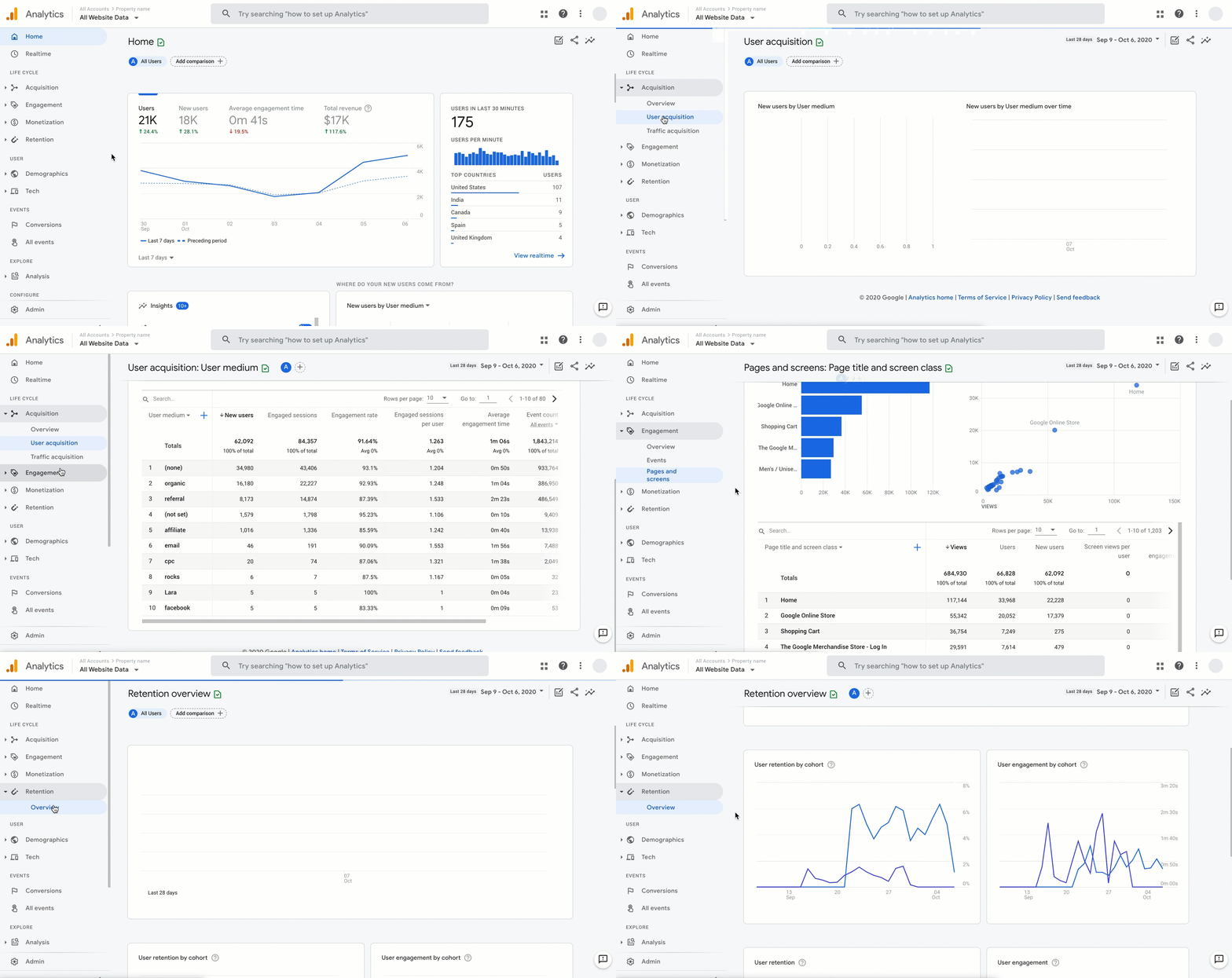
By mid-2020, as the global pandemic accelerated the digital transformation of retail and service industries, the limitations of legacy systems became glaringly apparent. Marketers found themselves unable to reconcile a customer’s journey that might begin with a mobile app download, continue on a desktop browser, and conclude in a physical store. The official rollout of the new Google Analytics serves as the culmination of these efforts, replacing the historical reliance on Universal Analytics with a measurement model that prioritizes the user lifecycle over simple page-view metrics.
Machine Learning at the Core
At the heart of the new Google Analytics lies an advanced machine learning engine designed to bridge the gaps created by incomplete data. As regulatory bodies like the European Union (under GDPR) and California (under CCPA) introduce more stringent data privacy standards, and as browsers like Safari and Firefox phase out third-party cookies, the "signal-to-noise" ratio in digital marketing has diminished.
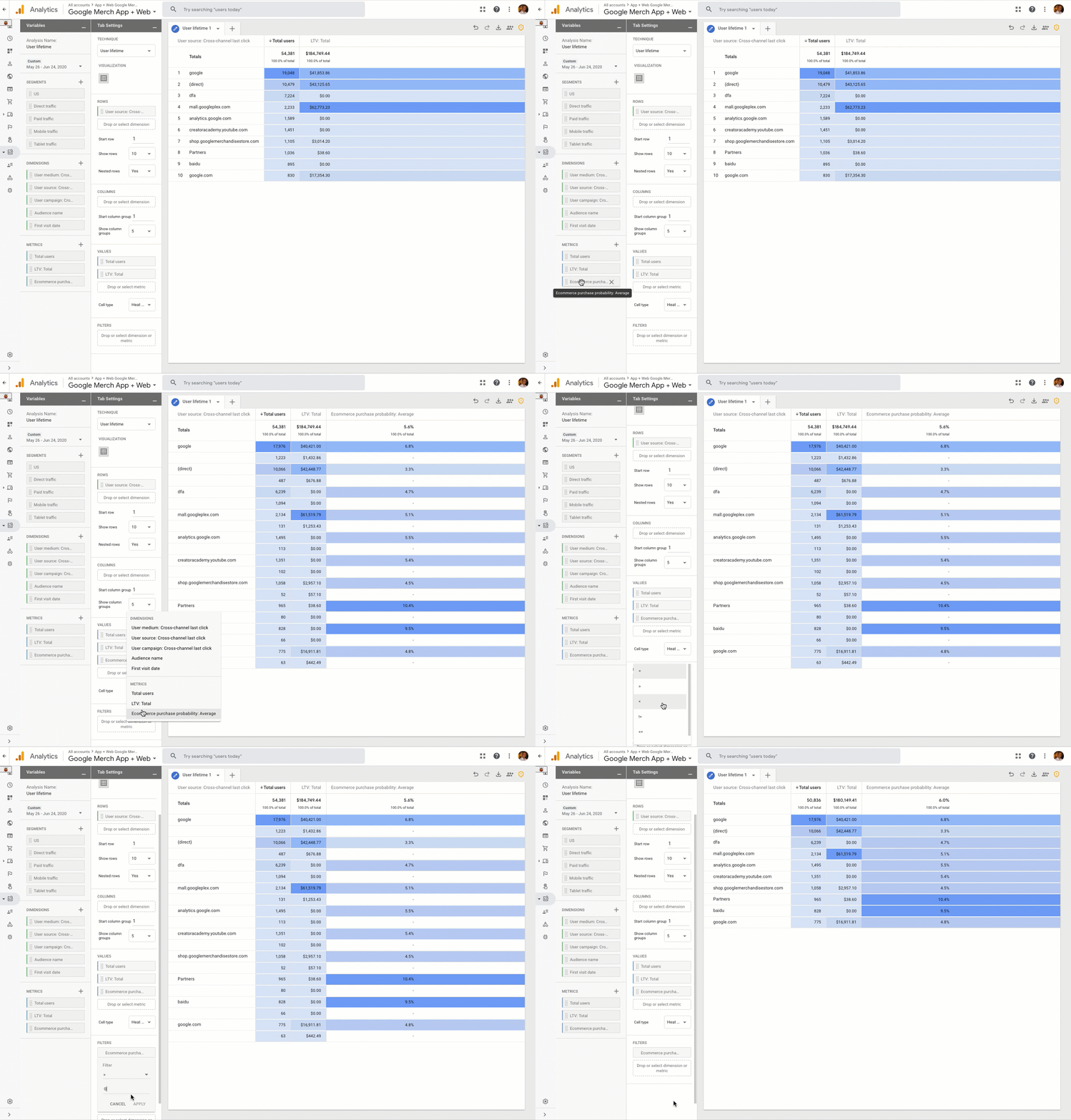
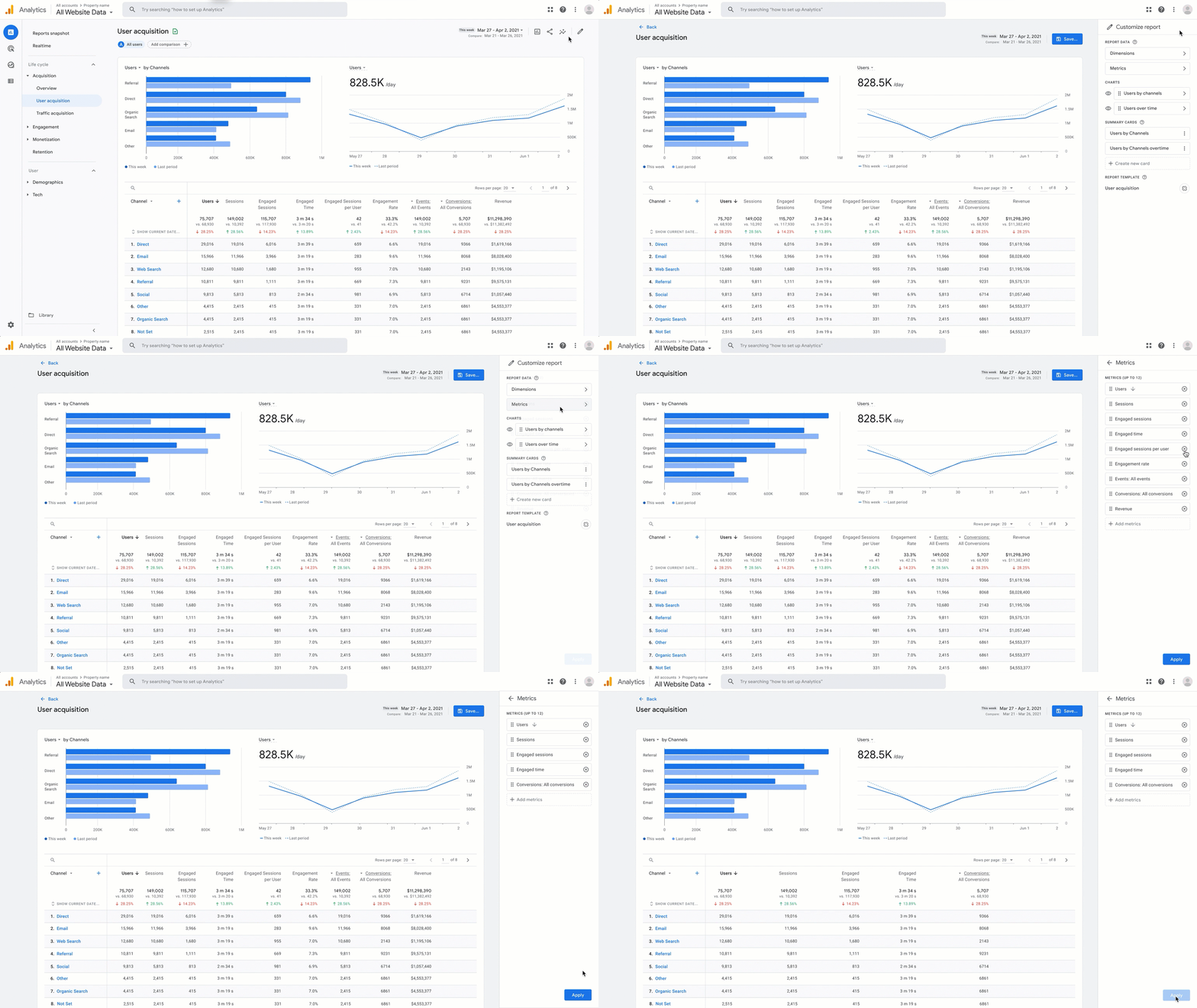
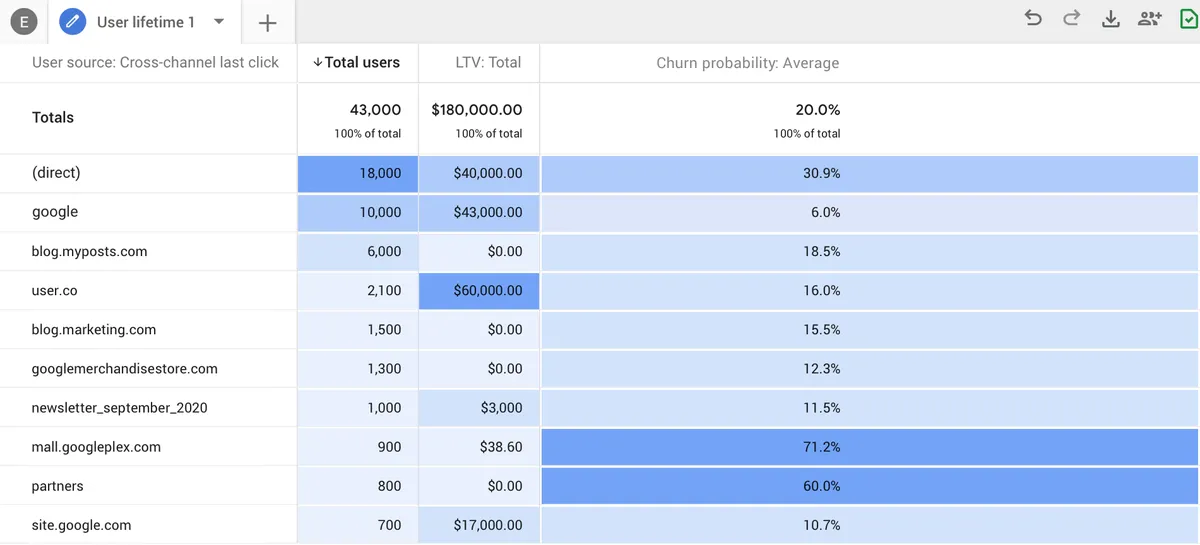
The new platform compensates for this by utilizing predictive metrics. Rather than merely reporting on historical activity, the system now offers "churn probability" scores, allowing marketers to identify customer segments that are likely to disengage. By analyzing patterns in user behavior, the platform can forecast future revenue potential from specific audiences, enabling businesses to allocate marketing budgets toward high-value retention efforts rather than reactive customer acquisition. These predictive insights are not just theoretical; they are integrated directly into the reporting interface, providing actionable intelligence that can be piped into Google Ads to refine targeting in real-time.
Bridging the Gap: Cross-Platform Unified Reporting
One of the most significant challenges for modern enterprises is the "silo effect," where app data and web data exist in separate, incompatible buckets. The new Google Analytics adopts a customer-centric measurement model that uses multiple identity spaces. This includes marketer-provided User IDs—which allow businesses to track logged-in users across platforms—and Google Signals, which utilizes data from users who have opted into ads personalization.
This integration is particularly vital for omnichannel retailers and service providers. For instance, a brand can now observe a customer journey that begins with a video engagement on YouTube, follows through to an app install, and culminates in a purchase on a desktop website. By aggregating these interactions, the platform provides a more accurate attribution model. The inclusion of YouTube Engaged-view conversions within the standard reporting interface is a direct response to advertiser demand for a "single source of truth" regarding their marketing spend.
Industry Implications and Privacy-Centric Design
The broader implications of this update are significant for the advertising ecosystem. As the industry moves toward a "cookieless" future, the reliance on deterministic data—data based on direct, identifiable tracking—is becoming increasingly fragile. The new Google Analytics anticipates this by embedding data controls directly into the platform. These controls allow administrators to define how data is collected, retained, and used for advertising purposes.

For the modern enterprise, this represents a shift in risk management. By providing more granular controls, Google is enabling organizations to remain compliant with evolving privacy laws while still extracting the utility of aggregated, anonymized trends. The future of the platform relies on sophisticated modeling techniques that can infer behavior in the absence of explicit tracking, ensuring that marketers can continue to measure ROI even as privacy-first standards redefine the web.
Voices from the Field: Early Adopter Perspectives
Early feedback from beta testers underscores the practical utility of these changes. Vistaprint, for example, utilized the platform’s real-time reporting capabilities during the early stages of the pandemic to pivot their inventory and marketing strategy toward high-demand products like protective masks. By monitoring engagement trends, they were able to align their supply chain with consumer needs in a matter of days rather than weeks.
Similarly, Domino’s Pizza of Canada has leveraged the integration between Google Analytics and Google Ads to create a feedback loop that optimizes for specific conversion events. According to leadership, the ability to prioritize actions that matter—such as order placement regardless of the device used—has significantly improved their advertising efficiency. These case studies highlight a shift toward "performance-oriented" analytics, where the goal is no longer just to collect data, but to trigger immediate, optimized business outcomes.
Strategic Transition for Organizations
For organizations currently utilizing older versions of Analytics, the transition is not immediate, but it is necessary. Google has positioned the new Analytics as the default experience for all new properties, while encouraging existing users to run a dual-setup. By creating a "Google Analytics 4" property alongside their current implementation, businesses can begin populating their new dashboards with data while maintaining the historical continuity of their previous setup.
For the enterprise sector, the rollout of Analytics 360—a premium version of the platform—is expected to further broaden the capability set. This version will feature Service Level Agreements (SLAs), enhanced support, and direct integration with big-data warehouses like BigQuery. This allows data scientists and analysts to export raw, granular data for custom modeling, moving beyond the standard reporting interfaces to perform bespoke analysis that is tailored to specific business models.
Analytical Outlook: The Path Ahead
The launch of the new Google Analytics is a recognition that the "status quo" of web tracking is no longer sustainable. The convergence of privacy legislation, shifting consumer expectations regarding data usage, and the technical degradation of the cookie has forced a paradigm shift. By moving away from a session-based approach and toward an event-based, user-centric model, Google is attempting to future-proof its ecosystem against technological instability.
However, the efficacy of this new model will depend largely on how businesses implement these tools. The power of machine learning is only as good as the quality of the inputs. Organizations that invest in proper data architecture, clean tag management, and accurate user-identity resolution will be the ones to reap the benefits of the platform’s predictive capabilities.
In conclusion, the new Google Analytics represents more than just a software update; it is an infrastructure upgrade for the internet economy. As businesses navigate a landscape defined by uncertainty, the ability to rely on smart, privacy-compliant, and cross-platform insights will be a primary competitive advantage. The transition period, while requiring effort and technical re-tooling, is a necessary step for any organization aiming to maintain visibility and efficacy in an era where data remains the most valuable currency in digital commerce. Whether for small businesses looking to maximize limited budgets or global enterprises managing complex multi-channel campaigns, the move toward this new standard is an investment in the long-term viability of their digital presence.