The Evolution of Measurement in a Privacy-First Era
For nearly two decades, digital marketing relied heavily on persistent identifiers and third-party cookies to stitch together the customer journey. However, with the rise of stringent global data protection regulations—such as the General Data Protection Regulation (GDPR) in Europe and the California Consumer Privacy Act (CCPA)—the industry has reached a critical juncture. The reliance on observable data is no longer sustainable as a long-term strategy for businesses seeking a holistic view of their marketing performance.
Google Analytics 4 (GA4) was built as the next-generation solution to address these structural changes. By integrating machine learning directly into the core of its measurement engine, the platform allows advertisers to fill the gaps created by missing or incomplete data. When users decline to consent to analytics cookies, the system no longer simply "goes dark." Instead, it utilizes sophisticated modeling to estimate conversion paths, ensuring that marketers retain visibility into their campaign efficacy while adhering to strict privacy preferences.

Chronology of the Shift Toward GA4
The transition toward the current iteration of Google Analytics has been methodical. Following the initial release of "App + Web" properties, which served as the precursor to the modern GA4 framework, Google officially moved toward a unified measurement model that treats mobile apps and websites as a single, cohesive user experience.
In mid-2021, the company accelerated its roadmap by rolling out advanced conversion modeling. This feature allows businesses to leverage existing, high-quality data to "train" the system, creating a predictive map that fills in the blanks where consent flags prevent direct tracking. This evolution is not merely a technical update; it is a strategic repositioning designed to move the industry away from "cookie-dependent" metrics and toward a privacy-safe, model-based paradigm.
Machine Learning as the New Foundation
The core value proposition of these updates lies in the democratization of machine learning. Historically, only the largest enterprises with dedicated data science teams could afford to build custom conversion models to account for data loss. By embedding these capabilities directly into the GA4 interface, Google has lowered the barrier to entry for small-to-medium-sized businesses.
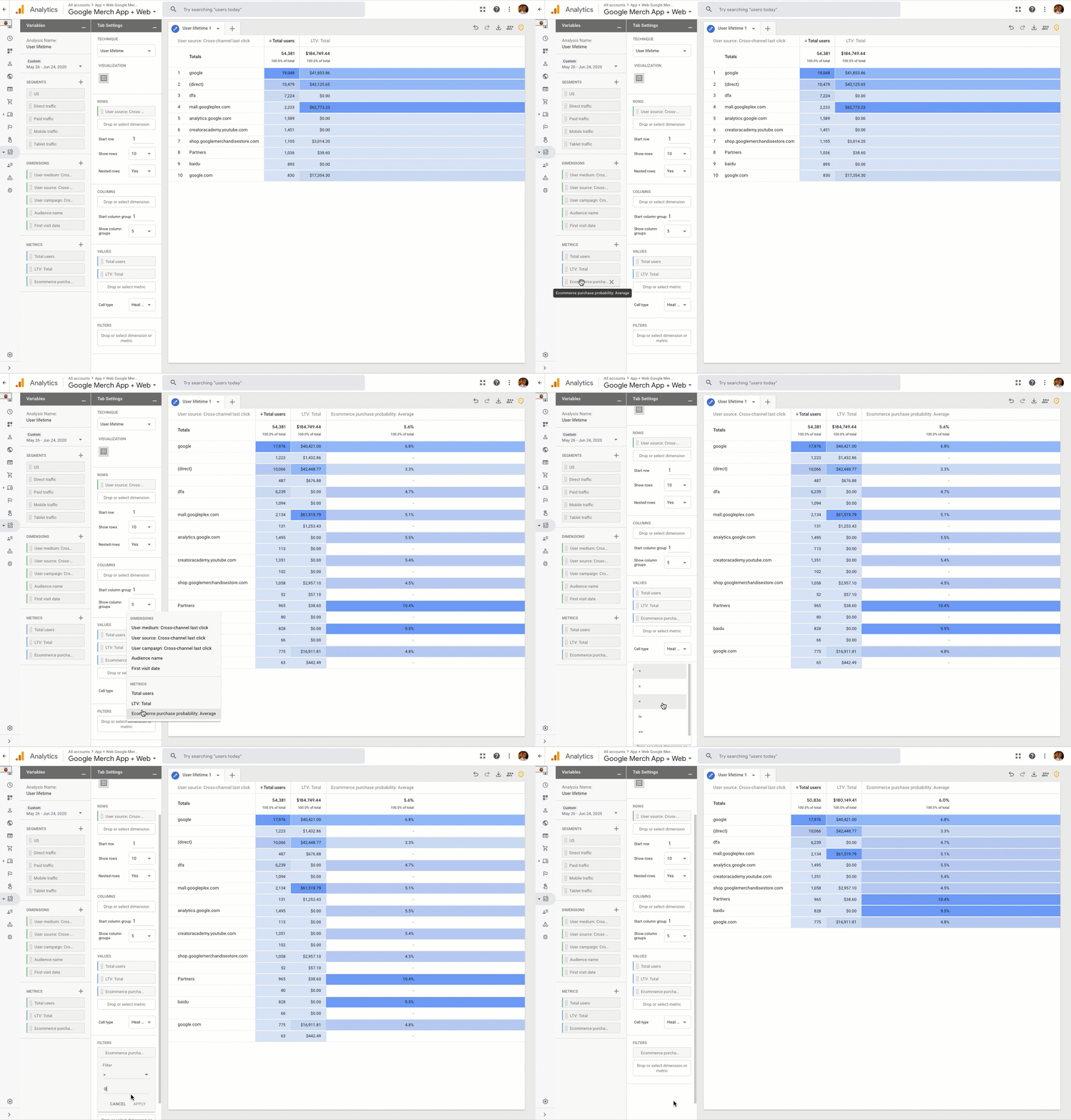
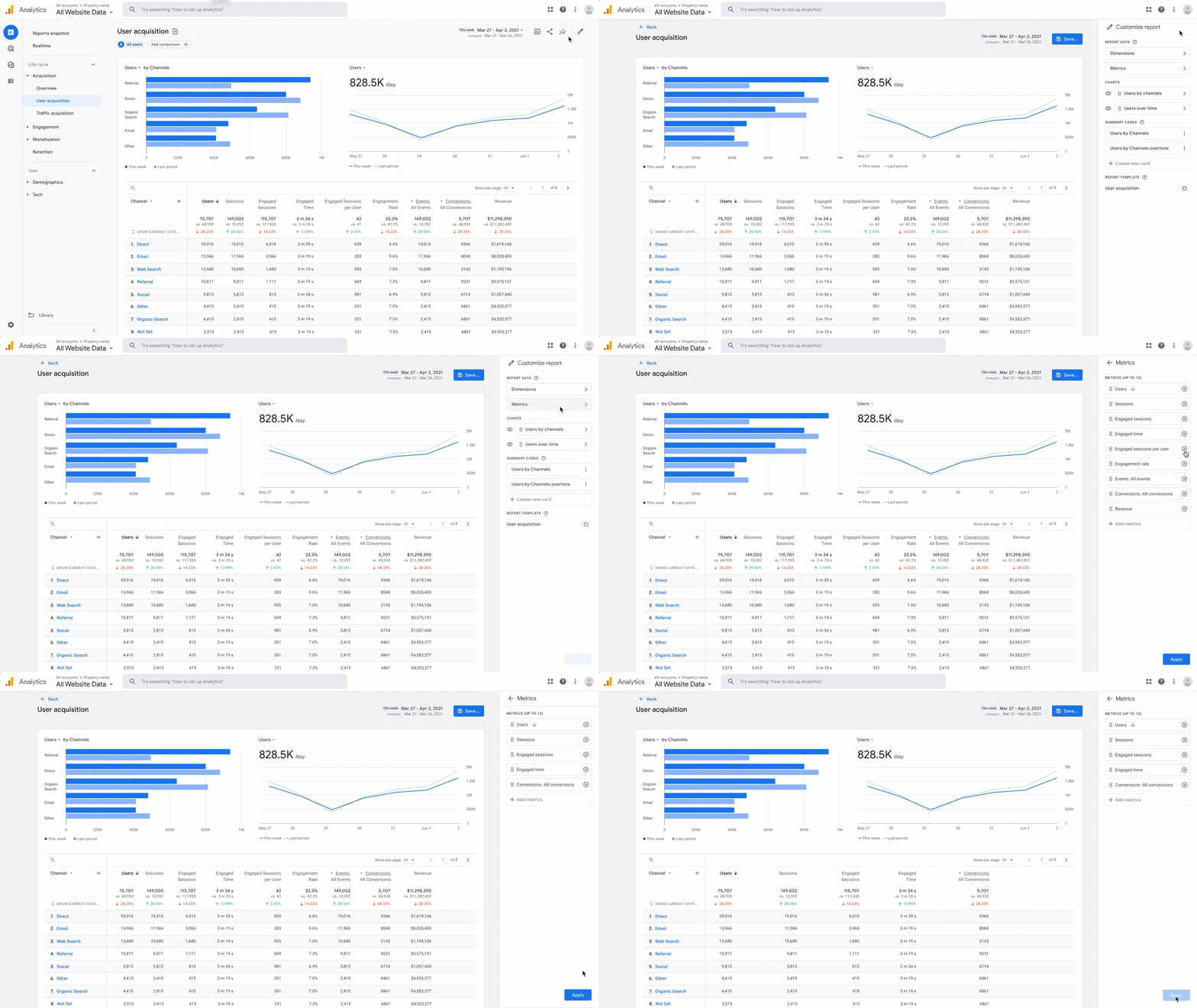
For example, when an advertiser reviews their User Acquisition reports, they will now see a blend of observed data and modeled estimates. If a campaign attracts 1,000 visitors but only 600 consent to cookies, the machine learning model analyzes the behavior of the consenting users to infer the likely actions of the remaining 400. This "blended" data approach provides a more accurate representation of true ROI, allowing for more precise budget allocation.
Redesigning the User Interface for Actionable Insight
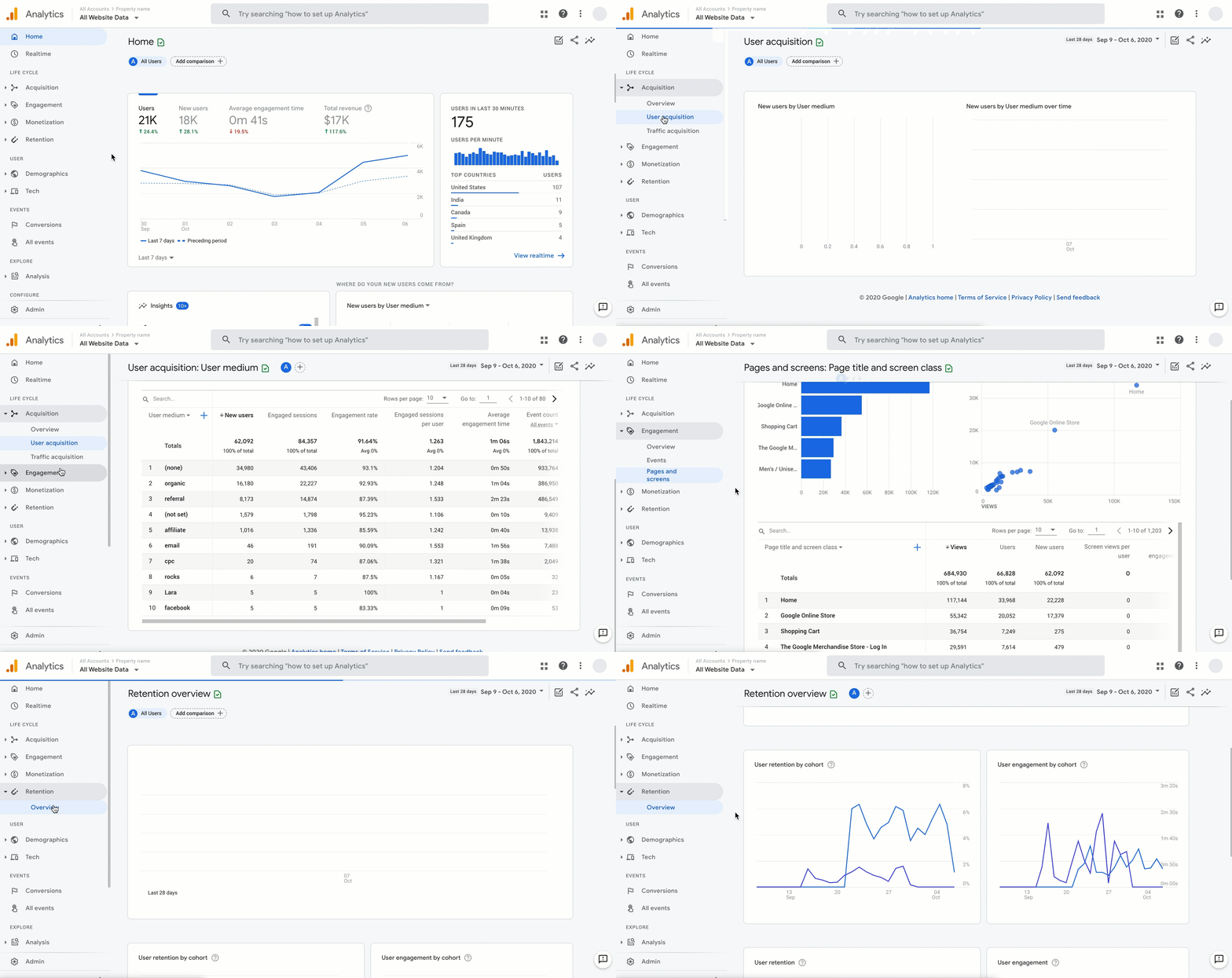
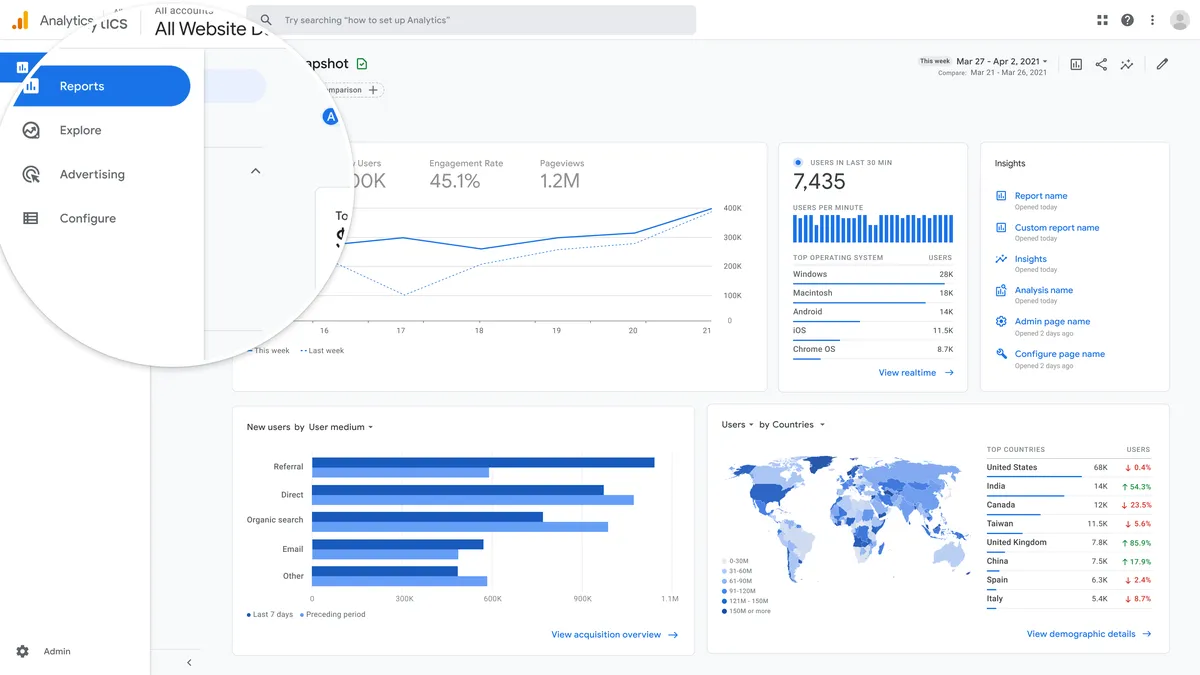
Beyond data science, Google has overhauled the platform’s navigation to prioritize speed and usability. The previous iteration of Analytics often left users overwhelmed by a sheer volume of reports that were difficult to parse without deep technical knowledge. The new modular left-hand navigation organizes the platform into distinct "workspaces."
The "Advertising Workspace" is perhaps the most significant change for marketing professionals. It functions as a command center for campaign performance, moving away from static tables toward dynamic snapshots. Automated insights now surface performance anomalies, such as sudden spikes in traffic or shifts in conversion rates, without requiring the user to construct complex custom queries.
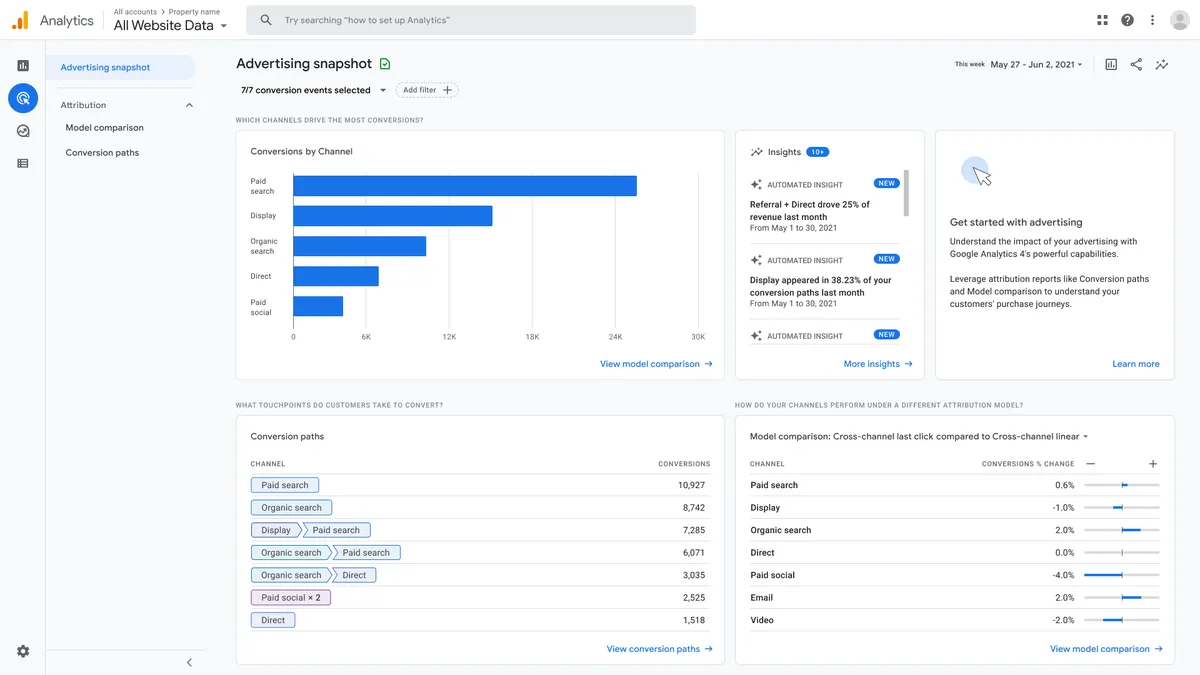
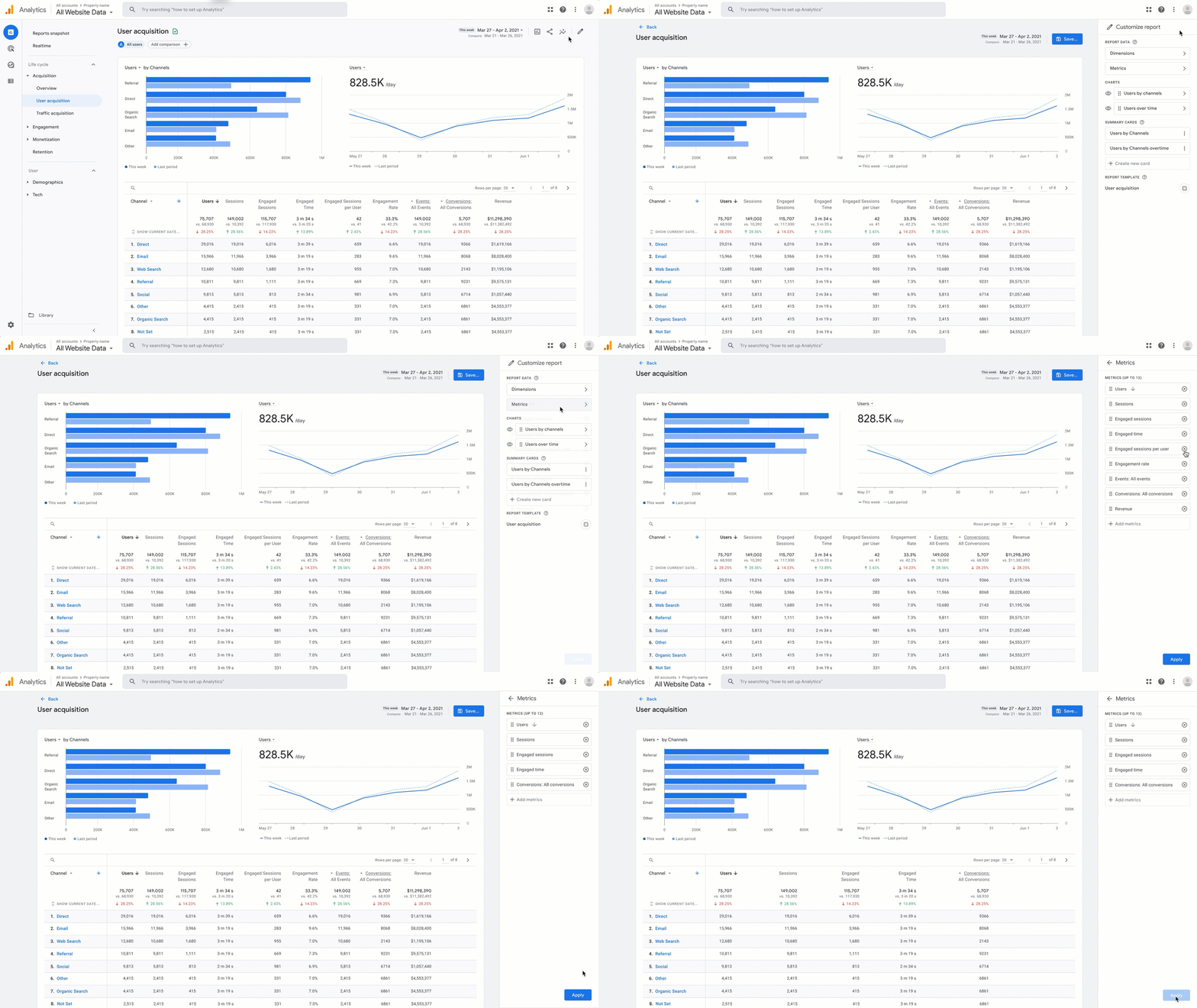
Furthermore, the introduction of customizable reporting allows organizations to tailor the platform to specific roles. A CMO, a digital analyst, and a paid search specialist now have the ability to curate their own dashboards, ensuring that the metrics most relevant to their specific KPIs are front and center. This level of customization, which was once locked behind the enterprise-grade "Analytics 360" paywall, is now a standard feature, signaling Google’s intent to make GA4 the default standard for all businesses.
Attribution and the Value of the Marketing Funnel
One of the most persistent challenges in digital marketing is attribution—the process of determining which touchpoints deserve credit for a sale. In the fragmented world of modern marketing, where a user might interact with an advertisement on social media, perform a search, and eventually purchase through a mobile app, linear tracking is rarely sufficient.
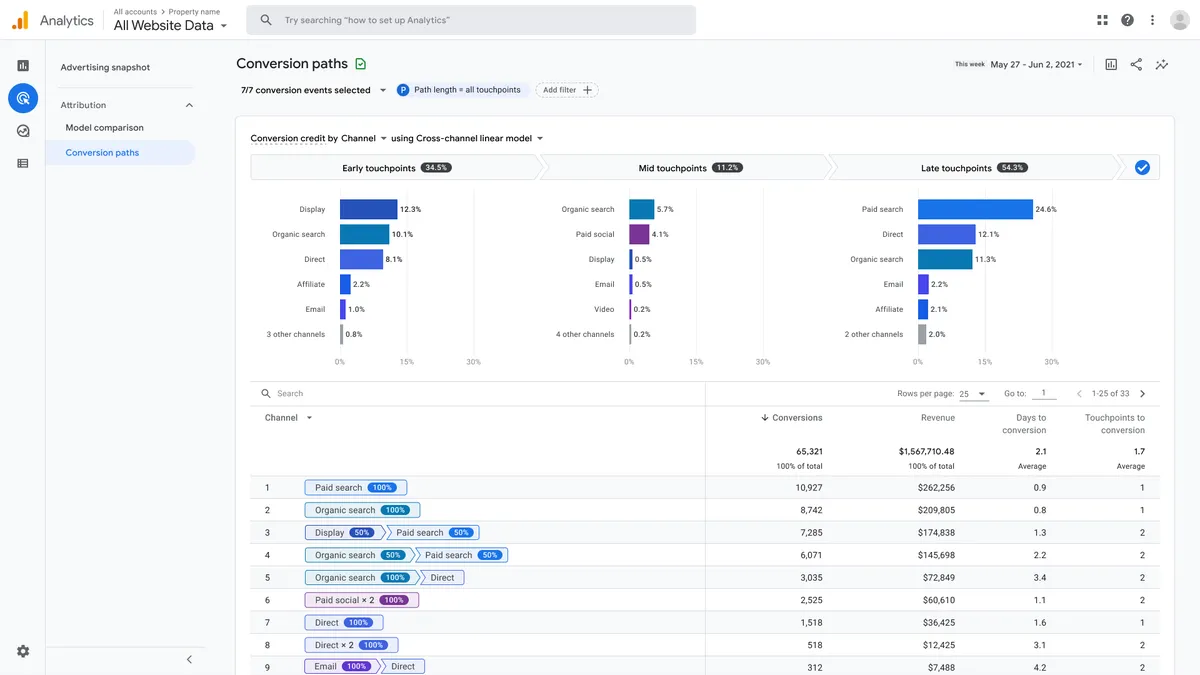
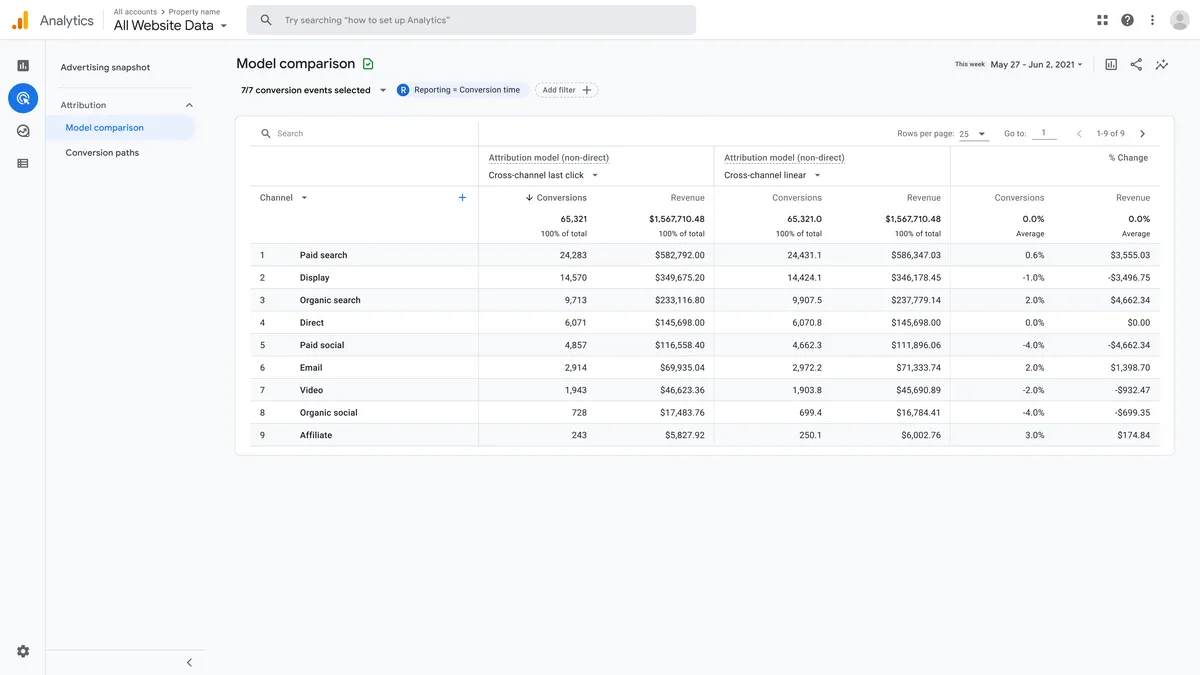
Google is addressing this by integrating cross-platform attribution capabilities directly into the Advertising Workspace. The inclusion of data-driven attribution (DDA) as a standard feature across all GA4 properties is a significant development. DDA uses machine learning to assign fractional credit to each touchpoint in a user’s journey, providing a nuanced view of how different channels—such as display, search, and video—contribute to the final conversion.
The launch of the "Conversion Paths" and "Model Comparison" reports further empowers marketers to move away from "Last-Click" attribution, which often undervalues the top-of-funnel discovery phases. By comparing different models side-by-side, businesses can identify which touchpoints act as the primary drivers of growth versus those that serve as final closers.
Industry Implications and Strategic Outlook
The shift to this new era of measurement is not without friction. For many organizations, the move to GA4 requires a complete re-evaluation of how they define a "conversion" and how they structure their data pipelines. However, the move is widely viewed by industry analysts as a necessary evolution.
Data privacy experts have noted that the industry’s reliance on third-party data was a "house of cards" that was destined to collapse under the weight of regulatory scrutiny. By shifting the burden of data interpretation to machine learning models that do not rely on PII (personally identifiable information), Google is attempting to preserve the efficacy of digital advertising while simultaneously aligning with the global movement toward data sovereignty.
Looking ahead, the success of this model will depend on the quality of the data that remains available. While modeling can fill gaps, it is not a panacea. The industry is currently moving toward a hybrid future where first-party data—information collected directly from customers with their explicit permission—is becoming the most valuable asset any company can possess.
Conclusion: Preparing for a Future of Certainty
As Google continues to roll out enhancements to the Analytics platform, the focus for business leaders should remain on building a robust, privacy-first data infrastructure. The tools provided by GA4 are designed to offer a bridge from a past defined by invasive tracking to a future defined by ethical, high-utility measurement.
For companies that have yet to transition, the recommendation remains clear: start the integration of GA4 properties immediately. The platform is not merely a tool for tracking traffic; it is an analytical environment designed to help organizations interpret the complexity of the modern customer journey. By embracing predictive modeling, custom reporting, and advanced attribution, businesses can maintain their competitive edge, ensuring that even in a world of limited data, their marketing decisions remain rooted in the most accurate insights possible.
The future of measurement is here, and it is defined by the ability to balance the technical demand for performance with the fundamental human right to privacy. As these technologies continue to mature, the gap between those who leverage intelligent modeling and those who struggle with raw data will only continue to widen, making adoption a primary strategic imperative for the years to come.