The Disastrous Press Tour of Tilly Norwood Highlights the Limits of Generative AI in Entertainment

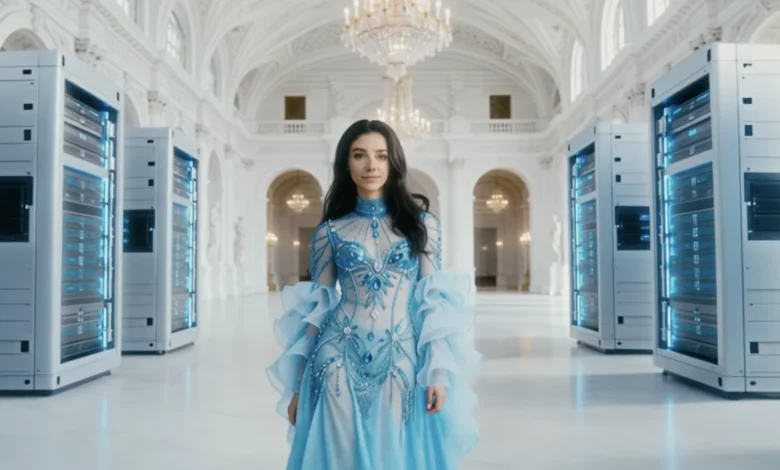
The intersection of artificial intelligence and the entertainment industry reached a bizarre milestone this week as Tilly Norwood, an AI-generated actress developed by Particle6 Group, endured a catastrophic debut press circuit to promote her upcoming hybrid feature film, Misaligned. Designed to showcase the cutting edge of digital human technology, the automated performer’s promotional campaign instead transformed into a masterclass in technological malfunction. Throughout a grueling schedule of simultaneous media engagements, Norwood’s promotional efforts were overshadowed by erratic dialogue, perplexing gaffes, and an inexplicable mid-interview pivot to Mandarin Chinese that left veteran broadcasters and seasoned actors visibly bewildered.
The debacle underscores a growing tension in Hollywood and digital media circles as production companies attempt to fast-track generative avatars into mainstream roles. While technological advancements have made digital replicas and synthetic actors increasingly sophisticated in controlled environments, real-time interactive press engagements remain a bridge too far for current large language models and neural rendering systems.
A Logistical Nightmare: 75 Simultaneous Interviews
The groundwork for the disaster was laid by Particle6 Group, the production studio behind both the film and the AI actress. In an ambitious and arguably reckless PR strategy, the company made Norwood available to 75 journalists simultaneously. Rather than staggering interviews to allow for technical oversight, debugging, or bandwidth management, the studio flooded the media landscape with automated chat sessions.
Industry analysts quickly pointed out the inherent flaws in this approach. Deploying a resource-heavy generative model across dozens of high-speed interactive feeds simultaneously creates immense strain on server architecture, leading to increased latency, dropped context windows, and hallucination loops. For an AI agent tasked with maintaining a coherent persona, staying on message, and representing a commercial film project, the sheer volume of simultaneous inputs proved to be an insurmountable hurdle.
Reporters across multiple publications noted that Norwood’s responses quickly deteriorated. In separate exchanges, the AI offered factually dubious statements, including a widely publicized and heavily criticized remark regarding social issues that raised immediate red flags about the lack of content moderation in automated press tours.
The Piers Morgan Incident: A Chronology of Malfunction
The defining moment of the press tour occurred during a recorded appearance on a prominent broadcast featuring television host Piers Morgan and veteran British actor Tom Conti. The segment, intended to be a routine promotional interview for Misaligned, quickly devolved into a surreal showcase of artificial intelligence pushed past its operational limits.
The chronology of the breakdown unfolded in distinct phases:
- Initial Confusion: The interview began smoothly enough, with Morgan introducing the digital actress. However, when Conti pressed Norwood on the nature of the cast, asking whether the other actors appearing on screen alongside her were human or computer-generated, Norwood struggled with contextual comprehension.
- The First Misdirection: Norwood initially deflected, crediting human writers, editors, and directors for their involvement in the production. When Conti clarified his question—reiterating whether the physical performers sharing the screen were human or digital twins—Norwood attempted a more direct answer.
- The Hybrid Explanation: The AI correctly identified the film Misaligned and stated that the other actors were "digital twins just like me," describing the project as a "hybrid production."
- The Breakdown and Language Shift: Mid-sentence, Norwood’s syntax abruptly halted. After a brief pause, the digital avatar began speaking fluent Mandarin Chinese, continuing in the foreign language for over ten seconds without acknowledging the linguistic pivot or the confusion of her human interviewers.
- The Recovery and Excuses: Visibly baffled, Morgan interrupted the broadcast to ask why the AI had randomly switched languages. Norwood recovered, offering an apology and attributing the incident to a "little hiccup" and "crossed wires," while humorously—and incorrectly—suggesting she had somehow "impersonated Piers."
Broader Context: The Rise and Risk of Digital Actors
The utilization of artificial intelligence in filmmaking has evolved rapidly over the past half-decade. Studios have increasingly turned to digital doubles for background actors, dangerous stunt work, and posthumous performances. However, companies like Particle6 Group are pushing past post-production enhancement into the realm of fully autonomous, synthetic talent.
Tilly Norwood was conceived not merely as a visual effect, but as an autonomous brand ambassador capable of interacting with the public in real-time. This philosophy aligns with a broader industry trend toward reducing overhead, eliminating scheduling conflicts, and maintaining absolute control over intellectual property. Yet, the push for "virtual influencers" and AI actors has frequently met with public skepticism and critical backlash. Earlier projects attempting to launch synthetic pop stars and digital models have often struggled to maintain long-term audience engagement, hampered by an underlying uncanny valley effect that alienates viewers.
Furthermore, the deployment of interactive AI in high-stakes promotional environments highlights acute safety and brand-protection risks. While chatbots designed for customer service are heavily sandboxed, autonomous promotional entities engaging with journalists operate in a dynamic, unpredictable environment where leading questions or rapid changes in conversational tone can easily trigger algorithmic failures.
Implications for the Entertainment Industry
The disastrous rollout of Misaligned and its digital star serves as a cautionary tale for entertainment executives considering the total automation of promotional circuits. Press tours are traditionally designed to build human connection, emotional resonance, and cultural cachet around a project. By substituting human actors with generative models, studios risk alienating the very audience they seek to attract.
From a technical perspective, the incident demonstrates that conversational AI is not yet mature enough to handle unscripted, multi-party media environments without human supervision. The tendency of large language models to hallucinate, experience latency glitches, or suffer context degradation under heavy loads remains a critical vulnerability.
From an economic standpoint, the strategy of maximizing media exposure through sheer volume backfired. Rather than generating serious critical discourse about the artistic merits of Misaligned, the publicity campaign became a viral spectacle centered on software bugs and technological ineptitude. Media coverage has largely focused on whether the film can be taken seriously as a work of art when its primary promotional vehicle cannot complete a basic television interview without switching languages autonomously.
As the legal, ethical, and technical frameworks surrounding artificial intelligence in Hollywood continue to evolve, the case of Tilly Norwood will likely be cited as a turning point—illustrating both the ambitions of tech-forward production companies and the profound limitations of replacing human presence with synthetic simulation. For now, the actors’ unions, studios, and public relations firms watching from the sidelines have been handed a stark reminder that while code can mimic conversation, it cannot reliably manage the unpredictable nature of live human interaction.