Navigating the New Frontier of WordPress Security in the Age of Artificial Intelligence

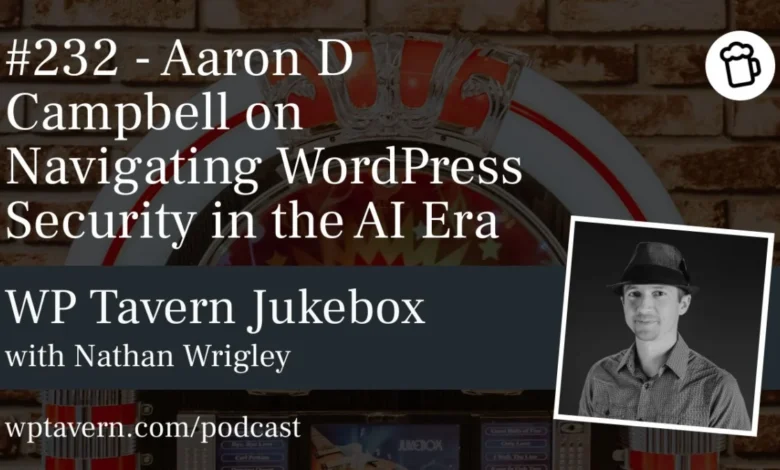
The cybersecurity landscape for the world’s most popular content management system has undergone a fundamental transformation. As artificial intelligence technologies become increasingly sophisticated, the barrier to entry for malicious actors has lowered, while the speed and complexity of cyberattacks have reached unprecedented levels. Aaron D. Campbell, a veteran in the WordPress security space and current leader at malware detection firm Monarx, recently discussed the paradigm shift currently affecting millions of website owners, hosting providers, and developers. The transition from human-led exploitation to AI-orchestrated, high-compute attacks marks a critical juncture for the digital infrastructure of the modern web.
The Escalation of Cyber Threats
Historically, WordPress security was characterized by a contest of human ingenuity. Adversaries would manually research vulnerabilities, craft exploits, and deploy them against targets. This process inherently included "lag time"—periods where the attacker needed to rest, plan, or manually execute commands. Today, that temporal advantage has vanished. AI-driven agents can now operate 24/7, testing thousands of permutations of a vulnerability simultaneously across global networks without human intervention.
Industry analysts note that AI is not merely finding existing flaws faster; it is identifying complex, chained vulnerabilities that were previously invisible to human researchers. These chains—where a minor vulnerability in a plugin is combined with a configuration oversight and a core system weakness—can now be orchestrated by automated scripts. Recent reports have indicated that complex exploits which once required extensive human labor to conceptualize are now being generated by AI agents for negligible costs, effectively commoditizing high-level cyberattacks.
Timeline of the Security Shift
The evolution of these threats can be tracked across the last four years. Before 2020, security was largely reactive: a vulnerability was discovered, a patch was released, and users updated their systems. The window of opportunity for attackers to exploit a patched vulnerability was measured in days or even weeks.
By 2023, the industry observed a significant tightening of this timeline. Current data suggests that for major, high-profile vulnerabilities, the window between public disclosure and active, large-scale exploitation has shrunk to approximately five hours. In extreme cases, researchers have documented mass-exploitation spikes occurring within 30 minutes of a patch being released. This rapid acceleration necessitates a move toward proactive security postures, where threat detection and mitigation occur at the infrastructure level rather than relying solely on individual user manual updates.
The Economics of Exploitation
The primary driver behind this surge in automated attacks remains financial gain. While ideological or political hacking exists, the vast majority of WordPress-related incidents are profit-motivated. Attackers deploy AI to compromise sites for several purposes:
- Monetization through Traffic: Compromised sites are frequently used to host unauthorized pharmaceutical advertisements or "pay-per-click" schemes, generating revenue for the attacker regardless of the site’s individual traffic levels.
- Distributed Compute Power: A compromised WordPress site can be integrated into a "botnet," providing the attacker with thousands of distinct IP addresses and processing power to launch larger, distributed denial-of-service (DDoS) attacks against other, more lucrative targets.
- Data Harvesting: Attackers leverage AI to cross-reference historical data breaches from the dark web. By matching older, leaked credentials with current site administrative access, attackers can often bypass secondary security measures through simple credential stuffing.
Supply Chain Vulnerabilities and the Protect the Shire Initiative
A significant component of modern security risk involves supply chain attacks, where malicious code is injected into widely used plugins or themes. Once the legitimate source is compromised, the infection spreads to every site that performs an automatic update.
In response to these emerging risks, the WordPress community has introduced measures such as the "Protect the Shire" initiative. This protocol involves a time-bound delay for plugin updates, providing a buffer period for security teams to verify the integrity of code before it reaches the broader ecosystem. While some critics argue that such delays could leave sites vulnerable for too long if a critical patch is withheld, security experts argue that the benefit—preventing the automated distribution of malicious updates—outweighs the risk. When an urgent security patch is required, standard channels remain available for accelerated deployment, ensuring that coordination between developers and the WordPress Security Team remains a primary defense mechanism.
The Role of Collective Intelligence
Despite the dystopian implications of an AI-versus-AI arms race, industry experts maintain a measured, albeit cautious, outlook. The open-source nature of WordPress is being cited as a strategic advantage in this conflict. With millions of developers and security researchers inspecting the core source code, weaknesses are often identified and communicated to the WordPress Security Team long before they can be leveraged by the average bad actor.
This collective intelligence, coupled with private, high-speed communication channels between security firms, hosting providers, and the WordPress core team, creates a "herd immunity" effect. By sharing information on new threats in real-time, large-scale infrastructure providers—such as hosting giants—can implement global blocks or WAF (Web Application Firewall) rules that protect millions of users simultaneously.
Practical Recommendations for Users
For the typical WordPress user, who may lack technical expertise in cybersecurity, the recommendation from industry professionals is to shift the burden of security to automated, managed services. The primary steps for mitigation include:
- Prioritizing Managed Updates: Enabling auto-updates for WordPress Core, plugins, and themes is the single most effective way to close the window of vulnerability. Relying on the expertise of the WordPress security community, which monitors and patches these systems, is more effective than attempting manual intervention.
- Selecting Security-Minded Hosting: Not all hosting providers are equal. Users should vet their hosts by inquiring about their layered security protocols. A host that offers automated malware scanning, proactive WAF protection, and real-time monitoring is essentially providing a dedicated security layer that the user does not have to manage.
- Credentials Hygiene: The proliferation of AI-driven credential stuffing requires higher standards for account security. Users should utilize password managers and ensure they are not reusing credentials across multiple platforms. Regularly checking services like "Have I Been Pwned" can provide early warning if personal data has been caught in a historical breach, allowing users to rotate passwords before they are targeted.
Future Implications
The battle against AI-orchestrated threats is not a static conflict but a continuous process of adaptation. As security experts refine their use of AI models to analyze code, detect anomalies, and predict attack vectors, the defense will become more sophisticated. However, the reality remains that the "grey area" of security—where the outcome of a defensive move is not always immediately clear—is the new normal.
The objective for the next decade is not to achieve a "perfectly secure" web, which is mathematically impossible, but to increase the cost of attack for the adversary until it is no longer profitable. As the technology continues to evolve, the cooperation between open-source contributors, enterprise security firms, and the end-user community will determine the resilience of the web. While the current environment presents a significant challenge, the infrastructure of the internet is being fortified by the very tools—AI and automation—that the attackers are attempting to weaponize. The focus remains on staying one step ahead, turning the tide of the arms race through vigilance, collaboration, and the strategic application of advanced computing power.