Building a Robust JSON Serialization Pipeline in Python for Modern Machine Learning Systems

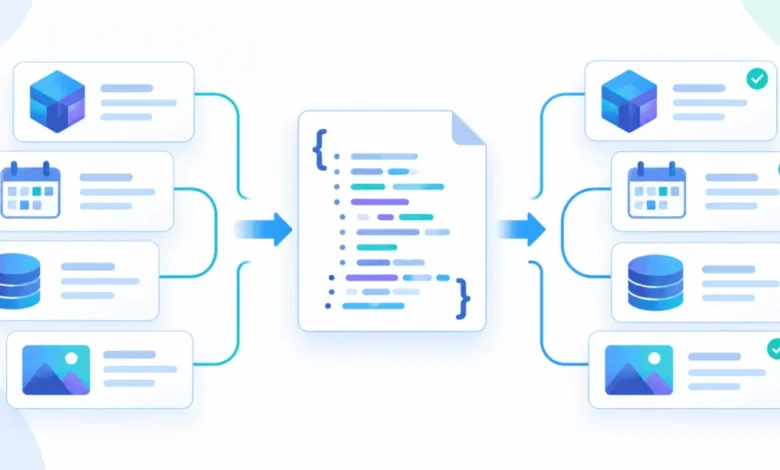
In the contemporary landscape of machine learning engineering, the primary challenge often shifts from the construction of complex neural network architectures to the arduous task of data infrastructure and plumbing. While data scientists often focus on hyperparameter optimization and model convergence, the operational reality of deploying production-grade machine learning pipelines relies heavily on the reliable movement of structured datasets across distributed systems, microservices, and storage layers. JSON (JavaScript Object Notation) has emerged as the industry standard for this data exchange due to its human-readable format and language-agnostic nature. However, native Python-to-JSON serialization frequently encounters technical bottlenecks when processing common data structures such as datetime objects, sets, path variables, or custom enumerated types. Building a robust serialization pipeline is no longer an optional skill but a fundamental requirement for maintaining data integrity in complex, evolving ML workflows.
The Technical Limitations of Standard Serialization
The Python json library is an efficient tool for standard data types like strings, integers, lists, and dictionaries. However, it fails when it encounters non-primitive objects. A typical machine learning experiment configuration—often containing timestamps, file system paths for model artifacts, and specific sets of features—will trigger a TypeError when passed directly to json.dumps(). This limitation forces developers to either flatten their data structures prematurely or write brittle, repetitive custom conversion logic that risks silent data corruption.
When an application attempts to serialize a datetime object, the standard encoder has no inherent mapping for how to convert that object into a string representation that can be reconstituted later. Similarly, Python set objects are incompatible with JSON’s list-only array structure. This leads to a loss of data fidelity, where a set becomes a list, potentially breaking downstream logic that relies on constant-time lookups or unique membership constraints. In large-scale systems, these failures often manifest as runtime errors that halt entire training pipelines, causing significant delays and wasted computational resources.
Architectural Strategy for Custom Encoders
To address these limitations, engineers must implement a custom serialization class by extending the json.JSONEncoder. This approach provides a centralized, extensible interface for handling complex data types without modifying the underlying business logic. By overriding the default() method within a class—such as a RobustEncoder—developers can define explicit rules for how specific objects should be translated into primitive types.
The most effective strategy involves adding a metadata marker, such as __type__, to the serialized output. This allows the system to distinguish between a regular string and a serialized Path or datetime object during the deserialization phase. For instance, when serializing a pathlib.Path object, the encoder should return a dictionary containing the type identifier and the string representation of the path. This "type-aware" serialization ensures that the data structure remains semantically intact even after it has been stored on disk or transmitted over a network.
The Reconstitution Process: Decoding and Schema Evolution
The inverse process—reconstructing Python objects from raw JSON strings—is arguably more critical. Using the object_hook parameter in json.loads(), developers can pass a function that inspects each dictionary as it is parsed. This function acts as a middleware layer, identifying the __type__ markers defined during the encoding phase and re-instantiating the corresponding Python objects.
This architecture also facilitates graceful error recovery. In a production environment, data can become corrupted or outdated. By wrapping the decoding logic in try-except blocks, developers can implement fallback mechanisms. If the decoder encounters a type it cannot recognize or a date format that has been mangled, it can log a warning and return the raw data rather than crashing the application. This level of resilience is essential for mission-critical ML pipelines that must operate continuously without manual intervention.
Managing Schema Migrations in Production
A common pain point in machine learning lifecycle management is schema drift. As projects evolve, researchers frequently add new hyperparameters, deprecate legacy metrics, or rename configuration fields. A rigid serialization system that expects a fixed schema will inevitably fail when it encounters configuration files from older versions of a model.
To mitigate this, a robust pipeline must incorporate a validation factory function. This layer sits between the json.loads() output and the application logic, ensuring that the incoming data conforms to the current version of the system. If a key is missing—for example, if a new learning_rate parameter is introduced—the factory function provides a safe default value. Conversely, it can filter out deprecated fields, ensuring that the application only interacts with a clean, validated dictionary. This approach treats configuration files as living documents that evolve alongside the software, rather than as static snapshots that eventually become obsolete.
Broader Implications for Data Plumbing
The necessity for these serialization patterns reflects a broader trend in software engineering: the move toward "defensive programming" in machine learning. As organizations scale their AI initiatives, the reliability of the data pipeline becomes as important as the accuracy of the model itself. When data is serialized in a way that preserves type information and accounts for schema evolution, it becomes significantly easier to audit experiments, debug production failures, and maintain historical data consistency.
Furthermore, these practices align with the principles of MLOps (Machine Learning Operations). By standardizing the way configuration and metadata are stored, teams reduce the "cognitive load" required to maintain complex systems. A robust serialization pipeline ensures that a model configuration generated today can be reliably reloaded and interpreted months or even years into the future. This is particularly vital in regulated industries where model traceability and reproducibility are legal requirements.
Practical Implementation: A Case Study
Consider a typical experiment configuration containing an experiment_id, a model_type (defined as an Enum), a set of features, and a Path to training data. Without a custom pipeline, serializing this object is impossible. By implementing a RobustEncoder, the Enum is converted to its underlying string value, the set is converted to a list marked with a set identifier, and the Path is cast to a string.
When this is retrieved, the robust_decoder function reads the metadata. It sees the set identifier, reconstructs the Python set object, and verifies that the Path is valid. If the system is later upgraded to include a new hyperparameter, the load_experiment_config factory ensures that legacy files are automatically augmented with the new parameter, effectively shielding the rest of the application from the change.
Future Outlook and Conclusion
As the Python ecosystem continues to mature, the tools available for data serialization are becoming more sophisticated, but the core requirement—customizability—remains constant. While libraries like Pydantic or Marshmallow offer high-level validation features, understanding the underlying mechanics of json.JSONEncoder and object_hook provides developers with the flexibility to build custom, lightweight solutions that do not introduce heavy external dependencies.
In summary, the transition from simple script-based data handling to a robust, professional serialization pipeline is a milestone in the development of a senior machine learning engineer. By prioritizing type safety, error handling, and schema flexibility, developers can build systems that are not only functional but also resilient to the inevitable challenges of the production environment. As machine learning models continue to be integrated into the core of global enterprise infrastructure, the importance of this "invisible" plumbing will only increase, marking it as a critical pillar of modern software engineering.