The Definitive Guide to Building WordPress Communities in 2026: BuddyPress, BuddyBoss, and PeepSo Compared

Building a community on WordPress has undergone a fundamental transformation over the last decade. What was once a straightforward process of installing BuddyPress and pairing it with a compatible theme has evolved into a complex landscape defined by proprietary platforms, SaaS-like managed services, and a diverging ecosystem of architectural philosophies. Today, site operators are no longer merely choosing a plugin; they are choosing a long-term technical partner and a specific path for digital infrastructure.
The three primary contenders in this space—BuddyPress, BuddyBoss, and PeepSo—now represent three distinct strategies for community management. BuddyPress remains the open-source legacy standard; BuddyBoss has positioned itself as the premium, feature-rich choice for course creators and mobile-first brands; and PeepSo offers a cohesive, standalone alternative that emphasizes structural independence from the aging WordPress social core.
A Historical Context of the WordPress Community Stack
To understand the current state of the industry, one must look at the 2019 pivot that redefined the market. BuddyPress, originally developed by the team at Automattic, provided the foundation for nearly all WordPress social networking for years. However, its development cycle, governed by community contributors, eventually slowed, leaving a gap for commercial entities to fill.
In 2019, BuddyBoss made the strategic decision to fork the BuddyPress and bbPress codebases. This was not a minor update but a architectural rupture. By creating the BuddyBoss Platform, they abandoned the requirement for users to install the original BuddyPress plugin, instead creating a unified environment that they could update on their own independent cadence. This move essentially bifurcated the ecosystem: one path remained with the free, volunteer-led community plugin, while the other moved toward a commercial, proprietary product roadmap.
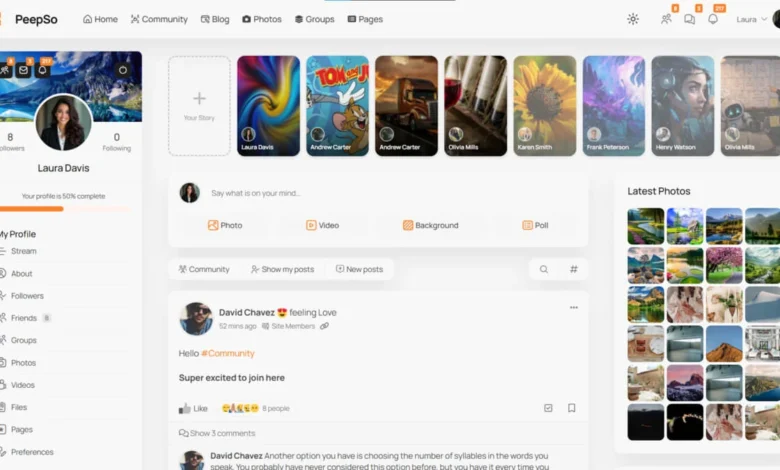
Meanwhile, PeepSo entered the market with a "clean room" approach. Recognizing that the technical debt inherent in the BuddyPress architecture was becoming a barrier to modern, high-speed performance, the developers built their platform from the ground up. By creating their own data models, activity streams, and messaging protocols, they avoided the legacy issues that plagued earlier solutions.

Comparative Data and Market Positioning
The decision-making process for site owners in 2026 revolves around the trade-off between customization, total cost of ownership (TCO), and vendor lock-in.
| Criteria | BuddyPress | BuddyBoss | PeepSo |
|---|---|---|---|
| Primary Model | Open-source/Community | Proprietary/Commercial | Proprietary/Commercial |
| Native Media | Third-party required | Included | Included (via Bundle) |
| Mobile App | No native option | Yes (Paid Subscription) | Yes (White-label) |
| Forums | bbPress (Separate) | Native (Forked) | Third-party integration |
| Average 3-Year TCO | $600–$1,500 | $1,000–$8,000+ | $600–$1,250 |
BuddyPress: The Open-Source Foundation
BuddyPress remains the only choice for developers who prioritize total ownership. Because it is free and open-source, it provides a level of transparency that commercial alternatives cannot match. There is no risk of a company sunsetting the product or pivoting to a business model that excludes smaller users.
However, the lack of a central commercial entity means that advanced features—such as integrated media uploads, sophisticated gamification, or native mobile experiences—require the installation of a fragmented network of third-party plugins. For a site owner, this creates a "maintenance tax." Each update to the WordPress core or the BuddyPress framework creates a risk of conflict, requiring constant monitoring of the plugin stack. It is an ideal solution for those with in-house development capabilities, but it is rarely the most efficient choice for businesses focused on rapid, stable scaling.
BuddyBoss: The Premium Standard for LMS and Membership Sites
BuddyBoss has effectively captured the high-end market by focusing on the "all-in-one" experience, particularly for organizations integrating Learning Management Systems (LMS) like LearnDash or Tutor LMS. By integrating the forum, the course content, and the activity feed into a single, cohesive interface, BuddyBoss removes the friction that often exists between different plugins.
The most significant differentiator for BuddyBoss is its investment in mobile infrastructure. In 2026, the demand for native mobile applications—as opposed to simple mobile-responsive websites—has surged. BuddyBoss offers a dedicated app service, allowing community managers to deploy white-label apps to the Apple App Store and Google Play Store. While this carries a significant price tag, it provides a level of professional polish that is difficult to replicate with other WordPress tools. The drawback, as noted by industry analysts, is the increasing lock-in. Once a community is built on the BuddyBoss theme and platform, the costs and technical hurdles associated with migrating to another system are substantial.
PeepSo: The Architecturally Independent Alternative
PeepSo serves as the middle ground, offering a modern, unified experience without the heavy reliance on the legacy BuddyPress core. Its independence from the BuddyPress codebase is its greatest asset; it does not suffer from the "slow drift" of volunteer-led development.

For content publishers and creator-led brands, PeepSo is often viewed as the more stable long-term bet. Because the platform is developed by a single entity, the integration between the activity stream, messaging, and profile management is more consistent. Furthermore, the introduction of the "Power Suite"—a managed, all-in-one service that includes hosting, the plugin, and mobile app maintenance—addresses a growing demand for "no-ops" solutions. For businesses that want to focus on their audience rather than server management, this creates a compelling value proposition that undercuts the high-end BuddyBoss implementation costs.
Fact-Based Analysis of Implications
The shift toward commercial, proprietary community platforms suggests that the "DIY" era of WordPress is narrowing. As communities become central to business revenue models, the tolerance for "Frankenstein" setups—where five different developers maintain five different plugins—has evaporated.
- Reliability over Flexibility: Site owners are increasingly prioritizing reliability. The trend shows a move toward platforms that offer comprehensive support, such as BuddyBoss and PeepSo, even at the cost of higher annual renewals.
- The Mobile Imperative: A community that does not exist on a user’s home screen is increasingly seen as a secondary community. The ability to offer a mobile app is no longer a "nice-to-have" but a core requirement for user retention.
- The Consolidation of Vendors: The risk of relying on dozens of small, independent plugin developers is high. Platforms that bundle functionality, such as PeepSo’s Community Bundle or BuddyBoss’s integrated ecosystem, reduce the "support burden" on the site owner, allowing for a more predictable maintenance schedule.
Strategic Recommendations
The decision of which platform to select should be guided by the maturity of the project:
- For the Bootstrap Startup: If the budget is the primary constraint and technical skill is available in-house, BuddyPress remains a viable, cost-effective foundation. It allows for experimentation without recurring licensing fees.
- For the Course Creator: If the business model centers on educational content and cohort-based learning, BuddyBoss is the superior choice. Its deep integration with major LMS providers ensures that the learning experience is seamless and professional.
- For the Content Publisher: For media companies or creators looking to foster engagement around existing content, PeepSo offers the best balance of price, performance, and cohesion. Its architecture is better suited for modern, high-traffic websites that require a standardized user experience.
Ultimately, the divergence of these three platforms reflects a healthy, maturing market. While BuddyPress continues to protect the spirit of open-source collaboration, BuddyBoss and PeepSo have professionalized the space, offering the tools necessary for businesses to scale their social platforms with the same level of reliability found in dedicated SaaS products. The era of the "one-size-fits-all" community plugin is over; in its place is a nuanced landscape where the right tool is determined entirely by the operator’s willingness to manage complexity versus their desire for a managed, polished solution.