The Imperative to Upgrade: Fortifying WordPress with Modern PHP 8.x for Enhanced Security and Performance

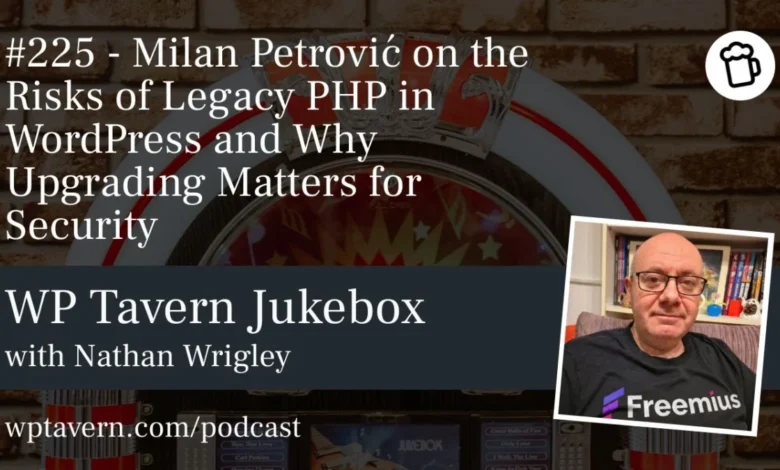
The critical importance of migrating WordPress websites to modern PHP versions, particularly PHP 8.x, for bolstering security and significantly enhancing performance, was a central theme at the recent WordCamp Europe. This pressing call to action was articulated by Milan Petrović, a veteran full-stack developer at Freemius with nearly two decades of immersion in the WordPress ecosystem, during an insightful discussion on the Jukebox Podcast from WP Tavern. Petrović’s presentation at the conference and subsequent podcast interview underscored that clinging to legacy PHP versions like 7.x is not merely a suboptimal practice but an active invitation for automated exploitation, exposing sites to thousands of unpatched vulnerabilities.
The Critical Call to Action: PHP 8.x and Beyond
Milan Petrović, whose extensive experience includes developing a myriad of plugins, particularly for bbPress forums, and leading his own company, Dev4Press, before joining Freemius, has witnessed firsthand the evolutionary trajectory of both WordPress and PHP. His message is clear: while many WordPress users might only vaguely acknowledge PHP versions in their hosting panels, the profound impact of these versions on website security and efficiency is often underestimated. Petrović advocates that embracing newer PHP versions, specifically PHP 8 and its subsequent iterations, is not just a matter of good practice but a fundamental requirement for the contemporary web.
His discourse at WordCamp Europe, and the subsequent podcast conversation with Nathan Wrigley, delved into the heart of his recent presentation, which confronted the stark reality that legacy PHP code exposes websites to thousands of open bugs and vulnerabilities. He passionately argued that reliance on outdated versions constitutes an "active invitation for automated exploitation," a risk that grows exponentially as these versions fall further behind in security support.
A Deep Dive into the Risks of Legacy PHP
The most alarming aspect of running outdated PHP versions, as highlighted by Petrović, is the sheer volume of unaddressed vulnerabilities. He revealed that PHP 7 and PHP 5, still powering millions of WordPress sites globally, harbor between 3,000 and 4,000 open and confirmed bug reports that will never receive official fixes. These bugs, many with direct security implications, represent a massive, publicly documented attack surface for malicious actors.
For instance, PHP 7.4 reached its official End-of-Life (EOL) in November 2022, meaning it no longer receives security updates or bug fixes from the PHP development team. PHP 8.0 followed suit in November 2023, and PHP 8.1 will reach EOL in November 2024. Despite these critical deadlines, WordPress’s official statistics show a significant portion of its user base still operating on PHP 7.4 or even older versions, some even on PHP 5. This widespread adherence to obsolete software creates a fertile ground for exploits that operate at the server level, transcending specific content management systems. Hackers can leverage these well-known, unpatched flaws with automated tools, posing a constant and severe threat to websites running on these unsupported environments.
Petrović emphasized that while some hosting providers might attempt to patch these legacy PHP versions independently, this practice introduces its own set of risks. Custom-patched environments can lead to unique quirks and undocumented issues, potentially compromising code behavior and security in unforeseen ways, deviating from the officially supported and rigorously tested PHP builds.
Performance and Resource Efficiency: An Unmissable Advantage
Beyond security, the discussion underscored the significant performance and resource efficiency benefits offered by modern PHP versions. Petrović presented compelling data indicating that each new PHP release brings substantial performance gains. For example, PHP 8.3 is reported to be over 50% faster than PHP 7.4, a dramatic improvement that directly translates into quicker page load times and a more responsive user experience.
Furthermore, newer PHP versions are engineered to be more memory-efficient. Petrović showcased how the same piece of code could consume almost half the memory on PHP 8.x compared to older versions. This efficiency is a game-changer for hosting companies, enabling them to host more websites on the same infrastructure, thereby reducing operational costs and potentially offering more competitive pricing. For individual site owners, it means a faster website without needing to invest in more expensive hosting plans or complex caching solutions.
WordPress’s Backward Compatibility Dilemma
The conversation critically examined WordPress’s long-standing policy of backward compatibility, acknowledging its historical role in the platform’s widespread adoption. This policy allowed WordPress to be deployed on a vast array of hosting environments, regardless of their PHP version, which democratized publishing and fostered its immense growth. However, this same policy now presents a significant challenge, effectively "sticking" WordPress Core to supporting PHP versions that are many years past their official EOL.
Currently, the minimum recommended PHP version for WordPress is 7.4, a version that ceased receiving security updates almost two years ago. While WordPress is compatible with PHP 8.x, the Core itself is not fully optimized to leverage all the modern language features and security enhancements available in these newer versions due to the need to maintain compatibility with older PHP branches.
Petrović argued that while WordPress shouldn’t necessarily force immediate adoption of the absolute latest PHP version, it should accelerate its timeline for minimal version requirements. A move to make PHP 8.0 or 8.1 the new minimum would be a crucial step. Such a declaration would compel hosting providers and plugin developers to update their support, ultimately modernizing the entire ecosystem. This transition, he suggested, doesn’t have to be instantaneous; WordPress Core could be gradually refactored to incorporate stricter typing and other modern PHP features over several years.
The Role of Hosting Providers and Developers
The adoption of modern PHP is a multi-faceted challenge involving various stakeholders. Hosting companies, while recognizing the benefits of improved performance and reduced resource consumption, face the complex task of managing a diverse client base. Many users, treating their websites as static entities akin to a bicycle that requires no updates, resist changes, fearing downtime or compatibility issues. Hosting providers often bear the brunt of support inquiries when such transitions occur.
Despite these hurdles, managed hosting solutions are increasingly taking the lead, often enforcing the use of more recent PHP versions (e.g., 8.2 or 8.3). This proactive approach, while potentially causing short-term disruption for some users, ensures a more secure and efficient environment in the long run.
Plugin and theme developers also play a pivotal role. Many popular plugins have already invested significant effort in updating their codebases to support PHP 8.x. Furthermore, the broader PHP ecosystem, particularly third-party libraries that many WordPress plugins rely upon, is rapidly moving towards requiring newer PHP versions (e.g., 8.1 or 8.2). This trend effectively "forces the hand" of WordPress developers to upgrade their plugin requirements to maintain compatibility with essential dependencies, thereby indirectly pushing the ecosystem forward.
Petrović emphasized that developers can initiate this modernization gradually, starting with small changes like implementing stricter typing or replacing deprecated functions. This incremental approach makes the transition more manageable for individual projects and the wider community.
Bridging the Gap: Education and Tools
Recognizing the need to practically demonstrate the abstract concepts of security vulnerabilities and performance gains, Milan Petrović developed the "Vulnerability Lab" plugin. This tool, primarily aimed at developers and agencies, allows users to run specific code examples on different PHP versions to visually observe how common exploits (like authentication bypass or server-side request forgery) succeed on legacy code but are neutralized by the native shields of modern PHP 8.x. It also provides concrete examples of performance differences, such as memory usage comparisons.
The plugin serves as a powerful educational instrument, enabling developers to show clients or team members the tangible risks of outdated PHP and the clear benefits of upgrading, moving beyond mere assertions to demonstrable evidence. Petrović plans to expand this plugin, transforming it into a pattern library that illustrates how to improve old PHP code with new features, documenting version compatibility and security enhancements. He also extended an open invitation for community contributions to this GitHub-hosted project.
While advocating for PHP upgrades, Petrović was careful to stress that this does not diminish the importance of existing WordPress security practices. Essential measures like escaping, sanitization, and robust input validation within WordPress Core remain crucial. The ideal scenario, he concluded, is a synergistic combination of WordPress’s built-in security features and the inherent security and performance improvements offered by modern PHP versions.
The Future of WordPress and PHP
The discussions at WordCamp Europe, spearheaded by experts like Milan Petrović, highlight a critical juncture for the WordPress ecosystem. While WordPress’s commitment to backward compatibility has been a cornerstone of its success, the accelerating pace of PHP development and the ever-evolving threat landscape necessitate a more aggressive stance on modernization.
The path forward involves a concerted effort from all stakeholders: WordPress Core leading by gradually raising minimum PHP requirements, hosting providers actively migrating their infrastructure and educating users, plugin developers embracing modern PHP patterns, and users becoming more aware of the benefits and risks associated with their website’s underlying technology. The goal is to move beyond merely "patching bugs" to "secure by design," building a more resilient, efficient, and future-proof WordPress for the millions who depend on it.