GPT-5.6: A Deep Dive into OpenAI’s Latest Model and Its Practical Implications

The artificial intelligence landscape continues its rapid evolution with the recent unveiling of OpenAI’s GPT-5.6, a model that promises to build upon the significant advancements of its predecessors. Following its release a few days ago, early adopters and researchers have begun to explore its capabilities, offering initial assessments of its performance and potential applications. This article delves into the initial impressions of GPT-5.6, examining its strengths and weaknesses in comparison to other leading models, and providing insights into optimizing its usage for maximum effectiveness.
GPT-5.6: Building on a Foundation of Excellence
The introduction of GPT-5.6 arrives on the heels of GPT-5.5, a model that garnered considerable praise for its performance, often rivaling or even surpassing established benchmarks in specific domains. The original author notes that GPT-5.5 was frequently on par with Anthropic’s Opus 4.8 across a broad spectrum of tasks, and in critical areas such as code review, it was perceived as demonstrably superior. This strong foundation sets high expectations for GPT-5.6, which, theoretically, should represent a further leap in capability. The anticipation surrounding this release is therefore rooted in the proven track record of its lineage and the inherent drive for continuous improvement within the field of large language models (LLMs).
Understanding the Architecture: Sizes and Reasoning Levels
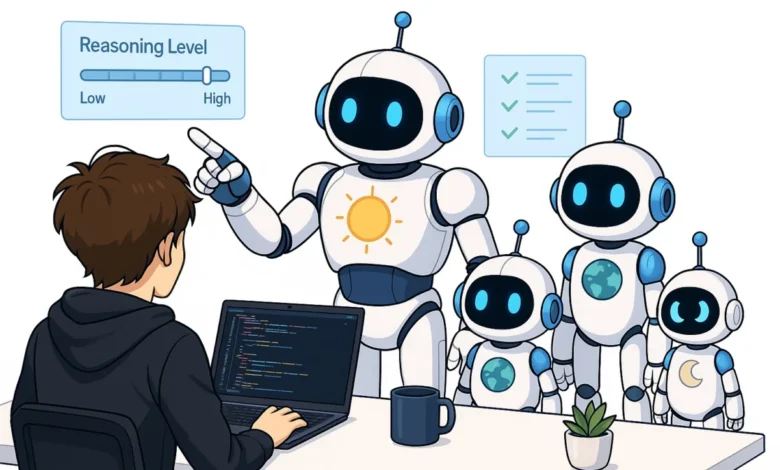
A key differentiator for GPT-5.6, as highlighted by early analyses, is its modular design, offering different "sizes" and "reasoning levels." The model is reportedly available in three distinct configurations, metaphorically named after celestial bodies: Sol (Sun), Terra (Earth), and Luna (Moon). These names are intended to represent the scale and power of each iteration, with Sol positioned as the most advanced, "frontier" model.
Beyond physical size, GPT-5.6 introduces configurable reasoning levels. This feature allows users to influence the depth and duration of the model’s cognitive processing before generating a response. The trade-off is straightforward: enhanced reasoning typically leads to higher-quality, more nuanced outputs, but at the cost of increased processing time. This granular control over computational effort suggests a sophisticated approach to balancing performance and efficiency, catering to diverse user needs and task complexities.
Initial Performance Assessment: An Incremental Leap Forward
Early evaluations suggest that GPT-5.6 represents a discernible improvement over its predecessor, GPT-5.5. The consensus among initial testers is that the new model exhibits enhancements across virtually all aspects of its functionality. This is particularly evident in its application to code review, where GPT-5.6 appears to be more adept at identifying issues. The metrics of precision and recall, crucial in bug detection, seem to have seen an uptick. Precision refers to the accuracy of the reported bugs, ensuring that flagged issues are indeed legitimate problems. Recall, on the other hand, measures the model’s ability to identify all existing bugs within a codebase. An improvement in both suggests a more comprehensive and reliable code analysis tool.
For implementation tasks, GPT-5.6 reportedly demonstrates an increased capacity to work through complex problems and a more thorough approach to execution. While GPT-5.5 was already proficient, GPT-5.6 is observed to be slightly more meticulous. However, it is important to note that this improvement is characterized as incremental rather than revolutionary. This suggests that while GPT-5.6 offers tangible gains, it may not represent a paradigm shift in LLM capabilities but rather a refined and optimized iteration.
Navigating the Challenges: Usage Limits and Latency
Despite its advancements, GPT-5.6 is not without its challenges. A significant concern for users, particularly those on subscription plans, is the rapid depletion of usage limits when employing higher reasoning levels. The "extra high" or "ultra thinking" settings, while promising superior results, can consume token allowances at an accelerated rate. This issue is compounded by the fact that OpenAI has, at least temporarily, removed the previous five-hour usage cap, shifting the constraint primarily to weekly limits. For users on standard subscription tiers, this necessitates careful management of advanced reasoning settings to ensure sustained usability throughout the week.
Furthermore, the increased computational demands of higher reasoning levels translate into noticeable latency. For simpler tasks, the extended processing time can become a bottleneck, impacting workflow efficiency. This has led some early users to adopt a nuanced strategy, employing higher reasoning for planning phases and reverting to medium reasoning for the actual implementation of tasks. This adaptive approach aims to leverage the strengths of advanced reasoning without succumbing to its practical limitations.
The discrepancy between benchmark performance and real-world experience is a critical point. Benchmarks often showcase results achieved with the highest reasoning settings. If users are unable to consistently utilize these settings due to usage constraints or latency, the model’s practical utility may fall short of its theoretical potential as presented in performance evaluations. This underscores the importance of user-specific testing and adaptation.
Model Size Considerations: Sol, Terra, and Luna
The choice of model size also plays a role in GPT-5.6’s performance. While the "Sol" model, representing the largest and most capable tier, is generally favored for its superior output, some benchmarks suggest that in specific scenarios, the "Terra" model with a higher reasoning level might outperform "Sol" with a lower reasoning setting. Initial independent testing has not revealed stark differences, leading many to continue with "Sol" and adjust reasoning levels as needed. This area warrants further investigation as users accumulate more experience with the various configurations.
Strategic Applications of GPT-5.6

The effectiveness of GPT-5.6 hinges on its strategic deployment across different use cases. The article identifies several key areas where the model can provide substantial value.
Code Reviews: A Paradigm Shift in Software Development
One of the most compelling use cases for GPT-5.6 is code review. The author posits that for many scenarios, AI-powered code reviews may soon render traditional human code reviews obsolete. While critical infrastructure or highly sensitive code might still benefit from human oversight, GPT-5.6 is presented as a robust tool capable of preventing many bugs from reaching production environments. This has significant implications for development cycles, potentially accelerating release timelines and reducing the burden on development teams.
Implementation and Planning: A Hybrid Approach
For actual code implementation, the author advocates for a hybrid strategy, which may not exclusively rely on GPT-5.6. The proposed workflow involves using another advanced model, Claude Fable, for the initial planning phase. Subsequently, the implementation itself is executed using Claude Opus 4.8. This layered approach is reported to yield superior results compared to solely utilizing GPT-5.6, even when adjusting its planning and implementation reasoning levels. This suggests that while GPT-5.6 is capable, the specific strengths of other models may still be complementary and beneficial.
Computer and Browser Interaction: Enhanced Efficiency
GPT-5.6 demonstrates considerable proficiency in computer and browser interaction. The model navigates web interfaces with notable speed, especially when utilizing a medium reasoning level. This capability is invaluable for tasks requiring automated browser actions, such as end-to-end code verification or performing complex sequences of operations within a web application. The efficiency and accuracy of its browser navigation could streamline testing processes and automate repetitive digital tasks.
Optimizing GPT-5.6 Usage: Advanced Techniques
Maximizing the utility of GPT-5.6 involves adopting specific techniques that account for its unique features and potential limitations.
Strategic Reasoning Level Management
The most critical technique identified is the judicious management of reasoning levels. The author strongly advises against the indiscriminate use of "extra high" or "ultra" reasoning, citing the rapid consumption of usage limits and the unacceptable latency for many tasks. The recommended strategy involves a two-tiered approach:
- Planning Phase: Employ "extra high" reasoning when initiating a task. This allows the model to thoroughly analyze the scope, consider all relevant factors, and generate a comprehensive plan. This initial deep dive is crucial for establishing a solid foundation for subsequent execution.
- Implementation Phase: Once a plan is established, transition to a "medium" reasoning level for the actual implementation. This is logical, as executing a pre-defined plan is often less computationally intensive than the initial complex planning process, which may require broader contextual analysis and problem decomposition.
This adaptive reasoning strategy allows users to harness the model’s full potential for complex planning while maintaining efficiency and manageability during the execution phase.
Granting Comprehensive Tool Access
A significant factor in GPT-5.6’s performance is its access to integrated tools and services. The author points out that neglecting to grant the model access to necessary connectors, such as email clients, calendars, or specialized software interfaces (e.g., Playwright MCP), can lead to suboptimal performance. This is particularly relevant for users transitioning from other LLMs that may have had pre-existing integrations. OpenAI offers a broad array of connectors comparable to those found in other advanced AI systems, and ensuring GPT-5.6 has access to all relevant tools is paramount for unlocking its full capabilities. This mirrors the principle that an AI is only as effective as the data and tools it can access.
Leveraging Banked Resets for Usage Management
OpenAI, similar to other AI providers, implements usage limits. A notable feature of OpenAI’s system, which distinguishes it from some competitors, is the provision of "banked resets." These are essentially on-demand resets of usage limits that users can trigger at their discretion. This is particularly beneficial during periods of high anticipated usage or when a user unexpectedly depletes their token allowance.
However, it is crucial to understand that activating a banked reset not only replenishes usage but also resets the timer for subsequent limits. For instance, triggering a reset will also reset the five-hour and weekly usage counters. While this reduces the long-term benefit of the reset by delaying the next refresh, banked resets remain a valuable tool for managing unexpected usage spikes and ensuring continuous access to the model’s capabilities. Historically, these banked resets have been provided periodically to subscribers, making them a predictable, albeit limited, resource.
Broader Implications and Future Outlook
The introduction of GPT-5.6 continues to push the boundaries of what is achievable with artificial intelligence. Its enhanced capabilities in code review suggest a future where AI plays an increasingly integral role in software development quality assurance, potentially democratizing access to high-level code analysis. The nuanced approach to reasoning levels and model sizes indicates a maturing understanding of how to balance power with practicality, allowing for greater customization to individual user needs.
However, the ongoing challenges related to usage limits and latency highlight the economic and technical considerations that still accompany the deployment of advanced AI. As these models become more powerful, managing their computational and financial costs will remain a critical aspect for widespread adoption.
The comparison with other leading models, such as Anthropic’s Opus 4.8 and Fable 5, underscores the competitive nature of the LLM market. Each model brings unique strengths, and the optimal choice often depends on the specific task and user preference. The current setup, where GPT-5.6 is favored for code reviews, while other models handle planning and implementation, exemplifies this collaborative and specialized application of AI tools.
As the field progresses, continuous experimentation and adaptation will be key for users to stay abreast of the latest advancements. The rapid pace of development necessitates that individuals and organizations regularly evaluate new models to determine their relevance and potential to enhance existing workflows and unlock new possibilities. The journey with GPT-5.6 is just beginning, and its long-term impact will be shaped by ongoing research, user feedback, and further innovation from OpenAI and its competitors.
Related posts: