Austrian Ecommerce Market Records Significant Growth as Online Retail Share Hits 16 Percent in 2025

The digital transformation of the Austrian retail landscape reached a pivotal milestone in 2025, with online channels accounting for more than 16 percent of total consumer spending. This represents a robust acceleration from the 14.9 percent share recorded just one year prior, signaling a deepening entrenchment of digital purchasing habits among the Austrian population. According to the latest comprehensive analysis by RegioData Research, this shift has propelled the national ecommerce market to a total volume of approximately 12.4 billion euros. On an individual level, the average Austrian consumer now directs roughly 1,400 euros annually toward online retail, a figure that highlights the growing preference for the convenience and accessibility afforded by digital storefronts.
The Chronology of Austrian Digital Adoption
To understand the current trajectory of the Austrian market, one must examine the timeline of its digital evolution. Prior to 2020, Austria was often characterized by a more conservative, brick-and-mortar-focused retail culture compared to its neighbors in Northern Europe or the United Kingdom. However, the global pandemic acted as a catalyst, forcing a rapid digitization of supply chains and consumer behavior.
In 2021 and 2022, the market experienced unprecedented spikes in online engagement as lockdown measures necessitated remote shopping. By 2023, the focus shifted from emergency adoption to the stabilization of these new habits. The 2024 fiscal year saw the online share settle at 14.9 percent, a figure that market analysts initially believed might plateau. The 2025 data, showing an increase to over 16 percent, suggests that the growth is not merely a byproduct of crisis-driven necessity but is instead a permanent structural change in how Austrians interact with the retail economy.
Sectoral Breakdown: Where Austrians Click and Buy
The surge in online spending is not uniform across all retail categories. Certain sectors have become almost synonymous with digital commerce, while others remain rooted in physical inspection and immediate gratification.
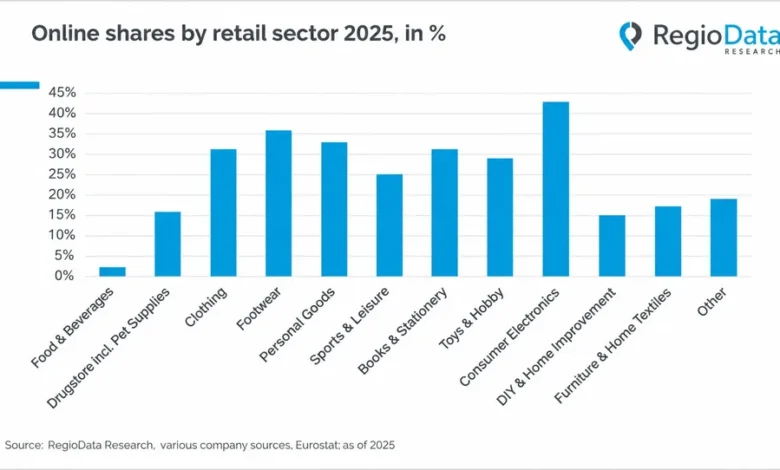
Consumer electronics lead the charge, with an impressive 43 percent of all retail spending in this category occurring online. This trend is driven by the ease of comparing technical specifications, prices, and user reviews—tasks that are significantly more efficient in a digital environment. Following closely behind is the footwear sector, where 36 percent of sales are now conducted online. This growth is largely attributed to improved logistics, such as simplified return processes and "try-before-you-buy" initiatives, which mitigate the traditional barriers of shopping for apparel without a fitting room.

Other categories showing strong digital penetration include personal goods at 33 percent, and both clothing and books, which each hold an online market share of approximately 31 percent. These figures demonstrate that consumers are increasingly comfortable purchasing items that require physical interaction—such as clothing—provided that the platform offers robust customer support and easy return policies.
European Context: Austria in the Continental Landscape
When viewed through a broader European lens, Austria occupies a mid-tier position in terms of digital maturity. The United Kingdom continues to lead the continent, with an online share of approximately 29.3 percent, driven by a long-standing infrastructure for large-scale logistics and a highly competitive online marketplace.
In contrast, Austria’s 16 percent share places it in close proximity to Germany, which reports a figure of 16.8 percent. This alignment is significant, as the two nations share deep economic and cultural ties, often moving in tandem regarding consumer trends. At the lower end of the spectrum, countries like Serbia continue to show lower digital penetration at 6.7 percent, highlighting a digital divide within Europe that is influenced by varying levels of logistics infrastructure, internet connectivity, and payment processing maturity.
The Dominance of Cross-Border Sellers
Perhaps the most striking finding in the 2025 market analysis is the dominance of international entities over local Austrian retailers. Only about 40 percent of online spending remains within the country, directed toward domestic online shops. The remaining majority is captured by cross-border platforms, which benefit from massive economies of scale and highly optimized global logistics networks.
Amazon remains the undisputed leader in the Austrian market, capturing 35.1 percent of total online spending. Its dominance is supported by a mature ecosystem of Prime services and a vast inventory that local retailers struggle to replicate. However, the landscape is shifting. Emerging players like Temu (5.1 percent) and eBay (4.1 percent) have carved out significant niches. Collectively, Chinese online platforms—including Temu, Shein, and AliExpress—now command a combined market share of 7.9 percent, reflecting a rapid expansion of low-cost, direct-to-consumer models that have disrupted traditional retail pricing.
Economic Implications and Strategic Outlook
The transition toward a 16 percent online share carries profound implications for the traditional Austrian retail sector. Small-to-medium enterprises (SMEs) face increasing pressure to modernize. The reliance on physical footfall in town centers is no longer a sufficient strategy for long-term sustainability. Retailers are now forced to adopt an "omnichannel" approach, integrating digital storefronts with their physical locations to offer "click-and-collect" services or hybrid experiences.

From a macroeconomic perspective, the rise in cross-border shopping presents a challenge for local tax bases and employment. As capital flows to international giants, local policymakers are increasingly discussing the need for more equitable regulatory frameworks that can support domestic businesses while ensuring a fair competitive playing field.
Furthermore, the environmental impact of the surge in online shopping cannot be ignored. The rise in deliveries correlates with an increase in packaging waste and carbon emissions related to last-mile logistics. Analysts suggest that the next phase of the Austrian ecommerce narrative will likely focus on sustainability, with consumers demanding greener delivery options and more transparent supply chains.
Conclusion: A Market in Transition
The 2025 data serves as a clear indicator that the Austrian retail environment has entered a new era. With over 12 billion euros flowing through digital channels, the influence of online commerce is no longer a peripheral concern but a core component of the national economy. As cross-border platforms continue to capture a majority share, the future of the Austrian retail sector will depend on its ability to leverage its unique strengths—such as localized customer service, trust, and physical brand loyalty—while simultaneously embracing the digital efficiencies that define the modern global market.
The growth trajectory, while steady, indicates that the ceiling for online retail in Austria is still far off. As mobile technology continues to improve and payment systems become even more seamless, it is highly probable that the online share of retail will continue to climb, forcing a permanent redesign of the Austrian commercial landscape. Whether this results in the total disappearance of traditional retail or a harmonious fusion of the two, the shift is undeniable and irreversible.