Netflix Discloses $587 Million Cash Acquisition of Ben Affleck’s AI Startup InterPositive to Bolster Generative AI Production Capabilities

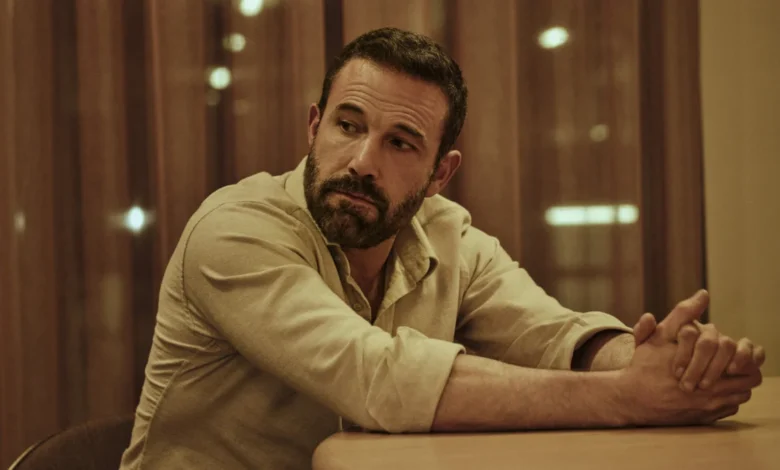
Netflix has officially disclosed in a recent regulatory filing with the Securities and Exchange Commission that it completed the acquisition of InterPositive, an artificial intelligence startup co-founded by Academy Award-winning filmmaker Ben Affleck, for a total of $587 million in cash. This financial revelation, appearing in the streaming giant’s latest quarterly report, provides the first definitive valuation of a deal that has been the subject of intense industry speculation since it was first announced in March 2026. The acquisition represents one of Netflix’s most significant investments in production technology to date, signaling a strategic pivot toward integrating generative AI directly into its filmmaking pipeline.
The disclosure follows months of rumors regarding the price tag of the startup, which was designed to bridge the gap between traditional cinematography and emerging machine-learning technologies. Initial reports from financial news outlets suggested the deal could reach as high as $600 million, a figure that the official $587 million cash payment closely mirrors. By opting for an all-cash transaction, Netflix has demonstrated its significant liquidity and its commitment to securing proprietary rights to InterPositive’s suite of tools, which are intended to streamline post-production and mitigate the ballooning costs associated with high-end digital effects and physical reshoots.
The Genesis and Vision of InterPositive
InterPositive was founded by Ben Affleck alongside a group of veteran technologists and visual effects specialists with the goal of creating "filmmaker-centric" AI. Unlike many generative AI platforms that focus on creating entire scenes from text prompts—a practice that has drawn sharp criticism from creative unions—InterPositive focuses on what Affleck describes as "utility AI." The startup’s proprietary algorithms are engineered to solve specific, high-cost problems in the post-production phase, such as correcting lighting errors, replacing backgrounds without the need for extensive rotoscoping, and digitally inserting "missing shots" to maintain narrative continuity.
In a statement released during the initial announcement of the merger in March, Affleck emphasized that the technology was built to "protect the power of human creativity" rather than replace it. He argued that by automating the more tedious and technical aspects of film production, directors and editors can focus on the emotional and narrative beats of their work. According to internal sources at Netflix, the InterPositive team has already begun integrating their tools into the company’s internal production software, known as "The Netflix Workbench," which is used by thousands of creators globally.
As part of the acquisition, the entire InterPositive staff has transitioned to Netflix’s engineering and production divisions. Affleck himself has taken on a formal role as a Senior Advisor, a position that allows him to influence how the technology is deployed across the streamer’s vast slate of original films and series. This move is seen as a major win for Netflix, as it secures the expertise of a high-profile creative who can serve as a bridge between the technical engineering teams in Silicon Valley and the creative community in Hollywood.
A Timeline of the Acquisition and Implementation
The road to the $587 million deal began in late 2025, when InterPositive first emerged from "stealth mode" with a series of demonstrations that reportedly impressed Netflix’s Chief Content Officer and Chief Technology Officer.
- March 5, 2026: Netflix officially announces its intent to acquire InterPositive. The press release highlights the startup’s ability to handle "real-world production challenges" but remains silent on the financial details.
- March 11, 2026: Financial analysts and industry insiders begin speculating on the deal’s value. Bloomberg reports that the transaction is likely valued near the $600 million mark, citing Netflix’s aggressive push into the AI space.
- April-May 2026: Netflix begins a pilot program using InterPositive’s tools on several mid-budget features and unscripted series. During this period, the company reports a noticeable reduction in the time required for "finishing" titles.
- July 2026: In its Q2 2026 earnings report and subsequent SEC filing, Netflix confirms the $587 million cash expenditure for the startup. The report also reveals a staggering statistic: approximately 300 Netflix titles released or in production during the first half of the year have utilized some form of generative AI technology.
This rapid integration underscores the speed at which Netflix is moving to normalize AI within its ecosystem. The 300-title figure includes everything from minor background adjustments in foreign-language dramas to complex digital de-aging and environment building in high-budget science fiction series.
Financial Context and Market Implications
The $587 million cash payment is a substantial outlay, even for a company of Netflix’s scale. For context, Netflix’s annual content budget has hovered between $17 billion and $19 billion over the last several years. While $587 million represents only a fraction of that annual spend, it is a massive investment for a single technology platform. To justify the cost, analysts suggest that Netflix is looking at the long-term "cost-avoidance" potential of InterPositive’s tools.
In the traditional Hollywood model, reshooting a single day of a major production can cost upwards of $250,000 to $1 million, depending on the cast and location. If InterPositive’s AI can "fix" a scene by adjusting lighting or inserting a missing reaction shot without requiring the actors and crew to return to the set, the technology could save the company hundreds of millions of dollars across its entire portfolio over several years. Furthermore, by owning the technology outright, Netflix avoids the licensing fees it would otherwise pay to third-party visual effects houses or AI software providers like OpenAI or Adobe.
Market reactions to the disclosure have been cautiously optimistic. Shareholders are generally supportive of initiatives that improve operational efficiency, though some entertainment industry analysts warn of potential friction with creative guilds. The 2023 strikes by the Writers Guild of America (WGA) and the Screen Actors Guild (SAG-AFTRA) established clear boundaries regarding the use of AI, and Netflix’s heavy investment in the space will likely be under intense scrutiny during the next round of contract negotiations.
Strategic Integration and the "Creative AI" Narrative
Netflix’s decision to bring Affleck into the fold as a senior advisor is a calculated move to mitigate the "tech-versus-talent" narrative. By positioning the acquisition as a tool for filmmakers, led by one of the industry’s most respected actors and directors, Netflix is attempting to frame AI as a collaborative partner rather than a replacement for human labor.
InterPositive’s technology is particularly adept at "post-production relighting," a process that allows editors to change the light source in a shot after it has been filmed. This is traditionally a grueling process involving frame-by-frame manipulation. The AI-driven approach can achieve the same result in a fraction of the time, maintaining the photorealistic integrity of the original footage. Similarly, the startup’s "background replacement" tools utilize generative fill to expand or change environments without the "uncanny valley" effect often associated with lower-budget CGI.
Netflix has stated that these tools are being made available to its "creative partners"—the independent producers and directors who make up the bulk of its content engine. By providing these high-end tools for free (or as part of the production package), Netflix makes itself a more attractive destination for creators who want to achieve "big-budget" visuals on a "streaming-budget" timeline.
Broader Industry Impact and Future Outlook
The acquisition of InterPositive for $587 million is likely the first of many such "acqui-hires" in the entertainment sector. As generative AI continues to evolve, other major studios such as Disney, Warner Bros. Discovery, and Sony are expected to follow suit, either by acquiring their own proprietary AI firms or by forming deep-rooted partnerships with tech giants like Google or Microsoft.
However, Netflix’s lead in this area is significant. With over 270 million subscribers and a data-driven approach to production, the company is uniquely positioned to train its AI models on a vast library of high-quality proprietary content (assuming legal and contractual permissions are met). This "flywheel effect"—where more content leads to better AI tools, which in turn lead to faster and cheaper content creation—could further distance Netflix from its traditional media competitors.
Despite the technical advantages, the ethical and legal landscape remains complex. The disclosure that 300 programs have already used AI will undoubtedly spark discussions regarding transparency. Critics and advocacy groups are calling for clearer labeling of AI-assisted content, arguing that audiences have a right to know when the images they are seeing have been synthetically altered or generated. Netflix has not yet committed to a universal labeling system, though it has maintained that all its uses of AI comply with current labor agreements and copyright laws.
As the industry moves toward the end of 2026, the success of the InterPositive acquisition will be measured not just by the $587 million price tag, but by the quality of the content produced under this new paradigm. If Netflix can maintain its high standard of storytelling while significantly reducing production friction, the "Affleck Deal" may be remembered as the moment the streaming era fully transitioned into the AI era. For now, the focus remains on the integration process, as the InterPositive team works to turn Ben Affleck’s vision of "human-centric AI" into a reality for millions of viewers around the globe.