Google Integrates Meridian Open Source Marketing Mix Model into Analytics 360 to Drive AI Powered Measurement and Predictive Insights

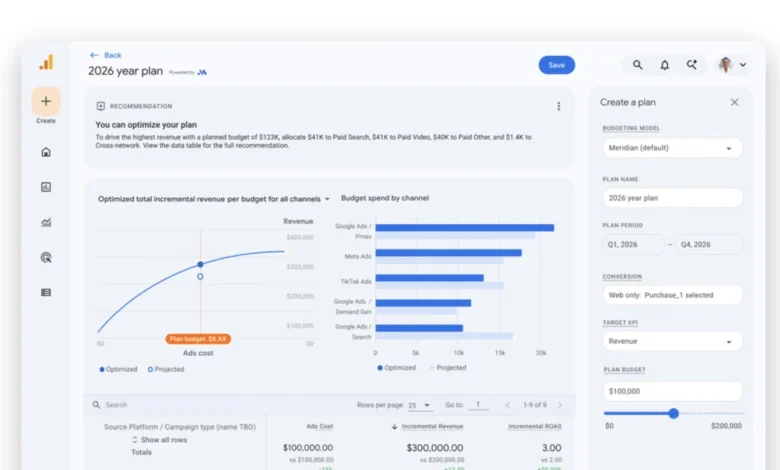
The global digital advertising landscape is currently undergoing a fundamental transformation, driven by the dual pressures of increasing privacy regulations and the rapid advancement of artificial intelligence. In response to these shifts, Google has announced a significant expansion of its measurement capabilities, centering on the integration of its open-source Marketing Mix Model (MMM), Meridian, into the Google Analytics 360 environment. This strategic move, coupled with the introduction of Gemini-powered "Qualified Future Conversions" (QFCs), represents a pivot toward durable, privacy-centric measurement solutions that aim to bridge the gap between brand awareness activities and long-term sales performance.
As marketers face the imminent depreciation of third-party cookies and the limitations of traditional click-based attribution, the demand for sophisticated modeling has surged. Google’s latest updates are designed to provide enterprises with a unified view of their marketing effectiveness, allowing for data-driven decisions that account for both online and offline variables. By embedding Meridian directly into its premium analytics suite, Google is attempting to democratize high-level econometric modeling, which was previously the domain of specialized data science teams or expensive external consultancies.
The Evolution of Marketing Mix Modeling in the AI Era
Marketing Mix Modeling (MMM) is a statistical technique used by advertisers to estimate the impact of various marketing tactics on sales and then forecast the impact of future sets of tactics. While the methodology has existed for decades, it has traditionally been a slow, manual process that relied on historical data and often lacked the granularity required for modern digital campaigns. Google’s Meridian aims to modernize this framework by utilizing Bayesian statistics and open-source transparency, allowing brands to customize models to their specific business needs while benefiting from Google’s vast data ecosystem.
The integration of Meridian into Google Analytics 360 simplifies the data pipeline for large enterprises. Historically, one of the primary hurdles to effective MMM was data collection—aggregating spend and performance metrics from disparate sources such as television, radio, social media, and search. By centralizing this within Analytics 360, Google provides a streamlined path for advertisers to ingest data and generate actionable insights. This "unified measurement" approach is intended to eliminate the silos that often exist between brand marketing teams and performance marketing teams.
Bridging the Funnel with Qualified Future Conversions
Beyond the structural improvements to MMM, Google is introducing a new predictive signal within Google Ads: Qualified Future Conversions (QFCs). Powered by Gemini, Google’s most capable multimodal AI model, QFCs are designed to solve the perennial "attribution gap" between upper-funnel awareness spend and lower-funnel conversions.
For many years, marketers have struggled to prove the ROI of brand-building activities, such as YouTube campaigns or display ads, which may not result in an immediate sale but significantly influence a consumer’s future path to purchase. QFCs address this by identifying signals that correlate with future intent. For instance, a user who views a brand’s video and subsequently searches for that brand’s specific products is categorized as a "qualified future conversion." By linking these early-stage signals to eventual sales outcomes, Gemini allows the Google Ads platform to optimize bidding and budget allocation for long-term growth rather than just immediate, last-click results.
These predictive signals are not intended to exist in a vacuum. Google has indicated that QFC data will eventually be integrated back into the Meridian MMM framework. This integration will further refine the accuracy of the models, allowing the AI to understand the nuanced relationship between a search query today and a purchase three months from now.
Contextual Background: The Privacy-First Shift
The timing of these updates is critical. The digital advertising industry is navigating a "privacy-first" era, characterized by regulations like the General Data Protection Regulation (GDPR) in Europe and the California Consumer Privacy Act (CCPA) in the United States. Furthermore, technological changes—such as Apple’s App Tracking Transparency (ATT) and the ongoing transition toward the Privacy Sandbox on Chrome—have made individual-level tracking increasingly difficult and less reliable.
In this environment, aggregated measurement solutions like MMM have regained popularity because they do not rely on individual user tracking or cookies. Instead, they look at aggregate trends and correlations. By investing heavily in Meridian and QFCs, Google is positioning itself as a leader in "durable" measurement—tools that will continue to function regardless of future privacy restrictions. This shift reflects a broader industry trend where the "black box" of AI-driven attribution is being replaced by more transparent, model-based approaches.
Chronology of Google’s Measurement Roadmap
The integration of Meridian into Analytics 360 is the latest step in a multi-year roadmap aimed at reinventing advertising measurement.
- Early 2023: Google began emphasizing the importance of first-party data and "Enhanced Conversions" as a way to maintain measurement accuracy amidst cookie depreciation.
- Early 2024: Google officially introduced Meridian as an open-source MMM, inviting the developer and data science communities to contribute to its codebase. This was seen as a direct response to Meta’s "Robyn," another open-source MMM that had gained significant traction in the industry.
- Mid-2024: The announcement of Gemini-powered QFCs signaled a shift toward using generative and predictive AI to interpret complex consumer journeys.
- Present: The announcement of the Meridian-Analytics 360 integration marks the move from a standalone tool to a core component of Google’s enterprise marketing stack.
Industry Implications and Competitive Landscape
The decision to make Meridian open-source is a calculated move by Google. In the past, Google’s measurement tools were often criticized for being "walled gardens" that favored Google’s own media properties. By providing an open-source model, Google is offering a level of transparency that allows advertisers to see exactly how their ROI is being calculated. This transparency is vital for gaining the trust of Chief Financial Officers (CFOs) and Chief Marketing Officers (CMOs) who are increasingly skeptical of proprietary attribution models.
However, Google is not alone in this space. Meta’s Robyn and Amazon’s Marketing Cloud also offer sophisticated measurement capabilities. The "measurement wars" are no longer just about who has the best ad inventory, but who can provide the most credible proof of performance. Google’s advantage lies in its ability to combine search intent data with the analytical power of Google Analytics 360, which is already embedded in the workflows of most Fortune 500 companies.
Supporting Data and Market Analysis
Recent industry reports underscore the necessity of these technological advancements. According to data from Gartner, nearly 60% of marketing leaders reported that they have faced increased pressure from executive leadership to prove the long-term value of their marketing spend. Furthermore, a study by Deloitte found that companies utilizing advanced predictive analytics in their marketing suites saw a 15% to 20% increase in marketing ROI compared to those relying on traditional attribution methods.
The role of AI in this efficiency cannot be overstated. Internal data from Google suggests that advertisers using AI-powered bidding and measurement tools see an average of 18% more conversions at a similar cost per action. By adding QFCs to the mix, Google is essentially providing a "forward-looking" metric that allows brands to adjust their strategies before a campaign ends, rather than performing a post-mortem analysis weeks after the budget has been spent.
Official Reactions and Expert Perspectives
While Google has led the narrative on these updates, the broader marketing community has reacted with a mix of optimism and cautious scrutiny. Independent data scientists have praised the open-source nature of Meridian, noting that it allows for better "incrementality testing"—the gold standard of measurement that determines if a sale would have happened anyway without the ad.
"The integration of MMM into a platform like Analytics 360 is a game-changer for accessibility," says Sarah Jenkins, a senior analyst at a leading digital consultancy. "For years, MMM was a ‘once-a-year’ project. Now, it has the potential to become a real-time dashboard. However, the success of these tools will depend entirely on the quality of the data being fed into them. AI like Gemini is powerful, but it still requires a foundation of clean, comprehensive first-party data."
Logically inferred reactions from major advertising agencies suggest a shift in staffing needs. Agencies are likely to move away from manual reporting roles toward "measurement architects" who can configure Meridian models and interpret the predictive signals generated by QFCs.
The Future of Decision-Making in Marketing
As Google rolls out these features to Analytics 360 users, the focus will shift to implementation. The ability to "turn data into decisions," as Google’s internal documentation suggests, requires not just the tools but a cultural shift within marketing organizations. Companies will need to move away from the "instant gratification" of last-click metrics and embrace the more complex, yet more accurate, reality of long-term brand influence.
The ultimate goal of the Meridian and QFC ecosystem is to provide a "complete picture of performance." In a world where a consumer might see a YouTube ad on their TV, search for the product on their phone, and eventually buy it in a physical store, the old ways of tracking are no longer sufficient. Google’s integration of AI-driven modeling into its core analytics platform is a clear signal that the future of marketing measurement is aggregate, predictive, and transparent.
In conclusion, the integration of Meridian into Google Analytics 360 and the launch of Gemini-powered Qualified Future Conversions represent a significant milestone in the maturation of AI-driven marketing. By providing tools that are both privacy-compliant and highly predictive, Google is offering a pathway for advertisers to maintain growth in an increasingly fragmented digital world. As these tools become standard, the industry will likely see a renewed focus on brand-building, backed by the rigorous mathematical proof that modern CMOs require.