Beyond the Click: Why Modern Marketing Must Pivot from Activity Metrics to True Financial Accountability

In an era where digital advertising dominates enterprise budgets, a persistent disconnect remains between marketing activity and actual corporate profitability. Recently, strategic consulting engagements with global enterprises operating across dozens of international markets have brought this friction to the forefront. While corporate marketing teams frequently celebrate top-of-funnel metrics like high traffic volume and low cost-per-session figures, a rigorous examination of these strategies through the lens of corporate finance often reveals a troubling reality: massive marketing activity that quietly erodes net profit.
The Rise of Activity Metrics and the Cost-Per-Session Trap
The genesis of modern marketing analytics stems from the need to quantify digital engagement. Impressions, clicks, views, and sessions have long served as the foundational building blocks of digital campaign reporting. However, treating these metrics as the ultimate endpoint of marketing success presents a fundamental strategic flaw.
During a strategic review for a multinational corporation operating in 75 countries, digital strategists encountered a performance key performance indicator (KPI) that prioritized Cost Per Session (CPS) above all else. In enterprise marketing, a focus limited to driving high volumes of cheap traffic resembles a treadmill that rewards movement rather than destination. While ad platforms and digital agencies frequently champion metrics that demonstrate high volume and low acquisition costs, these figures fail to account for whether the generated traffic possesses genuine commercial intent or contributes positively to the bottom line.
Industry veterans note that while metrics like impressions and views provide virtually no intrinsic business value, intermediate activity metrics can easily create a false sense of security. When campaigns generate thousands of site visits at minimal cost, internal marketing teams often report resounding success to corporate leadership, prompting executives to reallocate larger portions of the annual budget toward those channels.
A Chronological Framework for Evaluating Marketing Impact
To bridge the gap between marketing departments and corporate financial officers (CFOs), analysts advocate for a systematic shift moving progressively through three distinct phases: Activity, Outcomes, and Accountability.
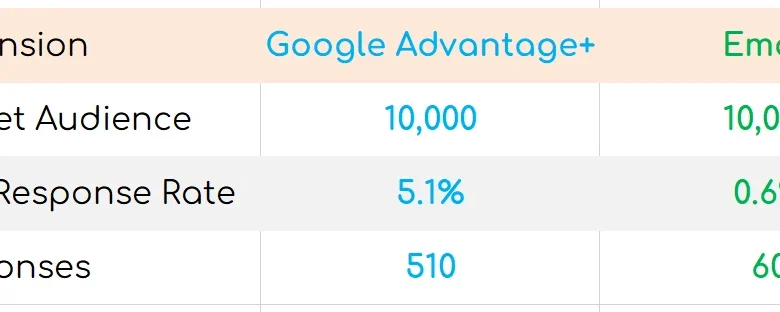
Initially, organizations evaluate performance strictly through activity views. Reports highlight total clicks, response rates, and platform-specific engagement—such as the performance metrics associated with automated campaign tools like Google Advantage+. While high response rates generate internal celebration, financially astute leadership inevitably asks a critical question: What are the actual commercial outcomes?
Transitioning from activity to outcomes requires organizations to track macro and micro-conversions, including completed orders, total revenue, lead signups, and average order values. Even in complex B2B sectors, pharmaceutical industries, or long-cycle retail markets where direct digital conversion is less immediate, businesses can map micro-conversions against historical lead-to-offline conversion rates to establish a reliable working dataset.
However, true corporate alignment demands a final, rigorous evolution: moving from outcomes to absolute accountability. Because marketing initiatives require capital investment—encompassing both campaign ad spend and the cost of goods sold (COGS)—evaluating profitability requires subtracting these foundational inputs from generated revenue.
Financial Analysis: Revenue Versus Real Profitability
A comparative analysis of digital channels reveals why revenue generation alone can be a deceptive indicator of success. Consider a scenario evaluating two primary marketing channels within an enterprise portfolio: an automated paid advertising campaign and a direct email marketing program.
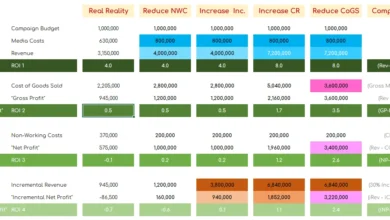
When assessed purely on an activity level, the paid search campaign might generate 173 orders and $17,000 in revenue, drastically outperforming an email campaign that yields only 14 orders. Standard return on ad spend (ROAS) calculations further inflate the perceived success of the paid channel, rewarding teams for top-line revenue without factoring in the underlying costs required to produce the sold goods or execute the ads.
However, when analysts calculate Profit on Ad Spend (POAS), Return on Investment (ROI), and ultimately Profit on Investment (POI), the dynamic inverts entirely. Factoring in campaign costs and COGS often reveals that automated high-volume ad platforms can yield a negative return—for example, returning a mere 70 cents in profit for every dollar spent. Conversely, targeted email marketing programs, despite yielding lower overall traffic and revenue volume, frequently demonstrate exceptionally high POI because their operational and acquisition costs remain minimal.
This discrepancy highlights a central tension in corporate governance: marketing teams naturally prioritize scale and revenue growth, while CFOs must safeguard overall enterprise profitability. When financial leaders demand accountability over activity, they expose campaigns that exist primarily to sustain advertising platform revenues rather than corporate earnings.
Industry Responses and Strategic Adjustments
Faced with data demonstrating negative profitability on major ad platforms, marketing leadership typically encounters a choice between defending legacy tactics or restructuring campaign execution. Industry consultants recommend a decisive, multi-step corrective protocol.
First, organizations are advised to temporarily pause underperforming digital ad spend to disrupt unprofitable patterns and compel internal teams, external agencies, and platform representatives to re-evaluate their strategies. Although this pause invariably triggers internal alarm bells regarding declining traffic and immediate revenue drops, it allows net profit margins to recover and stabilize.
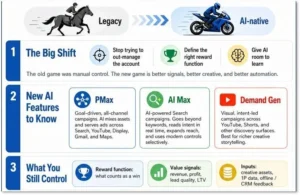
Second, marketing departments must initiate a revised strategy focused on audience intent, creative relevance, and advanced AI utilization. Rather than relying on automated "set-it-and-forget-it" configurations that shovel generic traffic, teams must leverage algorithmic tools to align specific consumer intent with highly tailored offers. Only when campaigns consistently demonstrate high green POI should budgets be systematically restored.
Furthermore, industry standards are adapting to eliminate legacy vanity metrics. Experts emphasize the necessity of abandoning metrics like Cost Per Session in favor of more rigorous indicators, such as Cost Per Non-Bounced Session. By filtering out unproductive traffic—users who arrive and immediately leave the site without engaging—marketers confront realistic acquisition costs that more accurately reflect campaign efficiency.
Broader Implications in the Age of AI Search
The evolution of search engine optimization and paid search dynamics—particularly with the integration of AI-driven search experiences such as AI Overviews and conversational search interfaces—further diminishes the utility of legacy metrics. Major search engine guidelines increasingly emphasize that modern traffic driven by AI-powered discovery tends to be of higher quality, characterized by longer on-site engagement and clearer transactional intent.
Consequently, industry authorities advise digital marketers to deprioritize high-volume, low-intent traffic acquisition strategies. Focusing narrowly on metrics like cost-per-session misaligns marketing incentives with the realities of modern consumer behavior, where algorithmic curation rewards contextual relevance and genuine audience engagement over superficial click volume.
Conclusion
The enduring success of marketing leadership within modern enterprises relies heavily on bridging the traditional divide between creative strategy and financial governance. By prioritizing outcomes over mere activity, and absolute accountability over simple outcomes, organizations insulate their marketing investments against market disruption. While adopting these rigorous frameworks requires difficult conversations, structural adjustments, and deep analytical discipline, the ultimate reward is a resilient, profitable marketing strategy capable of withstanding the strictest corporate financial scrutiny.
Related posts: